Reducing setup and changeover time with flexible equipment is the most direct way to raise throughput in your fabrication shop. I have visited enough shops to know the gap between a machine that needs half a shift to reconfigure and one that changes over in twenty minutes isn’t workholding. It is the equipment itself. When you invest in machines that remember their settings, adjust automatically to different diameters, and accept quick-change tooling, changeover time drops by 30 to 50 percent without extra operator effort. This article covers the equipment categories that make that difference, how to match them to your part mix, and how to build a realistic payback case.
Why Changeover Time Hurts More Than You Think
Most fabrication managers track arc-on time, but what kills capacity in a high-mix shop is the minutes between jobs. A welding positioner that takes forty minutes to reset between a 2‑ton flanged vessel and an 800 kg excavator boom burns up skilled labor and machine hours that never come back. In shops running three or four different part families every day, the cumulative cost of setup and changeover can equal the depreciation cost of the equipment itself within a single year.
Heavy fabrication isn’t a high-volume car line. Part weights, diameters, and weld joint orientations change constantly. Without equipment that is designed for frequent reconfiguration, operators fall back on manual alignment, shims, and trial passes. That introduces variation and scrap. The real question isn’t whether you need flexible equipment. It’s which type fits your part mix and how much changeover time can realistically be eliminated.
Flexible Equipment That Cuts Changeover in Half
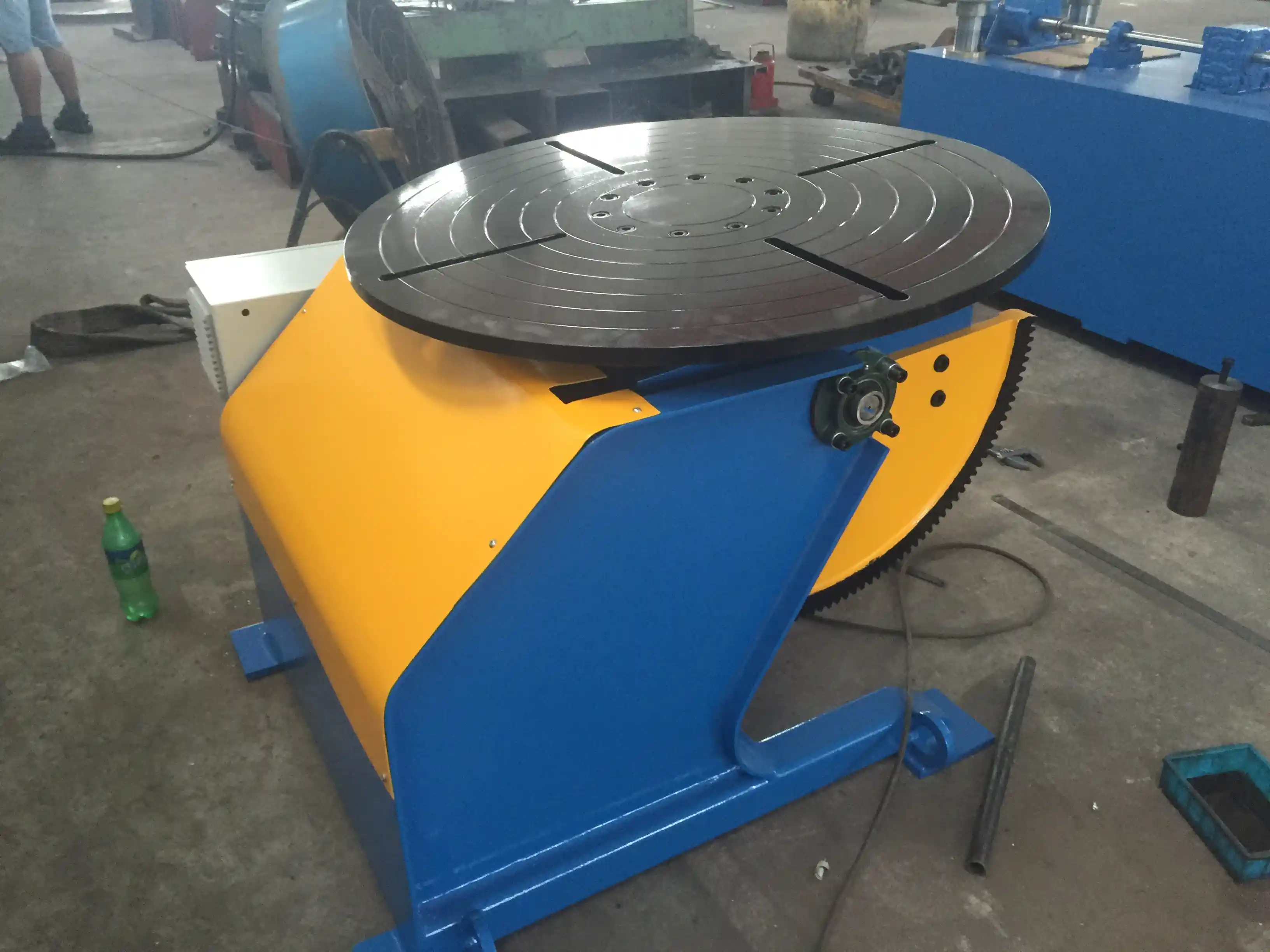
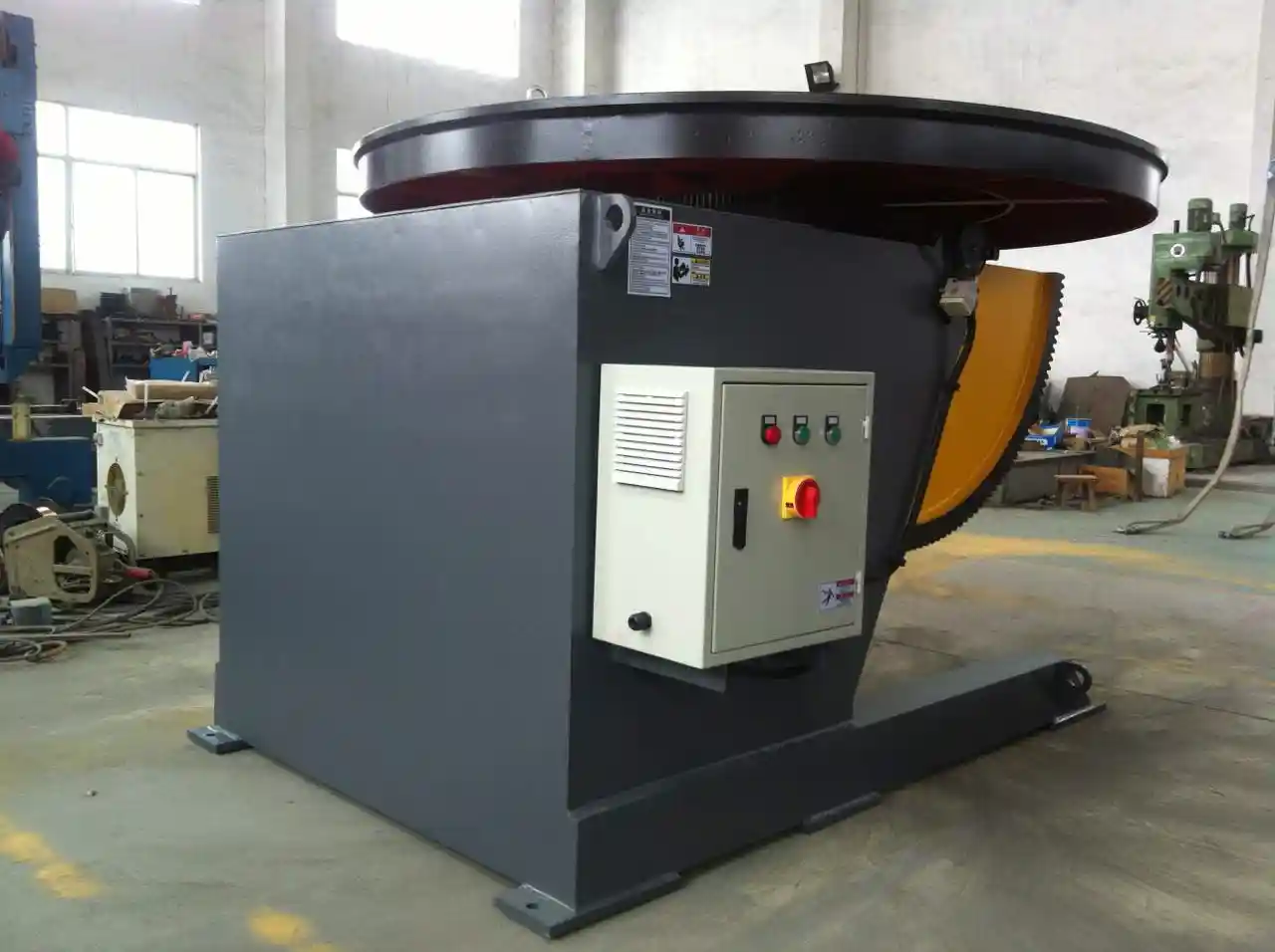
The biggest lever for reducing setup and changeover time is the welding positioner. A conventional fixed-tilt positioner forces the operator to adjust part clamping and weld torch angles by hand every time the workpiece dimensions change. A modern 3‑axis positioner with programmable memory eliminates that.
We ship positioners that store over 100 welding programs. An operator selects the part number on the touchscreen and the machine automatically moves to the stored tilt, rotation, and height values. I have seen a wind tower manufacturer cut section-to-section changeover from 45 minutes down to 12 minutes after switching to a programmable 3‑axis unit. The savings came from eliminating manual measurement and repositioning for every tower segment diameter.
Adjustable-height rotators are another category worth attention. For shops that weld cylindrical parts ranging from 500 mm to 4000 mm in diameter, a rotator with hydraulic elevation and self-aligning rollers means the operator pushes a button instead of re‑shimming the drive frame. That alone can chop 15 to 20 minutes off every changeover.
On the cutting side, a multi-torch CNC plasma or flame cutting machine reduces changeover by using different torch stations for different material thicknesses or bevel angles. Instead of stopping the line to change consumables and recalibrate, the control switches to the pre‑set torch and picks up the correct cutting parameters from the part program. While the investment is higher than a single-torch table, the throughput gain in shops that process mixed plate thicknesses pays back within 12 to 18 months in my experience.
| Equipment Type | Typical Changeover Reduction | Key Flexibility Feature |
|---|---|---|
| 3‑Axis Welding Positioner (programmable) | 40–50% | Stores 100+ part programs; automatic tilt/rotation recall |
| Adjustable-Height Welding Rotator | 30–40% | Hydraulic elevation for instant diameter adjustment |
| Multi‑Torch Плазменный резак с ЧПУ | 25–35% | Switches to pre‑set torch without recalibration |
| Head/Tail Welding Positioner | 20–30% | Quick-change tailstock handles different shaft lengths |
If your production schedule jumps from 600 mm pipe to 3‑meter pressure vessel sections within a single shift, confirming that your positioner’s tilt range and program memory can handle that spread is worth checking before you commit to a model. Reach out at jay@weldc.com with your typical part dimensions and we can verify the right configuration.
Key Selection Criteria for Flexible Equipment
Not every positioner or rotator is built for fast changeover. The difference sits in a few engineering choices that show up on the spec sheet.
Programmable control and memory. Machines with Siemens or equivalent PLCs that store part‑specific welding sequences eliminate the operator’s need to re‑teach positions. If your product mix involves more than ten recurring part numbers, look for at least 50 program slots.
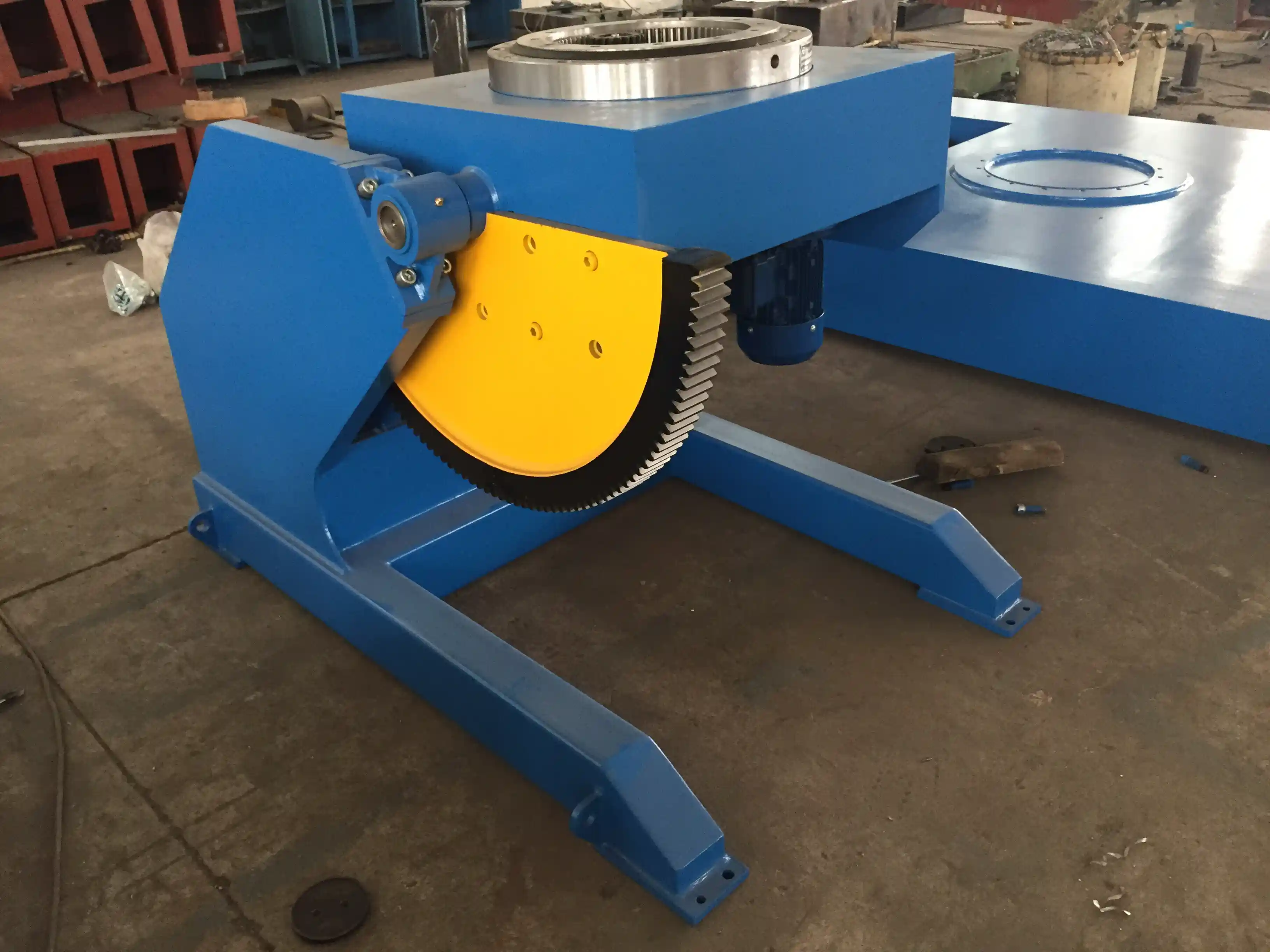
Load capacity and part envelope flexibility. A positioner rated for 3 tons might handle your heaviest part, but if its table diameter and tilt arc limit how you can orient an oddly shaped structure, you’ll still waste time rigging and re‑rigging. Select load capacity with a margin above your heaviest workpiece, and check that the maximum rotating diameter at full tilt fits your assembly.
Tooling interchangeability. Tables with T‑slots, conductive slip rings, and optional quick‑change chucks let the operator swap fixtures without re‑wiring or mechanical re‑alignment. A self‑centering chuck on a rotator drive frame can cut workpiece mounting time from several minutes to under a minute.
Linear guide and reducer quality. Components like THK linear guides and SEW reducers aren’t just about precision. They maintain positioning repeatability over tens of thousands of cycles, which means the machine returns to the same coordinate after changeover without drifting. That eliminates test welds and scrap.
Integrating Flexible Equipment into Your Workflow
Putting a programmable positioner on the floor doesn’t change the culture. I’ve seen shops where the new machine sat underutilized for three months because nobody had time to program the part library.
The integration step that rarely gets attention is building a setup reduction plan alongside the equipment purchase. That means documenting every part family you run, identifying the specific dimensions and weld joint types that cause changeover, and loading those into the positioner’s memory before it enters production. Companies that do this before commissioning typically see immediate cycle time drops. Those that skip it eventually figure it out, but they lose weeks of potential output.
Standardizing workholding across part families also pays off. If your shop runs both H‑beam stiffeners and pipe spools, a head‑tail positioner with a common drive dog and interchangeable tailstock adapters can handle both with a simple, tool‑free swap. The key is to think about the complete changeover sequence, from rigging and alignment to program selection, and eliminate every manual step that remains after the equipment is installed.
Building the Payback Case for Flexible Machinery
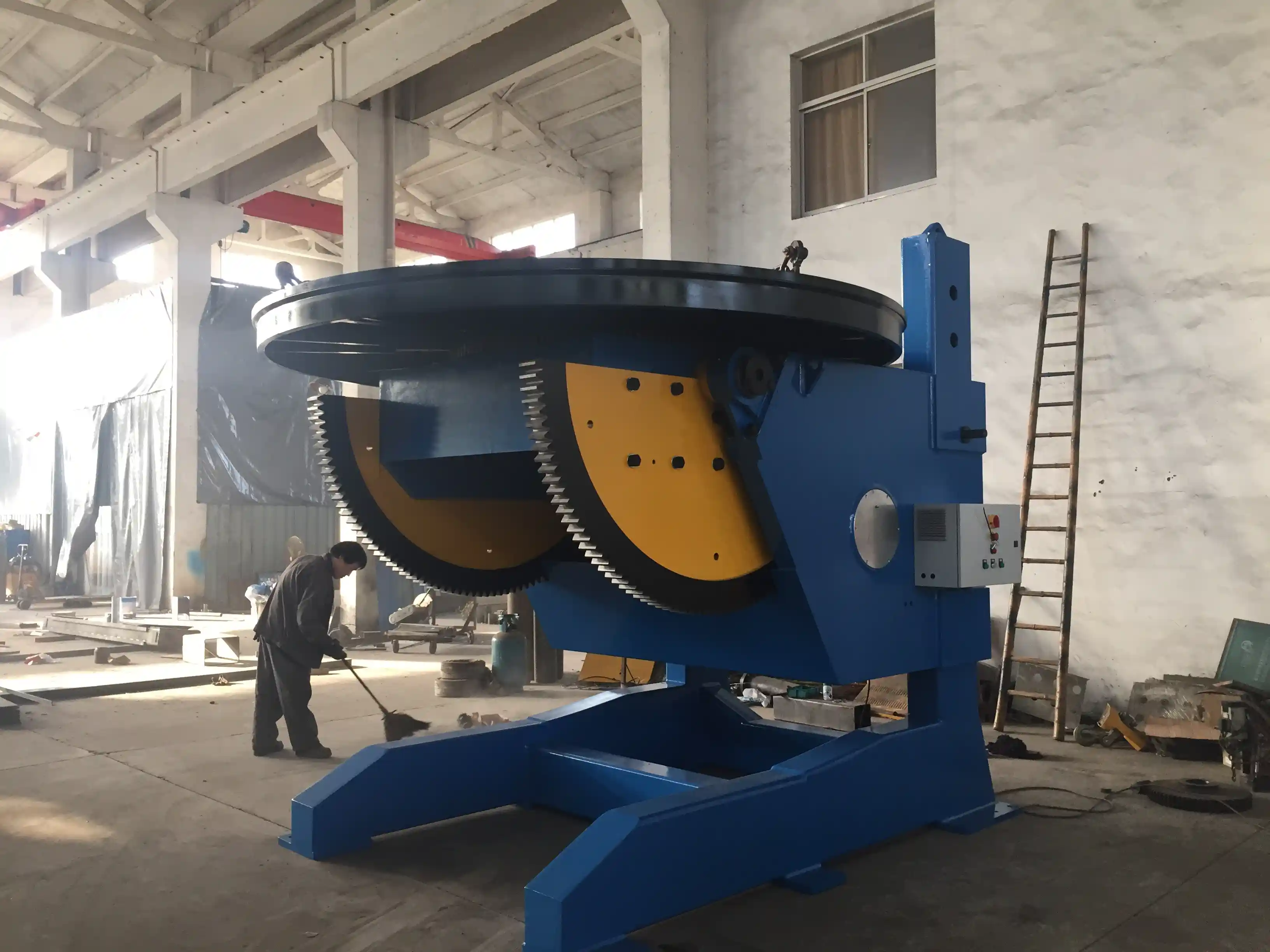
A straightforward way to calculate ROI is to take the hours per week lost to changeover on your current equipment, multiply by your shop rate, and compare that to the projected reduction after switching to flexible machines. If your shop spends 8 hours a week on changeover and you can realistically cut that by 40 percent with a programmable positioner and adjustable rotator, you recoup roughly 3.2 hours per week. Over a 50‑week year, that equals 160 hours of recovered production capacity.
Attach a realistic value to that extra capacity: if your shop rate is $120 per hour, the annual saving is $19,200 per machine. That puts a mid‑range flexible positioner well within a 24‑month payback window even before you factor in lower scrap and reduced operator fatigue.
The harder but more accurate calculation adds the cost of lost orders that you couldn’t accept because changeover time made the schedule too tight. I have spoken with production managers who turned away small‑batch work until they had equipment that could switch between products fast enough to fill the gaps between large orders. That additional revenue alone often covers the equipment cost in under a year.
Common Questions About Flexible Equipment Selection
How much reduction in changeover time is truly realistic, not just a brochure number?
In shops we support, a 30 to 40 percent drop is the typical range after the first month of operation, once operators are comfortable with program recall and the part library is loaded. The machines can deliver more, but reaching 50 percent usually requires adjusting workholding and material staging as well.
Does flexible equipment require more operator training or skill?
It shifts the skill from manual setup feel to part program management. An operator who understands the part dimensions and can navigate a touchscreen will adapt quickly. We find that most operators are productive within a week because the control interface mirrors what they already know from CNC cutting machines.
Won’t the extra axes and programming add maintenance complexity?
The added complexity is manageable if the positioner uses proven linear guides and sealed reducers. Our positioners are built with THK rails and SEW reducers and are rated IP54, which means welding spatter and shop dust don’t reach the critical moving parts. Routine cleaning and an annual recalibration keep the positioning accuracy within spec. I recommend scheduling that recalibration during a planned shutdown so it never becomes a surprise.
Is the payback faster if my shop runs only two part families, but the changeover between them is frequent?
Absolutely. When the changeover is frequent and predictable, the programmable recall saves those minutes repeatedly every day. The cumulative saving often exceeds what a high‑mix shop achieves because the same two programs run dozens of times a week. The math is simple: saved minutes per changeover multiplied by changes per week times your shop rate.
Can I start with one flexible machine and add more later?
Yes, and that is how most shops begin. We typically recommend starting with the bottleneck station, often the positioner or the rotator driving the main circumferential seam. Once that machine proves the throughput gain, adding a multi‑torch CNC cutting table in front of it eliminates the cutting bottleneck that often appears next. If you share your current production flow and part range, we can map out which machine will deliver the fastest payback. Send your typical part dimensions and changeover frequency to jay@weldc.com or call +86‑510‑83555592 for a no‑pressure review.
Если вам интересно, ознакомьтесь со следующими статьями по этой теме:
Проблемы с провисанием покрытия на трубопроводах судов: как интеллектуальные стойки для малярных валиков повышают коэффициент отбора до 98%
Основные проблемы и высокоточные решения в области сварочных позиционеров в ветроэнергетике и судостроении: всесторонний технический анализ
Трубовращатели и токарные валки: Основное оборудование для современного производства трубопроводов
Повышение качества и эффективности производства резервуаров и сосудов высокого давления: Основные возможности применения позиционеров
Неоценимое значение для практического применения: как позиционеры с фиксированной высотой способствуют развитию морского и судостроительного производства (Часть 2)
 English
  Español
  Français
  Deutsch
  Português
  Русский