
For sheet metal fabricators producing panels, enclosures, cabinets, and appliance parts, the panel bender-versus-press brake decision determines how fast parts move through the shop and how much labor is tied up in changeovers. Both machines form straight bends, yet the way they do it — folding versus pressing — changes accuracy, surface handling, batch efficiency, and the kinds of parts each handles best. The comparison below walks through the working principles, the differences that matter on the shop floor, and a practical path for matching the machine to the material and part families you actually run.
If you are already comparing machines for a specific panel or enclosure part, send a drawing and material grade to jay@weldc.com — a capacity check before purchase is far cheaper than the wrong machine after it.
How Panel Bending and Press Braking Work
A press brake forms sheet metal by driving a punch into a V-shaped die. The ram closes, the material yields along the die opening, and springback compensation brings the final angle to the programmed value. Bend force scales with material tensile strength, material thickness squared, and bend length, while the V-opening and bend radius control how sharply the part forms [1]. Cold-bending practice and allowance rules determine how far past the target angle the machine must travel to recover springback [2]. Tooling is part-specific: each profile generally needs a matching punch-and-die combination, and long or unusual profiles require special tools and crowning compensation.
A panel bender takes the opposite approach. The sheet is clamped flat between an upper and lower blank holder, and a swinging bending blade folds the free edge up or down along the clamp line. The blank body stays stationary, so coated, painted, polished, or otherwise sensitive surfaces are not dragged across die shoulders. Universal bending blades replace dedicated punch sets, and a modern panel bender changes bending direction, blade height, and up/down forming automatically from the part program. A servo-driven manipulator can re-position and rotate the sheet mid-cycle, which is why panel benders form box shapes, hems, and multiple-edge profiles in a single clamping sequence.
That mechanical difference drives nearly every other comparison in this article: press brakes gain their edge in force and tooling flexibility; panel benders gain theirs in speed, surface care, and changeover-free panel production.
Key Differences at a Glance
| Comparison factor | Panel bending machine | Press brake |
|---|---|---|
| Bending mechanism | Clamps the blank and folds the edge with a universal blade | Presses the sheet into a punch-and-die set |
| Tooling | Universal blades; automatic tool change | Dedicated punches and dies per profile |
| Changeover | Programmed in the control; little manual tool setting | Manual setup or staged tooling; longer on complex parts |
| Surface protection | Blank stays flat; minimal sliding contact | Sheet slides over die and back gauge; marring risk on sensitive surfaces |
| Thickness capability | Optimized for thinner sheet panels | Wide range from thin sheet to heavy plate |
| Geometry strength | Boxes, hems, large panels, short flanges | Brackets, channels, long profiles, deep narrow bends |
| Production profile | High throughput on panel-type parts, especially automated | Very flexible for high-mix job shop work |
| Operator dependency | Lower; blank positioning and bending sequence are automated | Higher; skill affects setup speed and consistency |
| Typical applications | HVAC, cabinets, elevator, appliance, architectural panels | Structural parts, brackets, heavy plate, custom profiles |
Where Panel Bending Excels
Panel bending machines are built for the parts that make press brake operators slow down: large flat panels with several edges to form, thin gauges, and surface-sensitive materials. Because the blank is clamped rather than dragged, pre-painted, brushed, anodized, and laminated sheet keep their appearance. The bending cycle forms one edge, flips the sheet automatically, and forms the next edge, so a cabinet or enclosure body with multiple flanges completes with minimal handling.
The automatic tooling deserves emphasis. A panel bender changes bending tools, adjusts clamping height, and switches between up and down bending from the part program. There is no manual punch-and-die matching, which removes both setup time and the error source of loading the wrong tool. For high-mix panel production — different cabinets, different widths, different flange lengths — that program-driven changeover is the core productivity gain. The folding principle also tends to require a compact footprint relative to a long press brake sized for the same panel length, which matters when forming sits beside welding and assembly cells.
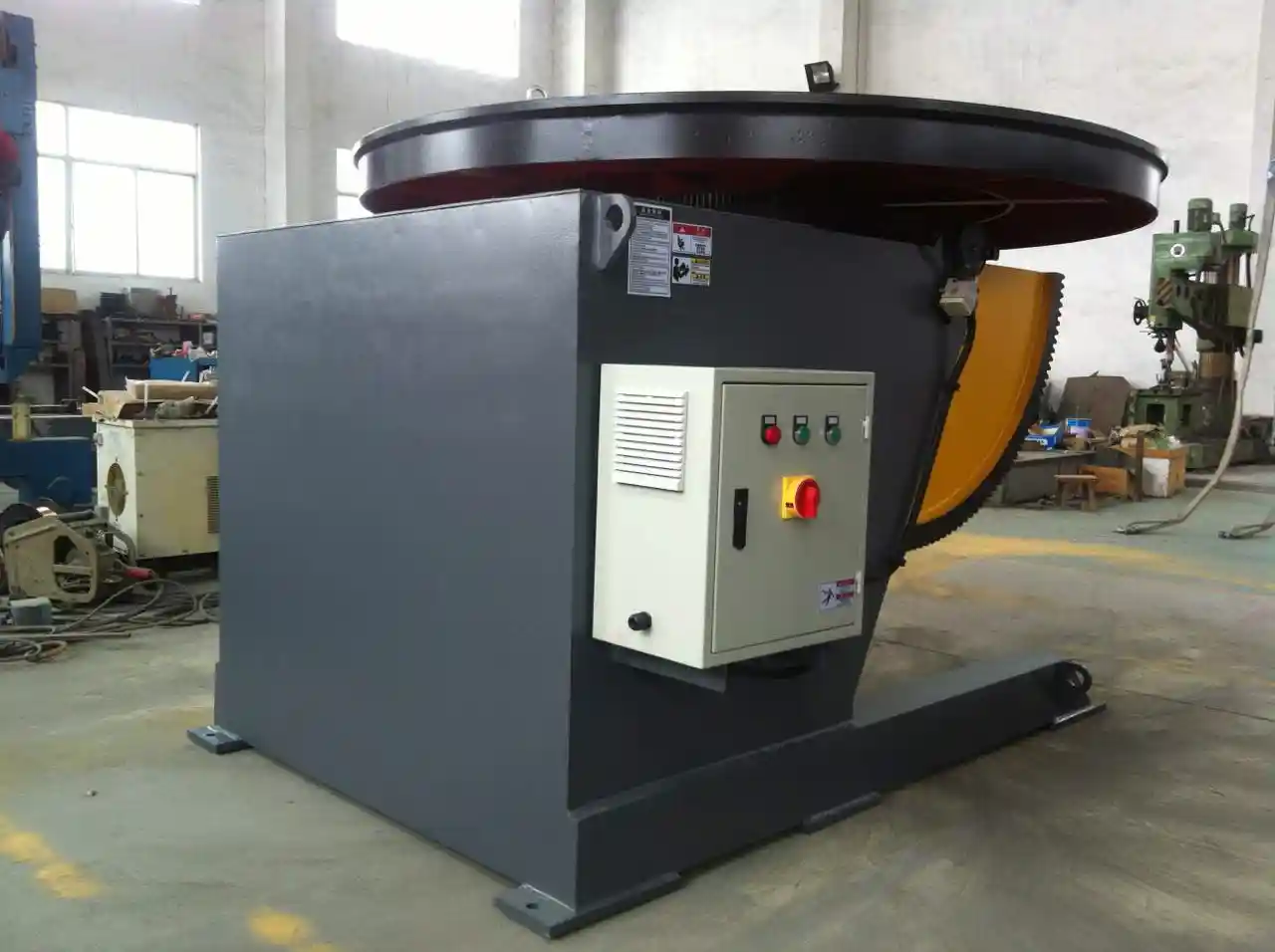
For shops adding automated forming alongside welding cells, floor area and material flow matter as much as cycle time. <Слишком маленькое пространство мастерской? Как колонные стрелы экономят 50% пространство на полу, повышая безопасность и эффективность> covers how compact, well-placed equipment frees working space in constrained workshops.
Short flanges and hems are another strong point. Panel bending creates small up/down flanges and closed hems in the same machine, operations that often require extra hemming dies or secondary setups on a press brake. The moving clamping and folding axes also make it feasible to hold angle consistency on long, thin panels without the full tonnage of a press brake.
Where Press Brakes Still Win
Press brakes remain the safer default when material gets thick, parts vary heavily, or the budget forces a single do-it-all machine. Tonnage — not folding geometry — is the limit, and a press brake can be specified large enough to bend heavy plate that is far outside a panel bender’s clamping window. Job shops producing one-off brackets, channels, and custom profiles keep their flexibility because punch-and-die tooling can be assembled for almost any bend.
Tooling variety is the second advantage. Standard V-dies, acute dies, radius tools, offset tools, hemming tools, and custom section punches cover narrow channels, long profiles, and unusual angles that are impractical to fold. A press brake with CNC crowning can also hold accurate angles across very long bends, making it the preferred choice for long structural parts and heavy sections [3].
There is also a financial argument. Entry-level press brakes generally cost less than panel benders, and a shop that only occasionally bends panel-type work may find the capability mismatch not worth the premium. The decision is not about which machine is “better” — it is about which machine matches the thickness, geometry, batch pattern, and surface requirements of the parts you actually ship.
On the heavy-fabrication side, part mass and process reliability drive equipment choices. <Освоение тяжелого производства: Как подъемные роликовые стенды стали краеугольным камнем эффективной сварки> covers how supporting equipment choices become the difference between stable production and downtime in heavy workshops.
Choosing the Right Technology: Five Factors
1. Material and thickness. Thin, coated, or polished sheet in panel form leans panel bender. Heavy plate, long parts, or high-strength materials lean press brake, where tonnage can be increased to match the bend.
2. Part geometry. Panels, boxes, hems, and multi-edge enclosures favor folding. Brackets, channels, narrow profiles, and unusual angles favor punch-and-die forming.
3. Batch size and part mix. High-mix or high-volume panel work justifies the panel bender’s automatic changeover. Low-volume, highly varied one-offs favor a versatile press brake with a stocked tooling library.
4. Surface finish. If appearance-critical surfaces cannot tolerate sliding contact, panel bending’s stationary blank is the stronger fit.
5. Total cost of ownership. Compare machine cost plus tooling, setup labor, operator skill, floor space, energy, and scrap across the expected part family. Bend allowance and springback behavior affect blank development regardless of machine [4].
The sharpest way to decide is to audit the shop’s own order book: list the ten most repeated sheet metal parts and score each factor above. If the list is panel-heavy, the panel bender’s throughput and surface care usually pay back; if the list is bracket-heavy and thick, the press brake’s force and flexibility do.
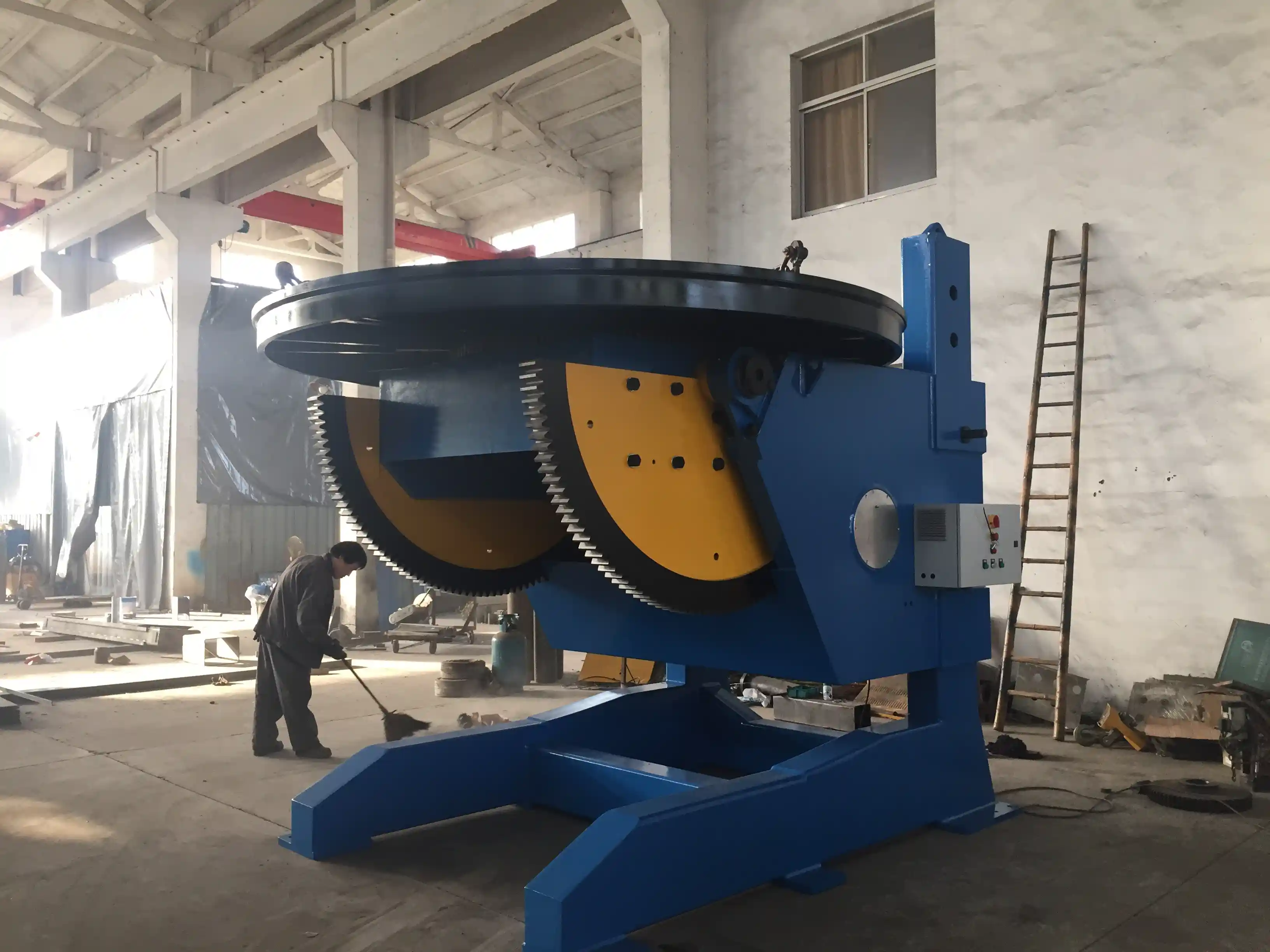
Automation payback comes from matching the process to the part mix, not from the automation label alone. <Tired of Complex Welding Challenges? How a 3-Axis Positioner Can Boost Productivity by 70%> covers how machine-driven positioning removes setup and variability in high-mix fabrication.
If that audit shows a panel-heavy mix — HVAC panels, enclosures, elevator cabs, or appliance housings — contact ABK at jay@weldc.com or +86-13815101750 with part dimensions, material, and batch size. The right capacity recommendation follows from the part, not from a catalog guess.
Get the right panel bending solution for your sheet metal work. ABK supplies Гибочный станок для панелей и Industrial Panel Bender systems for thin-sheet panel production. Send drawings and material specs to jay@weldc.com, or call +86-13815101750 / +86-510-83555592 for a practical capacity and price check.
Часто задаваемые вопросы
Can a panel bender fully replace a press brake?
Not in every shop. A panel bender can replace much of the press brake’s work for thin panel-type parts, boxes, and hems, but heavy plate and highly varied one-off profiles still need press brake tonnage and flexible tooling. Many fabricators run both machines side by side and route work by thickness and geometry.
What material thickness is a panel bender best suited for?
Panel benders are generally configured for thinner sheet, commonly in the low-single-digit millimeter range for mild steel, with stainless and coated materials slightly lower. Material strength also matters. Parts beyond the machine’s clamping and folding capacity belong on an appropriately sized press brake.
Which technology holds better bending accuracy?
Both can hold tight angles when properly controlled. Press brakes use CNC crowning and springback compensation; panel benders use servo-controlled clamping and folding axes. The practical accuracy difference in panel work often comes from consistency and setup error — panel benders reduce manual setup variables [3].
Does the higher cost of a panel bender pay off?
It depends on part mix and volume. High-mix or high-volume panel production typically recovers the premium through faster changeover, lower tooling cost, and reduced operator dependency. Shops with occasional panel work may be better served by a flexible press brake.
Which applications suit panel bending machines best?
HVAC panels, electrical enclosures, elevator panels, appliance bodies, architectural cladding, and similar flat-surface parts with multiple bends, short flanges, or hems are the strongest fits. Sheet metal parts that must keep a coated or polished surface are especially well matched to the folding principle.
References
[1] E. Oberg, F. D. Jones, H. L. Horton, and H. H. Ryffel, Machinery’s Handbook, 31st ed. New York, NY, USA: Industrial Press, 2020.
[2] DIN 6935:2011-10, Cold bending of flat steel products, Deutsches Institut für Normung, Berlin, Germany, 2011.
[3] ISO 2768-1:1989, General tolerances — Part 1: Tolerances for linear and angular dimensions without individual tolerance indications, International Organization for Standardization, Geneva, Switzerland, 1989.
[4] “The basics of bend allowance and bend deduction,” The Fabricator, FMA Communications, Elgin, IL, USA.
Если вам интересно, ознакомьтесь со следующими статьями по этой теме:
Достижение идеальных сварных швов на трубах большого диаметра с помощью профессионального прокатного оборудования
Основные проблемы и высокоточные решения в области сварочных позиционеров в ветроэнергетике и судостроении: всесторонний технический анализ
Сварочный вращатель Прецизионная автоматизация для промышленного производства: Руководство эксперта по часто задаваемым вопросам
 English
  Español
  Français
  Deutsch
  Português
  Русский