Getting tube-to-tube welds right the first time saves more than just material. When alignment drifts even slightly during fabrication, the downstream effects multiply fast—rework hours pile up, structural questions arise, and budgets take hits that nobody planned for. I’ve seen shops lose entire production days chasing problems that started with a few millimeters of offset at the joint. The techniques and equipment choices that prevent these issues aren’t complicated, but they do require deliberate attention to how tubes are held, monitored, and welded from start to finish.
Why Tube Welding Misalignment Happens and What It Costs
Misalignment in tube welding shows up in three main forms: axial offset where tubes don’t meet end-to-end properly, radial displacement where centerlines don’t match, and angular deviation where tubes meet at unintended angles. Each type creates its own set of problems for weld quality standards and structural integrity.
The root causes tend to cluster around a few recurring issues. Tube ends that weren’t cut square or prepped consistently throw off root gap control before welding even begins. Thermal distortion from uneven heat input during the weld itself causes movement that fixtures may not fully contain. And when clamping mechanisms lack the rigidity or precision to hold position under thermal stress, small shifts become permanent pipe welding defects.
These deviations carry real consequences. Stress concentrations form at misaligned joints, creating weak points that fail earlier than properly aligned welds under the same loads. Pressure systems develop leaks at joints that looked acceptable visually but lacked the fusion depth that proper alignment enables. The rework cycle—grinding out bad welds, repositioning, re-welding—consumes time and materials that erode cost efficiency quickly. Understanding where these problems originate makes prevention far more practical than correction.
Fixturing and Clamping Systems That Actually Hold Position
The difference between adequate fixturing and precision fixturing becomes obvious when tolerances tighten. Basic clamps hold tubes in roughly the right place. Precision systems maintain exact positioning while thermal forces try to move everything during welding.
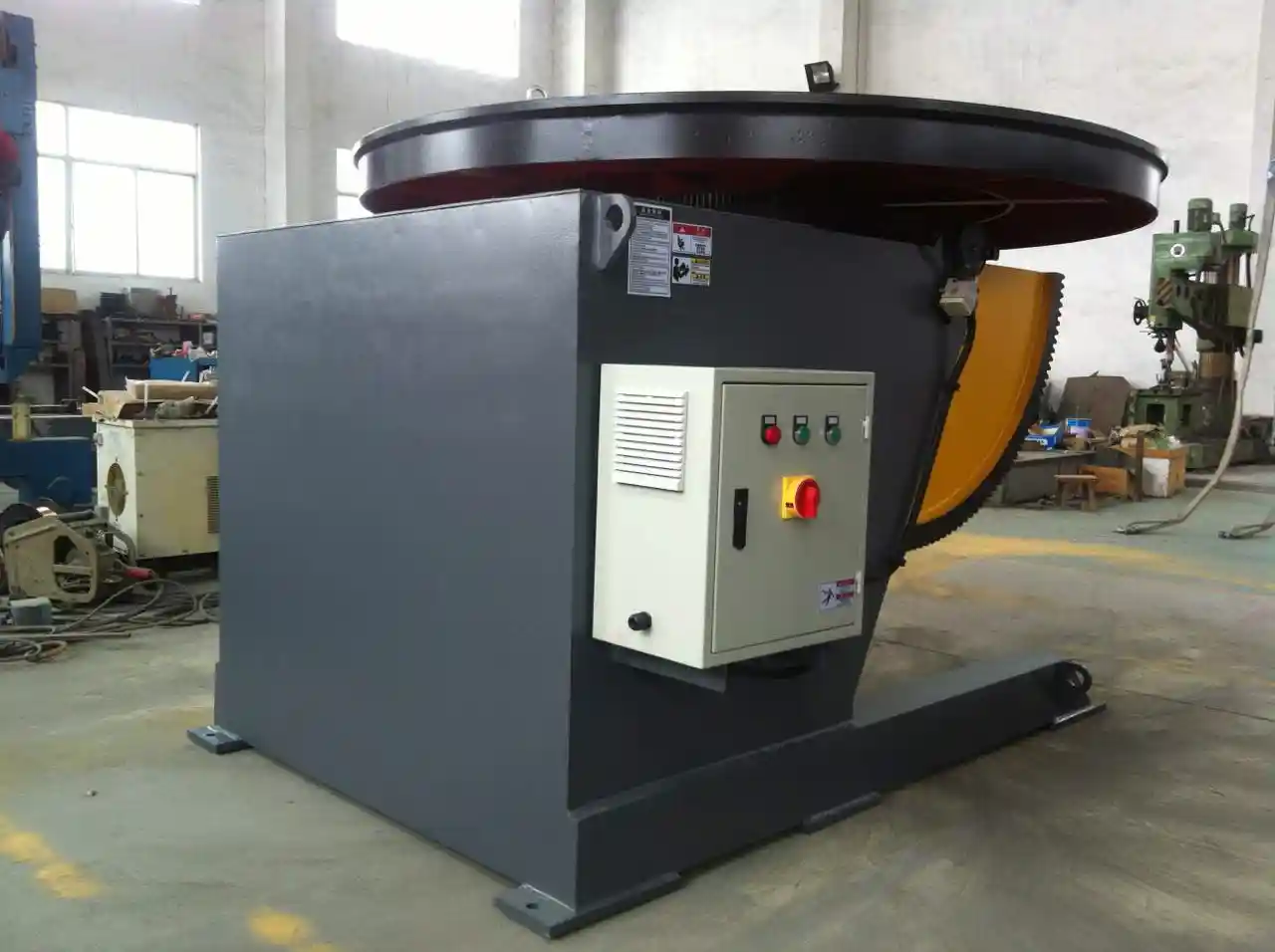
Welding positioners and manipulators provide the multi-axis control that complex tube assemblies require. They rotate workpieces to optimal welding positions, hold them stable against gravity and thermal expansion, and allow operators or automated systems to access joints from consistent angles. This stability directly affects dimensional accuracy and joint preparation quality.
The specifications matter here. WUXI ABK’s 3-Axis Positioner delivers ±0.05 mm positioning accuracy with 0.02 mm repeatability—numbers that translate to consistent fit-up across production runs. Their Welding Manipulator systems maintain ±0.1 mm/m positioning accuracy through combinations of linear guideways, servo drives, and structural rigidity that resist deflection under load. These aren’t marketing figures; they represent the mechanical precision that prevents the small initial offsets that compound into significant misalignment by weld completion.
How Welding Fixtures Improve Alignment Accuracy
Welding fixtures eliminate variables that human positioning cannot consistently control. Custom welding jigs built for specific tube geometries and universal fixtures designed for range of applications both serve the same core function: holding components in exact relationship to each other while welding proceeds.
The mechanical advantage comes from multiple contact points that distribute clamping force without distorting thin-walled tubes, reference surfaces that establish concentricity between mating sections, and rigid construction that resists the thermal forces generated during welding. This consistent support minimizes the thermal distortion that causes joints to shift during cooling. When fixtures maintain intended geometry throughout the thermal cycle, welds develop the uniform fusion profiles that pass inspection and perform in service.
The repeatability benefit compounds over production volumes. Manual positioning varies operator to operator and shift to shift. Fixture-based positioning produces the same alignment characteristics every cycle, which simplifies parameter development and reduces the inspection burden on completed assemblies.
Article Recommendation: If you are looking for advanced solutions to enhance welding precision, explore our detailed guide on 《Как повысить качество сварки труб с помощью высокоточного сварочного позиционера》.
Controlling Alignment Before and During the Weld
Alignment control splits into two phases that require different approaches. Pre-weld preparation establishes the starting conditions. In-process monitoring maintains those conditions while thermal forces work against them.
Pre-weld inspection verifies that joint design specifications have been met before committing to welding. Edge preparation angles, root face dimensions, and root gap measurements all need verification against tolerances. Root gap control deserves particular attention because it directly determines penetration depth and fusion quality. Gaps that are too tight restrict filler metal flow; gaps that are too wide create burn-through risks and require excessive filler to bridge.
Surface preparation—cleaning oils, removing oxides, deburring cut edges—prevents contaminants from disrupting arc stability and weld pool behavior. These steps take time but prevent defects that take far longer to repair.
During welding, real-time seam tracking systems compensate for the movement that thermal expansion causes. These systems, often integrated with Манипулятор для сваркиs, monitor joint position and adjust torch path dynamically to follow the actual seam location rather than the programmed path. This capability becomes essential on longer welds where cumulative thermal movement can shift the joint significantly from its starting position.
Heat input management through controlled welding parameters—current, voltage, travel speed, and interpass temperature—limits the thermal energy that drives distortion. Lower heat input generally means less distortion, though it must balance against penetration requirements. These process optimization decisions shape the final alignment outcome as much as the fixturing does.
!Автоматический позиционер для сварки
 ## Automation and Quality Systems That Maintain Standards
Manual welding skill varies. Automated welding systems execute the same parameters with the same motion profiles every cycle, removing the variability that causes inconsistent alignment outcomes across production.
Orbital welding systems wrap around tube joints and execute programmed weld schedules with precise control over all parameters. Robotic welding cells position torches with repeatability that manual operations cannot match, maintaining consistent torch angles and travel speeds that affect both penetration and distortion patterns. These systems don’t eliminate the need for proper fixturing—they depend on it—but they remove the execution variability that compounds fixturing limitations.
Quality assurance protocols verify that alignment control measures achieved their intended results. Non-destructive testing methods including radiographic, ultrasonic, and penetrant examination reveal internal defects and fusion quality without destroying the welded assembly. These inspections confirm that the alignment maintained during welding produced the joint integrity that specifications require.
Equipment calibration keeps automated systems operating within their specified parameters. 3-осевой позиционерs and Манипулятор для сваркиs require periodic verification that their positioning accuracy hasn’t degraded through wear or damage. Operator training on both automated systems and NDT procedures ensures that human decisions support rather than undermine the precision that equipment provides.
Long-Term Effects of Tube Welding Misalignment
The immediate consequences of misalignment—visible defects, failed inspections, rework requirements—represent only part of the cost. Long-term effects emerge after assemblies enter service.
Structural integrity degrades when stress concentrations at misaligned joints experience cyclic loading. Cracks initiate at these stress risers and propagate under loads that properly aligned joints would handle indefinitely. Premature component failure drives maintenance costs upward and creates unplanned downtime.
Defects common to misaligned welds—cracking from stress concentration, porosity from unstable arc conditions, incomplete fusion from improper joint access—create leak paths in pressure-containing systems. These leaks may develop gradually or suddenly, but either pattern creates operational disruptions and safety concerns that extend far beyond the original welding cost.
Product reliability suffers when alignment problems escape detection. Field failures damage customer relationships and company reputation in ways that are difficult to quantify but very real in their business impact.
Practical Steps That Reduce Misalignment Risk
Systematic attention to the factors that cause misalignment produces measurable improvements in weld quality and production efficiency.
Material Selection and Storage: Tubes with consistent wall thickness and straightness simplify fit-up. Proper storage prevents the warping and damage that create alignment problems before fabrication begins.
Precise Cutting and Preparation: Square cuts and consistent edge preparation establish the foundation for proper joint geometry. Advanced cutting technologies—laser, plasma with precision motion systems, or precision mechanical cutting—deliver the accuracy that manual methods struggle to match.
Advanced Fixturing and Clamping: High-precision welding positioners and manipulators, like WUXI ABK’s equipment lines, provide the positioning accuracy and holding force that maintain alignment through thermal cycles.
Controlled Welding Procedures: Optimized parameters balance penetration requirements against distortion control. Travel speed, heat input, and sequence planning all influence final alignment.
In-Process Monitoring: Real-time seam tracking and monitoring systems detect deviations while correction remains possible, preventing small shifts from accumulating into significant misalignment.
Post-Weld Inspection: Thorough non-destructive testing verifies that alignment control measures achieved their intended results and identifies any defects requiring attention.
Обучение операторов: Skilled personnel understand both the equipment capabilities and the process requirements that produce consistent results.
Continuous Process Improvement: Quality data from inspection results and production records identifies patterns that guide process refinements over time.
These practices work together. Equipment capability supports but doesn’t replace process discipline, and neither substitutes for trained personnel who understand what they’re trying to achieve. The combination drives improvements in productivity and manufacturing tolerances that justify the investment in doing things properly.
Enhance Your Welding Precision Today
WUXI ABK MACHINERY CO., LTD manufactures welding equipment—positioners, manipulators, and integrated systems—designed for the alignment accuracy that tube-to-tube welding demands. Contact us to discuss how these solutions fit your production requirements. Reach us at jay@weldc.com or call +86-13815101750.
Frequently Asked Questions About Tube Welding Misalignment
What causes misalignment in tube-to-tube welding?
Several factors contribute to tube welding misalignment. Inaccurate cutting leaves tube ends out of square, creating gaps or interference at the joint. Insufficient fixturing allows thermal forces to move components during welding. The welding process itself generates thermal expansion and contraction that shifts parts if not properly restrained. Material inconsistencies, equipment wear, and operator technique variations add to these primary causes, each compromising weld integrity in ways that compound across production volumes.
How can welding fixtures improve alignment accuracy?
Welding fixtures, including specialized Решения для сварочных поворотных столов and manipulators, hold tubes in precise positions throughout welding operations. They provide multiple contact points that establish and maintain concentricity between mating sections while controlling root gap dimensions. The rigid construction resists thermal forces that would otherwise shift components during the weld cycle. This consistent support reduces distortion and ensures joints maintain their intended geometry, producing higher quality welds with fewer defects and less variation between parts.
What are the long-term consequences of tube welding misalignment?
Misaligned tube welds create stress concentrations that reduce structural integrity over time. These stress risers initiate cracks under cyclic loading, leading to premature component failure and increased maintenance requirements. Defects associated with misalignment—cracking, porosity, incomplete fusion—create leak paths in pressure systems that may not appear immediately but develop during service. The resulting operational downtime, safety concerns, and reputation damage extend the cost of misalignment far beyond the original fabrication expense.
 English
  Español
  Français
  Deutsch
  Português
  Русский