
Precision in welding has always been a moving target. I’ve watched shops struggle with the gap between what their equipment can theoretically do and what actually happens when metal meets arc. The introduction of advanced sensors into welding positioner systems has fundamentally changed that equation. These aren’t just monitoring tools—they’re the difference between hoping for consistency and actually achieving it. What follows covers how industrial sensors integrate with modern welding automation, the specific technologies driving this shift, and what it means for manufacturers trying to stay competitive.
Why Sensor Integration Has Become Non-Negotiable
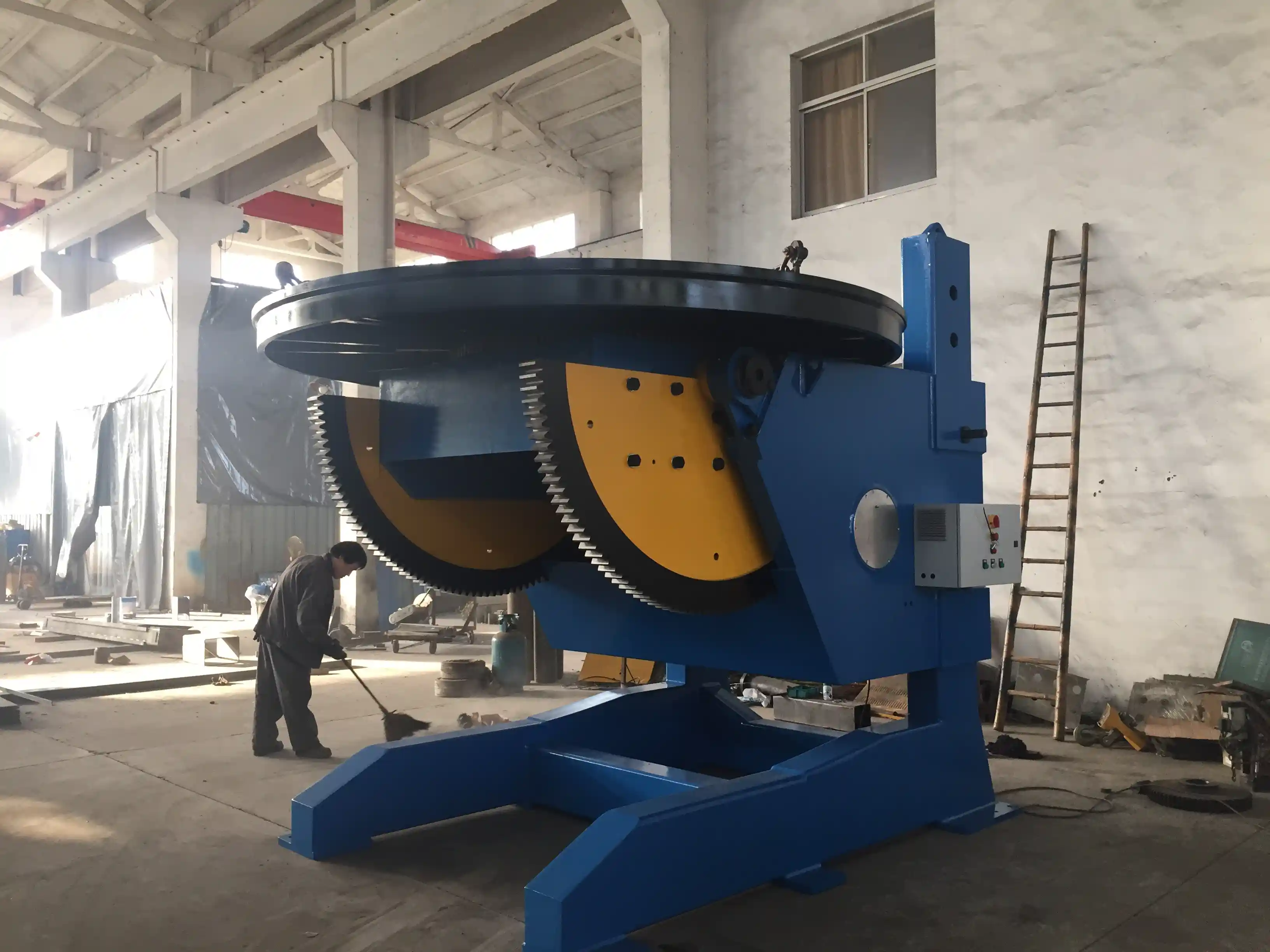
The case for integrating advanced sensors into automated welding systems has moved past the “nice to have” stage. Real-time monitoring and control capabilities translate directly into measurable productivity gains in welding operations. Consider the numbers: WUXI ABK’s 3-axis positioners—the 1-Ton, 2-Ton, and 3-Ton models—achieve ±0.05 mm positioning accuracy with 0.02 mm repeatability. That level of precision simply doesn’t happen without sophisticated feedback mechanisms working continuously.
Sensors catch deviations before they become defects. This proactive approach to welding defect reduction means less rework, fewer scrapped parts, and more consistent output. The safety implications matter too. Removing operators from direct proximity to the arc and molten metal reduces exposure to hazards that have plagued the industry for decades.
| Характеристика | Ручная сварка | Automated Welding (with Sensors) |
|---|---|---|
| Коэффициент переделок | High (due to human error) | Low (real-time correction) |
| Throughput | Limited by operator speed and fatigue | High (consistent, continuous operation) |
| Quality Consistency | Variable (operator skill dependent) | High (sensor-driven precision) |
| Safety | High risk of exposure to hazards | Reduced risk (operators removed from arc) |
| Data Collection | Minimal, often anecdotal | Extensive, real-time, actionable |
| Adaptability | Slow to adapt to material variations | Fast, adaptive parameter adjustment |
The WUXI ABK Welding Manipulator demonstrates what’s possible with ±0.1 mm/m positioning accuracy. Applications like boiler fabrication, pressure vessel welding, and wind tower construction demand this level of consistency. Sensor integration ensures equipment operates at peak performance while reducing operational costs.
Article Recommendation: If you are looking to enhance the precision of your welding operations, consider reading “《Как повысить качество сварки труб с помощью высокоточного сварочного позиционера》”.
Sensor Technologies That Actually Matter
Modern welding positioner technology depends on several distinct sensor types, each handling specific aspects of the process. Understanding what each brings to the table helps when specifying systems or planning upgrades.
Laser vision systems for welding provide non-contact measurement of joint geometry and seam tracking. The welding torch follows the actual joint path rather than a programmed assumption, compensating for part-to-part variations that would otherwise cause problems.
Through-arc sensing takes a different approach, using electrical signals from the welding arc itself to detect changes in joint position or gap width. This technology excels at real-time adjustments, maintaining consistent arc length and penetration without additional hardware in the weld zone.
Arc Voltage Control systems maintain constant arc length by adjusting torch height based on voltage feedback. Stable welding conditions produce consistent bead profiles—something that matters enormously for structural applications.
Machine vision welding inspection handles both pre-weld verification and post-weld quality checks. These systems identify porosity, cracks, and incomplete fusion, catching issues before they become expensive problems downstream.
Ultrasonic sensors for welding detect internal defects that surface inspection misses, providing non-destructive testing capabilities integrated into the production flow. Proximity sensors handle the basics—confirming workpiece presence and proper positioning on the welding positioner before the arc strikes.
Welding seam tracking systems combine multiple sensor inputs to follow complex weld paths. WUXI ABK’s Triple Axis Positioner offers ±0.05 mm positioning accuracy as a baseline, with external sensors providing dynamic adjustments during the actual welding operation.
How do advanced sensors improve welding quality and reduce defects?
Advanced sensors improve welding quality through continuous monitoring and immediate correction. Laser vision systems track the weld seam precisely, ensuring accurate torch placement and consistent bead geometry regardless of part variations. Through-arc sensing and AVC maintain optimal arc conditions, preventing burn-through on thin sections and lack of fusion on heavier material. Machine vision catches defects as they form, allowing correction before the part moves to the next station. The combined effect is higher first-pass yield and significantly reduced rework costs.
Making Sense of Sensor Data with AI
The intersection of sensor data and artificial intelligence represents where welding automation is heading. Sensors generate enormous amounts of information about welding parameters, joint conditions, and environmental factors. The challenge has always been turning that data into something useful.
Data analytics welding techniques process this information to identify patterns and optimization opportunities that humans would miss. Predictive maintenance welding equipment applications use AI algorithms to analyze trends in sensor data—monitoring motor temperatures and vibration patterns in a Welding Manipulator can forecast maintenance needs weeks before failure occurs.
Adaptive welding systems take this further, adjusting parameters in real-time based on what sensors detect. Material variations, unexpected distortion, changes in fit-up—the system responds rather than blindly following a fixed program.
WUXI ABK’s 3 Axis Positioner uses Siemens PLC and HMI control, providing the platform needed for integrating intelligent systems. The control architecture supports adaptive parameter adjustment and comprehensive data logging, both essential for AI-driven process optimization.

Getting Sensors Into Existing Equipment
Integrating advanced sensors into welding positioners already on the shop floor requires planning. The starting point is understanding current processes and equipment capabilities—identifying where sensor integration will deliver the most value for the investment.
Upgrading a standard Welding Turntable Solutions setup with laser seam tracking can dramatically improve results on complex welds without replacing the entire system. Sensor selection depends on specific application requirements and what outcomes matter most. Compatibility with existing control systems, particularly Siemens PLC platforms, determines integration complexity.
Options range from straightforward bolt-on solutions to more involved system modifications. Custom welding solutions often involve tailoring sensor packages to unique production requirements. ROI calculations for welding automation investments should account for reduced rework, increased throughput, and improved safety metrics—the numbers typically justify the capital expenditure faster than expected.
WUXI ABK’s Adjustable Welding Positioner and Lifting Column Positioner designs accommodate modular integration, simplifying the process of adding sensors to existing installations.
What are the cost implications and ROI of integrating advanced sensors into existing welding positioners?
Initial costs include sensor hardware, software integration, and installation labor. The specific investment varies based on technology selection and integration complexity. Long-term savings typically come from multiple sources: reduced material waste from fewer rejected parts, lower labor costs through automation, increased production speed, and decreased rework. Improved weld quality also reduces inspection time and prevents the kind of structural failures that generate warranty claims or worse. Most operations see payback periods that make the investment straightforward to justify.
Where Sensor Technology Is Heading
The trajectory of welding automation points toward deeper sensor integration across every aspect of the process. Advanced robotics welding systems will increasingly interpret complex sensor data rather than simply executing programmed paths. Augmented reality welding applications will give operators real-time visual feedback, improving precision while reducing training requirements.
Digital twin welding technology creates virtual replicas of welding processes for simulation and optimization before committing to production runs. Next-generation welding sensors will offer capabilities like multi-spectral imaging for material analysis and real-time monitoring of weld pool dynamics—providing control over factors that current technology can only approximate.
Sustainability considerations benefit from sensor integration as well. Optimized processes consume less energy and waste less material, addressing both cost and environmental concerns simultaneously.
Working with WUXI ABK MACHINERY CO., LTD
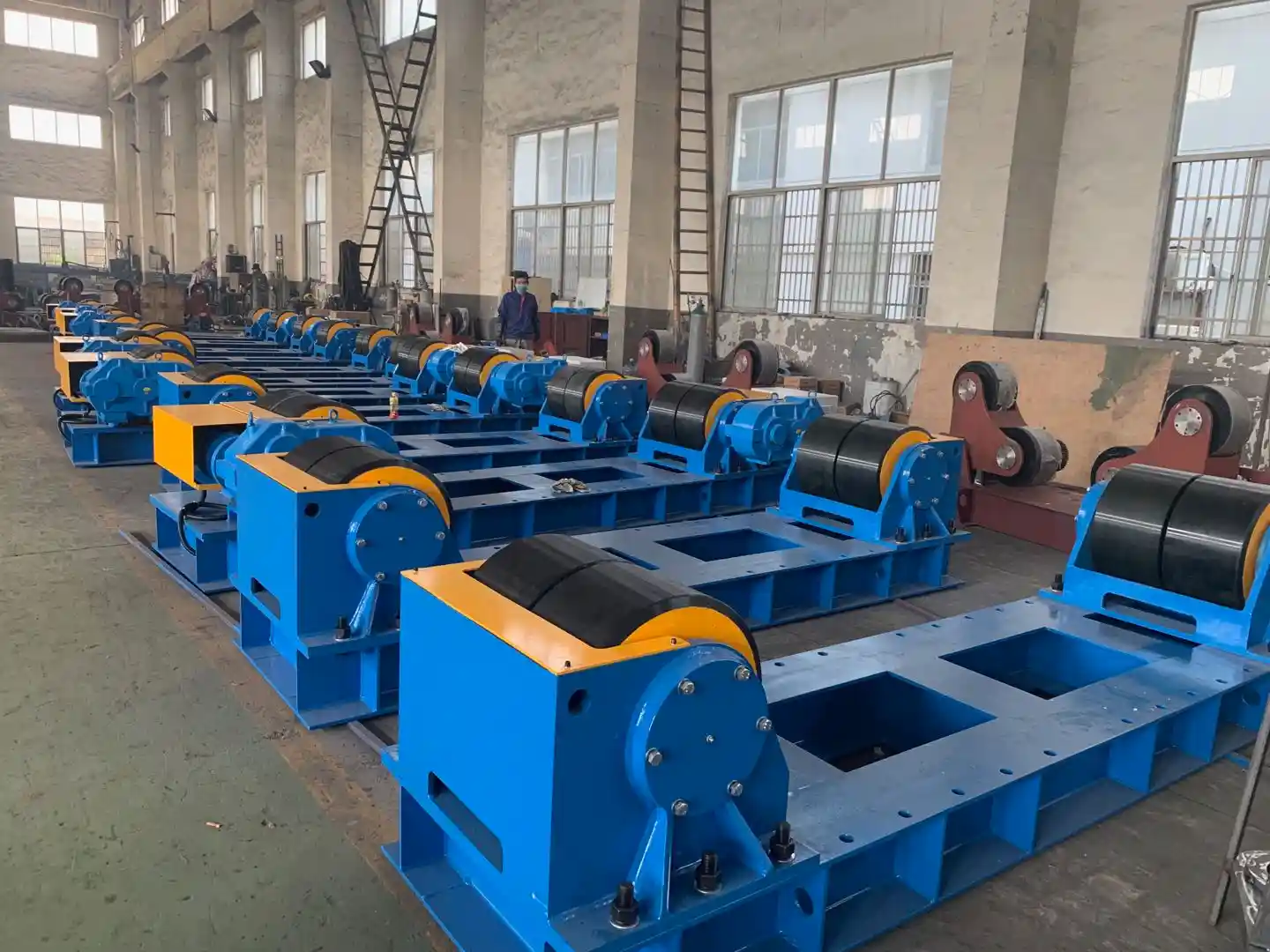
WUXI ABK MACHINERY CO., LTD provides welding equipment and automation solutions built around precision and efficiency. Our welding positioner technology, including the 3 Axis Positioner and Triple Axis Positioner, delivers the accuracy that modern manufacturing demands. Contact us for custom welding solutions designed around your specific requirements. Reach out via email at jay@weldc.com or call +86-13815101750.
Frequently Asked Questions About Advanced Sensors in Welding Automation
Which specific sensor technologies are most effective for complex welding geometries and materials?
Complex geometries and diverse materials typically require combining multiple sensor types. Laser vision systems handle precise seam tracking while machine vision manages pre-weld inspection and post-weld quality verification. Through-arc sensing provides valuable real-time feedback for arc stability and penetration, particularly useful with varying material thicknesses. WUXI ABK MACHINERY CO., LTD’s welding positioners integrate with these sensor arrays to maintain performance across challenging applications.
How do advanced sensors contribute to achieving higher welding positioner accuracy?
Sensors provide real-time feedback on weld joint location, gap variations, and material distortion as it occurs. This data enables instantaneous adjustments to torch path, travel speed, and welding parameters—corrections that happen faster than any human operator could manage. Laser seam tracking and optical sensors ensure precise arc positioning, producing consistent weld beads and minimizing deviations from specification.
Can advanced sensors be retrofitted to existing welding positioners?
Retrofitting is often feasible, depending on control system compatibility and mechanical structure. Modern sensor packages are designed with modularity in mind, allowing integration with various industrial setups. The specific approach depends on existing equipment characteristics. Consulting with WUXI ABK MACHINERY CO., LTD can help assess current equipment and identify the most practical sensor upgrade paths for improving welding automation capabilities.
 English
  Español
  Français
  Deutsch
  Português
  Русский