Petrochemical welding sits at the intersection of material science and operational risk management. Every joint in a refinery or processing plant carries the weight of what happens when things go wrong—pressure releases, corrosive leaks, thermal failures. The equipment we fabricate doesn’t get second chances. This reality shapes how we approach welding in this sector, from material selection through final inspection. The margins for error are measured in fractions of millimeters, and the consequences of getting it wrong extend far beyond equipment replacement costs.
What Makes Petrochemical Welding Different From Standard Industrial Work
Petrochemical fabrication operates under constraints that most industrial welding never encounters. The combination of aggressive chemical environments, sustained high temperatures, and internal pressures creates failure modes that simply don’t exist in conventional manufacturing. A weld that performs adequately in a structural steel application might fail catastrophically when exposed to hydrogen sulfide at elevated temperatures.
Material selection drives much of the complexity. Duplex stainless steels offer excellent corrosion resistance but require precise heat input control to maintain their dual-phase microstructure. Nickel alloys handle extreme temperatures well but present their own welding challenges, particularly around hot cracking susceptibility. The welding procedures for these materials aren’t just different—they’re fundamentally more demanding.
Hydrogen embrittlement remains one of the more insidious failure mechanisms in petrochemical service. Hydrogen atoms migrate into the weld metal and heat-affected zones, reducing ductility and creating conditions for delayed cracking. This can occur weeks or months after fabrication, making it particularly dangerous in equipment that has already entered service.
Working With Aggressive Media and Extreme Pressures
Fabricating for high-pressure corrosive service requires understanding how materials behave under combined stresses. A pressure vessel operating at 3000 psi with hot caustic solution inside faces simultaneous mechanical loading and chemical attack. The weld must resist both without degradation over the equipment’s service life.
| Welding Defect | Common Causes | Impact in Petrochemicals |
|---|---|---|
| Porosity | Gas entrapment | Reduced strength, leakage |
| Cracking | High stress, improper cooling | Catastrophic failure |
| Lack of Fusion | Insufficient heat | Weak joints, premature failure |
| Undercut | Excessive current | Stress concentration, corrosion |
| Incomplete Penetration | Poor joint preparation | Reduced load-bearing capacity |
How Modern Welding Technology Addresses Petrochemical Requirements
The gap between what petrochemical applications demand and what manual welding can consistently deliver has driven significant investment in automated systems. Human welders, regardless of skill level, introduce variability that becomes problematic when specifications require repeatability within tight tolerances.
Orbital welding systems have become standard for pipe work in petrochemical plants. The machine maintains consistent travel speed, arc length, and heat input throughout the weld—parameters that even experienced welders struggle to hold constant over extended periods. This consistency translates directly into more predictable weld properties and fewer inspection failures.
Laser welding has found applications where minimal heat input matters. The concentrated energy source creates narrow fusion zones with limited thermal distortion, which proves valuable for thin-walled components or materials sensitive to heat-affected zone growth. The precision comes at a cost in equipment complexity, but for certain applications the trade-off makes sense.
What Automated Systems Actually Deliver
The real value of automated welding in petrochemical work goes beyond simple consistency. These systems enable welding strategies that would be impractical or impossible manually. A Манипулятор для сварки can maintain precise positioning over hours of continuous operation, holding tolerances that would fatigue a human operator.
Our LH8080 welding manipulator provides 8000mm of travel in both horizontal and vertical axes with positioning accuracy of ±0.1 mm/m. For large pressure vessels and wind tower fabrication, this reach and precision combination allows single-setup welding of major seams. The 3 Axis Positioner complements this capability with ±0.05 mm positioning accuracy, handling the workpiece manipulation while the manipulator controls the torch.
!Автоматический позиционер для сварки
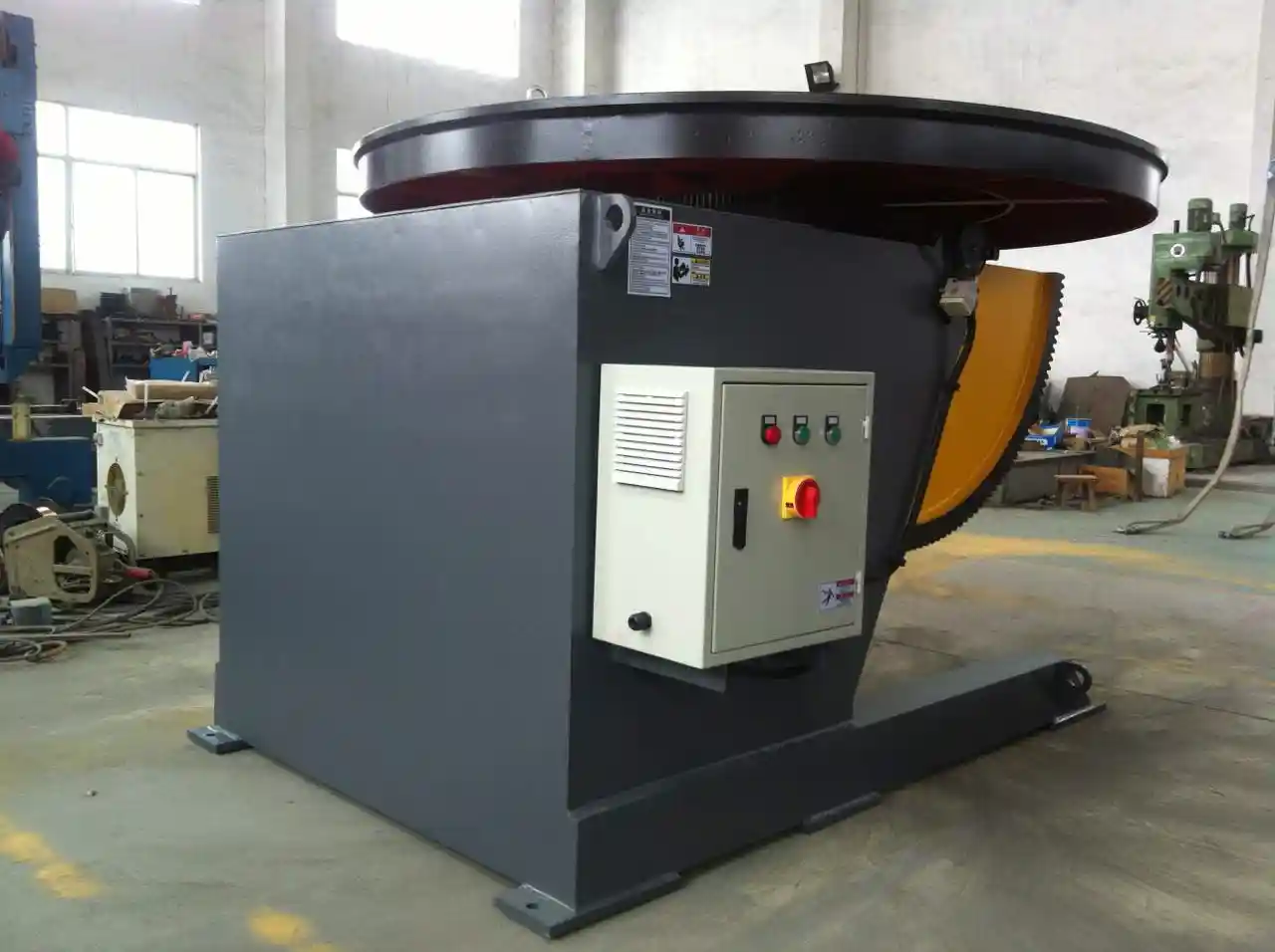 Robotic systems have expanded into petrochemical fabrication as programming capabilities have improved. Complex joint geometries that once required extensive manual welding can now be programmed and executed with consistent results. The Welding Positioner integration allows these robots to access all positions on a workpiece without repositioning or manual intervention.
Meeting Code Requirements in Petrochemical Fabrication
Petrochemical welding operates within a framework of codes and standards that leave little room for interpretation. API 1104 governs pipeline welding with specific requirements for procedure qualification, welder testing, and inspection. The ASME Boiler and Pressure Vessel Code establishes similar requirements for pressure-containing equipment, with Section IX covering welding qualification specifically.
These standards exist because the consequences of weld failure in petrochemical service extend beyond the immediate equipment. A pipeline rupture can contaminate groundwater. A pressure vessel failure can release toxic or flammable materials into occupied areas. The regulatory framework reflects this reality.
Welder qualification under these codes requires documented testing and ongoing verification. A welder qualified to ASME IX for one material and process combination isn’t automatically qualified for others. The qualification system ensures that personnel performing critical welds have demonstrated competence on similar joints.
Post-weld heat treatment represents another code-driven requirement for many petrochemical applications. The process relieves residual stresses from welding and can temper hard zones in the heat-affected area. For materials susceptible to stress corrosion cracking or hydrogen-induced damage, proper heat treatment is essential for service performance.
Material traceability runs throughout petrochemical fabrication. Every piece of base metal and filler material must be documented from receipt through final installation. When a weld fails in service, this documentation allows investigators to trace back through the entire fabrication history.
For more detail on how positioning equipment supports code-compliant fabrication, our article on 《Революционное решение для сварки сосудов под давлением: Технический анализ вращающихся на 360 градусов сварочных позиционеров》 covers the technical considerations.
Matching Welding Approaches to Specific Equipment Types
Different petrochemical equipment presents different welding challenges. A storage tank with miles of welded seams requires different solutions than a compact heat exchanger with hundreds of tube-to-tubesheet joints. The welding approach must match both the equipment geometry and its service conditions.
Pipeline welding has moved heavily toward orbital systems for new construction. The consistency these systems provide reduces inspection failure rates and accelerates installation schedules. For field repairs and tie-ins, manual welding remains necessary, but the trend toward automation continues.
Pressure vessel fabrication typically employs submerged arc welding for longitudinal and circumferential seams. The high deposition rates and deep penetration characteristics suit the thick sections common in vessel construction. Automated systems track the joint and maintain consistent parameters over welds that can run for hours.
Heat exchangers present a different challenge. The tube-to-tubesheet welds are small, numerous, and must be leak-tight. Automated TIG welding provides the precision and repeatability these joints require. The minimal distortion from TIG welding also helps maintain tube alignment during fabrication.
| Equipment Type | Recommended Welding Method | Key Benefits |
|---|---|---|
| Pressure Vessels | Submerged Arc Welding (SAW) | High deposition rate, deep penetration |
| Pipelines | Orbital Welding | High consistency, reduced manual labor |
| Storage Tanks | Automated Girth Welding | Fast, uniform seams, large scale efficiency |
| Heat Exchangers | TIG Welding (Automated) | High precision, minimal distortion |
| Offshore Platforms | Robotic MIG/MAG Welding | Versatility, speed, complex geometries |
!Heavy Duty Positioner
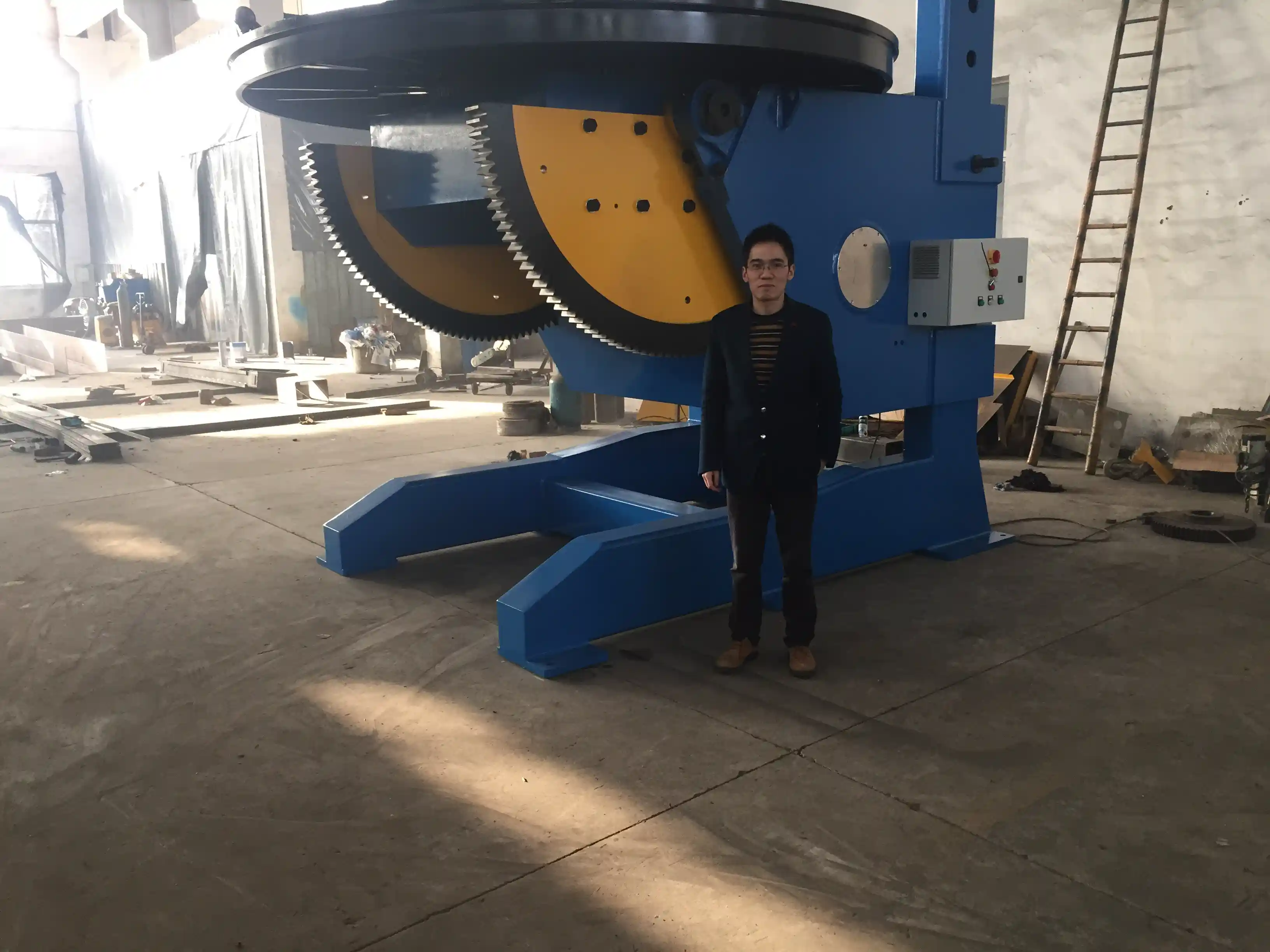 Offshore platform fabrication adds environmental and logistical constraints to the welding requirements. Components must be fabricated to tight tolerances onshore, then assembled in challenging conditions at sea. Robotic welding systems handle the complex geometries common in platform structures, while maintaining the quality levels required for marine service.
What WUXI ABK Brings to Petrochemical Welding Projects
WUXI ABK MACHINERY CO., LTD. has manufactured welding equipment since 1999, developing specialized solutions for demanding applications including petrochemical fabrication. Our product range addresses the automation and positioning requirements that modern petrochemical welding demands.
The wind tower welding line represents one application where our equipment handles large-scale fabrication with the precision petrochemical work requires. The same manipulators and positioners serve pressure vessel fabrication, where consistent positioning directly affects weld quality.
Our 3 Axis Positioner and Triple Axis Positioner models provide the workpiece manipulation capability that automated welding systems require. These positioners integrate with welding manipulators and robotic systems to create complete fabrication cells. The positioning accuracy these units deliver—±0.05 mm—supports the tight tolerances petrochemical codes demand.
The article on 《Повышение качества и эффективности производства резервуаров и сосудов высокого давления: Основные возможности применения позиционеров》 explores how this equipment integrates into fabrication workflows.
Frequently Asked Questions on Petrochemical Welding
What are the critical welding challenges in petrochemical equipment manufacturing?
The core challenges center on material behavior under service conditions. High temperatures alter mechanical properties and can accelerate corrosion mechanisms. High pressures create sustained stress that reveals any weakness in weld integrity. Corrosive media attack both base metal and weld deposits, with preferential corrosion at fusion boundaries being a common failure mode. Hydrogen embrittlement adds another layer of complexity for equipment in hydrogen service. Meeting API and ASME requirements while managing these material challenges requires both technical knowledge and process discipline.
How do specialized welding solutions improve safety and efficiency in petrochemical projects?
Automated welding systems reduce variability, which directly reduces the probability of defects that could lead to in-service failures. Consistent heat input, travel speed, and positioning mean more predictable weld properties across an entire fabrication project. The efficiency gains come from reduced inspection failure rates, less rework, and faster overall fabrication times. There’s also a direct safety benefit during fabrication—automated systems reduce welder exposure to fumes, radiation, and awkward positions that contribute to injuries.
Which welding technologies are essential for fabricating high-pressure petrochemical components?
High-pressure service demands welding methods that produce full-penetration joints without defects that could initiate cracks under sustained loading. Orbital welding systems provide the consistency required for pipe work. Submerged arc welding handles the thick sections common in pressure vessels, with its high deposition rates and deep penetration characteristics. For precision applications or heat-sensitive materials, laser welding offers concentrated energy input with minimal thermal distortion. The specific choice depends on material, geometry, and service conditions.
Партнерство с WUXI ABK для передовых решений в области сварки
Petrochemical fabrication demands equipment and expertise that match the severity of the service conditions. WUXI ABK provides welding automation solutions designed for these requirements. Our manipulators, positioners, and integrated welding systems support the precision and consistency that petrochemical codes demand.
Электронная почта: jay@weldc.com
Мобильный: +86-13815101750
 English
  Español
  Français
  Deutsch
  Português
  Русский