High-Volume Storage Tank Manufacturing Lines
Building storage tanks at scale is a different animal than one-off fabrication. The sheer volume of material moving through a facility, the repetitive welding sequences, the coordination between cutting, forming, and assembly stations—it all compounds quickly. When tank farm projects demand dozens of identical vessels on tight schedules, the manufacturing line itself becomes the product as much as the tanks rolling off it. Getting that line right determines whether you hit delivery windows or watch costs spiral.
What Makes a High-Volume Tank Line Actually Work
A high-volume storage tank manufacturing line isn’t just a collection of equipment. It’s a sequence of interdependent stations where delays at one point ripple through everything downstream. The welding automation carries most of the weight here—consistent seams at speed, without the variability that comes from operator fatigue on long shifts. But welding only works if the plates arrive cut to spec and positioned correctly.
Material handling tends to get underestimated until it becomes the bottleneck. Moving 20-ton shell sections between stations without damaging edges or wasting time repositioning requires purpose-built systems. Overhead cranes work, but automated guided vehicles are gaining ground in facilities where floor space allows.
| Component Category | Key Function | Example Equipment | Benefits |
|---|---|---|---|
| Welding Automation | Precision welding, increased speed | Welding Manipulator, 3-осевой сварочный позиционер | Consistent quality, reduced labor |
| Material Handling | Efficient movement of heavy components | Overhead cranes, automated guided vehicles (AGVs) | Faster throughput, enhanced safety |
| Cutting & Forming | Accurate plate preparation, shaping | Плазменный резак с ЧПУ, Гибочный станок для панелей | High precision, reduced material waste |
| Positioning | Optimal workpiece orientation | Welding positioners, Решения для сварочных поворотных столов | Improved weld access, ergonomic benefits |
| Quality Control | Inspection and defect detection | Non-destructive testing (NDT) equipment | Enhanced reliability, minimized rework |
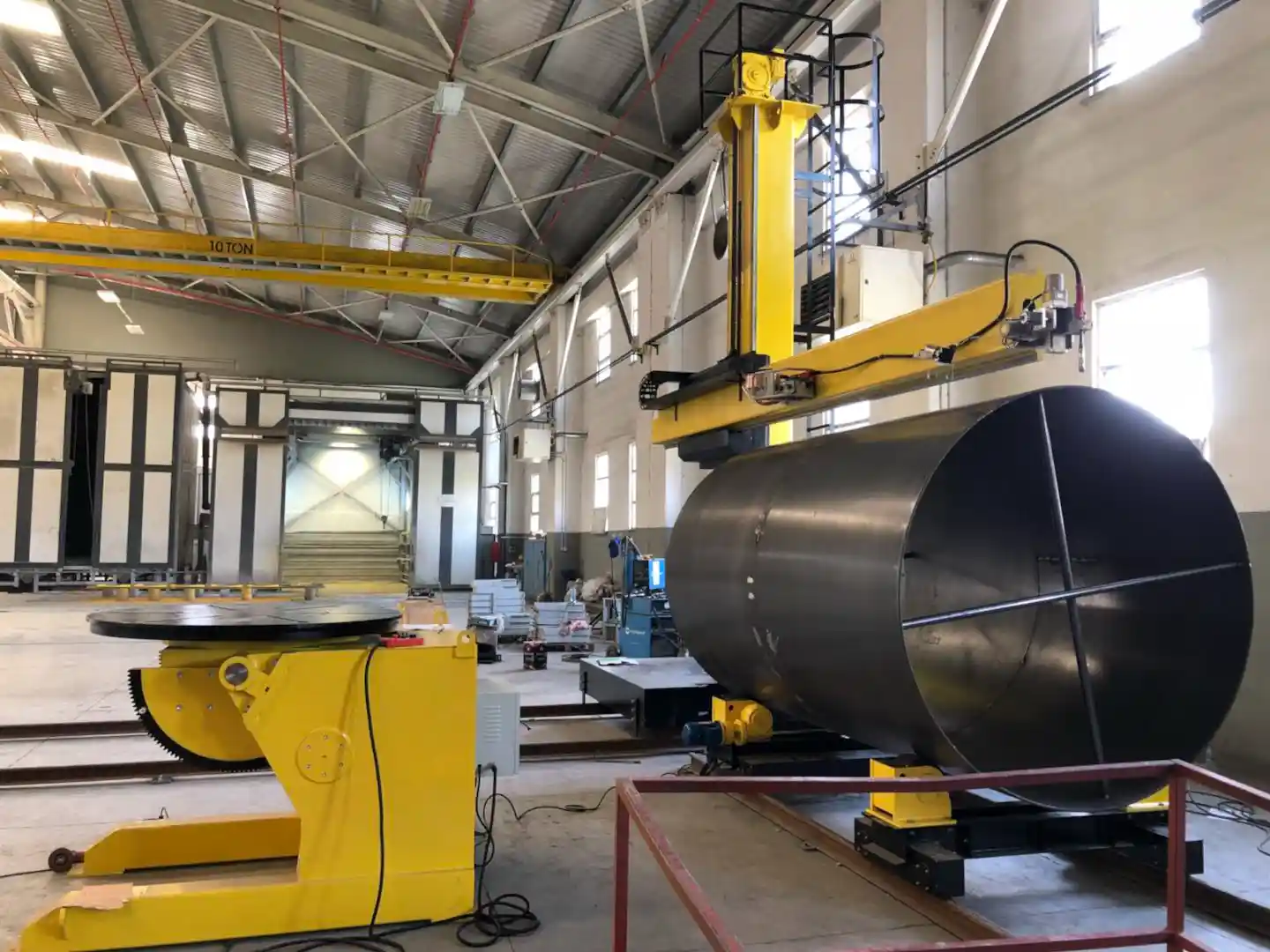
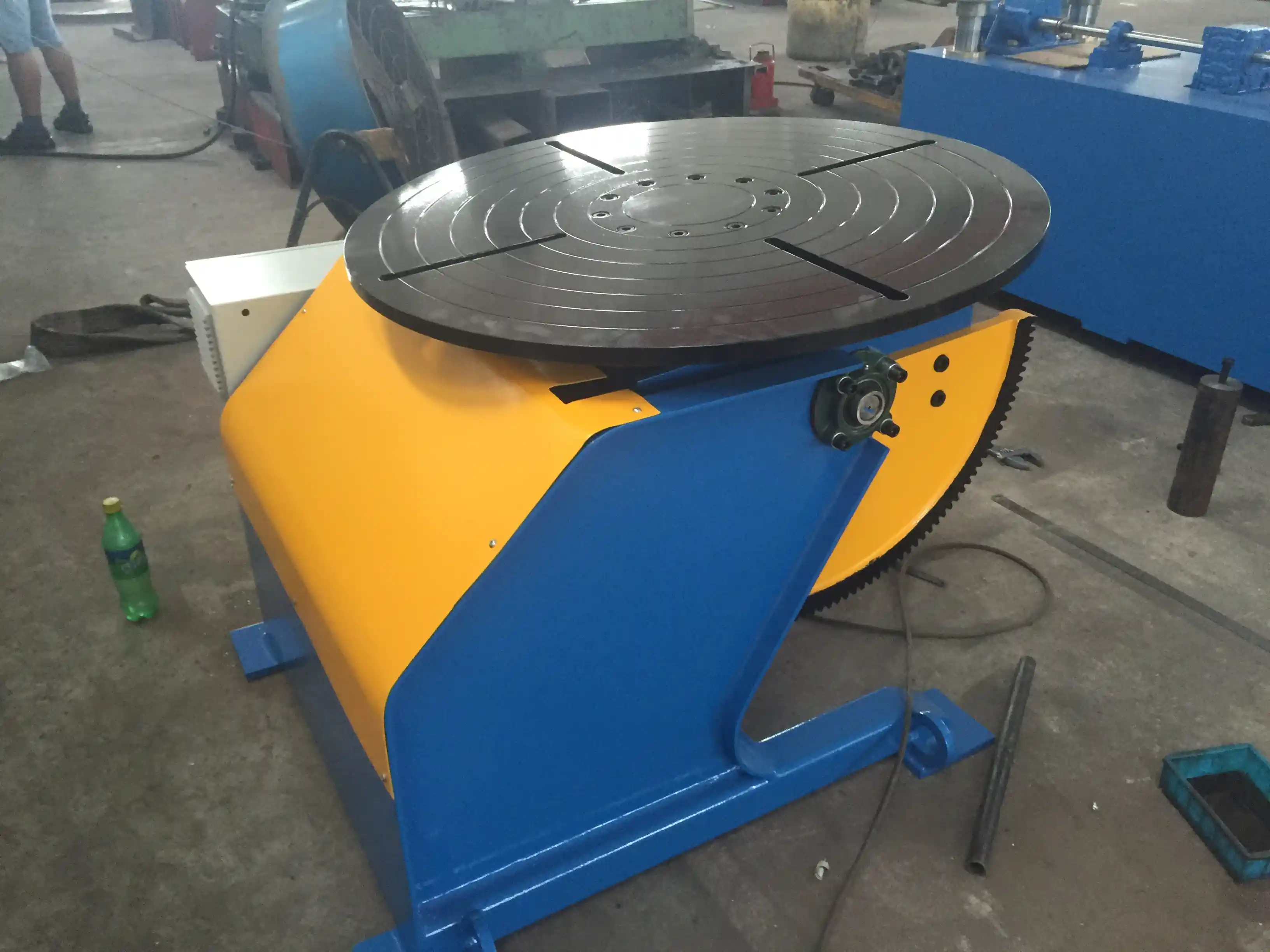
The positioning equipment often gets overlooked in planning discussions, but it directly affects weld quality. A welder working overhead or in awkward positions produces different results than one welding in the flat position. Positioners and turntables exist to keep the weld puddle where gravity helps rather than fights.
Where Automation Changes the Math on Tank Production
The economics of storage tank manufacturing shift dramatically once automation reaches a certain threshold. Manual welding on large circumferential seams might run 15-20 inches per minute with frequent stops. Automated systems with proper fixturing sustain 30-40 inches per minute with fewer interruptions. Multiply that across thousands of feet of weld per tank, then multiply again by production volume, and the numbers get compelling.
Robotic welding applications in tank fabrication have matured considerably. The challenge was always the variability—tanks aren’t precision machined parts with identical fit-up every time. Modern systems use adaptive controls that adjust parameters based on real-time feedback from the weld pool. This handles the minor variations in gap and alignment that inevitably occur with large fabricated assemblies.
Integrated control systems tie the production stages together. When the cutting station finishes a batch of shell plates, the downstream forming and welding stations receive that information automatically. Scheduling adjusts. Material handling routes update. This coordination eliminates the dead time that accumulates when each station operates independently.
The Industry 4.0 integration piece matters more for continuous improvement than immediate production gains. Collecting data on cycle times, defect rates, and equipment utilization across the storage tank manufacturing line reveals patterns that aren’t visible otherwise. A particular weld joint type might show higher repair rates on second shift—is it the operators, the equipment, or something about ambient conditions? The data points toward answers.
Practical Automation Gains in Tank Farm Production
Automation optimizes efficiency in tank farm production through consistency more than raw speed. Automated systems like Манипулятор для сварки units and welding positioners perform the same motion the same way every cycle. Human welders, even skilled ones, introduce variation. Over hundreds of repetitions, that variation shows up in quality metrics.
The 3-Ton 3-Axis Welding Positioner illustrates the precision available. With ±0.05 mm positioning accuracy and 0.02 mm repeatability, the workpiece ends up exactly where the welding head expects it. This matters because weld procedures are qualified at specific positions and orientations. Deviation means the weld might still be acceptable, or it might not. Eliminating that uncertainty eliminates rework.
Production line optimization through integration creates a seamless material flow. Plates move from cutting to forming to fit-up to welding without staging delays. The storage tank manufacturing line operates more like a continuous process than a batch operation.
If you’re looking to improve the quality of your pipe welding operations, explore “《Как повысить качество сварки труб с помощью высокоточного сварочного позиционера》”.
The Equipment That Actually Builds Tank Farms
Specialized welding equipment forms the backbone of reliable tank farm construction. The demands are specific: thick materials, long seams, tight tolerances on roundness and straightness, and production rates that don’t allow for extensive rework.
WUXI ABK MACHINERY CO., LTD. provides welding solutions designed around these requirements. The equipment range covers H beam welding lines and pipe welders for structural components, plus the welding manipulators and welding positioners that handle the tank shells themselves. Custom fabrication equipment fills gaps where standard configurations don’t fit project specifications.
Why Standard Equipment Falls Short on Large Tanks
Large-scale tank fabrication presents challenges that general-purpose welding equipment wasn’t designed to address. The material thickness alone changes everything. Tank shells might run 25mm or thicker, requiring high deposition rates to maintain reasonable cycle times. The joint preparation, preheat requirements, and interpass temperature control all differ from lighter gauge work.
Сайт Манипулятор для сварки systems handle the physical scale of these projects. The LH8080 model provides horizontal travel of 8000 mm and vertical travel of 8000 mm—enough reach to weld complete longitudinal and circumferential seams on large diameter vessels without repositioning. That continuous welding capability matters for both productivity and quality. Every start-stop introduces a potential defect location.
Structural integrity requirements drive equipment specifications. Storage tanks in critical service face regulatory scrutiny. The welds must meet code requirements consistently, not just on the test coupons but on every production joint. Specialized equipment designed for tank fabrication builds in the controls and repeatability that support this consistency.
Wind tower welding lines represent an extreme case of the same principles. These structures carry enormous loads and face fatigue cycling from wind variation. The welding equipment must produce joints that hold up under those conditions for decades. The same engineering approach applies to storage tank manufacturing lines serving demanding applications.
Safety and Compliance Aren’t Optional
High-volume tank production facilities operate heavy equipment continuously. The potential for serious incidents exists at every station. Safety features built into the equipment provide the first line of defense, but they work within a broader framework of protocols, training, and facility design.
Equipment design addresses the most common failure modes. Overload protection prevents damage when something binds or catches unexpectedly. Emergency braking stops motion quickly when needed. Interlocks prevent operation when guards are open or conditions are unsafe. These features don’t eliminate risk, but they reduce the severity and frequency of incidents.
Compliance with international standards provides external validation. CE marking indicates conformity with European safety directives. ISO certification demonstrates systematic quality management. These aren’t just paperwork exercises—the underlying requirements drive real improvements in equipment design and manufacturing processes.
Project management for tank farms integrates safety and compliance from the beginning. Equipment selection considers not just capability but also how the equipment fits into the overall facility safety program. Installation planning addresses rigging, electrical, and commissioning risks. Training ensures operators understand both normal operation and emergency procedures.
Safety Features in WUXI ABK Welding Positioners
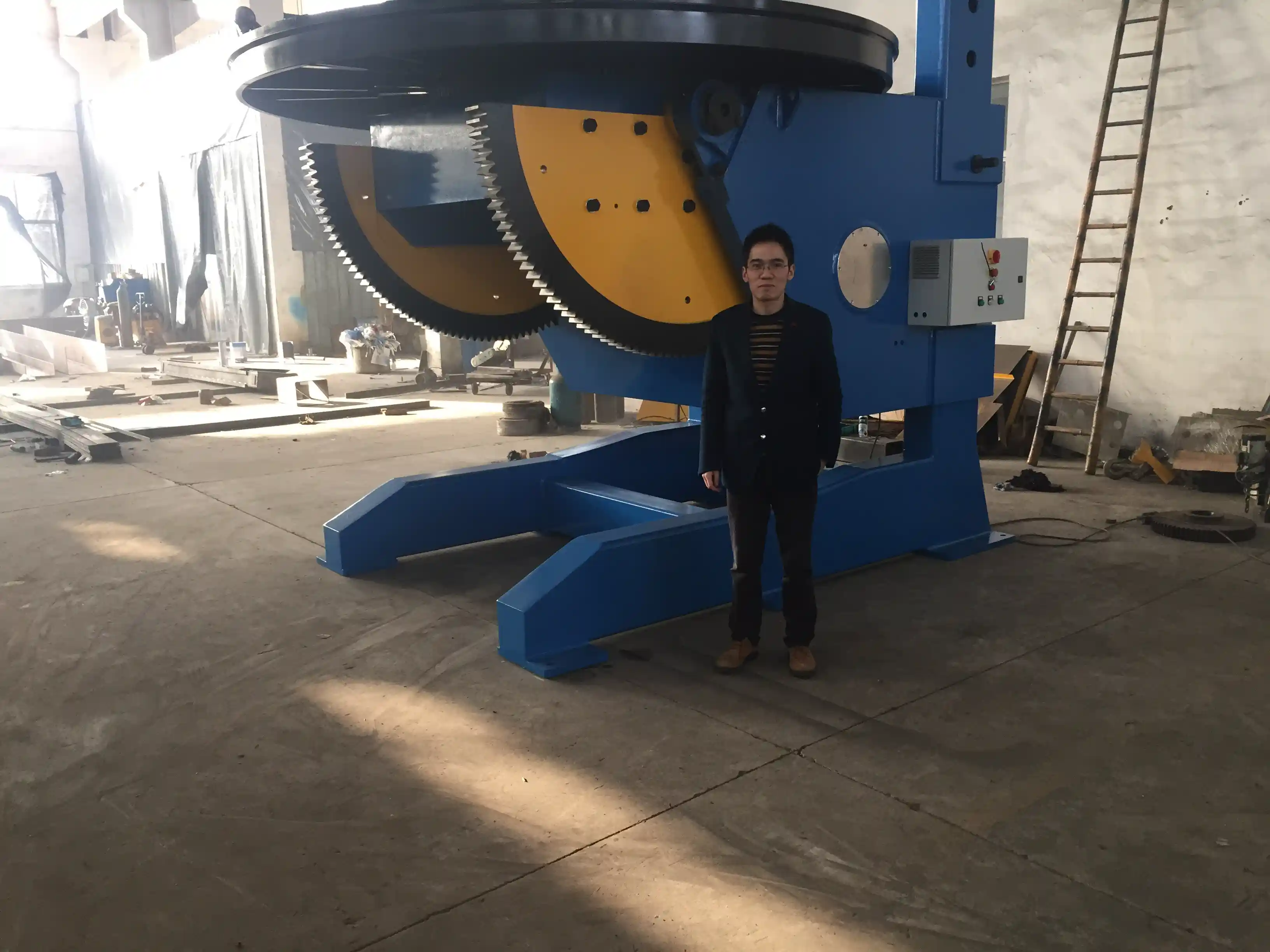
WUXI ABK’s welding positioners incorporate safety features that address the specific hazards of heavy workpiece manipulation. The 1-Ton 3-Axis Positioner includes overload shutdown that activates before mechanical limits are exceeded. Emergency braking stops rotation quickly if something goes wrong during operation.
The control cabinet carries an IP54 rating, providing protection against dust accumulation and water splashing. Tank fabrication environments aren’t clean rooms. Grinding dust, welding spatter, and occasional washdown create conditions that would damage unprotected electronics. The enclosure rating ensures reliable operation despite the environment.
CE and ISO certifications confirm that the equipment meets international safety standards. These certifications require documented design reviews, testing, and quality controls throughout manufacturing. The result is equipment that performs safely when properly installed and operated.
Maintenance practices extend the safety envelope over time. Daily checks catch developing problems before they become failures. The recommended schedule includes removing welding slag that could interfere with motion, inspecting electrical connections for damage or loosening, and verifying lubrication levels. Annual recalibration ensures positioning accuracy remains within specification.
How Welding Rotators Support Quality Control
WUXI ABK’s welding rotators contribute to quality control through precise, repeatable positioning. The HGZ-30 Standard Duty Welding Rotator features anti-creep technology that limits axial drift to less than 0.5mm. NOVO displacement sensors with 0.01mm resolution provide feedback for closed-loop control.
This precision matters because weld quality depends on consistent conditions. If the workpiece drifts during welding, the torch-to-work distance changes. The arc characteristics shift. The resulting weld might still pass inspection, or it might show undercut, lack of fusion, or other defects. Eliminating drift eliminates that variable.
Frequency conversion drive systems provide stepless speed control. Different welding procedures require different travel speeds. The ability to dial in exactly the right rotation rate—and maintain it consistently—supports optimal weld parameters throughout the joint.
Maintenance That Pays Back
Recommended maintenance practices for WUXI ABK welding equipment follow a tiered schedule based on operating hours and calendar time. Daily checks take minutes but catch problems early. Monthly or quarterly tasks address wear items and verify continued proper function. Annual maintenance handles the deeper inspections and replacements that extend equipment life.
The daily routine covers the basics: removing welding slag from work surfaces and drive components, inspecting electrical connections for heat damage or loosening, verifying lubrication at specified points. These simple checks prevent the gradual degradation that leads to unexpected failures.
Quarterly maintenance goes deeper. Torquing bolts to specification addresses the loosening that vibration causes over time. Checking drive mechanisms for wear or damage catches problems before they affect positioning accuracy. Testing safety systems confirms they’ll function when needed.
Annual maintenance includes replacing bearings on a preventive basis rather than waiting for failure. Re-lubricating sealed components that don’t receive daily attention. Recalibrating positioning systems to maintain the accuracy specifications.
Following these practices extends equipment lifespan by up to 30% compared to reactive maintenance approaches. More importantly, unplanned downtime drops by 85%. In a high-volume storage tank manufacturing line, unplanned downtime doesn’t just cost repair expenses—it disrupts production schedules and potentially delays project deliveries.
Часто задаваемые вопросы
What production volumes justify investing in an automated storage tank manufacturing line?
The breakeven point depends on tank size, complexity, and labor costs in your region. Generally, facilities producing more than 50 large tanks annually see clear returns on automation investment. The calculation changes if your current production struggles with quality consistency or if skilled welders are difficult to hire and retain. Smaller volumes can still justify selective automation—a welding manipulator on the longest seams, for instance—without committing to full line automation.
How long does it take to commission a complete high-volume tank production line?
Typical commissioning runs 4-8 months from equipment delivery to full production capability. The timeline depends heavily on facility readiness, foundation work, and utility infrastructure. Equipment installation itself might take 6-8 weeks for a complete storage tank manufacturing line. Operator training, procedure qualification, and production ramp-up add the remaining time. Projects that complete facility preparation before equipment arrives compress the overall schedule significantly.
Can existing manual tank fabrication facilities be upgraded incrementally?
Incremental upgrades work well when planned thoughtfully. Most facilities start with welding automation on the highest-volume seam types, then add positioning equipment, then integrate material handling. Each step delivers measurable improvements while limiting capital exposure and operational disruption. The key is ensuring early investments don’t create constraints for later additions. Consulting with equipment suppliers during planning helps avoid compatibility issues.
What training do operators need for automated welding equipment in tank production?
Operators need both equipment-specific training and broader understanding of welding fundamentals. Equipment training covers normal operation, parameter adjustment, troubleshooting, and daily maintenance. This typically runs 2-3 weeks for complex systems like welding manipulators. Welding knowledge matters because operators must recognize when the automated system produces acceptable results and when intervention is needed. Many facilities cross-train manual welders on automated equipment, leveraging their existing process knowledge.
Connect with WUXI ABK MACHINERY CO., LTD.
For advanced welding automation solutions and CNC cutting machines, contact us. We specialize in wind tower welding lines, H beam welding lines, pipe welders, Манипулятор для сварки, and welding positioners. Reach out to discuss your project requirements.
Электронная почта: jay@weldc.com
Phone: +86-510-83555592
Мобильный: +86-13815101750
 English
  Español
  Français
  Deutsch
  Português
  Русский