
Picking the right tube-to-tube welding approach has real, measurable consequences—I’ve seen projects hit their targets or spiral on cost and schedule based on this single decision. The choice between orbital and fixed-position welding affects weld quality, throughput, and budgets, and it hinges on understanding how these methods differ in process control, equipment, and use cases. Below, I break down the fundamentals, compare the two methods in practice, and outline when each shines so you can select with confidence.
Understanding the Fundamentals of Tube-to-Tube Welding
1. What is Tube-to-Tube Welding?
Tube-to-tube welding joins two tubular components end-to-end to form a continuous, leak-proof connection. It’s a cornerstone process in petrochemical, pharmaceutical, aerospace, and power generation work, where weld integrity directly ties to performance and safety. Multiple techniques can achieve this joint, each with distinct traits, strengths, and best-fit applications.
2. Why is Precision Critical in Tube Welding?
Precision is non-negotiable for several reasons. Many systems face high pressure or corrosive media, so even tiny defects can trigger serious failures. Dimensional accuracy improves fit-up and mitigates stress concentrations. And consistent weld quality cuts rework, inspection effort, and delays. Hitting that level of precision typically calls for advanced equipment and well-trained operators.
Comparing Orbital and Fixed Position Welding Methods
1. Examining the Key Differences in Welding Processes
Orbital welding automates the process by rotating the arc 360 degrees around a stationary workpiece. With pre-programmed, tightly controlled parameters, it yields highly consistent, repeatable welds. Fixed-position welding, by contrast, typically keeps the torch stationary while the workpiece rotates—or relies on a manual welder moving around a stationary workpiece. This puts more weight on operator skill and dexterity.
2. Analyzing the Equipment Requirements for Each Method
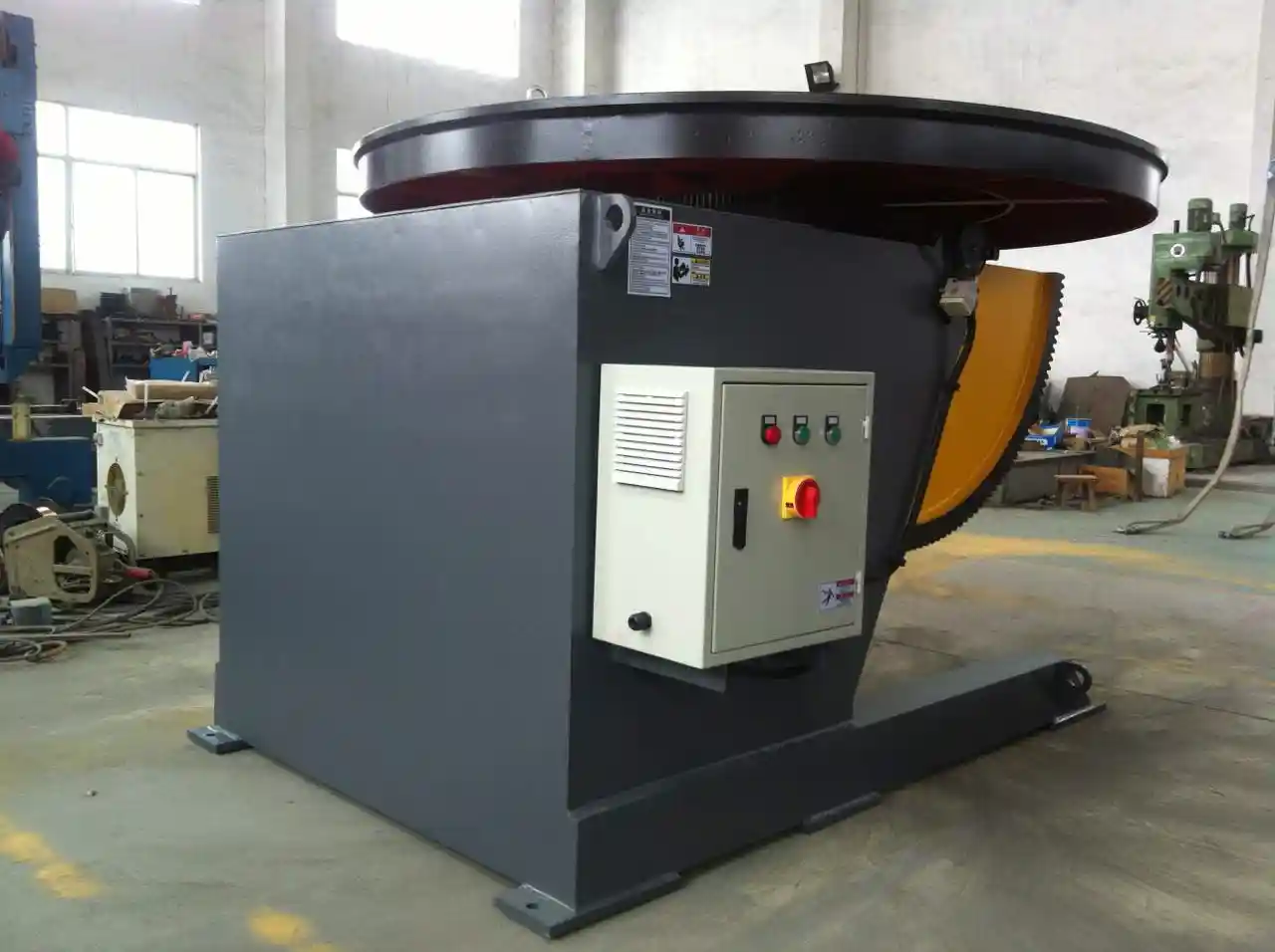
Orbital systems use specialized gear: a power source, a weld head that fully encircles the tube, and a control unit to program parameters—usually integrated for automated operation. Fixed-position welding leans on more conventional equipment: a power source, a torch, and sometimes a welding positioner or rotator. Setups range from basic manual rigs to semi-automated systems.
3. Evaluating the Skill Level and Training Needed
Orbital welding operators need strong programming and machine-operation skills more than advanced hand welding technique. Training centers on setup, weld schedule programming, and monitoring the automated cycle. Fixed-position welding demands highly skilled manual welders who can deliver quality across positions, with training focused on technique, consistency, and on-the-fly problem solving.
Advantages and Disadvantages of Orbital Tube Welding
1. Exploring the Benefits of Orbital Welding for Consistency and Quality
Thanks to automation, orbital welding excels at consistency and quality. Programmed parameters control heat input, penetration, and bead profile from weld to weld, reducing human variability and trimming post-weld inspection. Enclosed weld heads also improve shielding, lowering contamination and porosity risks.
Если вам интересно, проверьте 《.Как улучшить качество сварки труб с помощью высокоточного сварочного позиционера》.
2. Discussing the Limitations and Higher Initial Investment of Orbital Systems
The trade-offs: higher upfront equipment costs and specialized training. Orbital tools can be less flexible for unusual joint geometries or tight-access areas. For small batches, setup time may outweigh benefits, making it less economical for varied, low-volume work.
3. Identifying Ideal Applications for Orbital Welding
Orbital welding is a go-to for high volumes of identical, high-integrity welds—think cleanrooms, pharmaceutical piping, aerospace hydraulic lines, and semiconductor manufacturing. Where standards are stringent and documentation matters, it’s frequently the preferred route.
Advantages and Disadvantages of Fixed Position Tube Welding
1. Highlighting the Versatility and Cost-Effectiveness of Fixed Position Welding
Fixed-position welding is extremely adaptable, handling diverse joint configurations and tough-to-reach locations. Equipment costs are generally lower, which helps smaller shops or budget-sensitive projects. It also shines in repair and maintenance scenarios where flexibility is king.
Если вам интересно, проверьте 《.The Art Of Pipeline Fabrication How Positioners Enhance Welding Precision And Efficiency》.
2. Addressing the Challenges of Manual Skill Dependency and Quality Variation
The downside is reliance on welder skill and experience, which can introduce variability between operators and across shifts. Manual pace is slower than automation, affecting throughput, and fatigue can nudge quality up or down over time.
3. Determining Suitable Scenarios for Fixed Position Welding
Fixed-position welding fits low-volume production, custom fabrication, and repairs where automation doesn’t pencil out. You’ll see it in structural steel, general pipe welding, and on-site fixes. When geometry is complex or access is limited, skilled manual fixed-position welding is often the practical choice.
Key Factors for Selecting the Right Tube Welding Method
1. Assessing Project Volume and Production Rate Requirements
For repeatable, high-volume work, orbital welding typically delivers better efficiency and consistency. For lower volumes or bespoke jobs, fixed-position methods are usually more cost-effective and flexible. Match the method to your scale and throughput targets.
2. Considering Material Types and Wall Thicknesses
Orbital systems cover a wide range of materials and wall thicknesses and are especially strong on thin-walled tubes where precise heat control is crucial. Fixed-position welding handles various materials too, but achieving repeatable results on thin or exotic alloys demands top-tier manual skill.
3. Evaluating Joint Access and Positional Constraints
Tight access and complex geometries often tilt the decision toward fixed-position welding, where a skilled welder can maneuver the torch into place. Orbital weld heads need enough clearance to rotate. Map the physical constraints of both workpiece and workspace.
4. Analyzing Cost Implications and Return on Investment
Orbital welding’s initial price tag is higher, but it can pay back on high-volume runs with faster cycles, less rework, and lower labor per weld. Fixed-position welding costs less upfront but may carry higher ongoing labor and inspection costs. Weigh total cost of ownership—not just purchase price.
5. Prioritizing Weld Quality and Inspection Standards
When ultra-high weld quality, minimal defects, and strict compliance (e.g., ASME, API) are mandatory, orbital welding is often the safer bet, with consistent outputs that are straightforward to verify. Fixed-position can absolutely meet high standards, but it requires rigorous qualifications and inspection discipline.
Enhancing Tube Welding Efficiency with WUXI ABK Equipment
1. How Welding Positioners Optimize Fixed Position Welding
Welding positioners elevate fixed-position welding by positioning the workpiece for optimal torch angles. That reduces awkward stances, improving comfort, safety, and weld quality. 3-осевой позиционер allow rotation, tilt, and turning, enabling operators to weld in the flat or horizontal position, which is generally faster and produces higher quality welds.
We offer various welding positioners, including the 1-Ton Fixed Height Welding Positioner and the 5-Ton Fixed Height Welding Positioner. These machines provide precise control over workpiece orientation, reducing setup time and improving weld consistency.
Если вам интересно, проверьте 《.Революционное решение для сварки сосудов под давлением Технический анализ вращающихся на 360 градусов сварочных позиционеров》.
| Модель | Грузоподъемность | Скорость вращения | Угол поворота | Worktable Diameter | Приложения |
|---|---|---|---|---|---|
| HBJ-10 | 1000 kg | 0.05–0.5 RPM | 0-90° | 1200 мм | Excavator booms, Wind turbine flanges, Pressure vessel fabrication |
| HBJ-20 | 2000 kg | 0.05–0.5 RPM | 0–120° | 1200 мм | Wind turbine flange welding, Shipbuilding components |
| HBJ-30 | 3000 кг | 0.05–0.5 RPM | 0-90° | 1400 mm | Pressure vessel fabrication, Rail bogie assembly |
| HBJ-50 | 5000 кг | 0.05–0.5 RPM | 0–120° | 1500 мм | Wind turbine flange assembly, Robotic welding systems |
2. Leveraging Welding Rotators for Cylindrical Workpieces
Welding rotators are essential for cylindrical parts, providing controlled rotation for circumferential welds. By stabilizing travel speed and the arc, they help produce uniform beads and prevent defects. Our Вращатель для сварки труб equipment, such as the HGZ-10 Standard Pipe Welding Rotator, supports a wide range of pipe diameters and weights.
The HGK series of adjustable height welding rotators, ranging from 5-ton to 300-ton capacities, further enhance efficiency by allowing precise height adjustments. This capability ensures optimal ergonomic conditions for welders and facilitates integration with automated welding systems.
Если вам интересно, проверьте 《.Трубовращатели и токарные валки - необходимое оборудование для современного производства трубопроводов》.
| Модель | Грузоподъемность | Диапазон диаметров сосудов | Wheel Velocity | Мощность двигателя | Приложения |
|---|---|---|---|---|---|
| HGK-5 | 5 тонн | 250-2800 mm | 6-60 m/h | 2×0.37 kW | Pipeline girth welding, Pressure vessel fabrication |
| HGK-10 | 10 tons | 300-3200 mm | 6-60 m/h | 2×0.55 kW | Wind tower flange welding, Large-diameter pipe welding |
| HGK-20 | 20 tons | 500-4500 mm | 6-60 m/h | 2×1.1 kW | Heavy steel structure welding, LNG tank fabrication |
| HGK-40 | 40 тонн | 500-4800 mm | 6-60 m/h | 2×1.5 kW | Offshore platform construction, Large pressure vessels |
| HGK-60 | 60 тонн | 500-5000 mm | 6-60 m/h | 2×2.2 kW | Large-diameter pipe welding, Heavy vessel manufacturing |
| HGK-100 | 100 тонн | 800-5000 mm | 6-60 m/h | 2×3 kW | Wind tower production, Shipbuilding components |
| HGK-200 | 200 tons | 800-5000 mm | 6-60 m/h | 2×4 kW | Heavy pressure vessel manufacturing, Offshore structures |
| HGK-300 | 300 tons | 1000-6000 mm | 6-60 m/h | 2×5.5 kW | Super-large pressure vessels, LNG storage tanks |
Make an Informed Decision for Your Welding Needs
Choosing between orbital and fixed-position tube welding requires careful consideration of project specifics, quality demands, and budgetary constraints. At WUXI ABK MACHINERY CO., LTD, we provide expert guidance and a comprehensive range of welding equipment to meet your fabrication needs. Contact us today to discuss your project requirements and find the optimal welding solution.
Электронная почта: jay@weldc.com
Мобильный: +86-13815101750
Об авторе
Джей Ли, директор по исследованиям и разработкам
Jay Li, a welding automation expert with over 20 years of experience, specializes in wind tower welding lines, H-beam welding lines, and pipe welding equipment. He consistently helps companies improve quality and production efficiency through innovative solutions.
Вопросы и ответы
1. What is the primary difference between orbital and fixed-position welding?
Orbital welding rotates a welding torch around a stationary workpiece to deliver automated, consistent welds. Fixed-position welding typically keeps the torch fixed while the workpiece rotates, or a manual welder moves around a stationary workpiece—placing more emphasis on operator skill.
2. Which welding method is generally more expensive to implement?
Orbital welding usually has a higher upfront cost due to specialized equipment and advanced controls. Fixed-position methods—especially manual approaches—cost less initially, though long-term costs vary with labor rates, efficiency, and rework.
3. Can WUXI ABK equipment be used for both orbital and fixed-position welding?
WUXI ABK primarily provides equipment that supports and enhances fixed-position welding, including welding positioners and rotators. These tools optimize workpiece manipulation to boost efficiency and quality for manual and semi-automated fixed-position processes.
4. What are the main benefits of using welding positioners in tube-to-tube welding?
Positioners orient the workpiece for optimal angles, improving ergonomics and reducing fatigue. They enable flat or horizontal welding, which is generally faster and produces higher-quality welds with fewer defects.
5. How does workpiece access influence the choice between orbital and fixed-position welding?
Access is a major deciding factor. Orbital welding needs adequate clearance around the tube for the weld head to rotate. Fixed-position methods, particularly manual techniques, offer more flexibility for confined spaces or complex geometries where orbital heads can’t fit.
 English
  Español
  Français
  Deutsch
  Português
  Русский