
Wind towers stand hundreds of feet tall, and every vertical weld running up those cylindrical sections carries the full weight of structural responsibility. Get the weld wrong, and you’re looking at fatigue cracks propagating under cyclic loading, unplanned shutdowns, and repair costs that can dwarf the original fabrication budget. The vertical position itself makes things harder—gravity pulls at the molten pool, shielding gas coverage becomes inconsistent, and even experienced welders struggle to maintain the steady hand needed for defect-free passes. After years of working through these challenges on tower fabrication projects, certain patterns emerge: the defects that keep showing up, the root causes that get overlooked, and the solutions that actually move the needle on vertical weld quality in wind tower fabrication.
Vertical Weld Defects That Compromise Wind Tower Structures
Vertical welds in wind tower manufacturing face a specific set of discontinuities that show up repeatedly across fabrication shops. Understanding what these defects look like—and why they matter—is the first step toward eliminating them.
Porosity appears as scattered voids throughout the weld metal, typically caused by gas entrapment during solidification. These voids reduce the effective cross-sectional area of the weld and create stress concentration points. Lack of fusion presents a more serious problem: the weld metal simply doesn’t bond properly with the base metal or previous passes, leaving hidden planes of weakness that can initiate cracks under load.
Cracking represents the most severe category of vertical weld defects. Hydrogen-induced cracking can develop hours after welding completes, making it particularly insidious. Residual stresses from the welding process itself can drive crack propagation, especially in thicker sections where restraint is high. Slag inclusions—non-metallic compounds trapped within the weld—reduce mechanical strength and can mask other defects during inspection.
Undercut along the weld toes and root defects at the joint bottom round out the common failure modes. Each of these discontinuities degrades wind turbine weld integrity and can lead to premature fatigue failure under the dynamic loads that wind towers experience throughout their service life.
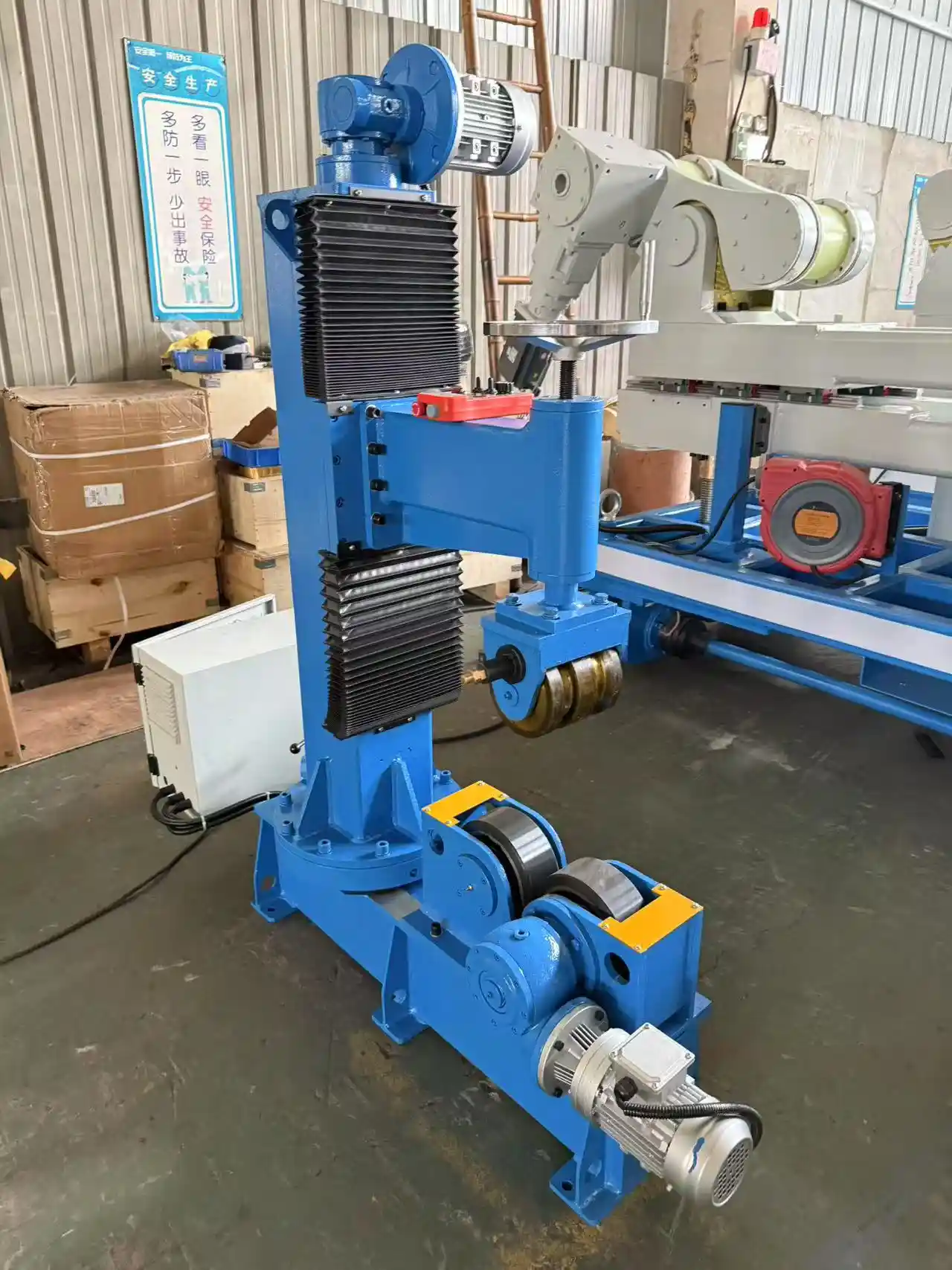
Why Vertical Weld Quality Problems Persist in Tower Fabrication
The root causes behind vertical weld quality issues rarely trace back to a single factor. More often, defects emerge from the interaction of several variables that compound each other’s effects.
Welding parameters sit at the center of most problems. Heat input that’s too high causes excessive penetration and distortion; too low, and fusion suffers. The vertical position amplifies these sensitivities because gravity constantly tries to pull the weld pool downward. Preheating temperature and interpass temperature control become critical—rapid cooling rates in thick tower sections increase cracking susceptibility, while excessive heat accumulation leads to metallurgical changes that weaken the joint.
Joint preparation quality directly influences what happens during welding. Bevel angles that deviate from specification create inconsistent root gaps. Surface contamination from mill scale, rust, or cutting residues introduces hydrogen and other contaminants into the weld pool. Fit-up accuracy matters enormously: gaps that exceed tolerance force welders to compensate with technique changes that often introduce new defects.
Material variations add another layer of complexity. Carbon equivalent differences between heats affect weldability. Shielding gas composition and electrode selection must match both the base metal chemistry and the specific welding process being used. Environmental factors—drafts disrupting gas coverage, humidity introducing hydrogen—can undermine even well-designed procedures.
Operator skill remains the variable that ties everything together. Welder qualification programs establish baseline competency, but fatigue, distraction, and the physical demands of vertical welding all contribute to inconsistency. The best welding procedures in the world still depend on human execution, and that execution varies from shift to shift.
Techniques That Actually Reduce Vertical Weld Defects
Preventing vertical weld defects in wind tower fabrication requires attacking the problem from multiple angles simultaneously. No single technique solves everything, but the right combination of approaches can dramatically improve outcomes.
Automated welding systems have transformed what’s achievable in vertical weld quality. Robotic welding and specialized wind tower welding lines remove the variability inherent in manual processes. Travel speed stays constant. Arc length doesn’t drift. Wire feed rate matches the programmed parameters exactly, pass after pass. The consistency these systems deliver translates directly into fewer defects and more predictable mechanical properties.
Submerged arc welding and flux-cored arc welding processes, when properly optimized for vertical applications, provide deeper penetration and better control over the weld pool than manual techniques typically achieve. The flux coverage in SAW eliminates atmospheric contamination entirely, while FCAW’s self-shielding or gas-shielded variants offer flexibility for different joint configurations.
Pre-weld inspection using laser profiling and other sensor technologies catches joint preparation problems before the first arc strikes. Identifying a bevel angle deviation or surface contamination issue at this stage costs almost nothing compared to discovering it through post-weld NDT or, worse, in-service failure.
Material handling and storage protocols prevent contamination from ever reaching the weld zone. Electrodes stored in proper ovens, base metal protected from moisture and surface degradation, and clean handling practices throughout the fabrication sequence all contribute to vertical weld quality in wind tower fabrication.
Continuous welder training and qualification programs keep human skills sharp and aligned with current procedures. Even shops running heavily automated lines need qualified operators who understand the process well enough to recognize when something’s going wrong.
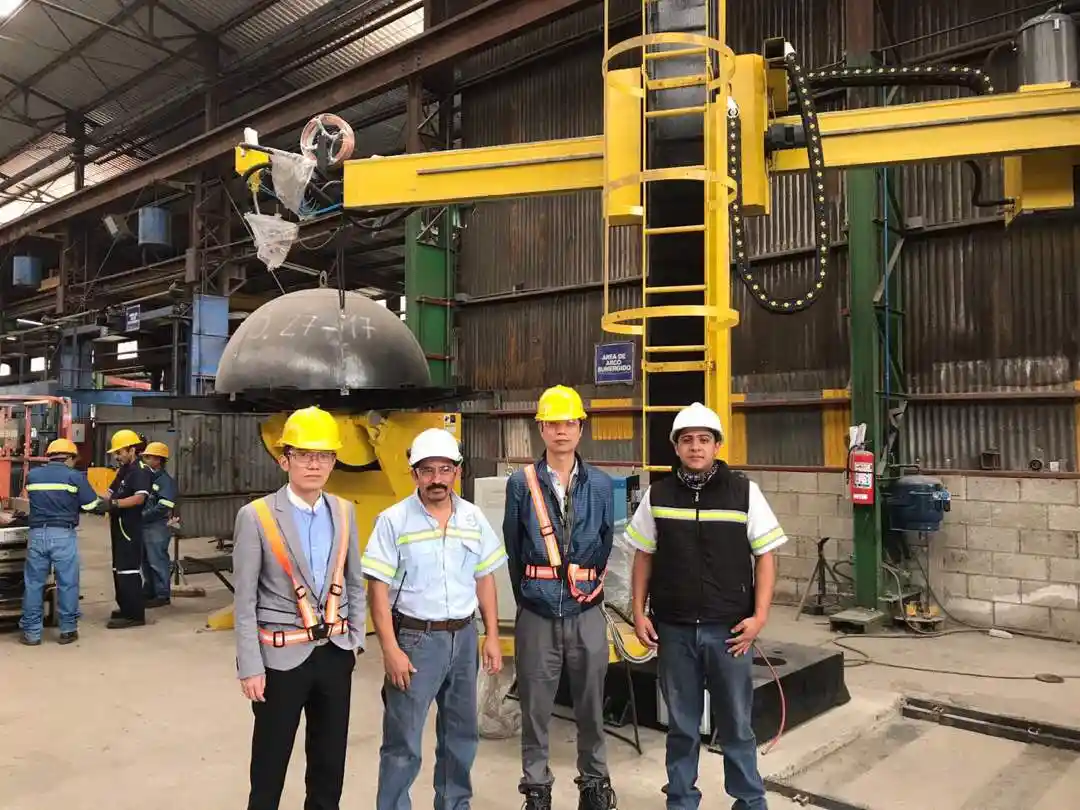
Automated Systems Transform Vertical Weld Consistency
Automated welding systems address the fundamental challenge of vertical weld quality: human variability. When a welder executes the same joint configuration repeatedly over an eight-hour shift, small inconsistencies accumulate. Travel speed drifts. Arc voltage fluctuates. The physical strain of maintaining position against gravity takes its toll.
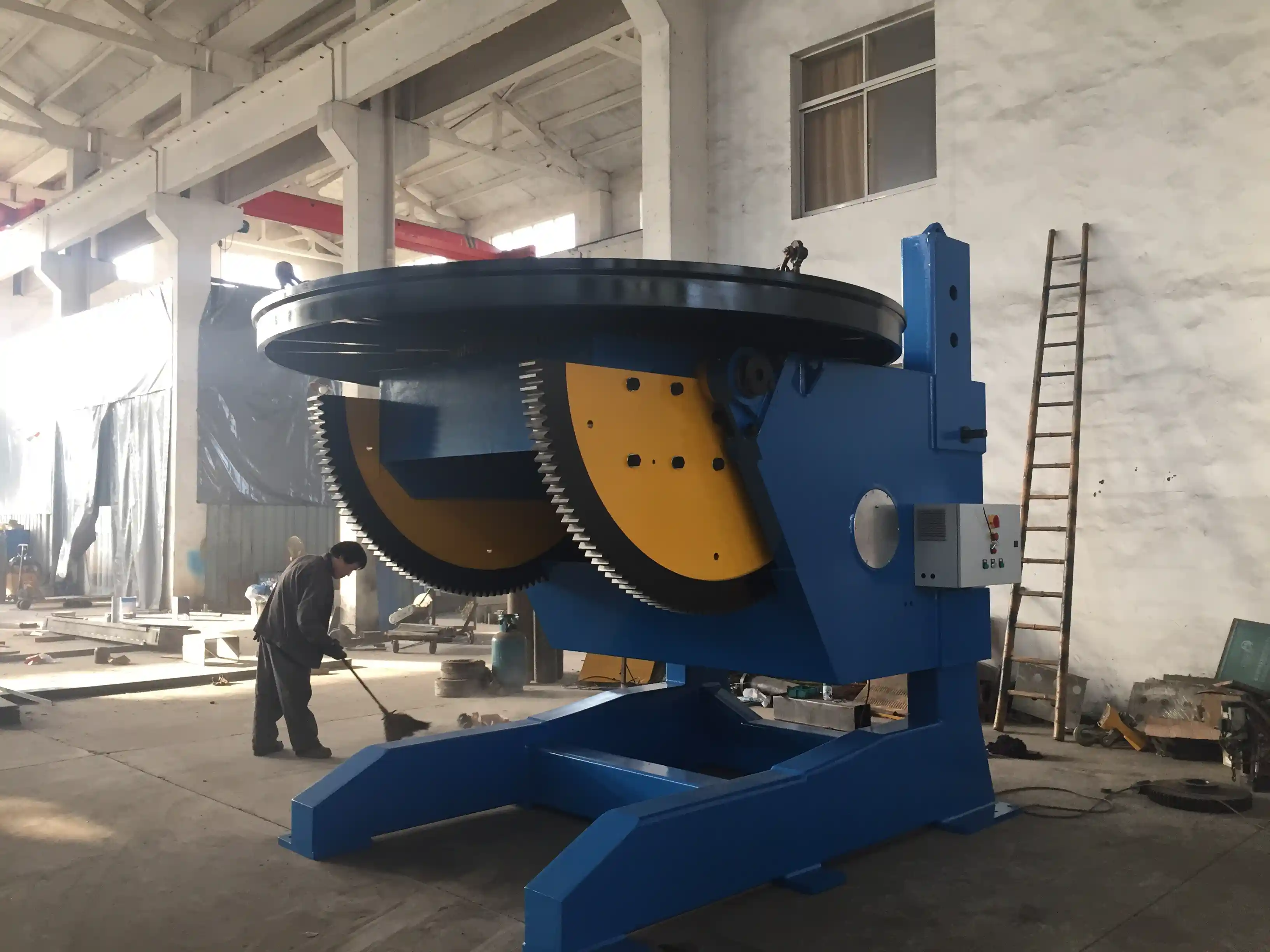
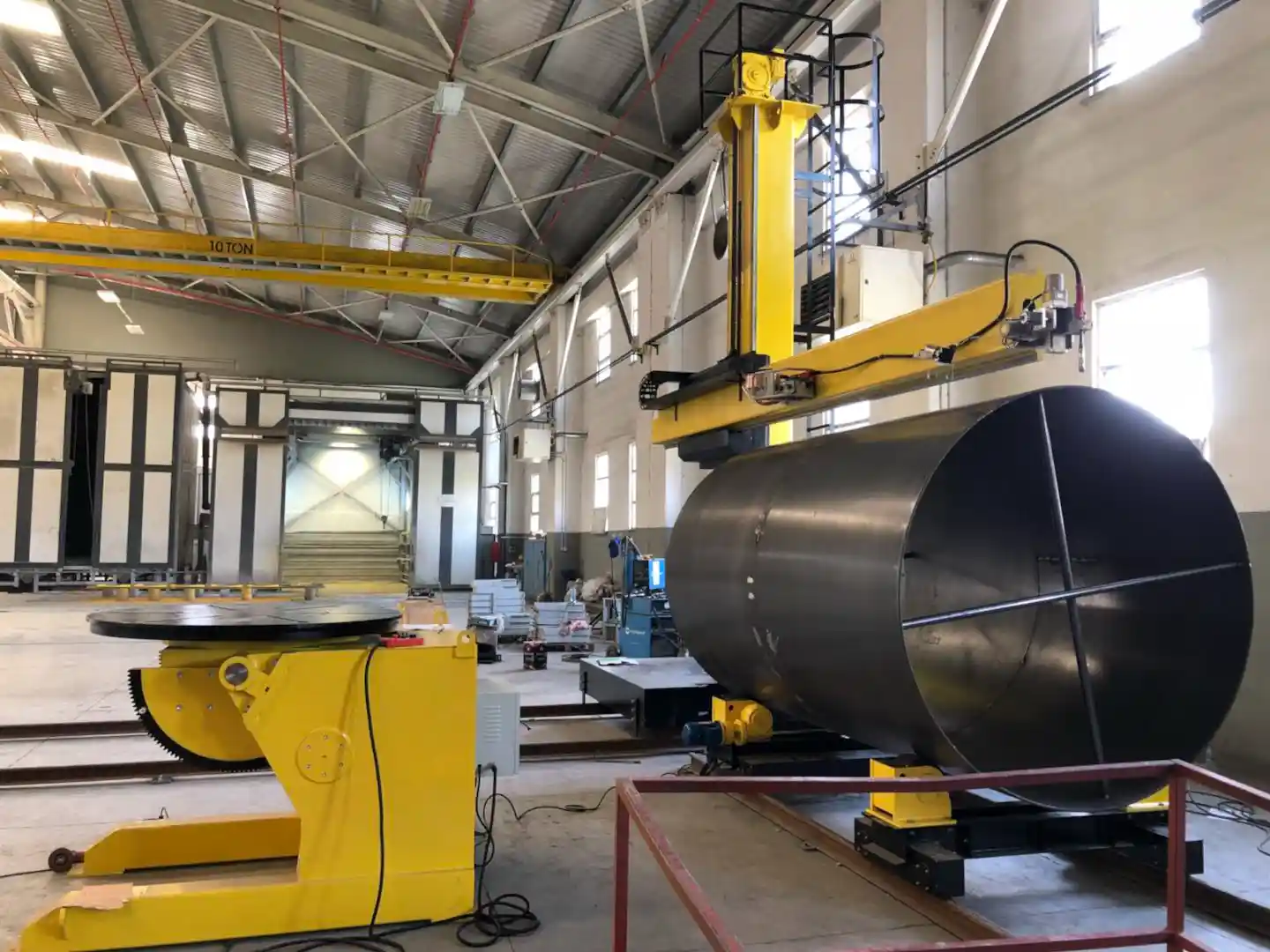
Automated systems eliminate these sources of variation. A Welding Manipulator positions the torch with positioning accuracy of ±0.1 mm/m and maintains that precision throughout the entire weld length. A Welding Positioner rotates the workpiece to present optimal joint angles to the welding head, reducing the difficulty of the vertical position itself.
The integration of these systems into dedicated wind tower welding lines creates a controlled environment where parameters stay within specification and defects become the exception rather than the expected outcome. Porosity rates drop because shielding gas coverage remains consistent. Lack of fusion defects decrease because heat input stays in the optimal range. The reduced human error and increased efficiency these systems deliver justify their capital cost through lower rework rates and faster throughput.
Non-Destructive Testing Methods for Vertical Weld Verification
Non-destructive examination provides the verification that vertical welds meet structural requirements without destroying the component being tested. Selecting the right NDT methods for wind tower applications requires understanding what each technique can and cannot detect.
Ultrasonic testing, particularly phased array UT, excels at finding internal discontinuities in thick-section welds. The technique sends sound waves into the material and analyzes the reflections to identify cracks, lack of fusion, and other volumetric defects. Phased array systems offer improved detection capability and the ability to generate detailed cross-sectional images of the weld zone.
Radiographic testing provides a permanent visual record of internal weld conditions. The technique reveals porosity, slag inclusions, and lack of penetration clearly, though crack detection sensitivity depends heavily on crack orientation relative to the radiation beam. RT remains valuable for documentation and for detecting certain defect types that UT might miss.
Magnetic particle inspection handles surface and near-surface crack detection in ferromagnetic materials efficiently. The technique is fast, relatively inexpensive, and highly sensitive to fine surface-breaking cracks that could initiate fatigue failure. Visual inspection, while basic, catches obvious surface defects and poor bead profiles before more sophisticated testing begins.
Most wind tower fabrication programs employ multiple NDT methods in combination. The specific selection depends on the defect types of concern, material properties, and code requirements such as AWS D1.1 compliance.
| NDT Method | Primary Defects Detected | Преимущества | Limitations |
|---|---|---|---|
| Visual Inspection | Surface cracks, undercut, porosity, poor bead profile | Cost-effective, quick, no special equipment | Only surface defects, operator dependent |
| Ultrasonic Testing (UT) | Internal cracks, lack of fusion, slag inclusions, porosity | High sensitivity, detects internal flaws, portable | Requires coupling medium, skilled operator |
| Radiographic Testing (RT) | Internal cracks, porosity, slag inclusions, lack of penetration | Provides permanent record, detects volumetric flaws | Radiation hazards, expensive, limited depth for cracks |
| Magnetic Particle Insp. (MPI) | Surface and near-surface cracks in ferromagnetic materials | Fast, sensitive to fine cracks, low cost | Limited to ferromagnetic materials, surface prep needed |
The Real Cost of Vertical Weld Quality Failures
Poor vertical weld quality in wind tower fabrication creates economic consequences that extend far beyond the immediate repair bill. The full cost picture includes direct expenses, schedule impacts, and longer-term operational and reputational effects.
Rework and repair expenses accumulate quickly when defects require grinding out and re-welding. Each repair cycle consumes labor hours, welding consumables, and inspection time. Production delays cascade through the fabrication schedule, pushing delivery dates and potentially triggering contract penalties. Projects that fall behind schedule often face pressure to accelerate, which can introduce new quality problems.
The more serious concern involves structural failure risk. A vertical weld defect that escapes detection and propagates under service loads can lead to tower collapse. Beyond the immediate safety implications, such failures generate warranty claims, litigation costs, and regulatory scrutiny that can threaten a fabricator’s ability to continue operating in the market.
Long-term operational costs rise when weld quality issues reduce the service life of installed towers. Maintenance requirements increase. Unplanned shutdowns for inspection and repair reduce energy production. The cumulative effect on project economics can turn a profitable installation into a financial burden.
Investing in quality assurance protocols and advanced welding solutions represents a strategic choice to prevent these costs rather than absorb them. The return on investment from reduced rework, faster throughput, and improved structural reliability typically justifies the upfront expenditure within the first few major projects.
Equipment Solutions for Vertical Weld Quality Challenges
Achieving consistent vertical weld quality in wind tower fabrication demands equipment designed specifically for the application. General-purpose welding systems lack the precision, reach, and integration capabilities that tower fabrication requires.
WUXI ABK MACHINERY CO., LTD has supplied wind tower welding equipment since 1999, developing specialized solutions through nearly 25 years of application experience. The Welding Manipulator systems provide precise longitudinal and circumferential seam welding with positioning accuracy of ±0.1 mm/m, maintaining that precision across the full travel range needed for tower section fabrication.
The Welding Positioner product line includes configurations for various tower diameters and weights. The 3-Axis Welding Positioner delivers ±0.05 mm positioning accuracy with 0.02 mm repeatability, enabling the precise joint presentation that automated welding processes require for optimal results.
These systems integrate into complete wind tower welding lines that handle material flow, joint preparation verification, welding execution, and post-weld handling as a coordinated sequence. Custom welding solutions address specific project requirements—unusual tower geometries, particular material specifications, or integration with existing shop equipment.
Frequently Asked Questions on Wind Tower Welding Quality
How does heat input affect vertical weld quality in wind towers?
Heat input determines the thermal cycle that the weld zone experiences, which in turn controls the resulting microstructure and mechanical properties. Excessive heat input causes grain growth in the heat-affected zone, reducing toughness and potentially creating distortion that affects fit-up for subsequent passes. Insufficient heat input leads to lack of fusion defects and incomplete penetration. The vertical position complicates heat input control because gravity affects weld pool behavior differently than in flat or horizontal positions. Maintaining optimal heat input requires careful parameter selection and consistent execution throughout the weld length.
What role does welder qualification play in preventing vertical weld defects?
Welder qualification establishes that an operator can execute a specific weld procedure and produce acceptable results under test conditions. Qualification testing per AWS D1.1 or equivalent codes verifies skills in arc control, travel speed management, and electrode manipulation for the vertical position. Qualified welders understand the relationship between their technique and the resulting weld quality, enabling them to recognize and correct problems before defects develop. Shops that maintain rigorous qualification programs and ongoing skills verification see measurably lower defect rates than those that treat qualification as a one-time administrative requirement.
Can environmental conditions impact wind tower vertical weld integrity?
Environmental factors significantly affect vertical weld quality. Wind drafts disrupt shielding gas coverage, allowing atmospheric contamination that causes porosity. High humidity introduces hydrogen into the weld pool, increasing cracking susceptibility in high-strength steels. Temperature extremes affect preheating requirements and interpass temperature control. Fabrication shops that control their welding environment—through enclosures, climate control, or scheduling around weather conditions—achieve more consistent results than those that weld under whatever conditions happen to exist.
What are the benefits of using specialized wind tower welding lines?
Specialized wind tower welding lines integrate material handling, positioning, welding, and inspection into a coordinated system optimized for tower fabrication. The integration eliminates handling damage between operations, maintains consistent joint presentation, and enables automated parameter control throughout the welding sequence. Throughput increases because the system moves work through each station efficiently. Quality improves because human variability decreases and process parameters stay within specification. The combination of higher throughput and lower rework rates typically delivers payback periods measured in months rather than years for shops with sufficient production volume.
Moving Forward on Vertical Weld Quality
Vertical weld quality in wind tower fabrication responds to systematic attention across the entire fabrication process. The defects that compromise structural integrity have identifiable causes, and those causes yield to the right combination of procedure development, equipment selection, operator training, and inspection protocols.
WUXI ABK MACHINERY CO., LTD provides the wind tower welding lines, manipulators, and positioners that enable consistent vertical weld quality at production volumes. Contact jay@weldc.com or call +86-13815101750 to discuss specific project requirements and equipment solutions.
Если вам интересно, ознакомьтесь со следующими статьями по этой теме:
Слишком маленькое пространство мастерской? Как колонные стрелы экономят 50% пространство на полу, повышая безопасность и эффективность
Инновационные способы применения 10-тонных сварочных поворотных устройств с ЧПУ в производстве сосудов под давлением
 English
  Español
  Français
  Deutsch
  Português
  Русский