
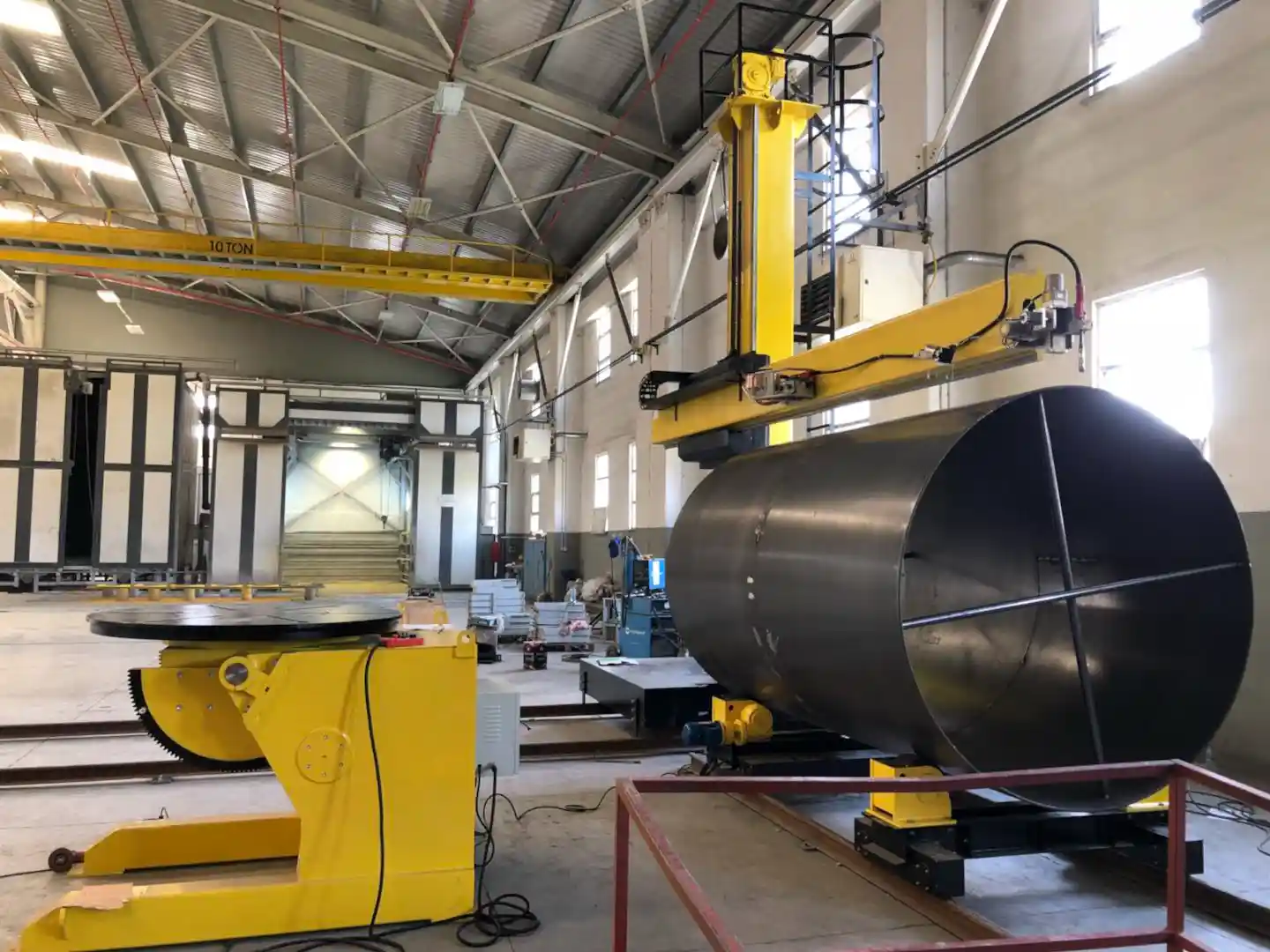
Welding manipulators run smoothly until they don’t. When something goes wrong, the pressure to get production back online can push troubleshooting into guesswork territory. That rarely ends well. The issues that stop these machines tend to fall into predictable categories: mechanical wear, electrical faults, control system glitches, and weld quality problems that trace back to equipment rather than technique. Working through each category systematically saves time and prevents the kind of cascading failures that turn a minor issue into a major rebuild.
Mechanical Problems That Actually Stop Production
Mechanical failures in welding manipulators announce themselves before they cause complete shutdowns. The trick is recognizing the early signs and knowing where to look first.
Structural damage shows up as visible bending, cracks, or deformation in the arm and column. High-strength box-beam construction handles normal operating loads without issue, but external impacts from crane swings or dropped materials can cause damage that affects positioning accuracy long before the structure actually fails.
Gear wear makes itself known through grinding sounds during movement. Pull the inspection covers and look at the gear teeth directly. Pitting, chipping, or uneven wear patterns indicate problems with the cycloidal reducers that control precise motion. Catching gear wear early prevents the kind of sudden failure that damages multiple components at once.
Bearing failure produces heat and noise. Squealing, rattling, or excessive warmth at bearing locations means replacement is coming soon. Continuing to operate with failing bearings creates jerky movements that affect weld quality and accelerates damage to adjacent components.
Rotator issues show up as stiffness or wobble during rotation. The drive mechanism and bearings in the rotator assembly take significant loads during positioning, and problems here affect the stability of every weld.
Linear guideway problems often trace back to contamination or inadequate lubrication. Debris, corrosion, or physical damage creates resistance that the drive system has to overcome, which stresses motors and reducers while degrading positioning accuracy.
Brake system failures cause drift or uncontrolled movement. The brake motor needs to engage and disengage cleanly. Anti-fall safety pins provide backup protection, but they’re not a substitute for properly functioning brakes.
Boom and trolley movement irregularities point to motor, reducer, or guideway problems. Smooth, consistent motion at speeds up to 1.2 m/min requires all these components working together. Hesitation, vibration, or speed variations during travel indicate something needs attention.
Если вам интересно, проверьте 《.Сварочные манипуляторы для изготовления ветряных башен: Революционное повышение эффективности производства》.
Electrical and Control System Faults
Electrical problems in welding manipulators often provide clearer diagnostic information than mechanical issues, but they require more careful safety procedures during troubleshooting.
Power supply problems start at the source. Confirm voltage stability and check circuit breakers and fuses before digging deeper. Voltage fluctuations cause erratic behavior that can mimic other problems, so ruling out power issues first saves diagnostic time.
Wiring faults require methodical inspection. Loose terminals, frayed cables, and heat damage at connection points cause intermittent problems that are difficult to reproduce. A detailed wiring diagram makes this process manageable rather than frustrating.
Control panel error codes exist for a reason. Modern welding manipulators generate specific diagnostic messages that point toward sensor failures, communication problems, or PLC faults. Recording these codes before clearing them provides valuable information for troubleshooting.
Motor and drive problems produce abnormal sounds or erratic movements. Multimeter checks for proper voltage and current supply identify whether the issue is in the motor itself or the power delivery system. Stepless speed control depends on consistent power delivery, and any deviation from smooth operation warrants investigation.
Sensor failures affect positioning accuracy and safety interlock function. Limit switches, encoders, and other feedback devices need periodic verification. A malfunctioning sensor can cause the control system to make decisions based on incorrect information.
PLC issues require checking status indicators and reviewing program logic. Communication faults between the PLC and other system components cause problems that look like hardware failures but actually trace back to software or parameter settings.
Communication cable problems create intermittent faults that are difficult to diagnose. Secure connections and undamaged cables between the control panel, motors, and sensors are essential for reliable operation.
What Causes Positional Drift in Welding Manipulators
Positional accuracy matters for weld quality, and drift problems have several potential causes. Encoder faults prevent the control system from accurately tracking position. Mechanical backlash in gears allows movement without corresponding position feedback. Worn drive components create inconsistency between commanded and actual motion. Insufficient braking force allows gravity or inertia to move the manipulator after the drive stops. Electrical noise affecting control signals can corrupt position data. Regular calibration and inspection of both mechanical and electrical components maintains the positioning accuracy that quality welding requires.
Weld Quality Problems That Trace Back to Equipment
Poor weld quality sometimes reflects operator technique or procedure issues, but equipment problems cause their share of defects. Distinguishing between the two prevents wasted effort on the wrong fixes.
Inconsistent weld beads with uneven width, excessive spatter, or poor penetration often indicate travel speed variations rather than parameter problems. Before adjusting welding settings, verify that the manipulator maintains constant speed throughout the weld.
Arc stability problems show up as flickering, difficulty initiating the arc, or inconsistent arc length. Grounding issues, worn consumables, and voltage fluctuations all affect arc behavior. Check the simple things first: ground connections, contact tip condition, and power supply stability.
Travel speed inconsistencies cause predictable defects. Too fast creates undercut and insufficient penetration. Too slow produces excessive reinforcement and heat input. Precise travel speed control is fundamental to consistent weld quality, and variations point to drive system or control issues.
Welding parameter drift happens when settings change unintentionally or when equipment wear affects actual output versus displayed settings. Periodic verification of current, voltage, and wire feed speed against procedure specifications catches drift before it causes rejection-worthy defects.
Torch alignment problems cause uneven weld deposition and fusion defects. The torch position relative to the joint needs to remain consistent throughout the weld, which depends on both initial setup and manipulator positioning accuracy.
Workpiece fixturing issues allow movement during welding that compromises weld integrity. Secure clamping and proper positioning prevent the kind of shifting that causes defects even when the manipulator performs correctly.
Environmental factors including drafts, humidity, and temperature extremes affect arc stability and shielding gas coverage. These factors are easy to overlook but can cause problems that look like equipment malfunctions.
Preventive Maintenance That Actually Prevents Problems
Preventive maintenance programs work when they focus on the failure modes that actually occur rather than generic checklists. Welding manipulators have specific wear points and failure patterns that determine where maintenance attention pays off.
Daily and weekly inspections catch problems early. Moving parts, electrical connections, and safety features need regular attention. The goal is identifying potential issues before they cause unplanned downtime.
Lubrication reduces friction and prevents wear in gears, bearings, and linear guideways. The right lubricant in the right quantity at the right interval matters more than simply adding grease on a schedule.
Cleaning removes welding spatter, dust, and debris that cause contamination and overheating. The manipulator structure, control panel, and electrical components all benefit from regular cleaning.
Electrical connection inspection finds loose terminals, corrosion, and damage before they cause faults. Intermittent electrical problems often trace back to connection issues that a periodic inspection would have caught.
Wear monitoring tracks the condition of gears, rollers, cables, and other components that degrade over time. Replacing wear parts before complete failure prevents secondary damage and unplanned downtime.
Manufacturer service intervals exist because certain maintenance tasks require specific expertise or equipment. Comprehensive inspections, calibration, and software updates at recommended intervals maintain performance and catch issues that routine maintenance might miss.
Documentation provides the historical record needed for effective maintenance planning. Dates, tasks performed, and parts replaced create a picture of equipment condition and help predict future maintenance needs.
Service Interval Recommendations for Welding Manipulators
Service frequency depends on usage intensity and operating conditions. Daily or weekly routine checks catch developing problems early. Quarterly or semi-annual comprehensive maintenance addresses wear items and verifies calibration. Annual overhauls replace worn components and recalibrate systems to original specifications. Following these intervals maintains equipment uptime and prevents the common issues that cause unplanned production stops.
Safety Procedures for Troubleshooting Operations
Troubleshooting welding manipulators involves working around electrical systems, moving mechanical components, and potentially energized equipment. Safety procedures protect personnel and prevent equipment damage during diagnostic and repair work.
Lockout/tagout procedures are non-negotiable before maintenance or troubleshooting work. De-energizing and locking out the power supply prevents accidental startup that could cause serious injury.
Operator training covers safe operation, emergency shutdown procedures, and proper PPE usage. Personnel working around welding manipulators need to understand the hazards and know how to respond to problems.
Risk assessment identifies potential hazards associated with manipulator operation and guides the implementation of appropriate safeguards. Periodic reassessment catches new hazards that develop as equipment ages or operating conditions change.
Emergency stop functionality requires regular testing. Emergency stop buttons need to be accessible and fully functional. Testing them periodically verifies they work when needed.
Emergency shutdown procedures should be documented and accessible. Clear instructions for securing the workpiece and powering down the system safely help personnel respond appropriately to emergency situations.
Warning signage alerts personnel to potential dangers in the manipulator operating area. Prominent, clear signs communicate hazards to everyone who enters the work zone.
Workspace organization keeps the area around the manipulator free of obstructions and tripping hazards. A clear workspace supports safe operation and emergency response.
When to Call for Professional Service
Minor issues like checking error codes or inspecting visible wiring can often be handled by trained operators. Complex electrical problems, PLC troubleshooting, or work requiring internal component access should go to qualified technicians. Attempting repairs without proper expertise creates safety risks and may void warranties. For significant problems, professional service ensures both safety and effective resolution.
Common Questions About Welding Manipulator Troubleshooting
What Problems Occur Most Often in Welding Manipulators
Mechanical wear in gears and bearings accounts for many welding manipulator problems. Electrical faults involving motors, wiring, and power supply cause their share of issues. Control system malfunctions including sensor errors and PLC communication problems round out the common failure modes. Regular preventive maintenance reduces the frequency and severity of these issues.
How Do I Identify Electrical Faults in a Welding Manipulator
Start with power supply continuity and work outward. Inspect wiring for damage, test motors and sensors for proper function, and review error codes on the control panel. Follow safety protocols throughout the diagnostic process. Complex electrical problems benefit from qualified technician involvement.
What Causes Rough or Jerky Manipulator Movement
Rough movement typically indicates mechanical binding from wear or misalignment, motor or drive system problems, or control system errors affecting motion profiles. Initial troubleshooting should include lubrication, calibration verification, and inspection of mechanical components for wear or damage.
Contact WUXI ABK for Welding Equipment Support
For assistance with welding manipulator troubleshooting or to discuss WUXI ABK MACHINERY CO., LTD.’s welding equipment and CNC cutting machines, contact our technical team. Decades of industry experience inform our approach to production optimization and equipment reliability. Reach us at jay@weldc.com or +86-13815101750 for consultation.
 English
  Español
  Français
  Deutsch
  Português
  Русский