Getting a tank fabrication line right comes down to equipment choices that actually hold up under production demands. After working in this space since 1999, we’ve seen how the right machinery setup separates shops that struggle with quality issues from those that run smoothly year after year. This breakdown covers what matters most when building or upgrading a fabrication line.
Foundation Equipment for Robust Tank Fabrication
Effective tank fabrication begins with foundational machinery designed for precision and heavy-duty operation. We rely on robust equipment to handle large metal plates and components with accuracy. [[《Повышение качества и эффективности производства резервуаров и сосудов высокого давления: Основные возможности применения позиционеров》 ]]
| Equipment Type | Key Function | WUXI ABK Product Example |
|---|---|---|
| Манипулятор для сварки | Precise longitudinal/circumferential welding | LH8080 (8000x8000mm travel) |
| 3-осевой сварочный позиционер | Synchronized turning, rotating, tilting | 3-Ton 3-Axis Welding Positioner |
| Pipe Rolling Machine | Forming cylindrical shells | 10-Ton Adjustable Height Pipe Rolling Machine (HGK-10) |
| CNC Plasma Cutter | Accurate plate cutting | (Specific model varies by requirement) |
Our welding manipulators, such as the LH8080, offer precise control for longitudinal and circumferential seam welding. These systems feature high-strength box-beam structures, linear guideways, and stepless speed control, ensuring positioning accuracy of ±0.1 mm/m. The LH8080 provides 8000 mm horizontal and vertical travel, which matters when you’re working with large tank components where even small positioning errors compound across long seams.
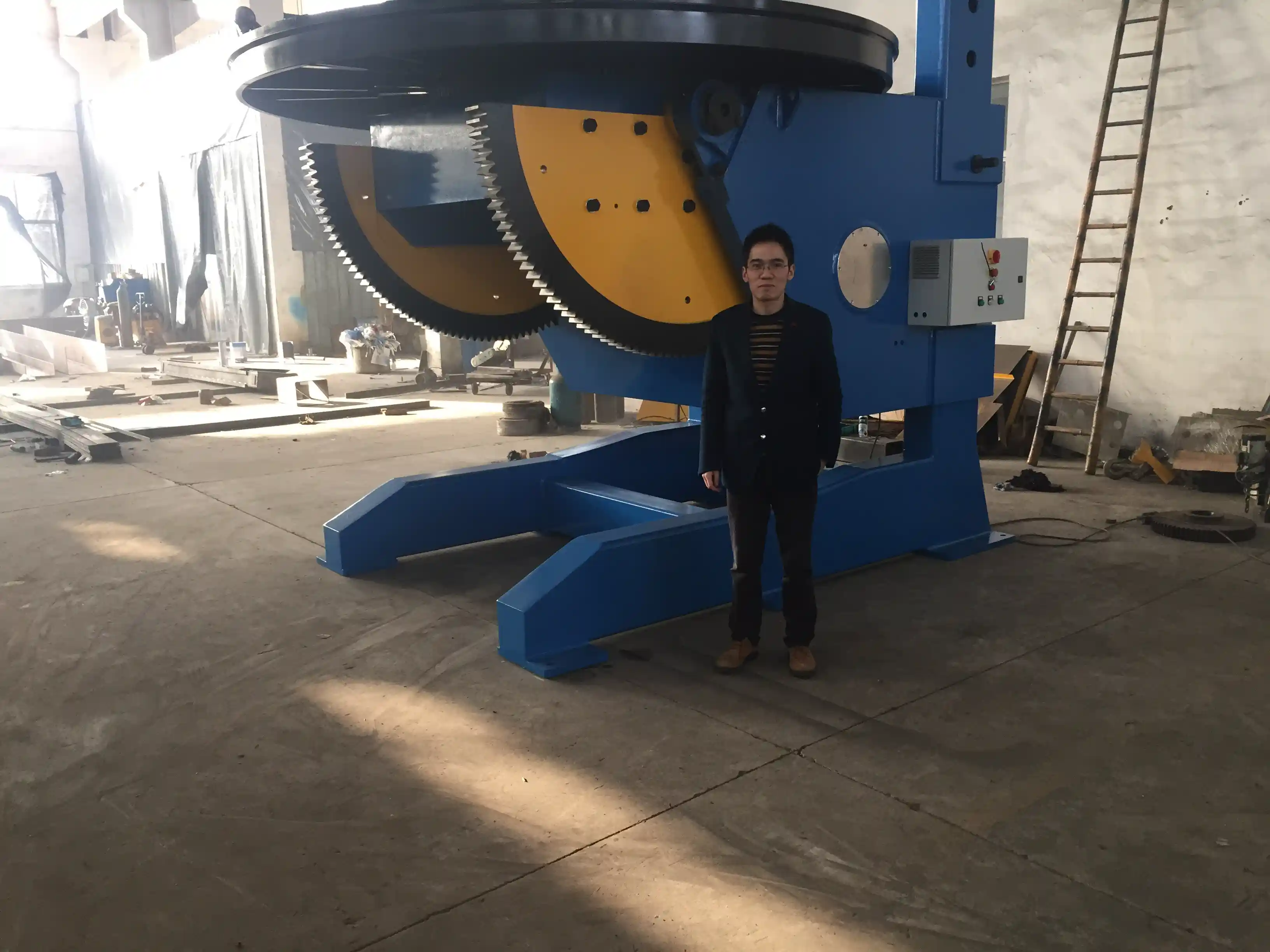
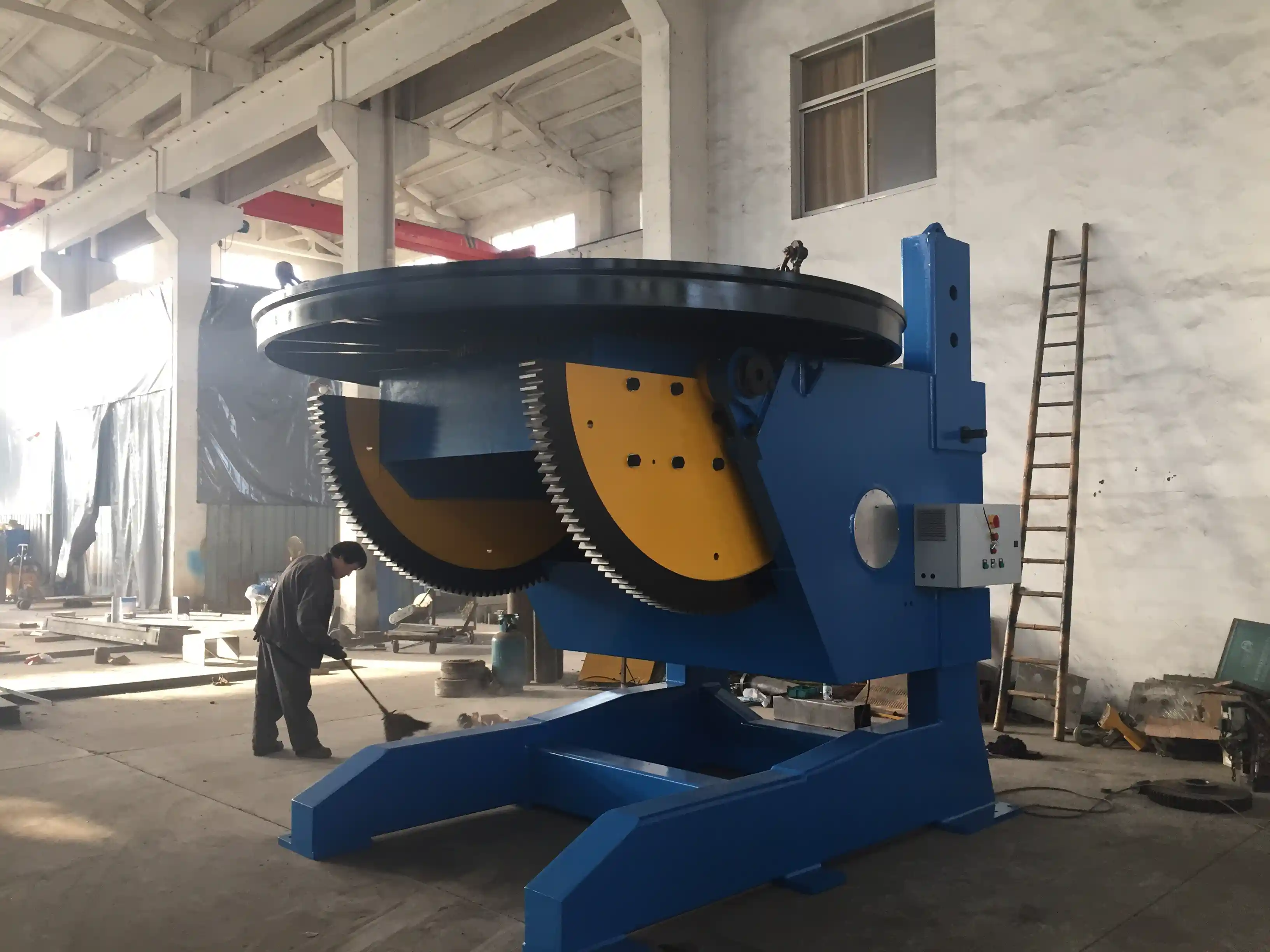
Welding positioner units are equally vital for manipulating heavy workpieces. The WUXI ABK 3-Ton 3-Axis Welding Positioner provides synchronized turning (180°), continuous rotation (360°), and tilting (0-90°). It achieves ±0.05 mm positioning accuracy and 0.02 mm repeatability. These specs become particularly relevant when integrating robotic welding cells where the robot expects the workpiece to be exactly where programmed.
Plate rolling machines form the cylindrical or conical sections of tanks. Our 10-Ton Adjustable Height Pipe Rolling Machine (HGK-10) handles vessel diameters from 300-3200mm. It features a dual-motor drive with frequency converter control and maintains ±0.1mm positioning accuracy. This ensures precise curvature for tank shells.
Cutting machines prepare raw materials with high accuracy. While specific models vary, CNC plasma cutters are commonly used for efficient and precise cutting of steel plates into required shapes. This initial processing step directly impacts subsequent fabrication stages.
Advanced Welding Systems for Superior Tank Integrity
Achieving superior tank integrity necessitates advanced welding systems that deliver consistent, high-quality welds. We integrate specialized welding technologies to meet stringent industry standards.
| Характеристика | Ручная сварка | Automated Welding Systems |
|---|---|---|
| Weld Consistency | Operator-dependent, variable | High, repeatable precision |
| Скорость | Slower, labor-intensive | Faster, continuous operation |
| Quality Control | Visual inspection, post-weld NDT | Integrated monitoring, real-time feedback |
| Operator Skill | High, specialized | Programming, supervision |
| Safety | Higher exposure to hazards | Reduced operator exposure |
Automated welding systems significantly enhance productivity and weld quality. These systems reduce human error and increase deposition rates. Our welding manipulators, when paired with automated welding heads, perform submerged arc welding (SAW) or MIG/TIG welding with exceptional precision. SAW works particularly well for thick-walled tanks, offering deep penetration and high-quality welds.
Our 3-axis welding positioners are compatible with ABB, KUKA, and FANUC robots, facilitating full welding automation. These systems offer ±0.05 mm positioning accuracy and 0.02 mm repeatability, which becomes critical for complex tank geometries where weld paths must track precisely along curved surfaces. Automated processes ensure consistent bead profiles and structural integrity across all welds. [[《Tired of Complex Welding Challenges? How a 3-Axis Positioner Can Boost Productivity by 70%》 ]]
For specialized applications like pipe welding, dedicated pipe welders ensure circumferential seam integrity. These systems often integrate with welding rotators for precise workpiece manipulation. The precision and repeatability of these advanced systems are paramount for pressure vessels and storage tanks.
Material Handling and Workflow Optimization for Tank Production
Efficient material handling and optimized workflow are critical for maximizing tank production efficiency. We focus on solutions that streamline movement and reduce bottlenecks.
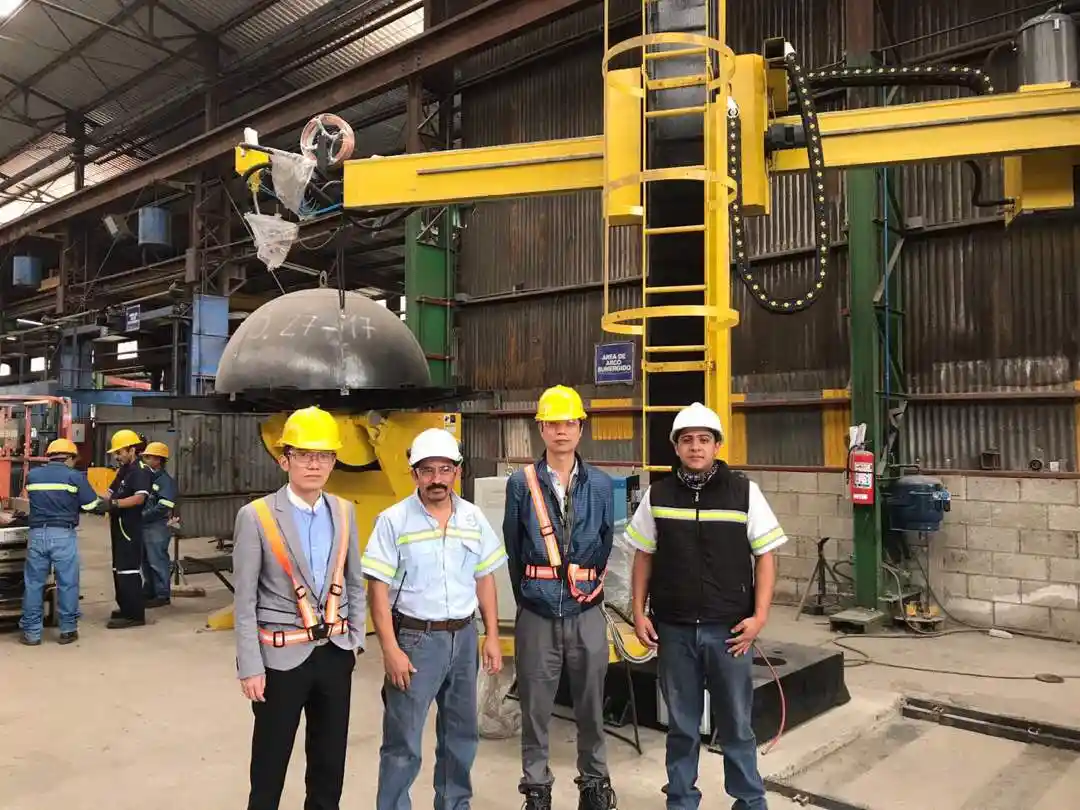
Effective material handling solutions minimize manual labor and improve safety. Overhead crane systems transport heavy plates and assembled sections within the workshop. These systems are often paired with specialized lifting attachments for secure handling of large, awkward tank components.
Fabrication workflow optimization involves careful layout planning and integrated equipment. Conveyor systems can move smaller components between workstations, while heavy-duty transfer carts handle larger sub-assemblies. This systematic approach reduces non-value-added time and improves throughput.
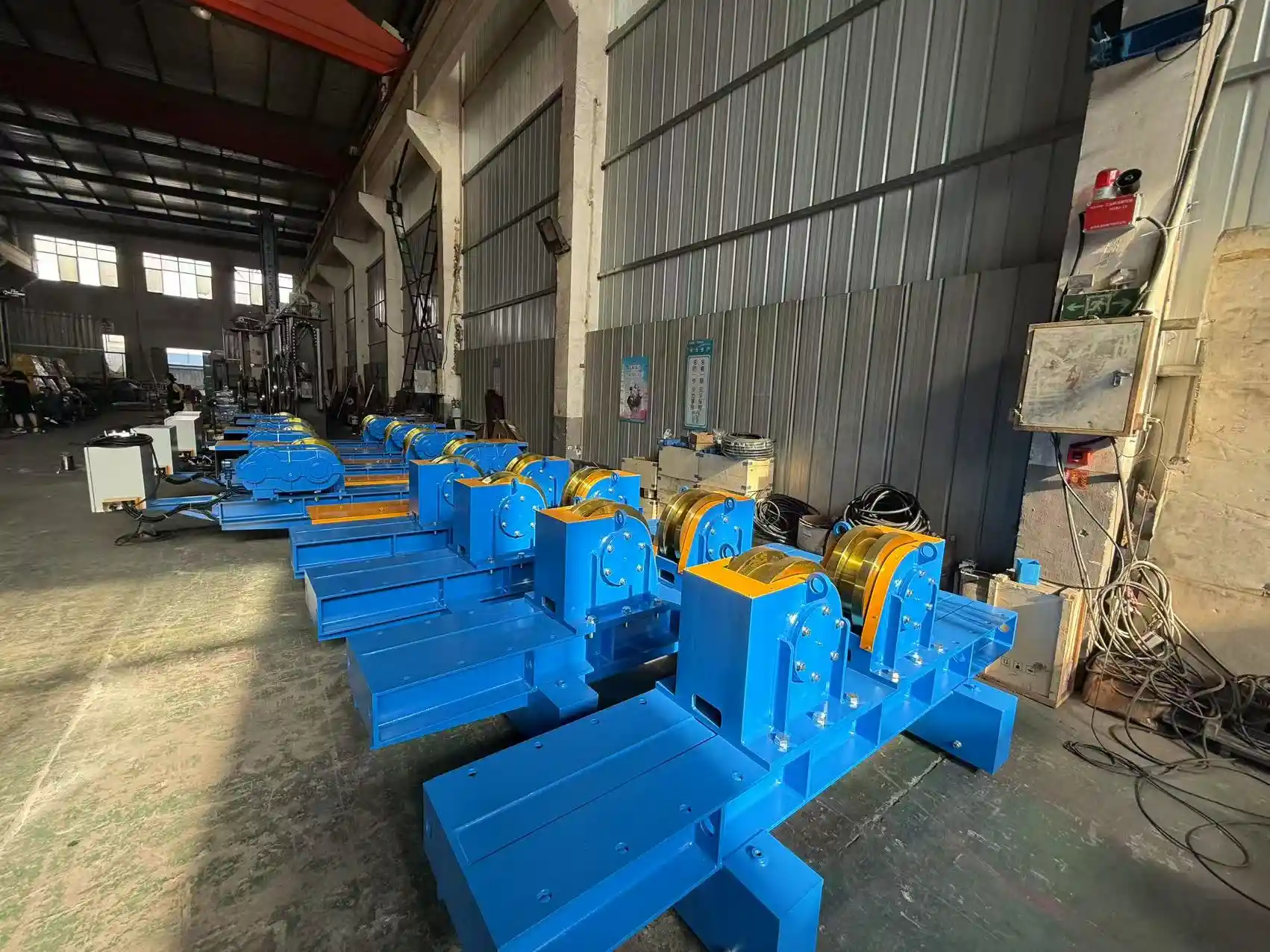
For cylindrical tank sections, welding rotators play a key role in positioning workpieces for optimal welding. Our HGK-series adjustable height pipe rotators can handle loads up to 300 tons, accommodating vessel diameters up to 6000mm. These rotators allow for continuous rotation during welding, ensuring uniform weld quality. [[《Трубовращатели и токарные валки: Основное оборудование для современного производства трубопроводов》 ]]
Quality Control and Safety Protocols in Tank Manufacturing
Rigorous quality control processes and strict safety standards compliance are non-negotiable in tank manufacturing. We prioritize equipment and protocols that ensure product reliability and worker protection.
| Safety Measure | Description | Benefit |
|---|---|---|
| Personal Protective Equipment (PPE) | Welding helmets, gloves, flame-retardant clothing | Protects workers from hazards |
| Ventilation Systems | Fume extraction, general ventilation | Maintains air quality, prevents respiratory issues |
| Emergency Stop Mechanisms | Readily accessible E-stops on all machinery | Immediate shutdown in emergencies |
| Machine Guarding | Physical barriers on moving parts | Prevents contact with dangerous components |
| Non-Destructive Testing (NDT) | Ultrasonic, X-ray, magnetic particle inspection | Detects internal/surface flaws without damage |
Quality control processes are integrated throughout the fabrication line, not just at the end. Non-destructive testing (NDT) equipment, such as ultrasonic testing (UT) and radiographic testing (RT), identifies internal flaws in welds. Magnetic particle inspection (MPI) detects surface and near-surface discontinuities. These inspections ensure weld integrity and compliance with industry codes.
Inspection equipment, including precision measurement tools and visual inspection aids, verifies dimensional accuracy and surface finish. Automated inspection systems can also be integrated for faster and more consistent checks.
Safety standards compliance is paramount. All machinery must feature emergency stop mechanisms and appropriate guarding. Our welding manipulators include brake motors and anti-fall safety pins. Proper ventilation systems are needed to manage welding fumes. Regular safety audits and operator training reinforce a culture of safety.
Future Trends and Automation in Tank Fabrication Lines
The future of tank fabrication lies in advanced automation and smart manufacturing. We continuously explore innovative technologies to enhance efficiency and competitiveness.
Robotic welding is gaining traction, offering higher precision and speed than traditional methods. Collaborative robots (cobots) can work alongside human operators, handling repetitive tasks. This reduces labor costs and improves weld consistency.
Industry 4.0 principles, including smart manufacturing and predictive maintenance, are transforming production lines. Sensors collect real-time data on machine performance, enabling proactive maintenance and minimizing downtime. This data-driven approach optimizes resource allocation and improves overall equipment effectiveness (OEE).
Digital twins and simulation software allow manufacturers to model and optimize fabrication processes virtually before physical implementation. This reduces prototyping costs and accelerates production cycles. These trends indicate a shift towards fully integrated, intelligent fabrication environments.
Optimize Your Fabrication Line with WUXI ABK MACHINERY CO., LTD.
Build stronger tank fabrication capabilities with WUXI ABK MACHINERY CO., LTD.’s welding and cutting solutions. Our expertise, developed since 1999, ensures you receive robust, efficient, and compliant equipment designed for your specific production needs. Contact us today for a consultation and discover how our advanced machinery can optimize your fabrication line. Email: jay@weldc.com, Tel: +86-510-83555592.
Frequently Asked Questions About Tank Fabrication Equipment
What are the essential safety considerations for a tank fabrication line?
Essential safety considerations include strict adherence to safety standards compliance, ensuring all personnel use appropriate personal protective equipment. Adequate ventilation systems are crucial for fume extraction, and all machinery must be equipped with easily accessible emergency stop mechanisms to prevent accidents. Regular training and safety audits are also vital.
How does automation improve efficiency in tank manufacturing?
Automated welding systems significantly boost efficiency by ensuring consistent weld quality and reducing cycle times. This leads to substantial reduced labor costs and improved throughput. Overall fabrication workflow optimization is achieved through precise, repeatable processes, minimizing rework and enhancing productivity.
What are the critical maintenance practices for tank fabrication equipment?
Critical maintenance practices involve regular preventative maintenance schedules to ensure equipment longevity and minimize unplanned downtime. This includes daily checks, monthly lubrication, and annual recalibration. Adhering to calibration schedules maintains precision and ensures consistent performance over the equipment’s lifespan.
 English
  Español
  Français
  Deutsch
  Português
  Русский