Structural steel fabrication has always been about getting things right the first time. When you’re dealing with components that will support buildings, bridges, or wind towers, there’s no room for inconsistency. Multi-station welding systems have become the practical answer to a persistent challenge: how do you maintain precision across thousands of welds while keeping production moving? These systems work because they address real bottlenecks that fabricators face daily, not because they promise some revolutionary transformation.
How Multi Station Systems Actually Change Production Flow
The practical difference with multi-station welding comes down to what happens between welds. Traditional setups force you to wait. One operation finishes, you move the piece, you set up again, you start the next weld. That dead time adds up fast on large structural components.
Multi-station configurations let different operations happen at once. While one workpiece gets tack welding at the first station, another moves through full welding at the second. A third might be cooling or getting inspected. The workflow keeps moving instead of stopping and starting.
This matters most for resource allocation. Skilled welders spend less time on material handling and setup. They focus on the work that actually requires their expertise. The consistency improves too, since automated movements between stations eliminate the small variations that creep in with manual handling.
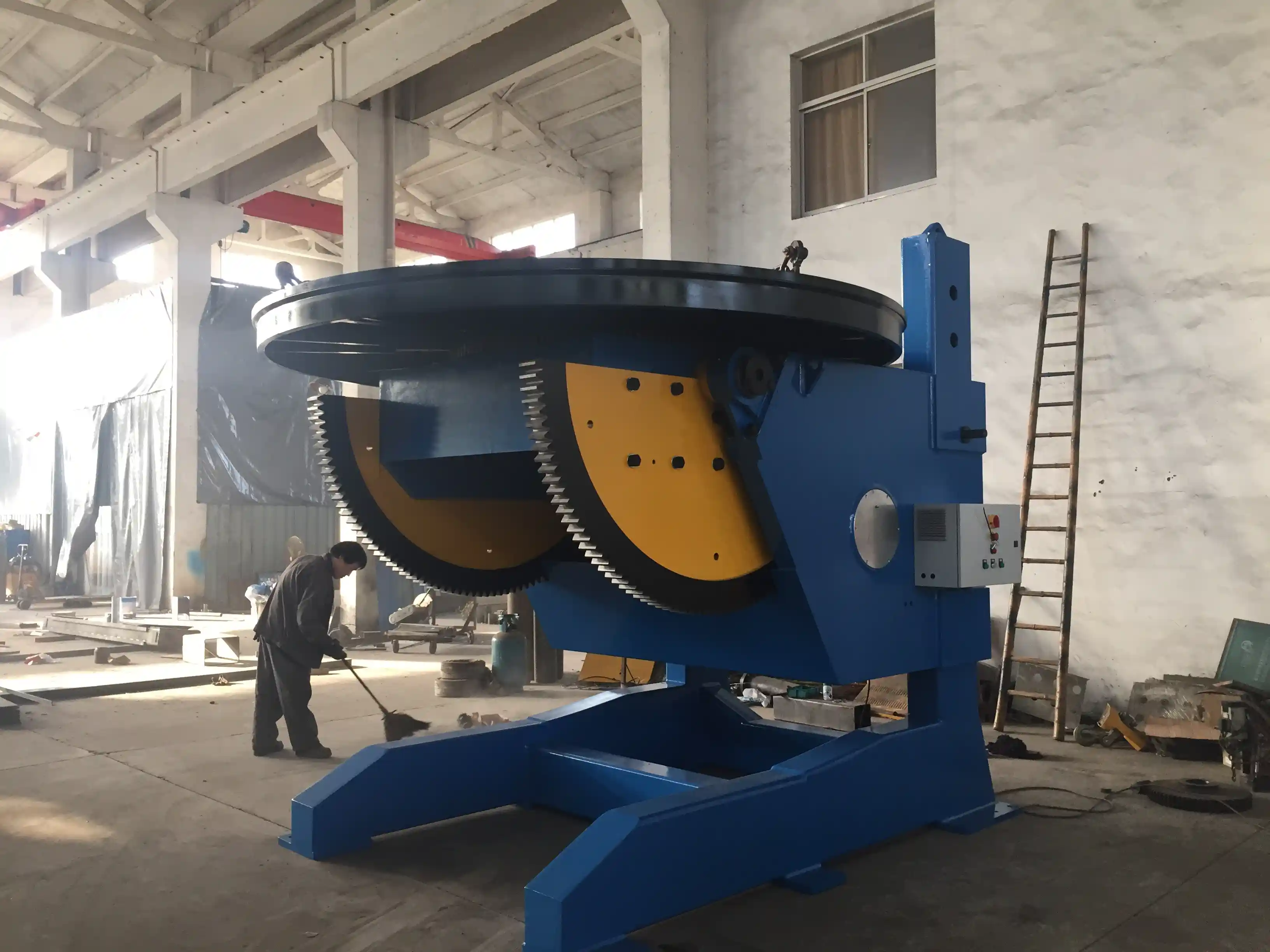
The modular aspect deserves attention. Most fabrication shops don’t run the same project forever. A system that handles wind tower sections this month might need to process pressure vessel components next quarter. Reconfigurable stations mean you’re not locked into one production type. You adjust fixtures, modify programming, and keep working.
For a large structural beam, the difference becomes obvious. Instead of crane lifts between separate machines, the beam progresses through stations designed to work together. Longitudinal seams at one point, circumferential welds at another. The control software coordinates everything, which eliminates the coordination headaches that slow down manual processes.
The Equipment That Makes Precision Possible
Robotic welding arms handle the actual weld execution, but they’re only part of the picture. The positioning equipment determines whether those robots can reach the joint correctly and maintain that position throughout the weld.
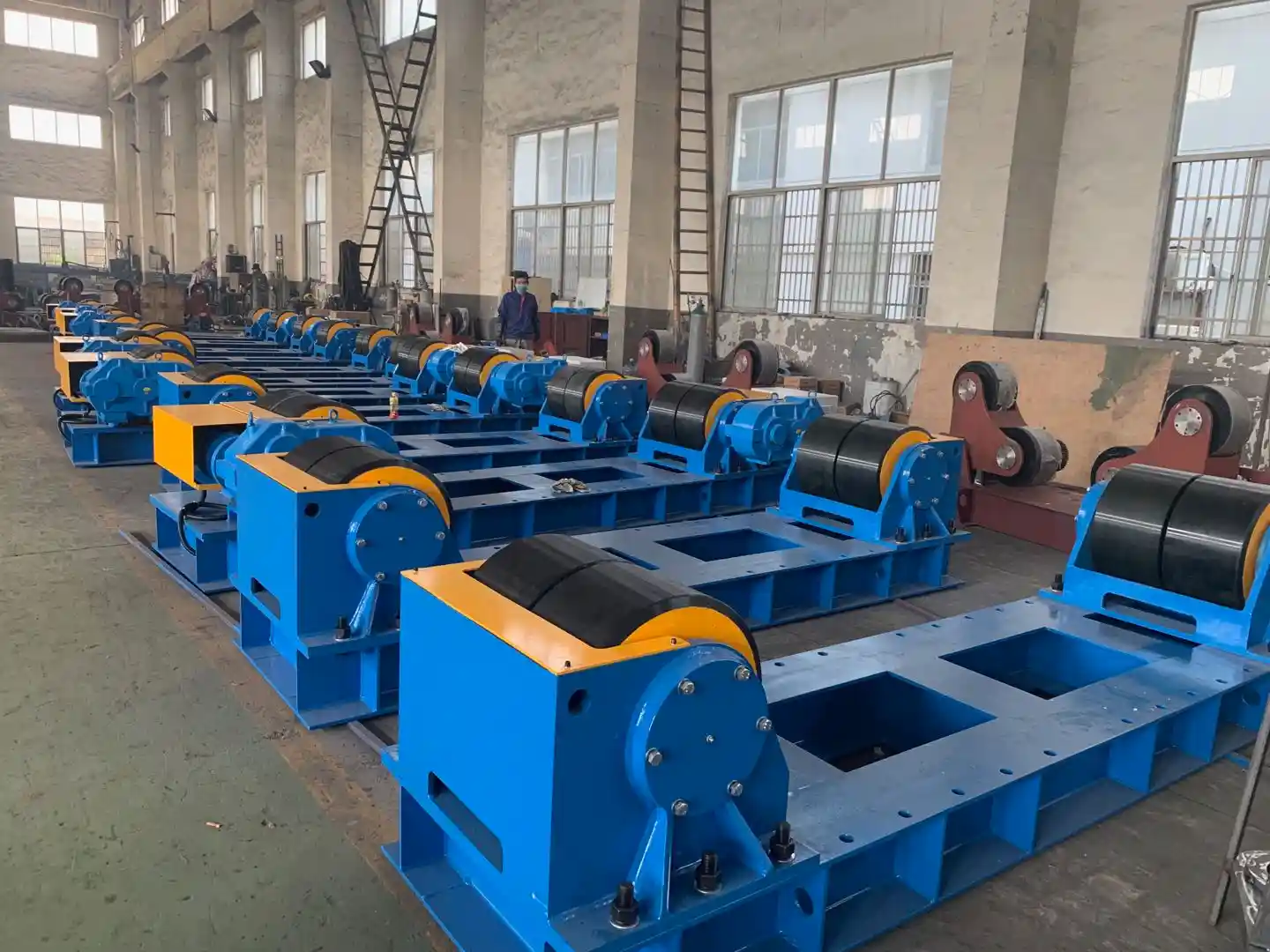
Welding manipulators provide the reach and stability needed for large structural work. Column and boom designs like the WUXI ABK LH series offer substantial travel distances. The LH8080 model covers 8000 mm in both horizontal and vertical directions, with positioning accuracy of ±0.1 mm/m. That precision matters when you’re running a weld across several meters of steel plate.
| Technology Type | Key Function | WUXI ABK Product Examples | Precision/Accuracy |
|---|---|---|---|
| Сварочные манипуляторы | Precise torch positioning for large welds | LH8080, LH4580, LH5060 | ±0.1 mm/m positioning |
| Сварочные позиционеры | Workpiece rotation, tilt, and turning | 3-осевой позиционер, HBJ-30, LHBJ-50 | ±0.05 mm positioning, ±0.5° |
| Robotic Welding | Automated, repeatable welding execution | Compatible with ABB, KUKA, FANUC robots | High repeatability |
| Control Systems | Programmatic control and process monitoring | Siemens PLC + HMI touchscreen | 100+ предустановленных программ |
| Seam Tracking Systems | Real-time weld path adjustment | Optional on welding manipulators | Enhanced weld accuracy |
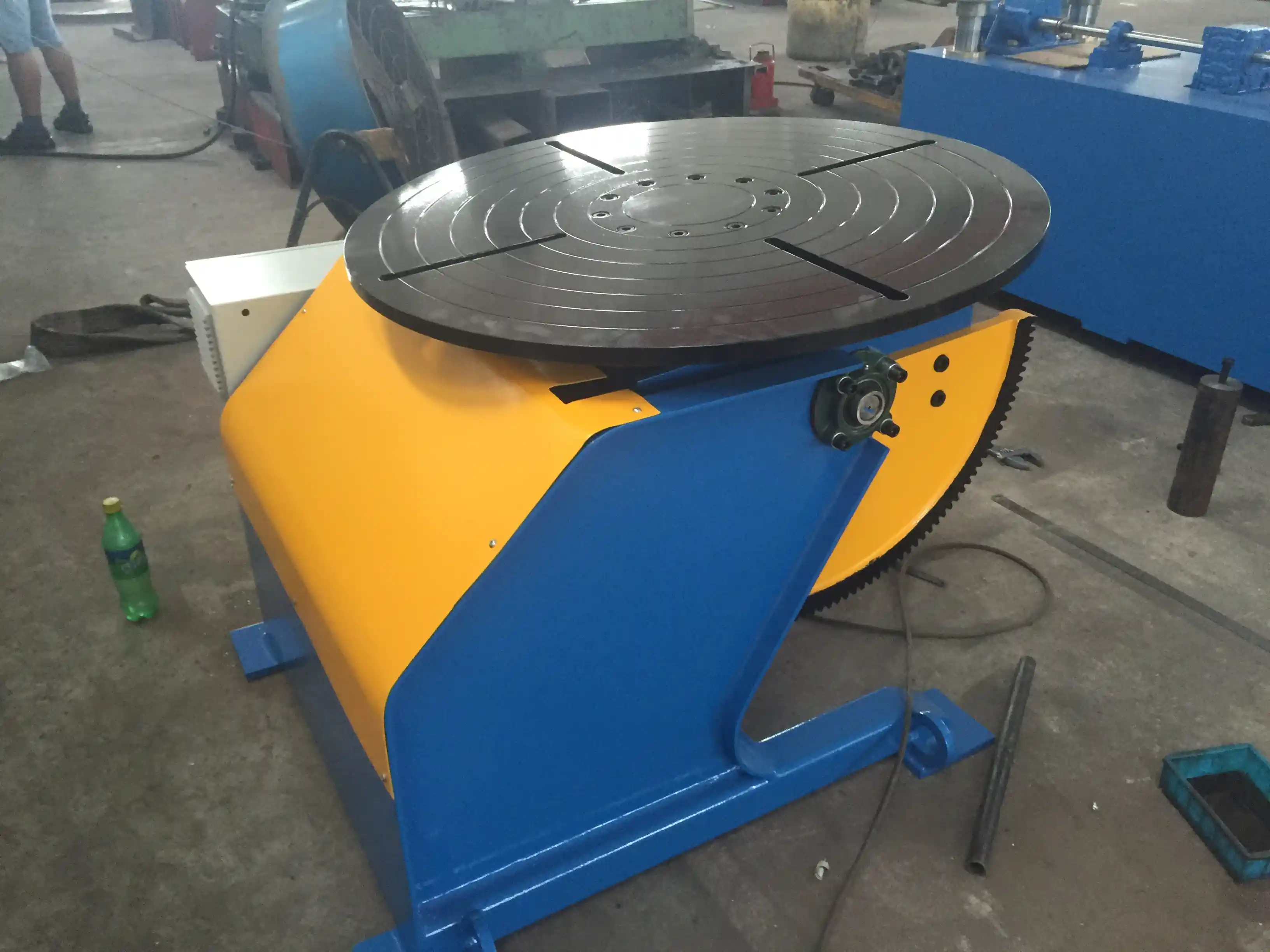
Positioners handle the workpiece orientation. The Манипулятор для сварки products use high-strength box-beam structures with linear guideways. This construction keeps things stable under load, which directly affects weld quality. The LH1235 offers manual rotation up to 360°, suited for smaller structural components where full automation isn’t cost-effective.
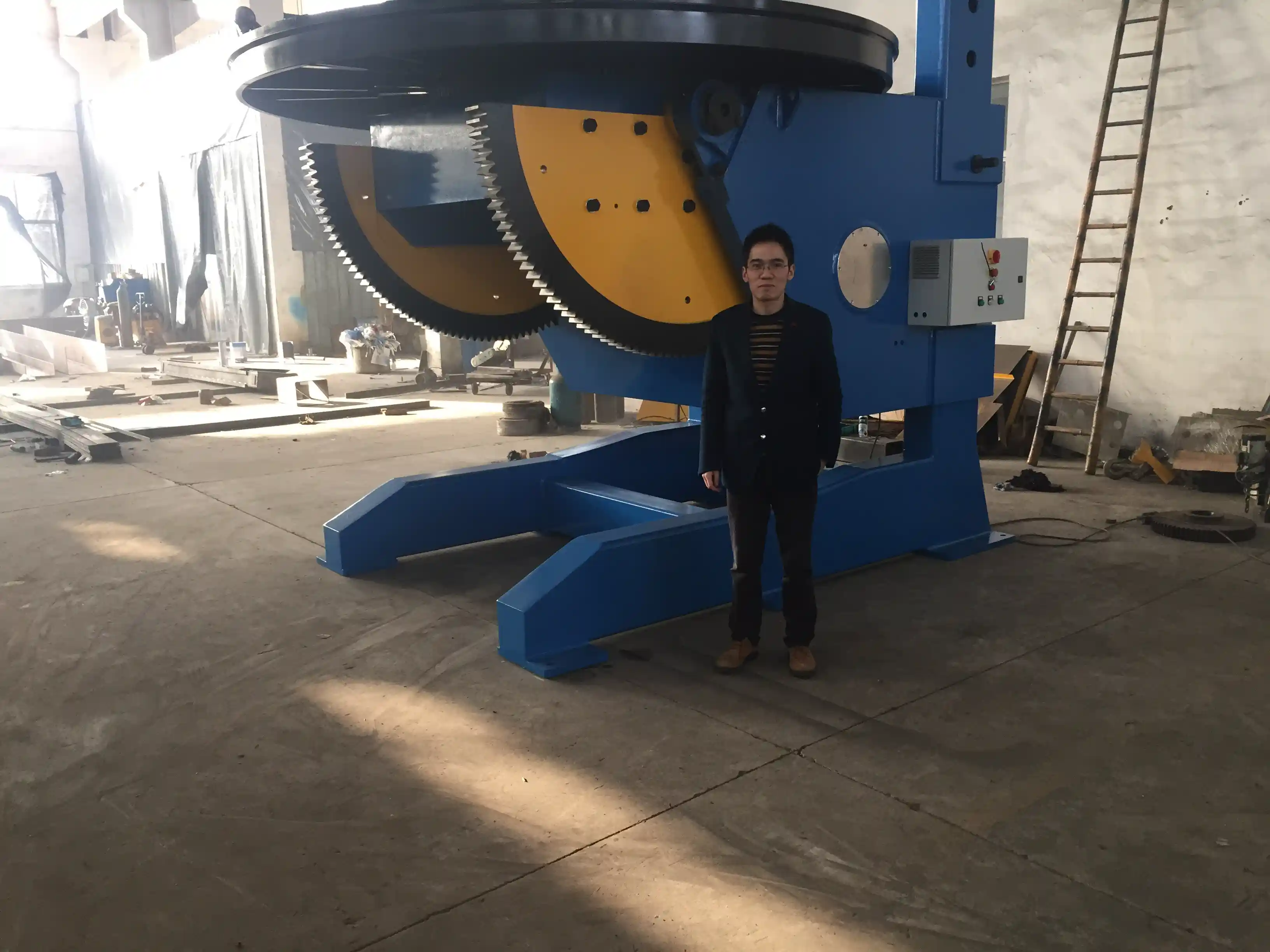
For robotic cells, the 3-осевой сварочный позиционер provides synchronized turning, rotating, and tilting. The 3-Ton version achieves ±0.05 mm positioning accuracy with 0.02 mm repeatability. When a robot needs to hit the same spot thousands of times, that repeatability becomes the difference between acceptable welds and rejected work.
Submerged arc welding handles thick structural sections where you need high deposition rates and deep penetration. The process works well with automated systems because the flux recovery and parameter control can be integrated into the station workflow.
Quality Control in Large Structural Components
Structural components carry loads. The welds holding them together need to perform under stress, sometimes for decades. Automated welding systems address this by removing the variables that cause inconsistency.
A manual welder, even a skilled one, will produce slight variations across a long shift. Travel speed changes. Arc length drifts. These small differences accumulate. Automated systems maintain the same parameters weld after weld. Current, voltage, travel speed, gas flow stay where they should be.
The control systems make this possible. PLCs and HMI interfaces let operators set parameters precisely and monitor them during operation. When something drifts out of specification, the system flags it immediately. You catch problems before they become defects that require grinding out and rewelding.
How do multi-station welding systems improve structural steel production?
Multi-station welding systems speed up fabrication by running operations in parallel rather than sequence. Loading, tacking, and full welding happen across different stations simultaneously. This cuts idle time substantially and increases daily throughput. The automation also reduces human error, which means fewer defects and less time spent on rework. Plants that implement these systems typically see measurable improvements in both output volume and first-pass yield rates.
Vision systems and laser scanners add another layer of precision. Seam tracking keeps the weld path following the actual joint, compensating for small variations in fit-up or thermal distortion during welding. This matters particularly on long welds where even minor drift accumulates into significant deviation.
Wind tower fabrication illustrates the point. These structures require consistent weld quality across large cylindrical sections. Manual welding struggles to maintain that consistency over the length of a tower section. Automated systems with proper seam tracking deliver uniform results that meet the demanding specifications these applications require.
Making Automation Work for Your Operation
Buying equipment is the easy part. Making it productive requires planning that starts well before installation.
Most fabrication shops have specific bottlenecks that limit their output. Sometimes it’s welding capacity. Sometimes it’s material handling. Sometimes it’s the setup time between different job types. Identifying where automation will actually help requires honest assessment of current operations.
The implementation process follows a logical sequence. Define what you’re trying to achieve. More throughput? Better quality? Reduced labor costs? Different goals point toward different equipment configurations. A plant focused on high-volume production of similar components needs different capabilities than one handling varied custom work.
Equipment selection should match the actual work. Манипулятор для сваркиs make sense for large-scale projects with long welds. 3-осевой сварочный позиционерs fit applications requiring complex workpiece orientation for robotic access.
What are the key benefits of automated welding for large steel structures?
Automated welding reduces labor costs by handling repetitive operations that would otherwise require manual welders. Safety improves because operators work away from arc flash and fume exposure. The scalability advantage matters for growth. Adding production capacity doesn’t require proportionally more skilled labor, which has become increasingly difficult to find. Plants gain competitive position through higher efficiency and more consistent quality.
Infrastructure changes often accompany automation projects. Factory layouts may need reconfiguration. Power supplies might require upgrades. Control networks need installation. Training becomes part of the equation too. Operators need to understand the systems they’re running, and maintenance staff need to keep them working.
WUXI ABK MACHINERY has supported these transitions since 1999. The experience shows in how we approach system integration. Equipment that works in isolation isn’t useful. Equipment that fits into your workflow and production requirements delivers actual value.
Matching Equipment to Your Specific Requirements
The range of available equipment means you can configure a system for your particular situation. Generic solutions rarely optimize anything. Specific solutions address specific challenges.
Start with the basics. What are the largest and heaviest workpieces you need to handle? What materials? What weld types? What production volume makes sense for your market? These questions narrow the options considerably.
Technical specifications matter. Load capacity determines what you can position safely. Positioning accuracy affects weld quality. Repeatability determines consistency across production runs. The Трехосевой позиционер (5 Tons) handles 5000 kg workpieces with ±0.05 mm positioning accuracy. That specification either fits your needs or it doesn’t.
Control system capabilities deserve attention. How many programmable welding programs do you need? What PLC integration makes sense with your existing systems? If you’re running ABB, KUKA, or FANUC robots, compatibility becomes a selection criterion.
How to select the right multi-station welding system for a structural steel plant?
Selection starts with understanding your operation. Determine maximum workpiece dimensions and weights. Identify the weld types you run most frequently and the throughput you need to achieve. Assess your available floor space and budget constraints. Then find a supplier who offers customization, technical support, and reliable service. The equipment only performs if it’s properly integrated and maintained over time.
Supplier evaluation goes beyond equipment specifications. How long have they been in the business? What’s their track record with similar applications? What support do they provide after installation? WUXI ABK MACHINERY CO., LTD. has operated since 1999, which means we’ve seen what works and what doesn’t across many different fabrication environments. We build systems that can be customized for specific challenges, and we back them with the technical support needed for long-term performance.
Партнерство с WUXI ABK для передовых решений в области сварки
Elevate your structural steel fabrication capabilities with WUXI ABK MACHINERY CO., LTD. As a leader in welding equipment since 1999, we specialize in advanced multi-station welding systems designed for unparalleled efficiency and precision. Contact our experts today to discuss tailored solutions that meet your plant’s unique demands and drive your operational success. Partner with us for innovation, reliability, and superior performance.
Электронная почта: jay@weldc.com
Тел: +86-510-83555592
Frequently Asked Questions About Multi Station Welding Systems
What are the primary advantages of multi-station welding systems for structural steel?
Multi-station welding systems boost productivity by allowing simultaneous processing of multiple components or different stages of a single large structure. Weld quality stays consistent because automated systems don’t have the variability that comes with manual work. Labor costs drop since fewer operators handle more output. Safety improves with operators positioned away from welding hazards. The parallel operation approach minimizes idle time and keeps production flowing.
How does WUXI ABK MACHINERY ensure the quality of its welding equipment?
WUXI ABK MACHINERY has manufactured welding equipment since 1999. We use advanced engineering approaches, select materials for durability, and run comprehensive quality control throughout production. Precision components undergo rigorous testing before assembly. The focus on accuracy and reliability shows in equipment that performs consistently over years of production use. Our substantial registered capital reflects the stability needed to support customers long-term.
Can multi-station systems be customized for specific structural steel projects?
Customization is standard practice. WUXI ABK MACHINERY works with clients to understand their specific requirements before configuring a system. This includes specialized fixtures for particular workpiece geometries, integration with existing robotic systems, and control programming tailored to specific production workflows. The goal is equipment that fits the actual work rather than forcing operations to adapt to generic equipment limitations.
 English
  Español
  Français
  Deutsch
  Português
  Русский