The most overlooked productivity lever in small fabrication shops is not the welding process itself — it’s how work moves between stations. For teams of three or four operators, adding more manpower is rarely an option; the smarter move is equipping one person to manage multiple automated welding cells simultaneously. Single-operator welding systems, built around modular PLC-driven positioners and manipulators, convert what used to require two or three skilled welders into a single operator’s oversight, dramatically increasing throughput without expanding headcount. The real gain comes from recipe-based control and integrated workflows that minimize idle time, not from full robotic automation.
The Labor Gap: Why Single-Operator Efficiency Matters
In many workshops we’ve visited, a welder spends more time repositioning the part and adjusting the manipulator than actually depositing filler metal. That idle time multiplies across shifts, especially when the team is small and each person is already handling multiple functions. According to industry feedback, arc-on time rarely exceeds 30% in manual welding cells. Single-operator systems address this by offloading positioning and rotation to servo-driven equipment that runs through pre-programmed sequences with minimal human intervention. When one operator can load a workpiece, start a stored welding program, and then walk to the next station while the first runs unattended, the arc-on time can easily double. For a shop running two or three welding stations with a single operator, the effective output per person rises well above traditional benchmarks.
Equipment Essentials for One-Operator Control
A single-operator system isn’t a single machine; it’s a combination of positioners, manipulators, and rotators linked by a common control architecture. The essential elements are repeatable positioning, recipe storage, and safe unattended cycle capability.
Манипулятор для сваркиs That Do the Heavy Positioning
Welding manipulators such as the LH8080 (8000‑mm horizontal travel, 8000‑mm vertical travel) carry the torch along programmed paths for longitudinal and circumferential seams. With AC frequency stepless speed regulation and positioning accuracy of ±0.1 mm/m, they hold consistent travel even during long welds. The operator sets the weld length, speed, and overlap from the touchscreen, loads the workpiece onto a companion positioner, and presses start. The manipulator runs the pass while the operator loads the next station.
Positioners and Rotators That Keep the Arc Burning
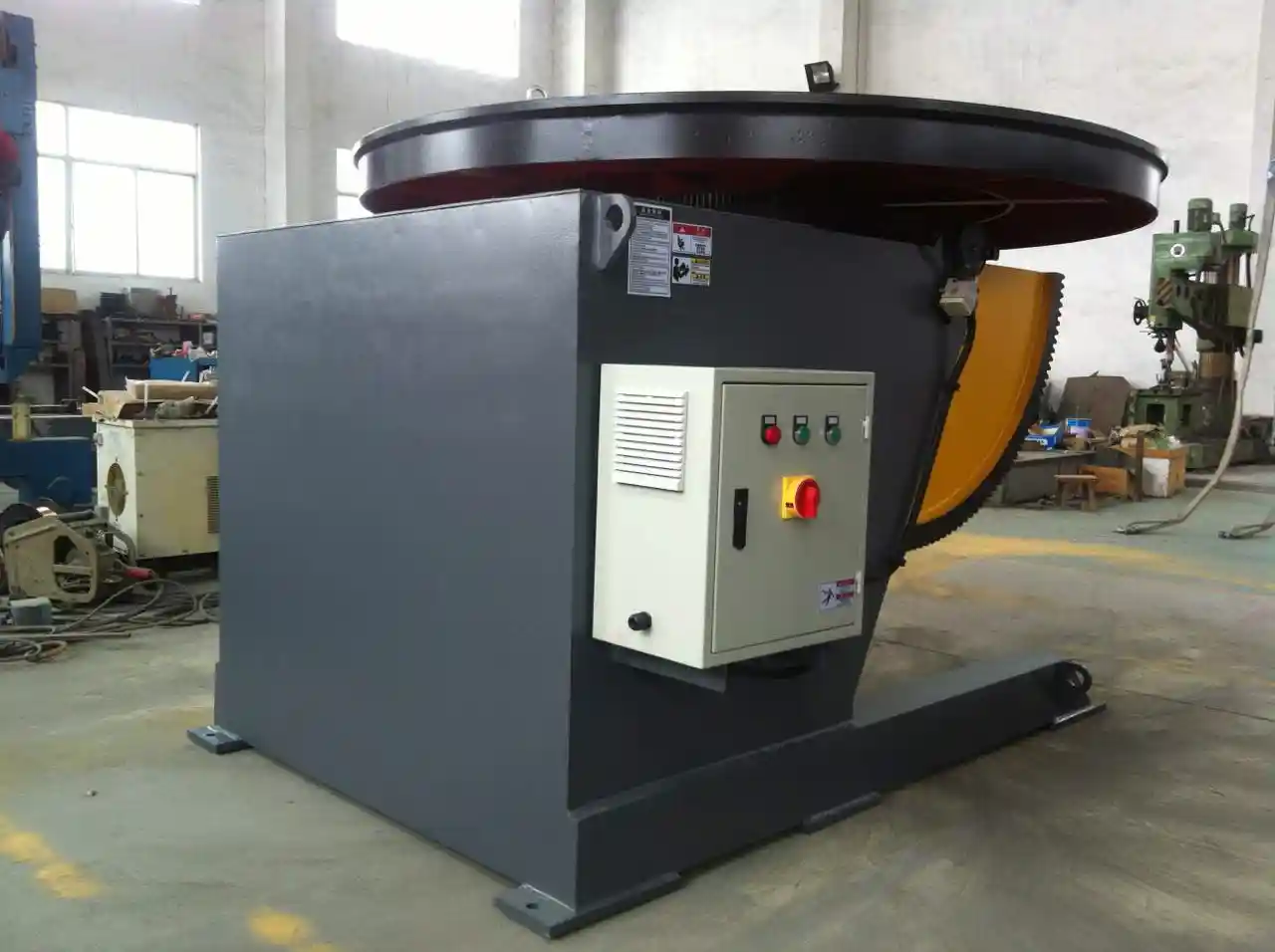
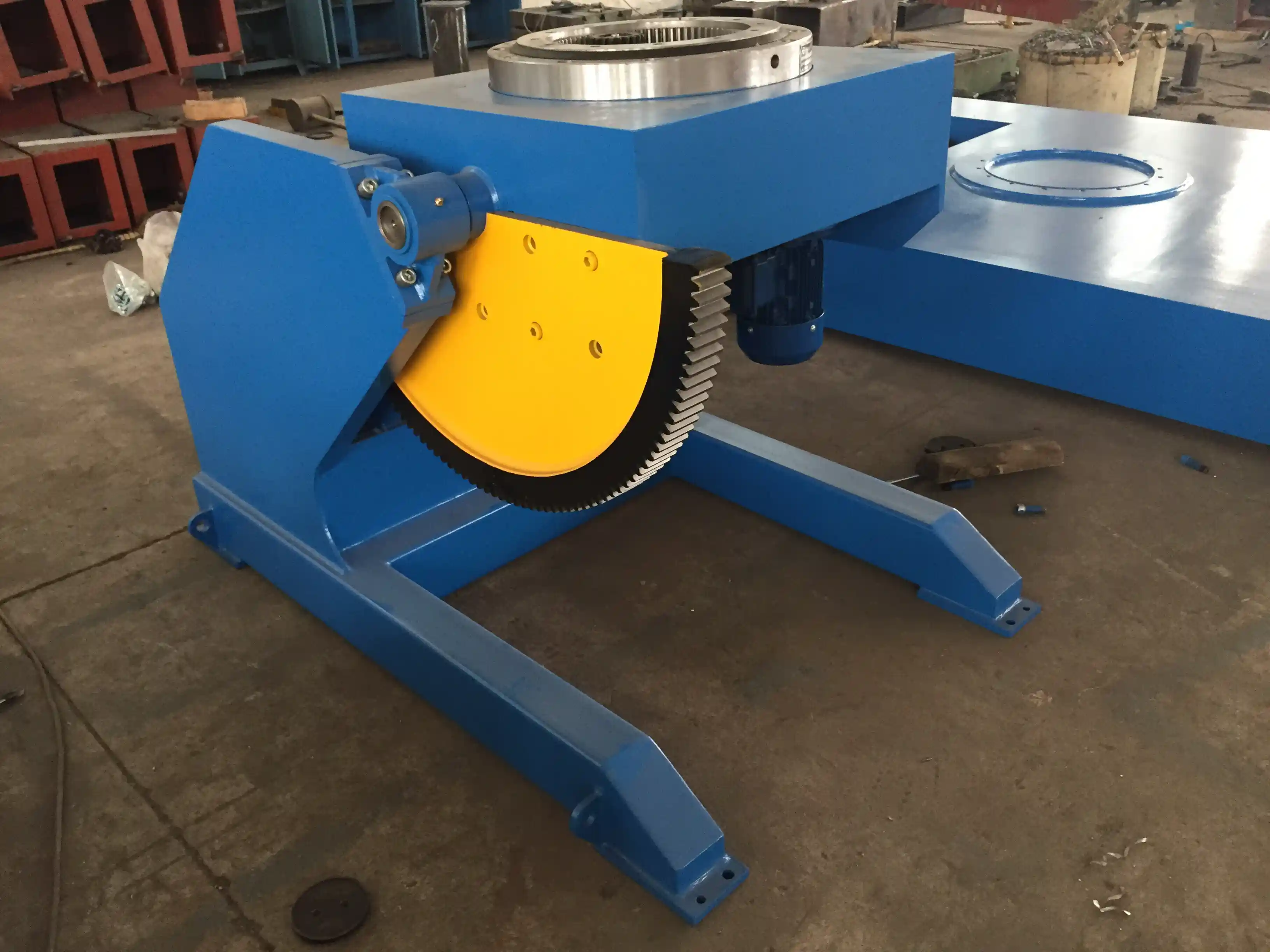
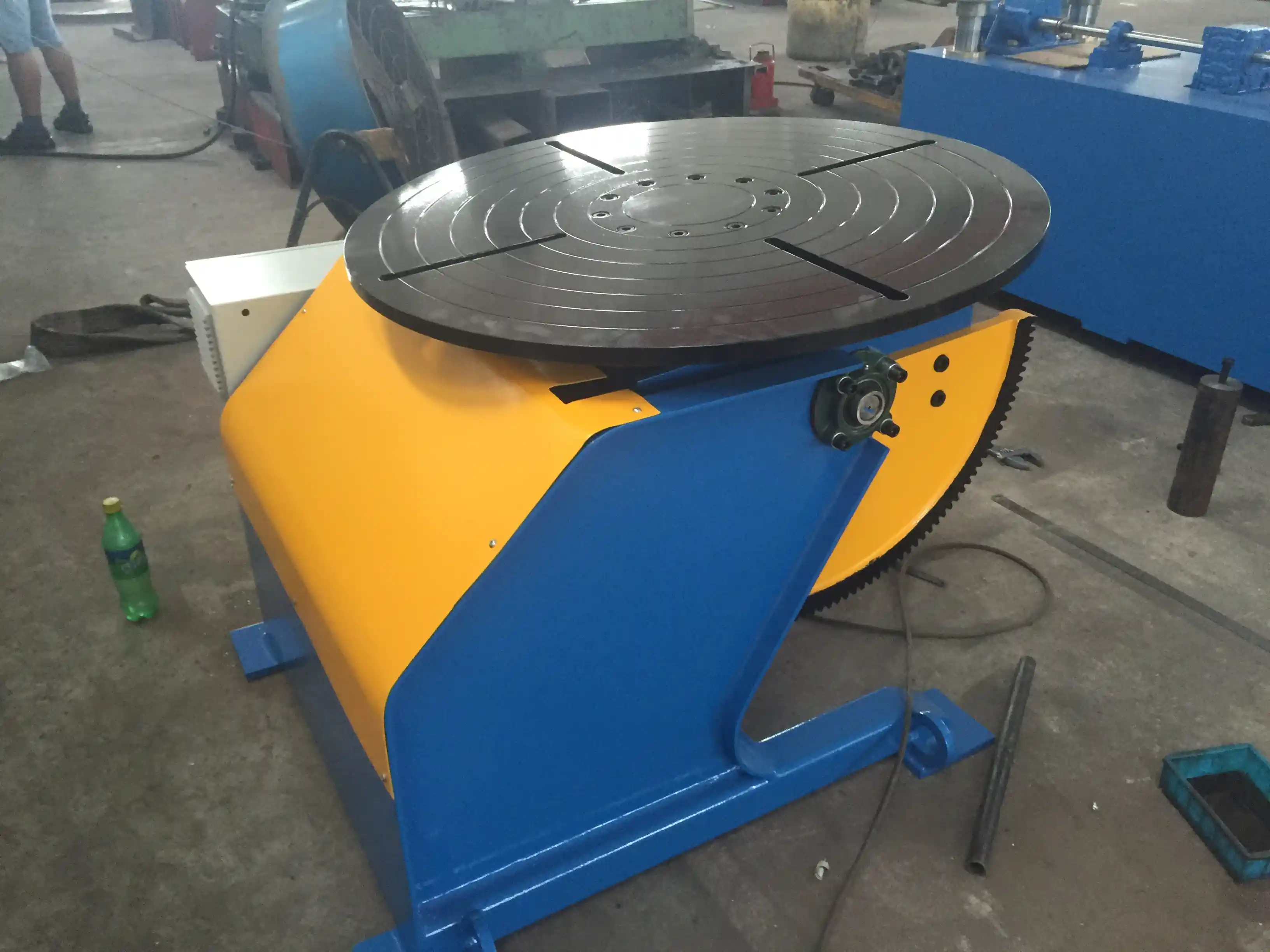
Load‑bearing rotation is critical. A 1‑ton 3‑axis welding positioner from ABK (worktable 1200 mm, 360° continuous rotation, ±0.05‑mm positioning accuracy) can hold a complex assembly and tilt it through 0–135° so that the weld puddle stays flat in any orientation. Combined with a welding rotator like the HGZ‑10 (10‑ton capacity, 320–2800‑mm diameter range, stepless speed control), an operator can rotate a cylindrical vessel while the manipulator welds the girth seam — all without manual turning. The table below lists manipulator models suitable for single-operator cells.
| Модель | Горизонтальное перемещение | Вертикальное путешествие | Typical Single‑Operator Application |
|---|---|---|---|
| LH3040 | 3000 мм | 4000 мм | Small pressure vessels, pipe flanges |
| LH5060 | 5000 мм | 6000 мм | Medium tank sections, H‑beam stiffeners |
| LH8080 | 8000 мм | 8000 мм | Wind tower sections, large storage tanks |
Why Recipe‑Based Control Is the Key
The operator’s ability to supervise multiple stations hinges on recipe management. With Siemens PLC and a 10‑inch HMI, the control cabinet stores over 100 welding programs — each specifying travel speed, welding current, oscillation width, and number of passes. The operator selects the program for the part on the floor, confirms the fixture is clamped, and walks away. Hours of manual parameter entry are eliminated. When the next batch of different parts arrives, the operator recalls a stored recipe and resumes production within minutes, not hours. This quick changeover is what makes one‑person operation practical in a high‑mix, low‑volume shop.
Designing a Workflow That One Person Can Monitor
Even with the right hardware, the floor layout determines whether a single operator can keep up. We’ve seen shops invest in automated equipment but then place stations so far apart that the operator spends half the shift walking.
The Multi‑Station Loop: Operator Movement Pattern
A typical U‑shaped cell puts loading at one end, welding in the middle, and unloading at the other. The operator loads a raw part onto the first positioner, starts the weld program, then moves to the second station to unload a finished part while the first runs. By the time the second station finishes, the operator returns to the first, unloads the completed piece, and repeats the cycle. With two manipulators and a rotator arranged in a 15‑meter loop, one operator can maintain three stations without backtracking. The key is that each machine has enough cycle time — at least 8–10 minutes — to give the operator time for material handling.
Integrating Cutting and Welding for Seamless Flow
Adding a CNC plasma or laser cutter to the cell eliminates the transport step. A plate is cut on the CNC table, and the operator moves it directly to the welding manipulator while the machine cuts the next piece. In a recent project, we designed a line where one operator managed a CNC plasma table, a welding manipulator, and a rotator station, producing complete muffler assemblies from raw sheet to finished weld in a continuous shift. The workflow reduced work‑in‑progress by half because parts never sat waiting.
Training and Safety When One Person Runs Multiple Machines
Running unattended cycles raises valid safety concerns, but modern control systems are designed to handle it.
Why Pre‑Set Recipes Reduce Human Error
With a stored program, the operator is not guessing the weld parameters — the machine repeats the exact travel, speed, and voltage that was qualified during setup. This consistency reduces rework and scrap, which are bigger productivity killers than labor itself. New operators become effective faster because the machine guides the process.
Safety Systems That Permit Unattended Cycle Time
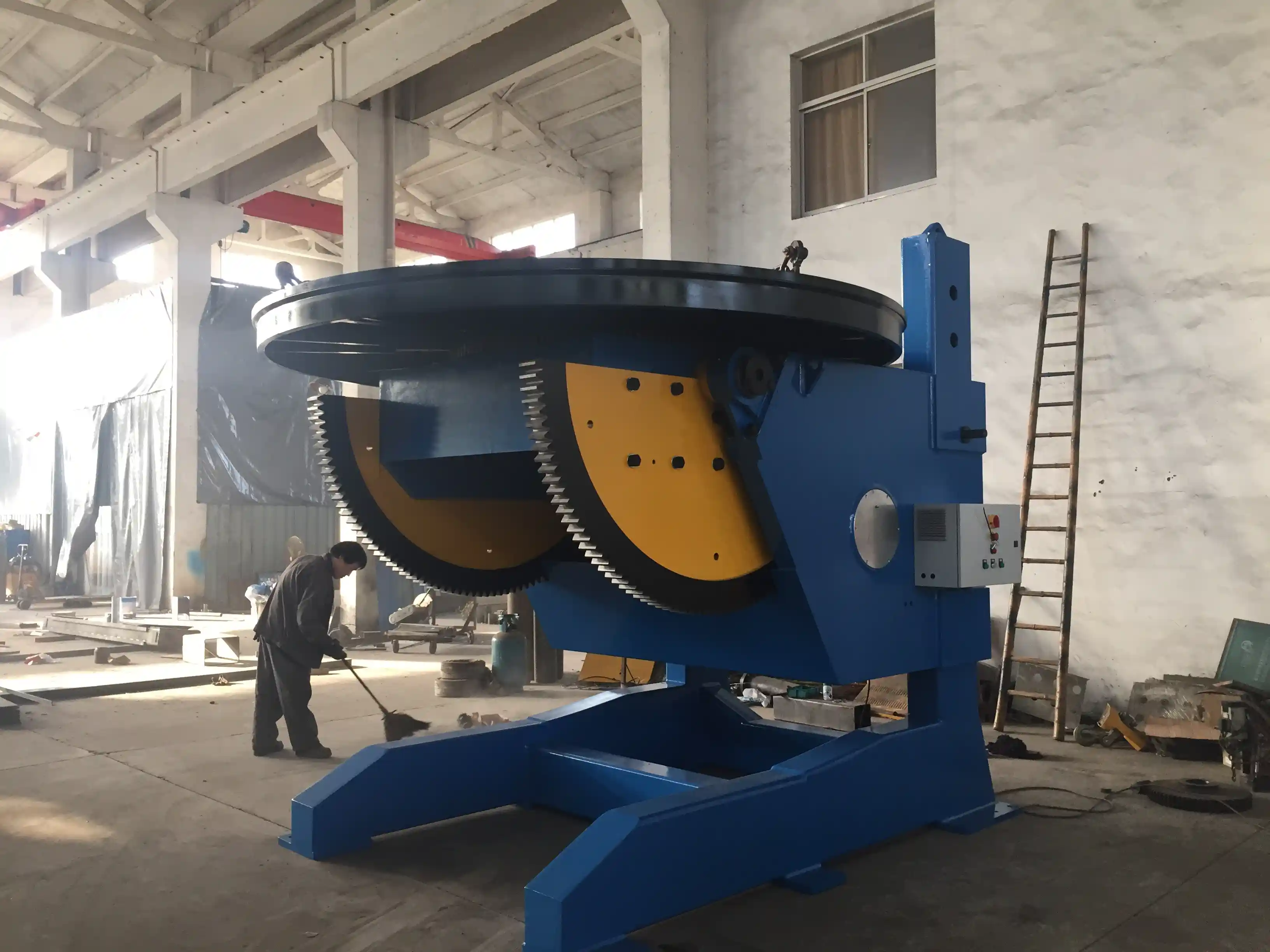
All ABK welding positioners and manipulators carry IP54‑rated enclosures and are equipped with emergency stop circuits that immediately cut motor power if a light curtain or gate switch is breached. Anti‑fall safety pins on the manipulator boom prevent back‑drive. The control system can be configured to require a two‑hand start or operator presence in a monitored zone, depending on local safety regulations. These features let the operator leave the immediate weld area while the machine cycles, provided the floor is marked and guarded.
If your shop currently relies on manual repositioning between passes, send your part number and quantity to jay@weldc.com. We’ll work with you to match a manipulator configuration that cuts handling time per part and eliminates non‑productive motion.
Calculating the Payback: How Automation Reduces Labor Costs
The financial case turns on one metric: how many more finished parts per shift can a single operator produce compared to a manual crew.
Throughput Comparisons: One Operator vs. Three Welders
Consider a standard tank fabrication operation: two welding manipulators on longitudinal seams and one rotator for girth welds. Manual operation typically requires three welders — one on each machine plus one for fit‑up. With automated recipe control and integrated rotation, one operator can load, start, and unload all three stations. In practice, we’ve measured throughput of 2.5 vessels per shift with a single operator, versus 3 vessels with three operators manually. The labor cost per vessel drops by more than half, and the operator can handle product mix changes without calling in extra hands.
Reducing Training Costs with Pre‑Set Programs
Because welding parameters are embedded in the recipe, a machine operator does not need ten years of welding experience. A competent technician can be trained to load, call a program, and inspect the result in under two weeks. This dramatically lowers the barrier to expanding capacity and reduces the impact of the skilled‑labor shortage without sacrificing quality.
Take the Next Step: Configure Your Single‑Operator Line
Small teams don’t have room for trial and error. The right combination of manipulator reach, positioner load capacity, and rotator diameter depends on your specific component sizes and the hourly output target. We routinely work with fabrication managers to sketch a cell layout, select equipment from our range of 1‑ton to 100‑ton positioners and manipulators, and define the PLC recipe structure before any equipment ships. Share your component dimensions and target shift output to jay@weldc.com or call +86‑13815101750, and we’ll return a preliminary equipment list and floor plan within two working days.
Common Questions About Single‑Operator Welding Systems
Is it realistic for one person to operate two or three welding machines at once?
Yes, provided the machines have stored programs and the cycle time per station is long enough to let the operator load and unload others. In our experience, a minimum cycle of 8–10 minutes per weld station is practical. The operator walks a pre‑determined loop and never stands idle waiting for a machine to finish. The layout and recipe timing must be engineered together — a free‑form approach leads to waiting and wasted motion.
How do single‑operator systems handle changeover between different product types?
Effective changeover relies on quick‑release fixtures and stored recipes. When a batch changes, the operator calls a new program, swaps clamps or jaws, and is ready to run the next part. We’ve seen shops with 50 different part numbers run on the same cell with a single operator by building a library of programs. The real barrier is not the machine but the fixturing — planning modular clamping from the start keeps changeover under 15 minutes.
What safety certifications apply to unattended welding stations?
Equipment built to CE and ISO 9001 standards with IP54 protection is the baseline. For unattended operation, we recommend hard‑wired safety PLCs, light curtains at entry points, and monitored emergency stops that can be triggered from multiple locations. Depending on your region and industry, you may also need compliance with ASME or AWS D1.1 for weld procedure qualification, but the equipment safety itself is governed by the machine directive.
Does a single‑operator setup eliminate the need for skilled welders?
It reduces the need, but doesn’t eliminate it. The machine handles torch manipulation and process control, but someone still needs to set up the qualified welding procedure, design the fixturing, and inspect the welds. What changes is that one skilled welding engineer can support multiple machine cells, while the day‑to‑day operation is handled by technicians trained on the equipment. For a small shop, that means your most experienced person can focus on quality and development instead of repetitive manual passes. Share your requirements and we’ll confirm which equipment fits your skill mix and throughput needs.
Если вам интересно, ознакомьтесь со следующими статьями по этой теме:
Повышение качества и эффективности производства ветроэнергетических установок: Ключевая роль позиционеров при сварке обхватов секций башен
Чрезмерное смещение при сварке трубопроводов: решение для прецизионного позиционирования сварного поворотного стола от компании Wuxi ABK
Wind Tower Welding Problems Again: How Intelligent Growing Line Rotators Boost Productivity by 50%
Проблемы, связанные с несоосностью при сварке труб: как интеллектуальные поворотные устройства для сварки труб повышают коэффициент готовности нефтепроводов
 English
  Español
  Français
  Deutsch
  Português
  Русский