Most fabrication shops I talk to want the same thing: the ability to switch from one job to the next without losing half the shift to setup. When batch sizes shrink and part variety climbs, equipment that adjusts a little is not enough. Quick-change flexible fabrication equipment reduces changeover from hours to minutes, but only if you specify the right design features for your production mix. The difference between adjustable and truly quick-change is a set of engineering decisions built into the machine, and that is what this article covers.
What Makes Fabrication Equipment Truly Quick-Change
Adjustability is not the same as quick-change capability. A welding positioner that requires four bolts loosened, a manual crank, and a trial-and-error alignment still eats 45 minutes per changeover. Quick-change equipment eliminates repetitive manual adjustment through three design elements: repeatable clamping interfaces that locate the workpiece without measurement, powered axes with programmable positions, and tooling that swaps out in seconds rather than being rebuilt.
In our experience, the single biggest source of lost time is re-indicating the workpiece after every changeover. Machines with precision-ground locating pins or zero-point clamping systems take the indicator out of the process entirely. You clamp, the workpiece sits where the program expects it, and welding starts. That alone can cut 30 minutes from a typical changeover on a pipe or structural part.
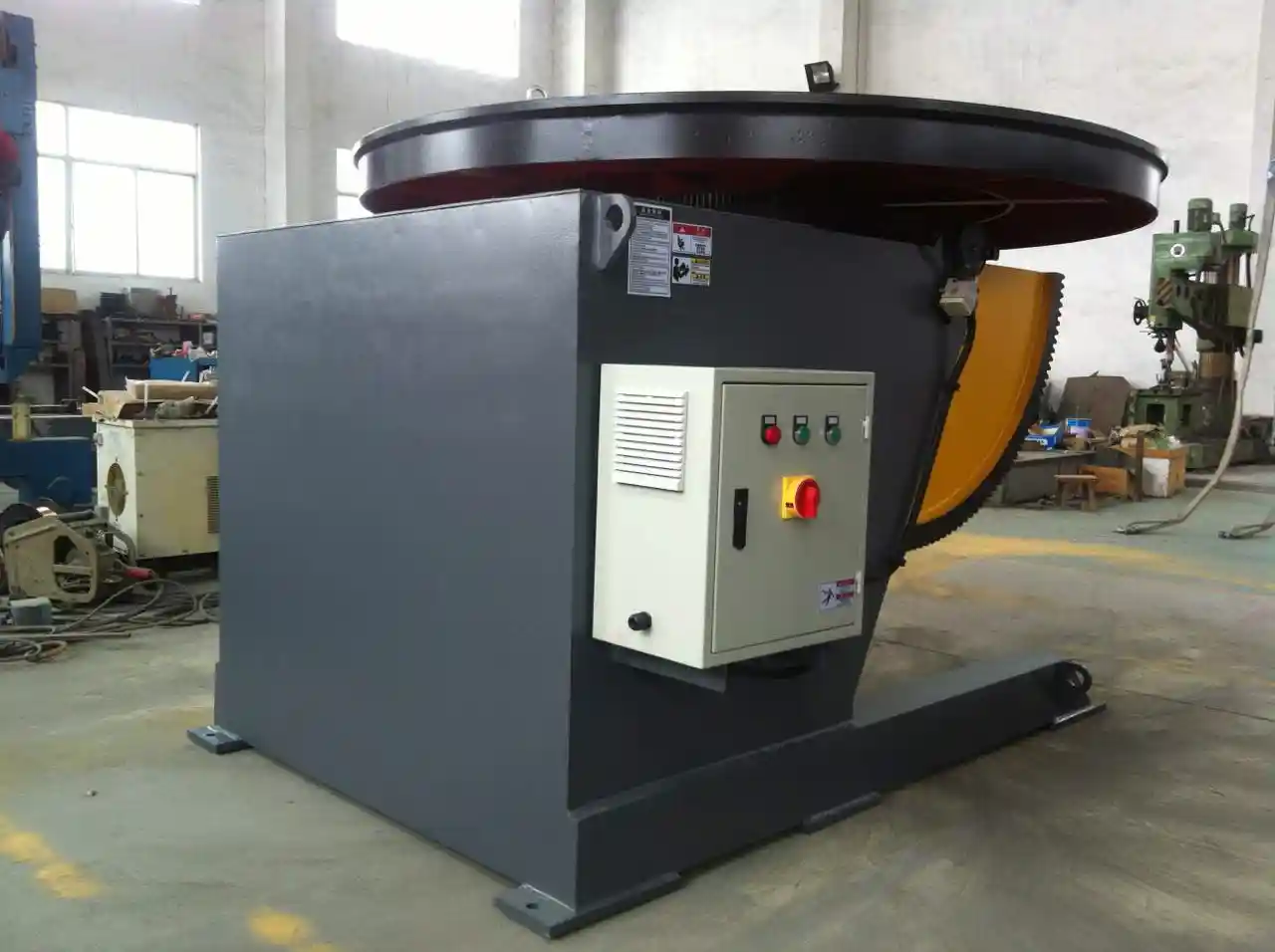
Hydraulic or pneumatic quick-clamping is another multiplier. Manual T-slot clamping works for one-off jobs, but repeat orders on different diameters need something faster. Positioners with hydraulic chucks, for instance, can grip and release a workpiece in under ten seconds while maintaining runout under 0.1 mm. That is the level of speed and precision that makes just-in-time fabrication practical.
Comparing Quick-Change Mechanisms: Hydraulic, Pneumatic, and Manual Systems
Not all quick-change systems work the same way, and mixing them up costs money. The table below compares the main mechanism types used on welding positioners and rotators.
| Mechanism | Changeover Time | Повторяемость | Типовое применение |
|---|---|---|---|
| Manual T-slot | 20–45 min | Operator-dependent | Prototyping, one-off repair |
| Pneumatic clamp | 5–12 min | ±0.2 mm | Small batch, similar diameters |
| Hydraulic chuck | 2–5 min | ±0,05 мм | Serial production, JIT cells |
| Zero-point interface | Under 2 min | ±0.01 mm | Robotic cells, high-mix lines |
Pneumatic systems work well for lighter loads and frequent changes within a narrow diameter range, but they lack the clamping force for heavy fabrications. Hydraulic chucks deliver both speed and grip, and they hold accuracy over thousands of cycles — important when the same program runs dozens of times per shift. Zero-point interfaces are the fastest but require dedicated fixtures on every new part type, so they make sense only when the variety is finite and repeatable.
If your shop runs 20 or more different part numbers per week, hydraulic quick-change on the main positioner often pays for itself within six months just through recovered productive hours. But if most of your work is large one-off vessels, the cost of a zero-point system may not be justified; manual adjustability with good measurement tooling can be the right answer.
The Role of Programmable Positioners in Setup Time Reduction
The mechanical side matters, but the electrical and control side can be the bottleneck if overlooked. A positioner that has quick-change tooling but requires the operator to manually jog each axis to position will still waste minutes per setup. Positioners with servo-driven axes and stored programs change the equation.
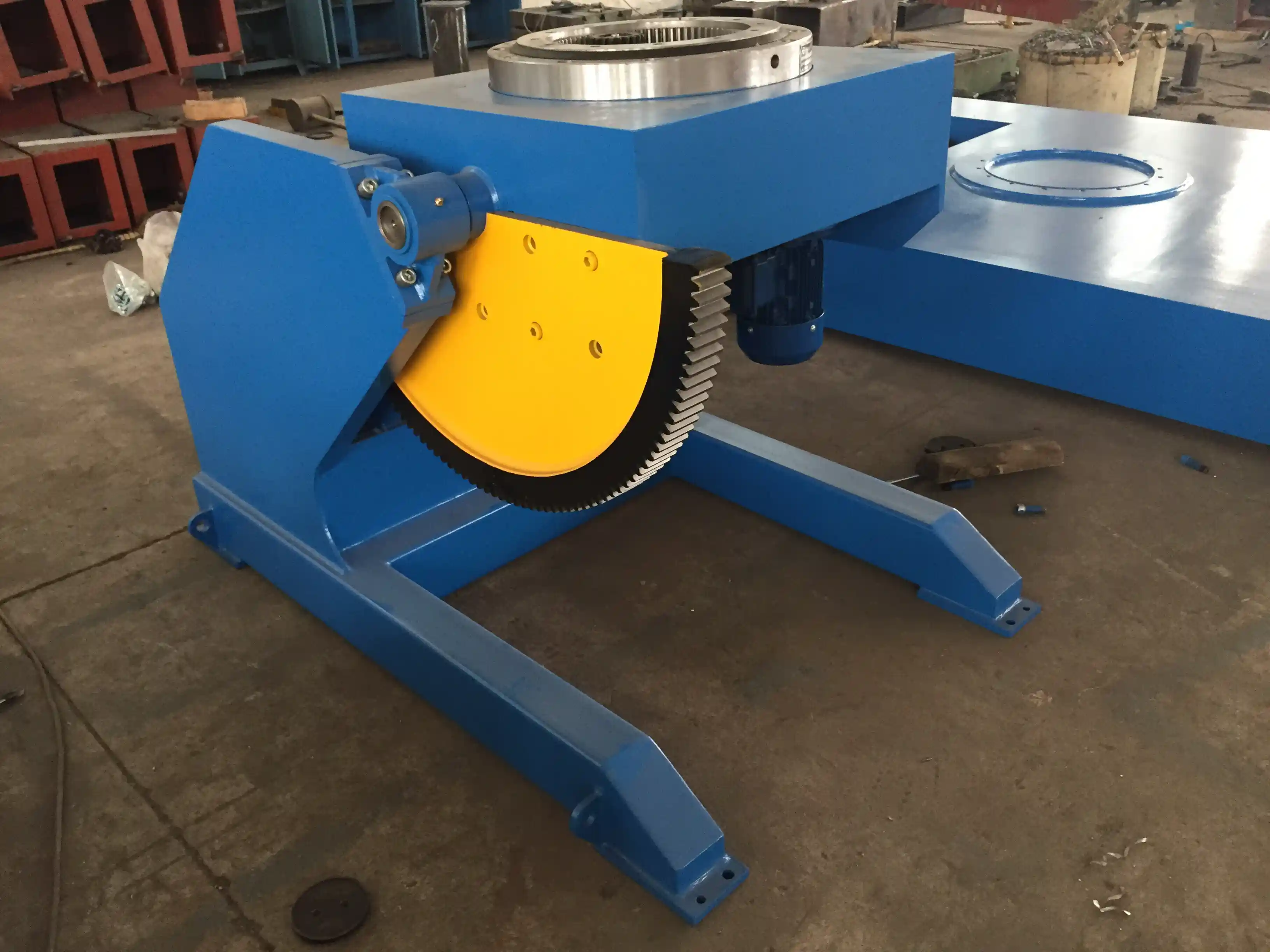
I have seen shops cut changeover on a 3-axis positioner from 35 minutes to under 5 minutes simply by storing welding positions for each part number in the PLC. The operator loads the program, the positioner drives to the preset tilt and rotation angles, and the welder starts. No manual finding, no test passes. On a positioner handling a mix of excavator booms, crane segments, and pressure vessel flanges, that eliminates human variability across shifts.
WUXI ABK’s 3-axis positioners with Siemens PLC and touchscreen interface can store over 100 preset programs. For a job shop running high-mix fabrication, that means the machine already knows where each part goes before the operator touches a control. This kind of programmability separates equipment you adjust from equipment you change over.
Calculating the ROI of Quick-Change Equipment for High-Mix Shops
When I talk to factory managers about investment, they want numbers, not promises. The simplest ROI model for quick-change equipment is: saved changeover minutes per shift times hourly machine rate times shifts per year. Suppose a positioner currently loses 45 minutes per changeover, you average three changeovers per shift, and the machine rate is $120 per hour. That is $270 per shift in lost productive time. Over 250 working days with one shift, that is $67,500 per year.
A hydraulic quick-change positioner with programmable positions might add 15–20% to the equipment cost but reduce changeover to under 10 minutes. The annual saving would approach $45,000 for that same shop. That ignores the additional throughput benefit: freed hours become capacity for more jobs without adding a second shift or another machine.
The numbers look different for every shop, but the principle holds: in high-mix, low-to-medium volume work, the cost of quick-change pays back from recovered time, not from increased welding speed.
Integrating Quick-Change Equipment into Existing Fabrication Lines
Quick-change equipment does not replace the entire line; it replaces the bottleneck stations. The most common mistake I see is buying a fast-change positioner while the upstream cutting or downstream material handling still runs at the old pace. The quick changeover only matters if the rest of the line can feed it.
Start by mapping where setup time currently accumulates: fit-up stations, welding positioners, and inspection fixtures. Then change out the station with the highest downtime. Often, switching the main welding positioner to a design with hydraulic clamping and preset programs frees enough capacity that the rest of the line catches up naturally.
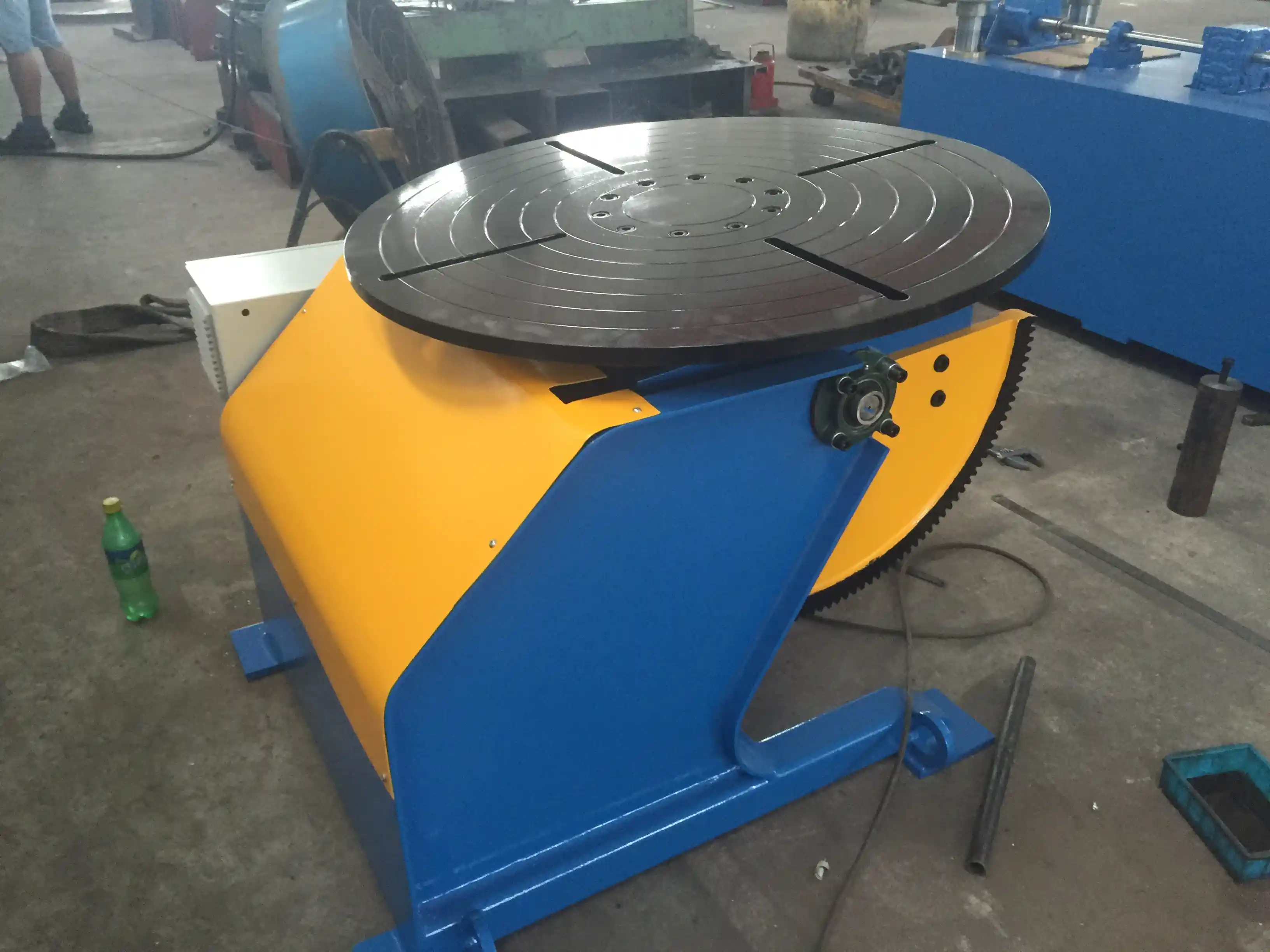
Also consider that quick-change features require a different discipline on the shop floor. Preset programs only work if the part is loaded consistently. Fixturing must be documented, programs verified and locked, and operators trained to trust the machine rather than re-checking every position. That cultural shift can be harder than the equipment installation itself.
How to Evaluate a Quick-Change Equipment Supplier
When you have narrowed down the specifications, the next step is qualifying the supplier. I recommend a checklist that goes beyond the brochure numbers:
First, ask for a demonstration with one of your actual part geometries, not a generic test piece. The changeover time claimed in a catalog means nothing if it was measured on a simple cylinder while your parts have offset flanges and irregular profiles. Insist on seeing the changeover process from last part of one job to first good part of the next.
Second, verify the control system’s program storage and recall: how many programs, how easily are they backed up, and can the operator retrieve them without navigating deep menus. A hundred stored programs are useless if the operator cannot select the right one in under 15 seconds.
Third, check the clamping interface: is it a standard design that allows you to build new fixtures in-house, or does it lock you into buying all tooling from the supplier? For shops with an in-house machining capability, the ability to fabricate your own fixture plates onto a standard interface is a long-term cost advantage.
If your program involves parts weighing over two tons or diameters above two meters, it is worth confirming the machine’s dynamic load rating and creep resistance before finalizing your specifications — reach out at jay@weldc.com with your part details and we can provide a capacity check.
Frequently Asked Questions on Quick-Change Fabrication Equipment
What is the difference between an adjustable positioner and a quick-change positioner?
Adjustable positioners allow you to set the work angle and rotation speed manually, typically using cranks, bolts, or a pendant jog. A quick-change positioner goes further: it integrates repeatable clamping interfaces and programmable position memory so that the changeover involves minimal manual input and produces the same part alignment every time without re-indication.
Can I retrofit an existing positioner to be quick-change?
It depends on the existing machine’s control architecture and mechanical interface. If the positioner already has servo-driven axes and a PLC, adding quick-change tooling and programming presets is feasible. If it is a purely manual machine with AC motors and limit switches, the cost of retrofitting often approaches that of a new unit, and the result is rarely as reliable. In our experience supporting retrofit projects, the better approach is to upgrade the highest-duty station first and cascade the older machine to lower-volume work.
Is quick-change equipment only for high-volume production?
No. In fact, the shops that benefit most are high-mix, low-to-medium-volume fabricators where changeovers happen many times per shift. High-volume production with few changeovers benefits more from dedicated automation. Quick-change justifies itself when setup time is the bottleneck, not welding speed.
What is the typical payback period?
Most shops we work with see payback in 9 to 18 months on a single positioner upgrade, based on recovered productive hours alone. If the added capacity allows the shop to take on additional work without adding a second shift, the payback can be under six months. Run the numbers on your own changeover frequency and machine rate to get a precise figure.
How do I validate a supplier’s quick-change claims?
Request a time study of the changeover process on one of your actual parts, recorded on video. Compare the supplier’s claimed time to what you currently measure in your shop under the same conditions. If the supplier cannot provide a credible demonstration, the specification sheet numbers should not be relied on. Share your typical part geometries and we can confirm whether our quick-change positioners meet your cycle time targets — reach out at jay@weldc.com or call +86-510-83555592.
Если вам интересно, ознакомьтесь со следующими статьями по этой теме:
Как повысить качество сварки труб с помощью высокоточного сварочного позиционера
Чрезмерное смещение при сварке трубопроводов: решение для прецизионного позиционирования сварного поворотного стола от компании Wuxi ABK
Проблемы с провисанием покрытия на трубопроводах судов: как интеллектуальные стойки для малярных валиков повышают коэффициент отбора до 98%
 English
  Español
  Français
  Deutsch
  Português
  Русский