
Mining equipment manufacturing depends on heavy steel fabrication that turns thick plate, castings, and long structural sections into haul truck frames, loader arms, shovel booms, crusher bodies, and rotating bases. A productive fabrication line starts with accurate cutting and then uses welding positioners, rotators, and manipulators to keep each weld in position while controlling distortion and operator fatigue. The selection challenge is not simply finding a high capacity machine. It is matching load center, part diameter, weld length, and shop flow to the right equipment package so that cutting, fitting, positioning, and welding work as one process.
Cutting Accuracy Comes Before Welding Productivity
Before a mining equipment part reaches welding, the plate must be cut square and straight. Heavy structural parts are often produced from carbon steel plate in thicknesses that favor flame or plasma cutting for lower cost and enough speed, while thinner or more detailed parts may justify laser or water jet cutting. The cut edge affects fit-up, root gap, weld volume, and rework. If the edge is wavy or heavily heat affected, a welder must compensate with extra passes or grinding, which multiplies labor on long joints.
| Cutting task | Preferred technology | Main selection factor |
|---|---|---|
| Thick carbon steel plate | Огневая резка с ЧПУ | Cut edge quality and thickness capacity |
| Medium plate and production mix | CNC plasma cutting | Speed and thickness range |
| Thin stainless or precision parts | CNC laser cutting | Heat input and detail |
For a large loader frame, the workflow should group similar plate thicknesses and nest parts to reduce handling. It is better to accept a slower cutting process for critical root faces than to create an accurate cut later through grinding. The cutting method must support the downstream weld plan, not merely produce a part quickly.
Positioning Heavy Components for Stable Welds
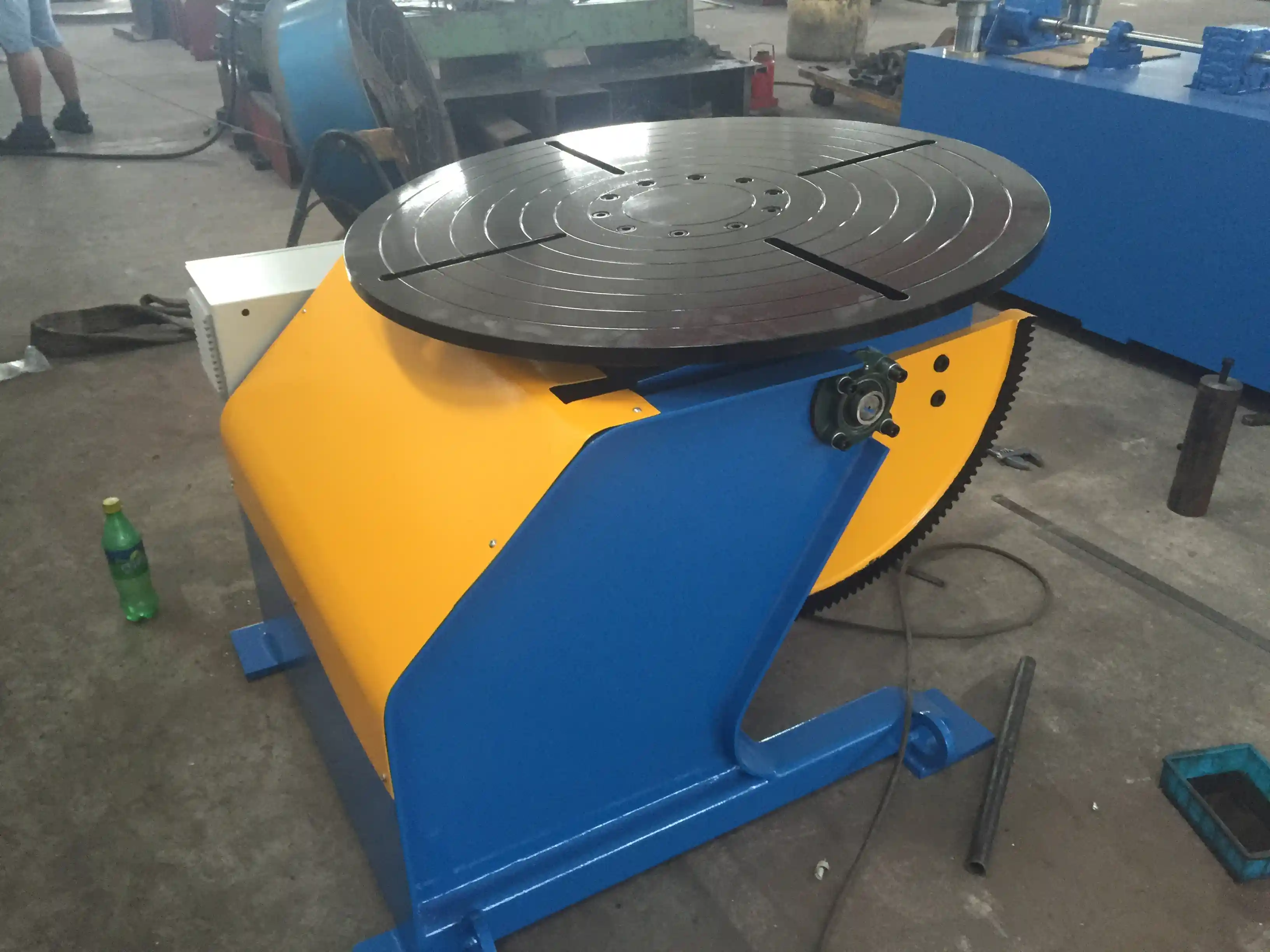
Mining equipment presents irregular heavy parts. A weld positioner reduces the need for a crane operator to reposition the part manually and lets the welder work in the flat or horizontal position. That matters because weld quality improves when the weld pool is kept in a favorable orientation, especially on thick sections with deep penetration requirements.
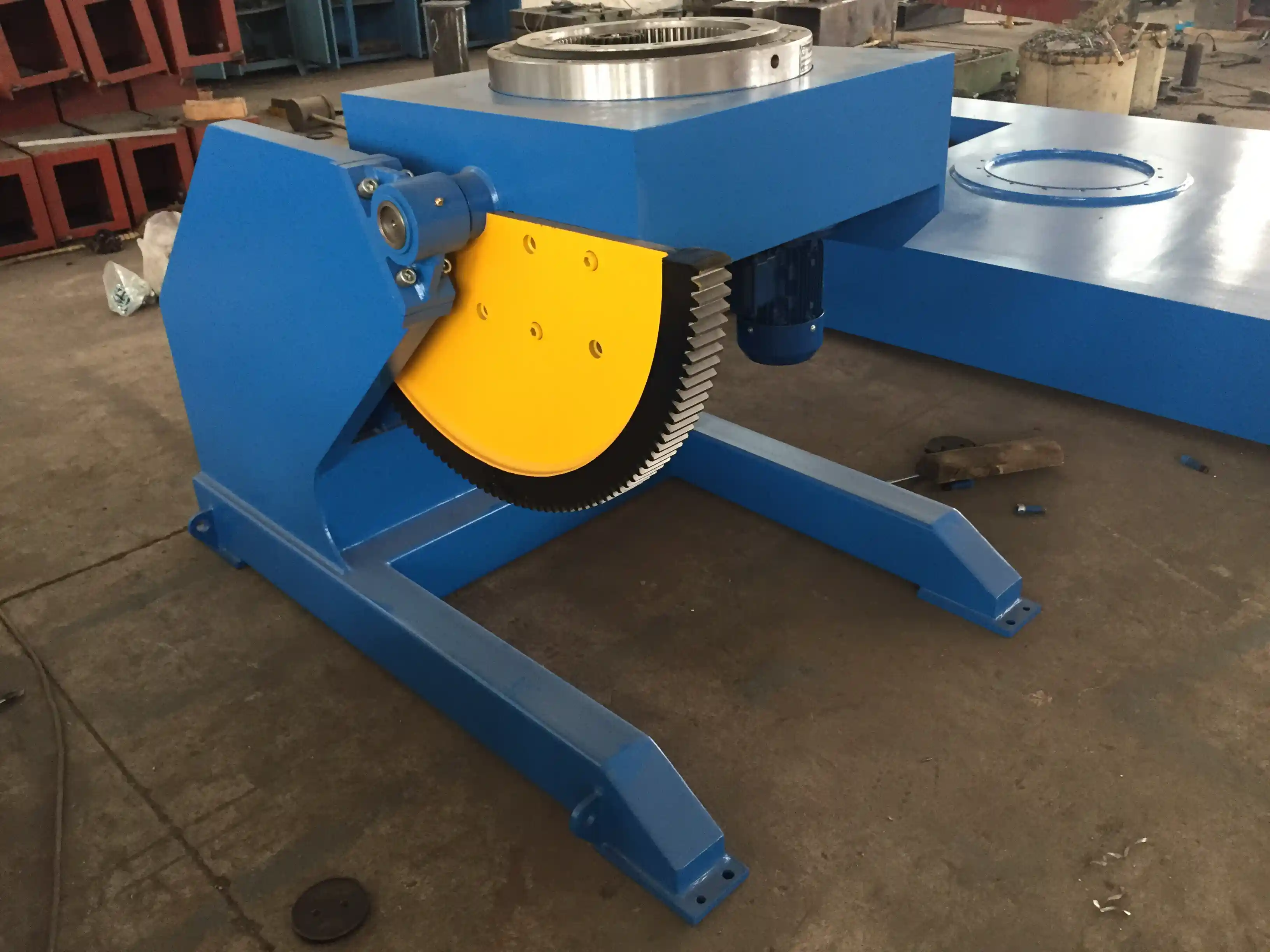
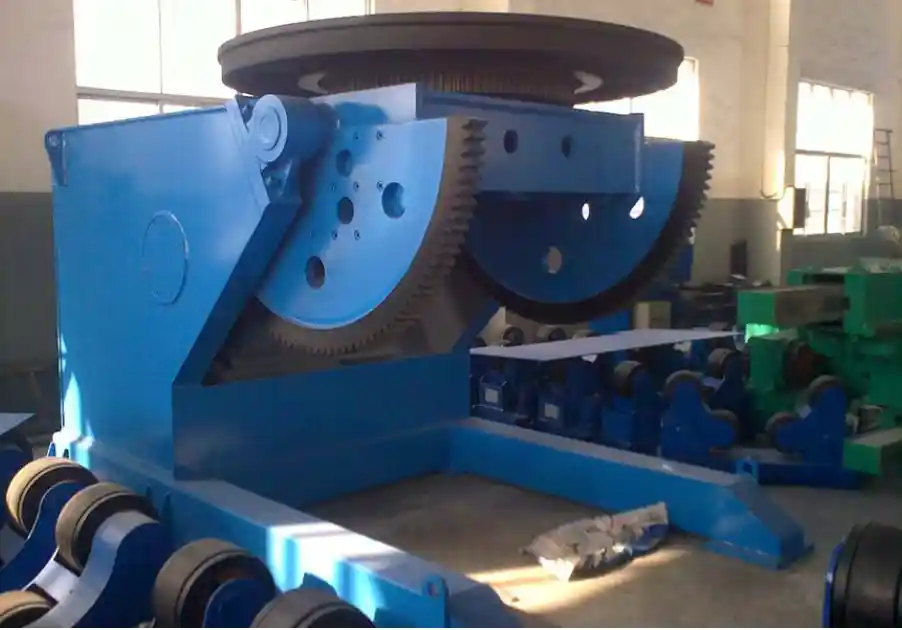
WUXI ABK 3-axis positioners provide 360-degree continuous rotation and tilting from 0 to 90 degrees. The 1 ton model is specified with ±0.05 mm positioning accuracy and 0.02 mm repeatability, while heavier models use a casting base and reinforced frame for stable dynamic loads. This type of control is useful when a mining component must be rotated between several welding positions without losing alignment.
| Equipment | Load capacity | Positioning capability | Typical mining part |
|---|---|---|---|
| 1 тонна 3-осевой позиционер | 1,000 kg | 360° rotation, 0 to 90° tilt, ±0.05 mm accuracy | Small brackets and hydraulic mounts |
| 3 Ton 3 Axis Positioner | 3,000 kg | 360° continuous rotation, 0 to 90° tilt, 180° turning | Boom subassemblies and chassis parts |
| 5 Ton L-Type Positioner | 5,000 kg | 0.05 to 0.5 RPM, 0 to 120° turnover | Mid-size frame sections and loader arms |
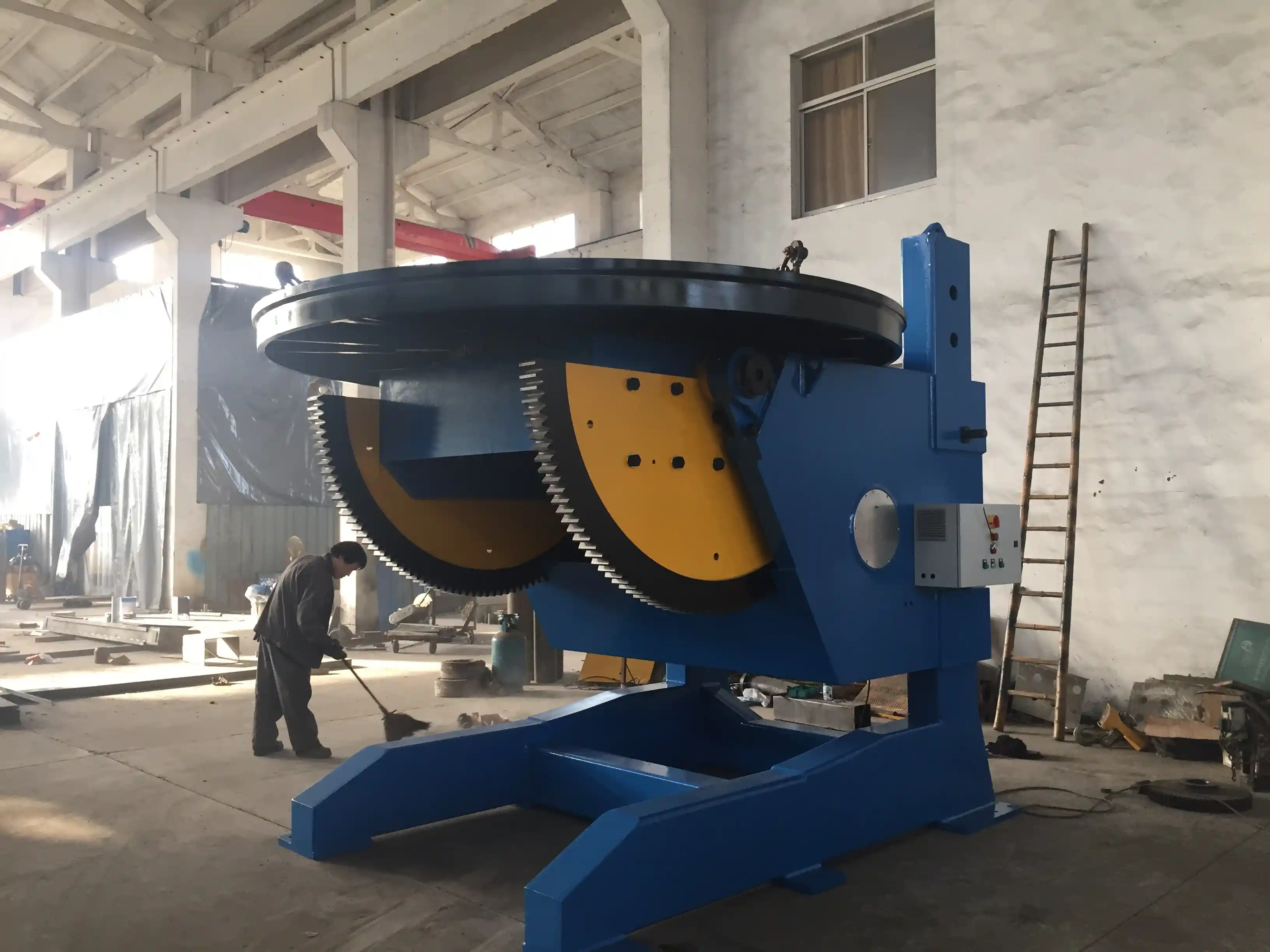
| 30 Ton Adjustable Height Positioner | 30,000 kg | 0 to 360° rotation, hydraulic lifting from 1000 to 2000 mm | Large slewing bases and crusher frames |
Load Center Is More Important Than Nominal Capacity
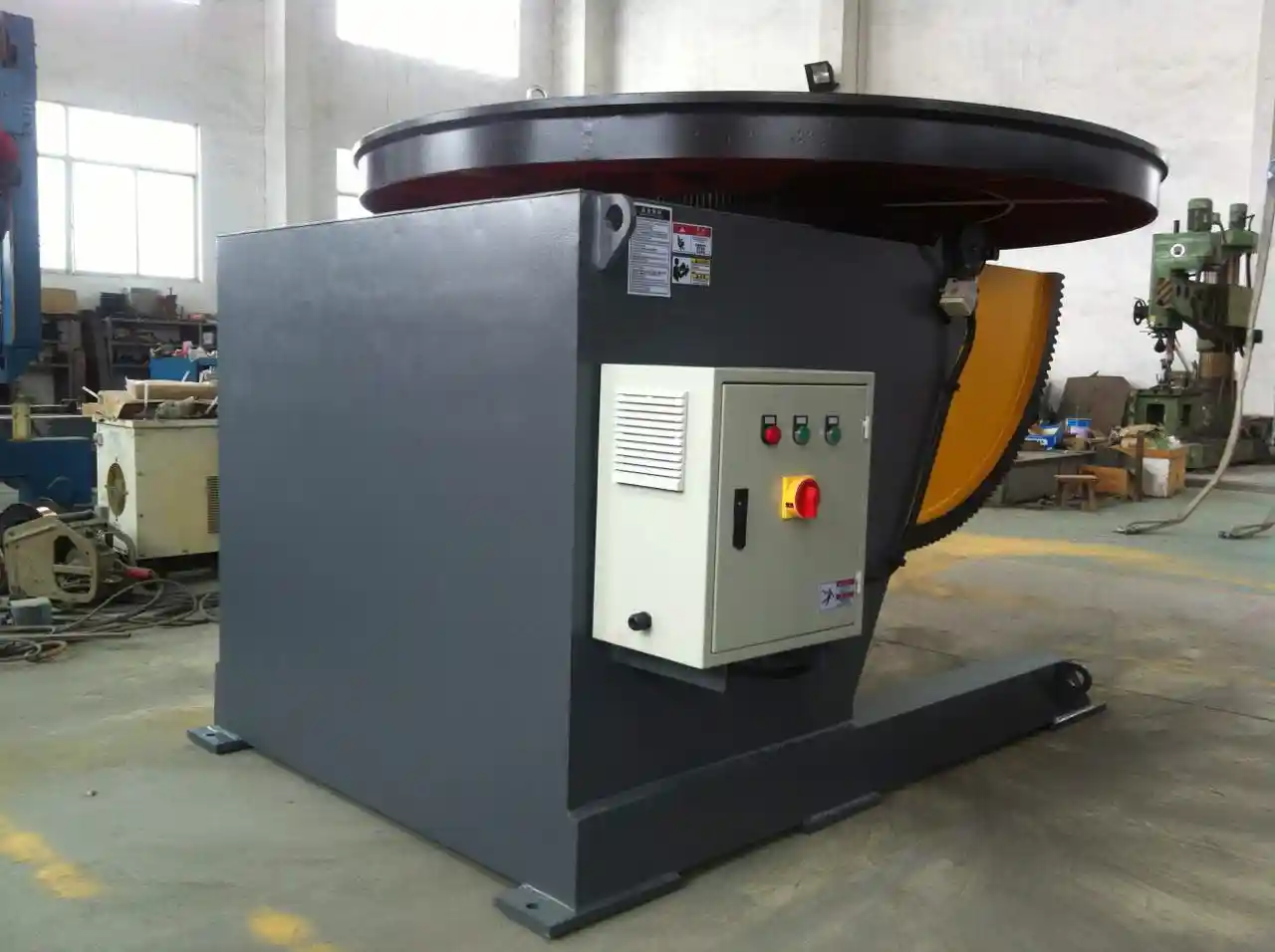
A positioner rated for 5 tons can be overloaded if the center of gravity is too far from the table. Before selecting a model, the buyer should confirm the workpiece weight, center-of-gravity distance, eccentric distance, and the angle at which the part must rotate. The product data for a fixed-height positioner lists both maximum eccentric distance and maximum center-of-gravity distance, which are separate limits, not the same rating. If these values are missing from an inquiry, the equipment supplier cannot safely confirm fit.
Rotating Cylindrical Mining Components
Drums, crusher rolls, shafts, and hydraulic cylinders are best handled by welding rotators. The driving and driven roller frames support the part while it turns at controlled speed, which is useful for submerged arc welding and circumferential seams. For mining equipment, self-aligning rollers help maintain contact on large diameters and tolerate slight out-of-round conditions.
Rotators are available from 5 ton to 300 ton capacity. A smaller system may handle diameters from 250 mm to 2800 mm, while a heavy 300 ton system can support diameters from 1000 mm to 6000 mm. Adjustable-height designs use hydraulic elevation for centerline alignment, and higher-capacity systems include anti-creep control to limit axial drift during welding.
Heavy cylindrical workpieces are only productive when the supporting rolls maintain alignment and speed control from fit-up through final weld passes. <Основа тяжелого производства: Выдающиеся характеристики роликовых стендов в ключевых процессах> covers how roller stand selection and setup affect heavy manufacturing consistency.
Welding Long Seams with Манипулятор для сваркиs
Haul truck bodies, excavator booms, and shovel arms require long welds. A welding manipulator carries the welding head along a column and boom, making consistent longitudinal and circumferential seams without requiring the welder to climb or reposition. The correct selection is based on work envelope rather than part weight alone.
A compact model such as LH3040 offers 3000 mm horizontal travel and 4000 mm vertical travel with a 1500 mm rail distance. A larger LH8080 offers 8000 mm horizontal travel and 8000 mm vertical travel with a 2700 mm rail distance. The right model depends on part length, seam height, and whether the application needs motorized trolley travel.
Long structural seams in mining truck frames and shovel components need stable torch positioning over many meters of travel. <Сварочные манипуляторы для изготовления ветряных башен: Революционное повышение эффективности производства> covers how column and boom manipulators support continuous welding in heavy fabrication.
Balancing Capacity, Precision, and Shop Flow
A mining equipment line should be viewed as a cut, fit, position, weld, and inspect sequence. The bottleneck is usually not the welding arc but the time spent moving and setting heavy parts. Using a positioner or rotator can reduce crane moves and keep the welder productive. However automation is not always justified for prototype or repair work. A manual positioner or standard rotator may be more appropriate when batch sizes are low.
The important tradeoff is between flexibility and repeatability. A high-precision 3-axis positioner supports robotic welding and consistent orientation, but it costs more and may be underused if the shop mainly welds simple frames. A fixed-height positioner or standard rotator can handle many heavy parts at lower cost, provided the part geometry does not require frequent multi-angle repositioning.
Checklist for a Mining Fabrication Line
Before finalizing equipment, the buyer should confirm the following:
- Maximum part dimensions, weights, and material grades.
- Center-of-gravity distance for every positioner application.
- Longest weld seam and required vertical reach for manipulators.
- Cylinder or drum diameter range for rotators.
- Maximum plate thickness and cut edge requirements.
- Parts per shift and the number of welders available.
- Floor load, rail installation requirements, and crane capacity.
- Robot interface, PLC control, and operator training needs.
This checklist prevents a line from being sized around one large part while the everyday production mix is smaller and more repetitive. The goal is equipment that improves daily throughput, not only equipment that can lift the largest possible part.
Plan Your Mining Equipment Fabrication Line
The most useful next step is to send drawings or a part list together with the maximum weight, center-of-gravity distance, weld seam length, material grade, and monthly output target. That information lets WUXI ABK Machinery Co., Ltd. recommend a cutting and welding package sized to the actual heavy steel fabrication task instead of a one-size-fits-all list. Contact Zhang Jian at jay@weldc.com, call +86-510-83555592, or reach the mobile line at +86-13815101750.
Mining Equipment Fabrication FAQ
How much positioner capacity do I need for mining components?
Start with the maximum workpiece weight and the center-of-gravity distance, not just a tonnage number. A 5 ton positioner can handle a 5,000 kg part only when the load center stays within the specified eccentric and center-of-gravity limits. For large slewing bases or crusher frames, a 30 ton adjustable-height positioner may be required because the part is both heavy and difficult to keep balanced.
Can the same CNC cutting system handle thick plate and thin precision parts?
Usually no single process is ideal for every thickness. Flame or plasma cutting handles thick carbon steel economically, while laser cutting suits thinner or more detailed parts with lower heat input. A fabrication line may combine two cutting machines or match the process to the highest-volume material thickness rather than forcing one system to cover all work.
How do I control distortion in large mining equipment frames?
Control starts before welding. Use accurate cut edges, balanced fit-up, and a planned weld sequence, then keep the joint position favorable with positioners or manipulators. For thick sections, avoid over-welding beyond the specified throat and use the minimum number of passes that achieves the required penetration.
What should I prepare before requesting a production line quotation?
Send part drawings or a clear description, maximum weight and dimensions, material grades, longest weld seam, required annual output, available floor space, and crane capacity. If parts require robot welding, also identify the robot brand or interface requirement so the positioner and control architecture can be selected correctly.
Если вам интересно, ознакомьтесь со следующими статьями по этой теме:
Основные проблемы и высокоточные решения в области сварочных позиционеров в ветроэнергетике и судостроении: всесторонний технический анализ
Освоение тяжелого производства: Как подъемные роликовые стенды стали краеугольным камнем эффективной сварки
Wind Tower Welding Challenges: How Advanced Hydraulic Lifting Systems Boost Production by 40%
Сварочный вращатель Прецизионная автоматизация для промышленного производства: Руководство эксперта по часто задаваемым вопросам
Низкая эффективность сварки трубопроводных узлов: как интеллектуальные роликовые стойки повышают производительность на 50%
 English
 Español
 Français
 Deutsch
 Português
 Русский