Shipyards investing in new welding automation face a critical question: does the equipment meet Lloyd’s Register classification requirements? Without LR approval, even a well-built manipulator or positioner can delay project certification and increase compliance costs. In over twenty years of designing welding systems for heavy fabrication, I’ve seen procurement teams over-focus on price and capacity, only to discover during inspection that documentation and precision engineering fall short of marine standards. This article addresses the specific technical requirements that welding automation machinery must meet for LR approval in shipbuilding, from the perspective of a welding engineer with direct experience in compliant equipment design. We’ll cover the precision, structural integrity, and documentation that make a welding manipulator, positioner, or rotator suitable for use on LR classed vessels, and how to verify this when sourcing.
What LR Approval Means for Welding Equipment in Shipbuilding
Lloyd’s Register (LR) is one of the world’s oldest classification societies, setting rules for the construction and maintenance of ships. Welding equipment used in the fabrication of hulls, decks, and structural assemblies must be capable of producing welds that meet the society’s quality and traceability standards. However, LR does not simply “approve” a welding machine in the way it certifies a structural component. The path to compliance passes through the shipyard’s own welding quality system.
The key concept is type approval (TA). When a shipyard applies for LR certification of a welding procedure, the equipment used must be shown to operate within calibrated tolerances, deliver repeatable arc characteristics, and support consistent weld quality. This means that the welding manipulator, positioner, or rotator must provide accurate positioning, stable rotation, and reliable control. LR surveyors will review machine specification sheets, maintenance logs, and calibration records. They will witness welds and inspect the equipment’s condition and performance. The machine’s design and documentation directly influence how smoothly the classification process goes.
Technical Specifications That Support LR Compliance
From a technical standpoint, the welding equipment must satisfy several performance demands that affect weld quality:
- Positioning accuracy and repeatability. Manipulators used for longitudinal and circumferential seams on hull plates require positioning accuracy within ±0.1 mm/m to ensure consistent joint alignment and travel speed. Our LH series сварочный манипуляторs, for example, achieve this through box-beam construction, linear guideways, and cycloidal reducers. These elements prevent deflection and vibration under load, which is critical when welding thick marine-grade steel (30–100 mm).
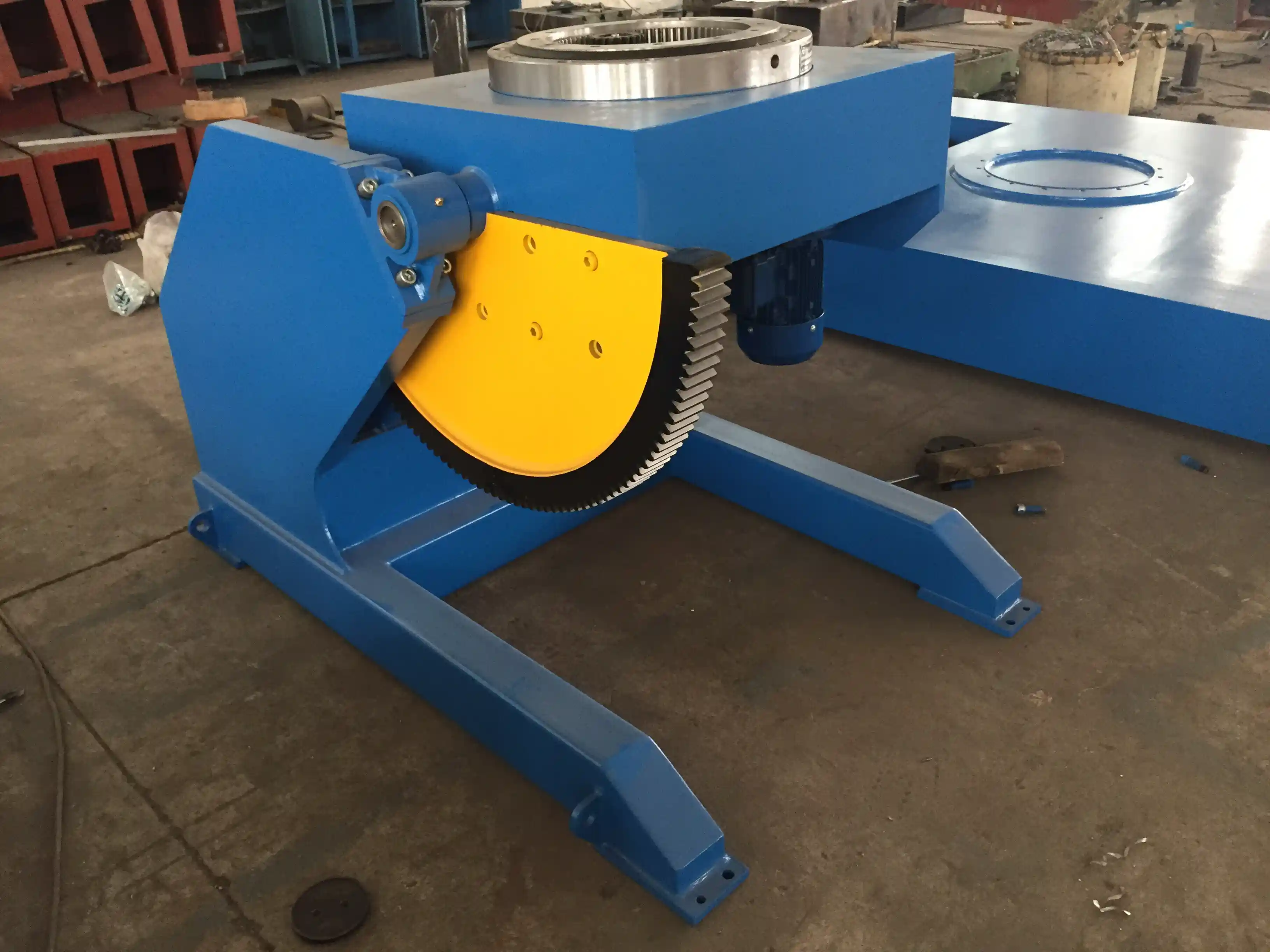
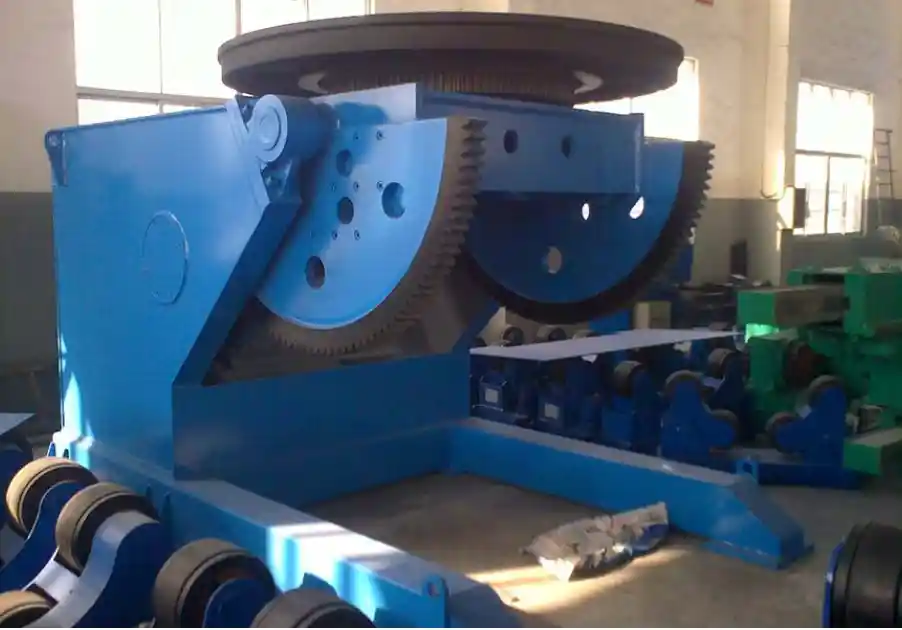
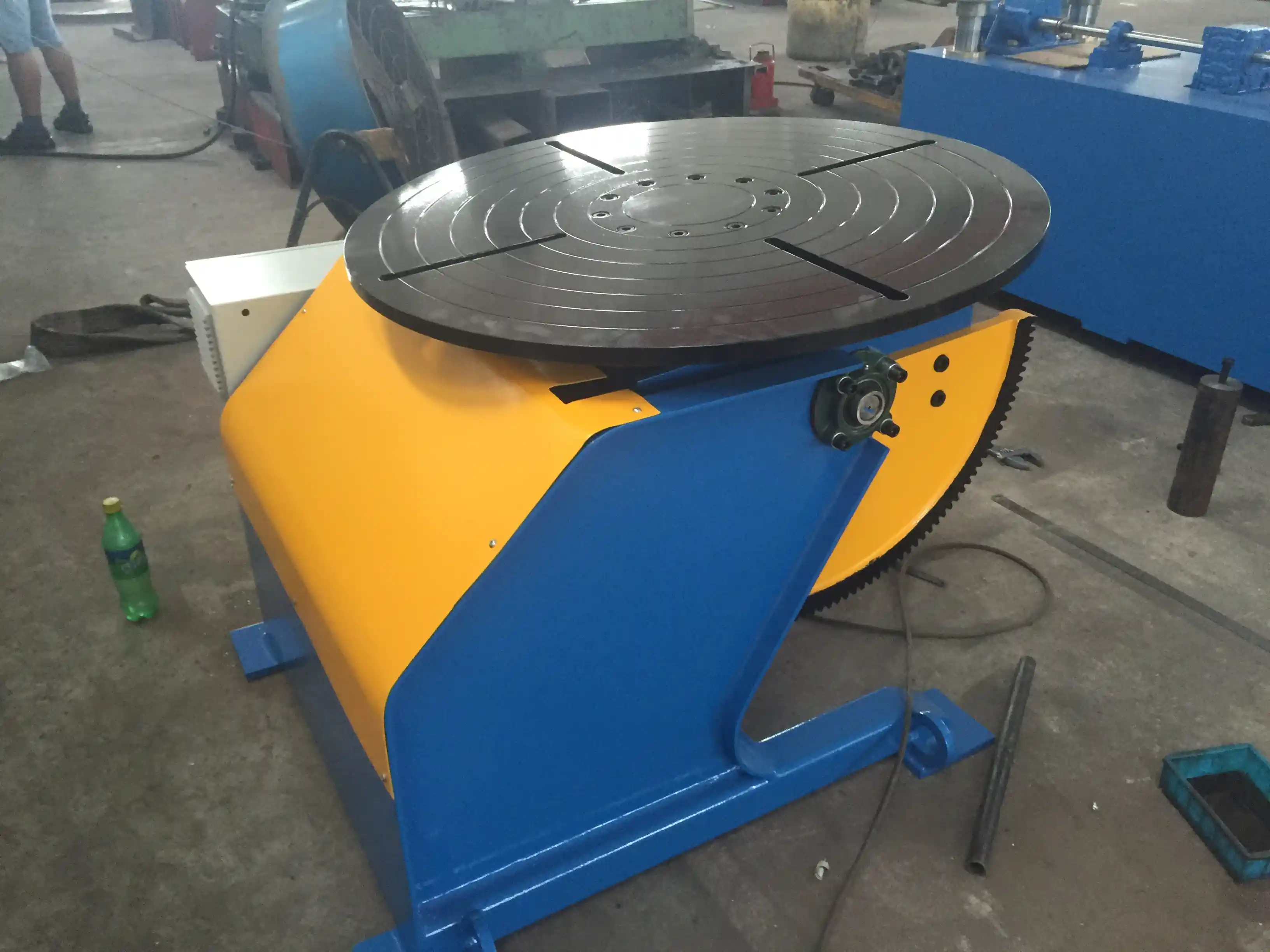
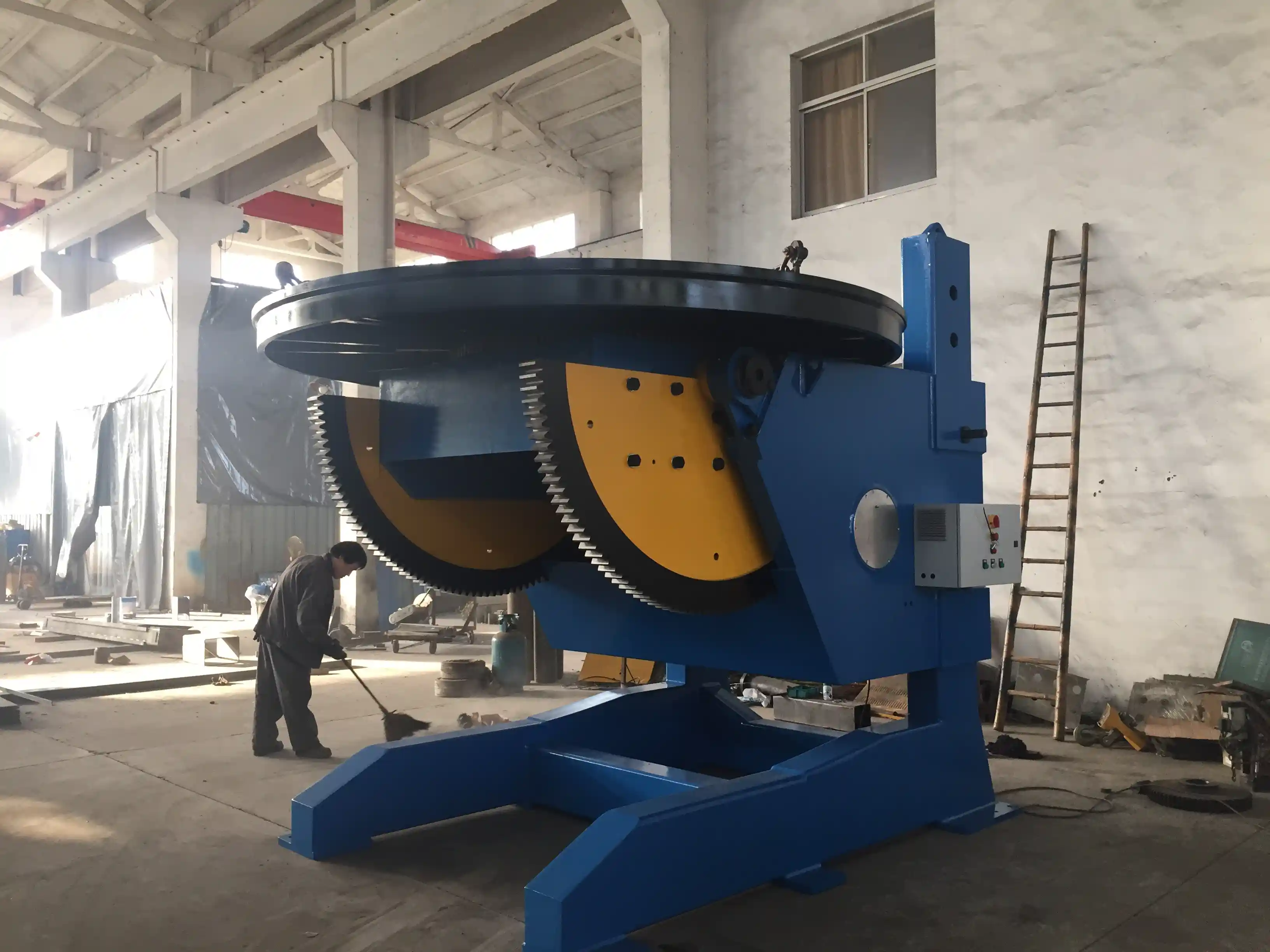
- Load capacity and structural integrity. Marine structures often involve heavy components that must be rotated and tilted for out-of-position welding. Welding positioners must maintain stable rotation at full rated load without excessive deflection. The triple-axis positioners we produce, from 1 ton to 5 tons, use THK linear guides and SEW reducers to hold ±0.05 mm positioning accuracy. This ensures that even if the workpiece is slightly off-center, the weld seam stays aligned.
- Continuous and controlled rotation. Rotators used for girth welding of pipe and tank sections need stepless speed control and consistent rotation. Standard welding rotators from our HGZ series offer 100–1000 mm/min speed regulation with frequency conversion, which allows welders to match travel speed precisely to the welding procedure specification (WPS).
- Documentation. The equipment must have clear technical data sheets, calibration procedures, and maintenance records. LR surveyors expect to see that the machine has been regularly checked for alignment, backlash, and electrical safety. Equipment with built-in programmable logic controllers (PLCs) and data logging – like the Siemens PLCs used in our positioners – can simplify this by recording welding parameters for audits.
Essential Documentation for Your LR Inspection
When the shipyard submits a welding procedure for qualification, the required supporting documents typically include:
- Equipment model and manufacturer’s nameplate data.
- Calibration certificates for positioning axes, rotation speed, and travel speed.
- Maintenance logs showing any repairs or adjustments.
- User manual with safety and operating instructions.
- Electrical diagrams and control system documentation.
These documents, combined with the machine’s physical condition, help the surveyor assess whether the equipment is fit for purpose. I always advise shipyards to request this documentation from the supplier before committing to a purchase, because missing records can stall classification until remedied.
How ABK Welding Equipment Meets LR Shipbuilding Standards
Our approach is to design machines that inherently support the quality and consistency required by classification rules. For welding manipulators, the LH series uses a high-strength box-beam structure and a 360° column rotation option. The boom’s forward travel is stepless from 0.12 to 1.2 m/min, which allows precise control over deposition rate. In shipbuilding, where long weld seams on hull plates demand stable arc length, this mechanical accuracy translates directly into acceptable weld profiles.
For rotating heavy ship segments, our triple-axis positioners offer synchronized turning, rotating, and tilting with servo-driven control. The IP54 control cabinet and overload shutdown protect the electronics in dusty shipyard environments. This reliability matters because equipment downtime during classification trials can delay the entire project.
Welding rotators for pipe and shell sections are also critical. Our HGZ series rotators can handle vessels from 250 mm to 5,000 mm diameter. The self-aligning rollers and anti-creep design keep the workpiece centered, so the welding torch maintains stickout. This is essential when following a qualified WPS that specifies exact welding parameters.
Manufacturers who want to meet LR requirements should look for these concrete specifications rather than just an “approval” label. The machine’s structural rigidity, motion control, and documentation completeness are the factors that dictate success in an LR audit.
Evaluating Your Supplier for LR-Compliant Equipment
When we talk with shipyard purchasing managers, I suggest a checklist that focuses on technical evidence:
- Precision specs: Can the supplier provide actual test reports for positioning accuracy and repeatability? Ask for calibration certificates, not just brochures.
- Structural design: Does the machine use a box-beam or reinforced structure? Avoid light-duty tube frames for heavy plate welding.
- Control system: Is the PLC capable of data logging? Can it export weld parameter records for surveyor review?
- Documentation readiness: Does the supplier offer the full documentation package listed above, including electrical diagrams and maintenance schedules?
- After-sales support: Can they provide remote diagnostics or on-site calibration assistance if the surveyor identifies a deviation?
If your upcoming project involves welding thick high-tensile steel for hull construction, it is worth confirming that the manipulator’s boom deflection is within 0.1 mm/m at full extension. You can reach us at jay@weldc.com with your part dimensions and we will confirm which model meets that tolerance.
Common Questions About LR Certification for Shipyard Welding
Does every welding machine in a shipyard need LR type approval?
Not necessarily. LR approval attaches to the welding procedure and the shipyard’s quality system rather than the machine itself. However, the equipment must be demonstrably capable of producing the qualified weld within the specified parameters. If a positioner’s rotation wobbles or a manipulator’s travel speed varies, the procedure qualification risks being invalidated. Practically, using well-engineered, calibrated machines eliminates the most common technical objections during LR surveillance. For new construction projects, many shipyard quality managers require all primary production machines to pass their internal capability verification, which mirrors the LR survey approach.
How long does it take to qualify welding equipment for an LR classed vessel?
The equipment itself is not certified in isolation. The qualification process centers on the welding procedure (WPS/PQR) and the fabricator’s workshop approval. A typical newbuilding project may require several weeks of preparation: documenting the machine’s calibration, performing weld tests witnessed by the surveyor, and submitting the quality plan. If the equipment already has a documented history of consistent performance, this preparation is faster. The machine’s readiness directly affects the schedule.
Can existing welding positioners and rotators be retrofitted to meet LR standards?
Often yes, if the mechanical foundations are sound. Retrofitting typically involves recalibrating axis drives, adding a PLC with data logging, and verifying structural integrity. However, if the machine has significant wear in the slewing bearing or the guideways are loose, the cost of rework can approach that of a new, purpose-built machine. We have helped shipyards assess their existing fleet; in many cases, upgrading the control system and providing a full calibration report was sufficient to satisfy the surveyor. Share your machine’s current specs and maintenance history with us, and we can give you a realistic appraisal.
What is the single most common equipment issue that delays LR approval?
In my experience, it is incomplete or missing calibration records. Surveyors need to see that positioning axes and travel speeds were measured against a standard within a defined interval. Without those records, they cannot verify that the weld was made under controlled conditions. This is easily avoided if the machine supplier provides a calibration certificate from the factory and the shipyard maintains a simple log. If your shipyard is planning for LR inspection, start by checking that every manipulator and positioner has a current calibration sticker and traceable documentation.
If you’re interested, check out these related articles:
Exceptional Application Value: How Fixed-Height Welding Positioners Drive Advancements in Offshore and Shipbuilding Manufacturing (Part 2)
Сварочные манипуляторы для изготовления ветряных башен: Революционное повышение эффективности производства
Ship Pipeline Coating Sagging Issues: How Intelligent Paint Roller Racks Boost Pass Rates to 98%
Повышение качества и эффективности производства ветроэнергетических установок: Ключевая роль позиционеров при сварке обхватов секций башен
 English
  Español
  Français
  Deutsch
  Português
  Русский