An equipment purchase contract is the single most important document for ensuring the industrial machinery you buy performs exactly as promised. Without specific, measurable protections tied to technical verification, even a well-known brand can deliver equipment that falls short of your production requirements. This article focuses on the contractual terms that turn a purchase agreement into a real risk management tool—from defining performance guarantees and structuring factory acceptance tests to aligning payment milestones and warranty coverage with measurable standards. The goal is not to produce a legally perfect document, but to give you the practical, technical insight needed to protect your investment before you sign.
Defining Specifications and Performance Guarantees
The foundation of any industrial equipment purchase contract is a clear, quantifiable set of technical specifications. Vague language like “good welding quality” or “high cutting accuracy” is unenforceable. The contract must list exact parameters: positioning accuracy, load capacity, speed range, power requirements, and applicable certification standards such as CE or ISO 9001.
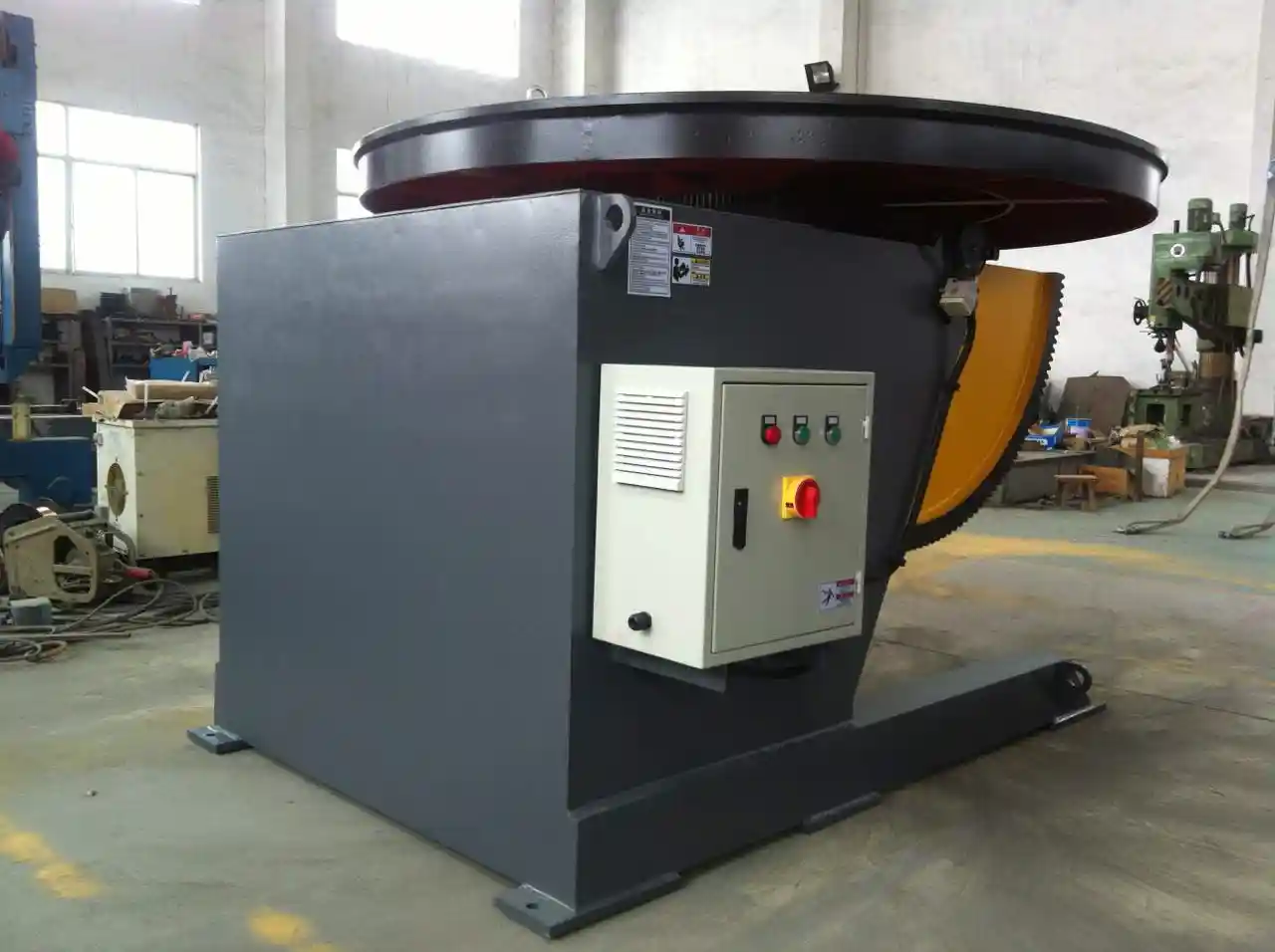
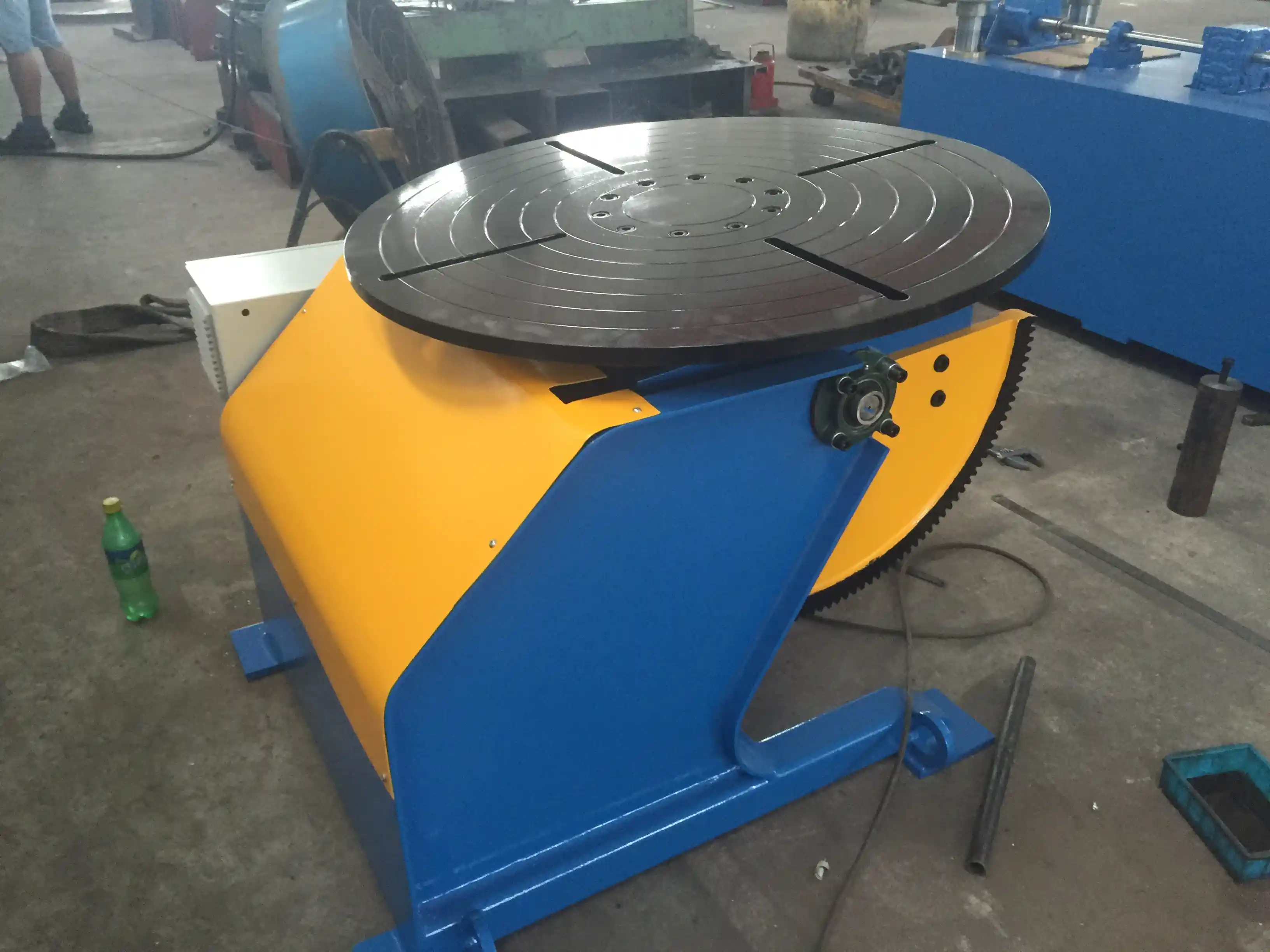
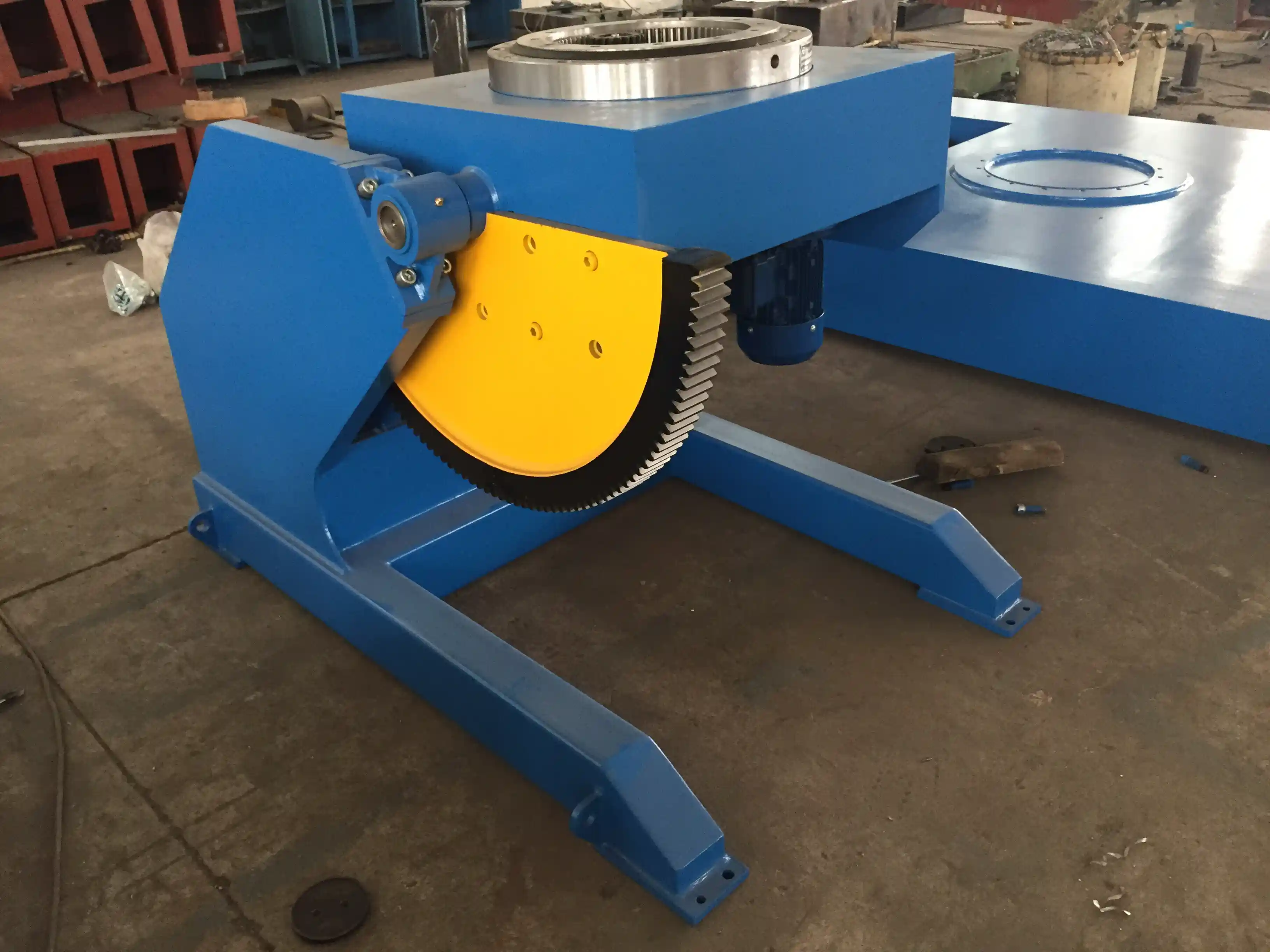
For a welding positioner, that means specifying the maximum load (e.g., 3,000 kg), the rotation and tilt angles (e.g., 360° continuous rotation, 0–90° tilt), and the positioning accuracy (±0.05 mm). These numbers must come from the supplier’s published specifications and be verified through real-world testing, not just a datasheet.
A performance guarantee clause should go further. It ties the equipment’s stated output to a measurable result: for a CNC plasma cutting machine, the contract might guarantee a cut straightness of ±0.1 mm per meter on 20 mm carbon steel at a specified feed rate. If the machine cannot reach that during final acceptance, the buyer holds the right to demand rectification or reject the equipment. This shifts the burden of proof from the buyer to the manufacturer.
When evaluating a welding manipulator, include parameters like horizontal and vertical travel range, boom elevating speed, and trolley speed. A contract that simply references a model number without its critical specifications invites disputes. The supplier should also define acceptable environmental conditions—temperature, dust levels, power stability—under which these guarantees remain valid. Without that, a machine that performs poorly in a hot, dusty workshop may be blamed on the user rather than the design.
Structuring Factory Acceptance Tests for Verification
A Factory Acceptance Test (FAT) transforms written specifications into verifiable evidence. Instead of relying on a supplier’s word, you witness the equipment in operation—under load, at production speed—before any money leaves your account. A strong contract ties the FAT to the payment schedule, not just to the delivery timeline.
The FAT protocol should be an annex to the contract, listing every test step, the required measurement tool, and the pass/fail criteria. For a 20-ton welding turntable, this might include:
| Test Item | Required Parameter | Метод измерения | Acceptance Criterion |
|---|---|---|---|
| Load capacity | 20,000 kg with simulated center of gravity offset | Strain gauge on worktable | No permanent deformation, vibration <0.01 mm |
| Rotation speed | 0.05–0.5 RPM stepless | Tachometer | Speed range achieved, no hunting |
| Точность позиционирования | ±0.2 mm repeatability | Laser tracker on reference point | Deviation within ±0.2 mm after 10 full cycles |
| Safety stops | Emergency stop response time | High-speed camera or PLC log | Stops within 50 ms |
| Уровень шума | Operating noise at full speed | Sound level meter at 1 m | ≤85 dB(A) |
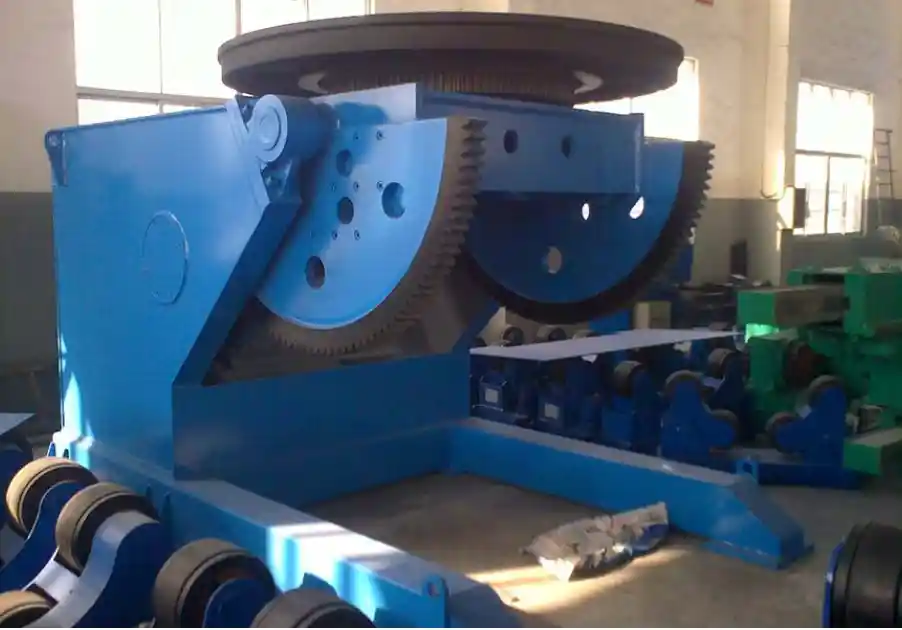
I’ve seen buyers approve equipment based solely on a visual inspection, only to find later that the rotator wobbled under heavy components or the speed regulation drifted after an hour of use. A proper FAT catches these issues before shipment. The contract should also specify who bears the cost if the equipment fails the FAT—usually the supplier pays for rework and retesting, with a clause for cancellation if failures persist.
For welding automation systems with PLC controls, the FAT should include a batch run of at least 10 identical weldments to confirm cycle consistency. The recorded data—arc voltage, current, travel speed—must fall within stated tolerances for every seam. This is not a theoretical exercise; it is the difference between a line that starts on Monday and one that needs two weeks of debugging.
If your project involves custom configured machines, such as an H-beam welding line tailored to specific section sizes, the FAT documentation becomes even more critical. The contract should require the supplier to provide a detailed test report signed by both parties, which then serves as the baseline for site acceptance testing after installation.
Aligning Payment Milestones with Delivery and Performance
Payment terms are where technical protections meet financial leverage. A standard equipment purchase contract might suggest 30% advance, 60% upon delivery, and 10% after installation. However, that structure leaves the buyer exposed: after delivery, 90% of the money is spent, and the supplier has little incentive to quickly resolve performance issues. A more protective approach splits the payment milestones around verifiable events.
A recommended structure for heavy welding equipment might look like this: 20% upon contract signing and order confirmation, 20% upon completion of mechanical assembly and successful pre-FAT review (photos, video, datasheets), 30% upon passing the full FAT at the factory, 20% upon delivery and successful site acceptance test (SAT), and 10% retained for 30–90 days after continuous production use. This retention amount acts as a de facto warranty bond and focuses the supplier’s attention on the early production phase.
In industries like сварка ветряных башен or pressure vessel fabrication, where a single day of downtime costs more than the machine itself, a liquidated damages clause for late delivery or performance shortfall is essential. But to be enforceable, it must be linked to a specific measurable loss—for example, €500 per day of delay beyond the agreed ship date, or a pre-calculated hourly downtime cost. Generic penalty figures get struck down in many jurisdictions.
Always clarify which Incoterms apply, as this determines when risk transfers. For an export contract, FOB (Free On Board) at the supplier’s port means the buyer bears the freight and insurance from that point; CIF (Cost, Insurance, Freight) to the buyer’s port shifts more responsibility to the supplier but often comes at a higher equipment price. The contract should leave no ambiguity.
Warranty, Liability, and After-Sales Coverage
The warranty clause is not a footnote. For industrial machinery, it should define the coverage period (typically 12 months from site acceptance, not from shipment), the scope of repair or replacement, and—crucially—the response time. A six-month warranty on a сварочный манипулятор that takes three months to install is essentially a three-month warranty. The contract should start the clock after commissioning.
Specific components with different wear rates may need separate treatment: consumable parts like torch nozzles or cutting tips are usually excluded, while major structural elements like the slewing bearing of a positioner should carry a longer warranty. If the supplier uses sub-supplied components from third parties (motors, reducers, PLCs), confirm that the original manufacturer’s warranty is passed through to you.
Liability limitations require careful reading. Many suppliers cap their liability at the contract value, meaning if a faulty machine causes a production shutdown costing twice the purchase price, you can only recover the equipment cost. Negotiate to raise that cap or carve out gross negligence and willful misconduct from the limitation. Similarly, intellectual property indemnification should protect you if the machinery incorporates patented technology that later becomes the subject of a third-party claim.
For after-sales service, the contract should specify the availability period of spare parts—a minimum of 10 years for welding automation parts is not unreasonable—and the maximum lead time for critical spares. A good supplier maintains a virtual stock for export models, but the contract makes that obligation explicit.
Dispute Resolution and Governing Law
When parties operate across borders, the choice of law and dispute resolution mechanism can be the most consequential line in the entire contract. A buyer in Europe ordering from a Chinese manufacturer may find that choosing the supplier’s local court system makes any legal action prohibitively expensive. International arbitration under a neutral institution like the Singapore International Arbitration Centre (SIAC) or the London Court of International Arbitration (LCIA) offers a fairer, more enforceable process.
The governing law should match the industry’s accepted standards. For welding equipment used in ASME pressure vessel fabrication, referencing the applicable ASME code section or ISO standard as the quality benchmark can help an arbitrator decide technical disputes without needing to become a welding engineer. If the contract simply says “high quality,” there is no yardstick.
Include a clause for expert determination on technical matters—an independent third-party engineer can resolve a disagreement about whether a weld seam meets spec, without triggering full arbitration. This saves time and preserves the business relationship.
Finally, a termination clause should allow you to cancel the order if the supplier commits a material breach and fails to remedy it within a specified notice period. That breach should include not only non-delivery but also failure to meet critical FAT milestones.
Common Questions About Equipment Purchase Contracts
The most overlooked clause in an industrial equipment purchase contract is the detailed performance specification. Most buyers assume the machine will do what the brochure says. If the contract only states a model number, you have no legal basis to reject equipment that underperforms. Write the specification into the contract—load capacity, speed, accuracy, material compatibility—and reference it in the acceptance test procedure. The time to define what “acceptable” means is before the purchase order, not after delivery.
You link the contract to factory output requirements by defining a performance test period. After the site acceptance test, a 30-day production trial can verify that the equipment consistently meets your cycle time and quality targets. The last payment (or a retention amount) is only released when the line produces, for example, 100 conforming weldments within 8 hours, with less than 1% defect rate. This moves the burden onto the supplier to prove the machine works in your actual production environment.
Does the contract need a specific penalty for late performance failure? Yes, but as a pre-estimated liquidated damage per day of downtime or output loss, not as a punitive fine. Calculate your daily production value and agree on a fixed amount per day of non-performance, capped at a percentage of the equipment price (often 10–15%). This encourages swift resolution without litigation. Always confirm that this is the exclusive remedy, or it could be overlapping with other claims and cause legal complexity.
Can a buyer demand source code for PLC-controlled equipment? It is a common request but often refused or offered under an escrow agreement. For a custom welding line, the control logic is proprietary. You can request a license to use the software indefinitely and receive full documentation, but the actual code may remain with the supplier unless they agree to deposit it with a third-party escrow agent, released only if the supplier ceases operations or fails to support the system. Negotiate this early, as it can become a showstopper.
What happens if the equipment is delivered damaged? The contract should specify that risk transfers according to the agreed Incoterms, but the supplier must provide adequate export packaging—vapor-phase corrosion inhibitor, waterproof wrapping, and crash sensors on large crates are reasonable requests. Upon arrival, conduct a joint inspection with the carrier and document any damage photographically before signing the delivery receipt. File an insurance claim immediately. The contract should also state that the supplier will expedite replacement of damaged parts even before the insurance claim is settled, to minimize your downtime.
Every manufacturing operation has unique production constraints that no generic contract template can fully anticipate. If your project involves heavy positioning equipment or automated welding lines, it is worth confirming the specific acceptance criteria and milestone structure with someone who understands both the equipment and the contract’s technical demands. Email your equipment specifications to jay@weldc.com or call +86-13815101750 to discuss how to structure protections that match your actual production requirements.
Если вам интересно, ознакомьтесь со следующими статьями по этой теме:
Как повысить качество сварки труб с помощью высокоточного сварочного позиционера
Основа тяжелого производства: Выдающиеся характеристики роликовых стендов в ключевых процессах
Повышение качества и эффективности производства резервуаров и сосудов высокого давления: Основные возможности применения позиционеров
Проблемы, связанные с несоосностью при сварке труб: как интеллектуальные поворотные устройства для сварки труб повышают коэффициент готовности нефтепроводов
 English
  Español
  Français
  Deutsch
  Português
  Русский