Procurement teams buying welding automation equipment often receive a quote and assume there is little room to move. That assumption is expensive. Having spent more than twenty years on the manufacturing side of this industry, designing and integrating сварка ветряных башен lines, H-beam systems, pipe welders, and CNC cutting machines, I have seen first-hand which negotiation approaches actually reduce cost without compromising machine capability or after-sales support. The key to better welding equipment prices is not pushing for an across-the-board discount. It is understanding exactly where value sits in the machine spec, where suppliers have flexibility, and which trade-offs degrade production performance.
Compare Total Cost of Ownership Before Price Negotiation
The sticker price on a сварочный манипулятор or a 5-ton positioner tells you very little about what the equipment will cost over five years. Two suppliers quoting the same load capacity and rotation speed can deliver completely different total cost structures depending on energy consumption, spare parts availability, and expected maintenance intervals. A machine with a Siemens PLC and THK linear guides, for instance, will have a higher purchase price than one using generic components, but it also reduces unplanned downtime by a significant margin.
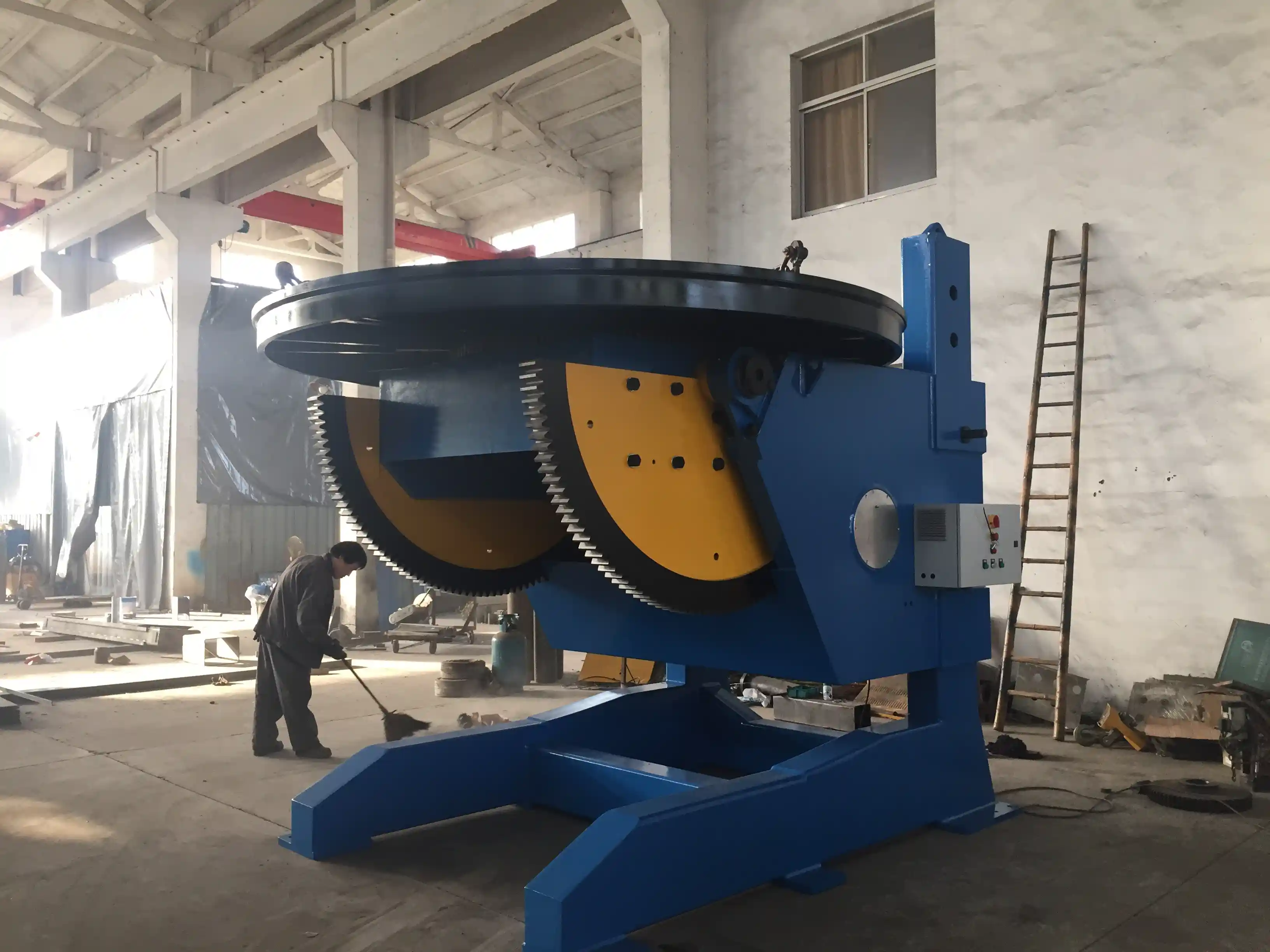
I have seen factories accept a lower upfront price only to spend more on onsite repairs and production stoppages within the first two years. When negotiating, shift the conversation to total cost of ownership. Ask suppliers to provide their recommended preventive maintenance schedule and the local availability of wear parts such as rollers, gears, and control modules. If the supplier cannot give you a clear answer on parts delivery lead times, that uncertainty is a cost you should account for.
| Cost Factor | Lower-Price Machine | Higher-Price Machine |
|---|---|---|
| Purchase price | Lower | Higher |
| Spare parts availability | Often limited, imported | Typically well-stocked locally |
| Unplanned downtime over 5 years | Potentially 15-20% higher | Typically under 5% |
| Control system | Generic PLC | Siemens/ABB with preset programs |
| Resale value after 10 years | Negligible | 20-30% of original cost |
Define Your Technical Requirements with Precision
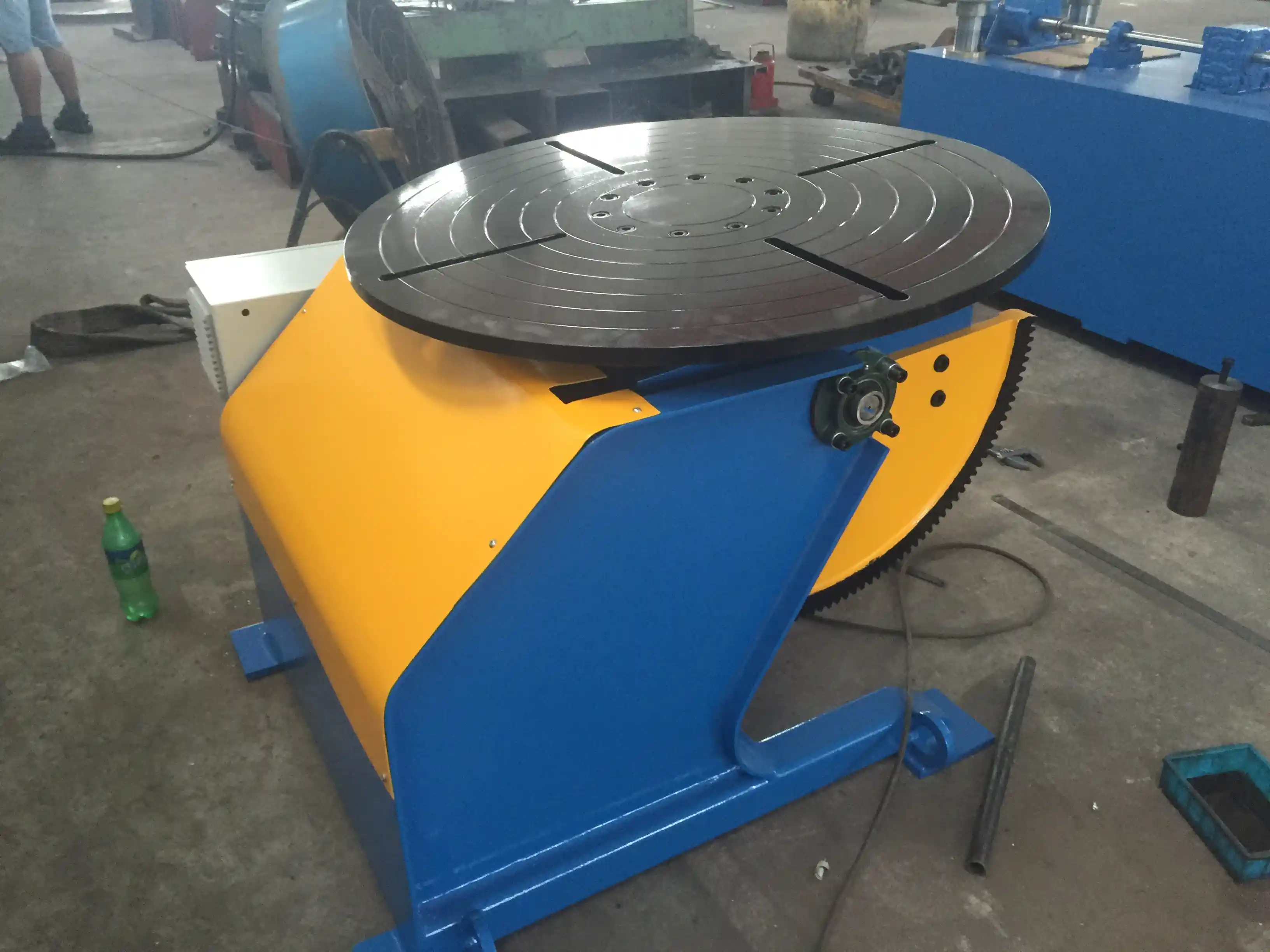
A common mistake in welding equipment procurement is requesting a machine that is oversized for the actual production work. A 5-ton head-tail positioner with hydraulic height adjustment is excellent for pressure vessels and wind tower sections, but if your shop only welds structural beams under 2 tons, you are paying for capacity you will never use. Likewise, specifying a fiber laser cutting machine for mild steel under 20 mm thickness is unnecessary when a CNC plasma cutter would handle the work at a fraction of the capital cost.
I always recommend that buyers build a detailed production profile before requesting quotations. List the maximum workpiece dimensions, the materials and thicknesses, the required cycle time, and the welding process. For tank fabrication, specify the vessel diameter range, the shell thickness, and whether you need fit-up assistance. For H-beam production, define the flange width and web height range, the required straightness tolerance, and the production rate per shift. The more precise the requirement sheet, the less margin a supplier builds into the quote to cover ambiguity, and the more focused the negotiation can be on the exact machine configuration you need.
Obtain Multiple Technical Proposals, Not Just Price Sheets
A price comparison between three suppliers is only useful when the technical proposals describe the same machine capability. I have reviewed bid comparisons where one supplier quoted a welding rotator with ZG45 cast steel rollers and a Siemens drive, while another quoted a lower-spec machine with standard rollers and a generic VFD. The second quote was cheaper on paper, but the roller hardness difference alone would affect wear life by thousands of hours on large-diameter vessel welding. Demanding a line-by-line technical comparison reveals where cost differences originate and puts you in a position to negotiate on substance, not just on a number.
If your program involves large-diameter tank welding or heavy pressure vessels, it is worth confirming the roller material, the drive type, and the anti-creep mechanism before finalizing your equipment list. Ask each supplier to highlight the three most expensive sub-assemblies in their proposal. This often surfaces differences in gearbox selection, linear guide quality, or control system architecture that the bottom-line price alone hides.
Use Configuration Standardization to Reduce Cost
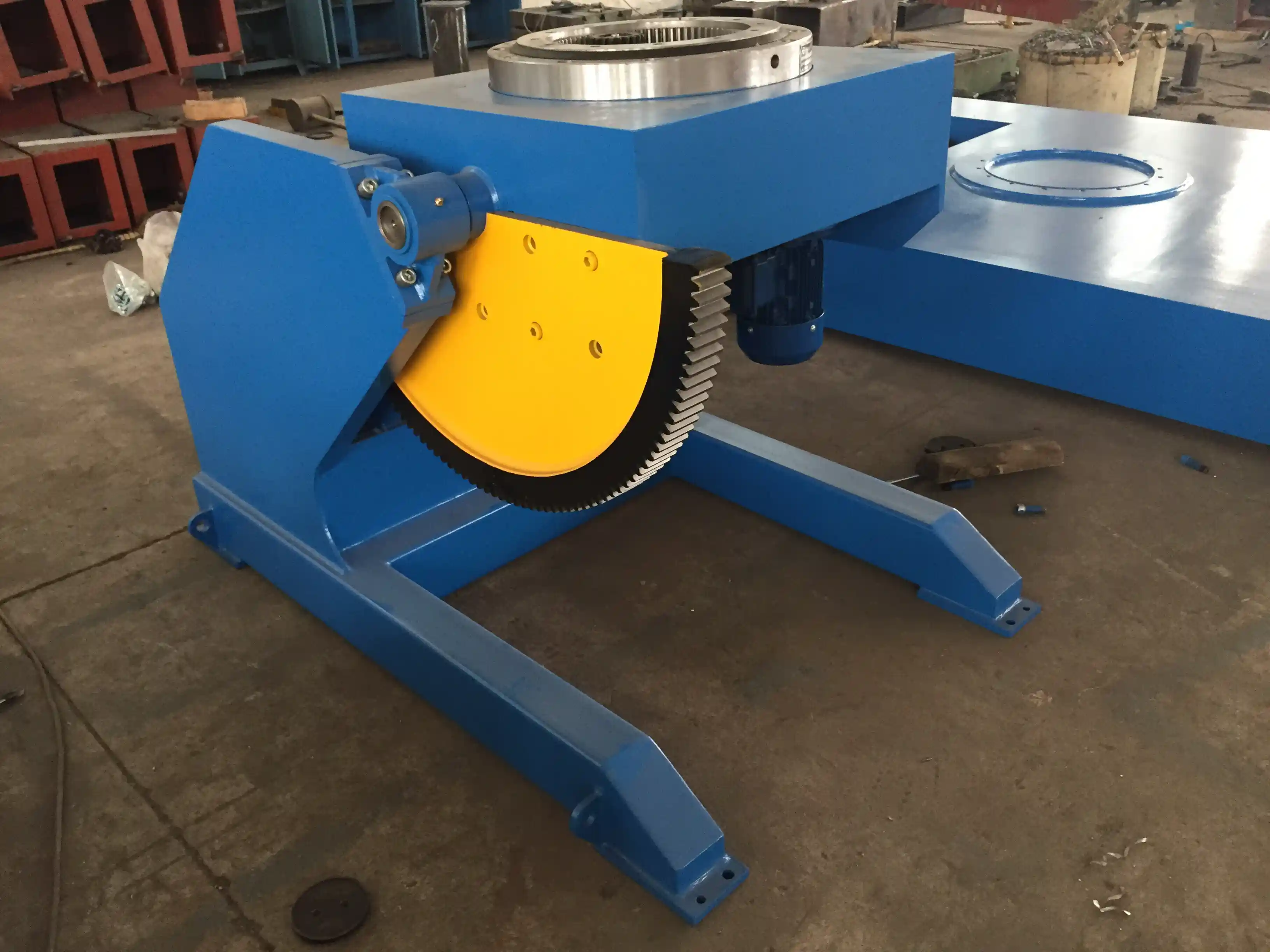
Custom engineering is one of the largest cost drivers in welding automation. Every modification to the standard boom length of a welding manipulator, every non-standard worktable diameter on a positioner, and every special roller pitch on a welding rotator adds engineering hours and procurement complexity. I advise customers to challenge whether a non-standard dimension is truly required. If a standard 1500 mm worktable on a 3-ton positioner serves the same workpiece range as a custom 1600 mm one, the savings in engineering and lead time are immediate and often in the 8-12% range.
WUXI ABK, for example, maintains stock configurations across a wide range of load capacities and diameters, from 1-ton fixed height positioners to 100-ton adjustable models. When a buyer can accept a standard configuration and adjust their tooling or fixture rather than customise the machine itself, both price and delivery lead time improve. In many cases, standardised equipment also benefits from better spare parts support, because the manufacturer already maintains stock for regular production.
Negotiate Payment Terms as Part of the Deal Structure
Price is not the only financial lever. Payment structure has a direct impact on cash flow and project risk, and suppliers who are reluctant to reduce the headline price may be open to a phased payment schedule. I have seen a 30-30-30-10 structure (30% deposit, 30% upon factory acceptance test, 30% upon delivery, 10% after installation and commissioning) secure a deal where the buyer could not shift the unit price. The supplier values predictable cash flow and a confirmed order pipeline, and the buyer reduces up-front financial exposure and retains leverage through the acceptance milestones.
For larger integrated production lines, such as a complete wind tower welding line or a boiler membrane panel system, it is also worth discussing retention amounts linked to output performance or uptime guarantees. This shifts the negotiation from a one-time price battle to a shared interest in reliable production output.
Secure After-Sales Commitments During the Purchase
After-sales support quality is one of the largest variables between welding equipment suppliers, and it is also one of the most negotiable if addressed before contract signing. I recommend that buyers negotiate specific service commitments rather than general promises. Agree on a maximum response time for onsite service, the warranty coverage for key components such as reducers, linear guides, and motors, and the availability of remote diagnostic support.
For instance, a 20-ton welding rotator may have a warranty period on the drive motors of 12 months as standard, but I have seen it extended to 24 months during negotiation. Similarly, some suppliers offer remote monitoring packages that flag abnormal vibration or temperature, allowing maintenance before a breakdown occurs. These commitments cost the supplier relatively little at the time of sale but provide substantial value to the buyer over the operational life of the equipment.
If you operate across multiple shifts with high production pressure, a prearranged supply of critical wear items in the initial equipment package avoids long lead-time procurement later. Negotiate a spare parts recommendation list as part of the quotation and discuss bulk packaging discounts for consumables such as plasma torch nozzles, roller pads, and filter elements.
Reach Out with Your Specific Requirements
Price negotiation for welding equipment works best when you have a clear picture of the machine you need, the production demands it must meet, and the total cost you are optimising for. I have helped fabrication shops, boiler manufacturers, and wind tower producers structure their equipment requirements so that suppliers compete on the same specification basis and hidden cost differences become visible. If you are preparing to invest in a welding production line and want to ensure you are comparing proposals on an equal technical footing, share your part sizes, material grades, and output targets with us at jay@weldc.com or call +86-510-83555592.
Questions Procurement Teams Often Ask About Welding Equipment Pricing
How much price variation should I expect between welding equipment suppliers?
For standard equipment such as a 3-ton welding positioner or a 10-ton welding rotator, price differences between established manufacturers are typically within 10-15%. Differences beyond that range almost always reflect different component choices: geared versus servo-driven tilt, standard versus high-precision linear guides, or local versus imported reducers. Identify the specification differences before accepting a lower price as a true saving.
Is it better to buy a complete production line from one supplier or source individual machines?
There is no rule that applies to every case, but in practice, line integration is where the hidden costs accumulate. When one supplier provides the full H-beam welding line or tank fabrication system, the mechanical, electrical, and control integration is their responsibility. When machines come from three different sources, your team owns the integration risk. The price may appear lower, but the installation and commissioning timeline often extends and the after-sales accountability fragments. For complex integrated lines, single-source procurement with clear performance guarantees is often the more cost-effective path.
Should I push for a discount during a trade show or industry exhibition?
Temporary exhibition discounts are sometimes genuine but are often offset by reduced configuration flexibility. A supplier might offer a 5% discount on a standard-configuration machine displayed at a show, yet the machine may not match your exact production needs. I generally advise buyers to focus on getting the right specification first and then negotiate based on total order value and long-term partnership potential. A supplier who sees a repeat customer rather than a one-time deal is usually more willing to offer favourable terms that actually benefit your operation.
How can I verify a supplier’s after-sales capability before placing an order?
Request a list of recent installations in your region and contact the buyers directly. Ask about dispatch time for service engineers, spare parts lead time, and the remote support responsiveness. A supplier who hesitates to provide references or cannot show regional service coverage is a risk regardless of the purchase price. If exact reference details are not available, ask the supplier to describe their typical field service process step by step. The clarity of that answer often tells you more than a generic service promise. Share your requirements and we will confirm the closest service support arrangement for your location.
Если вам интересно, ознакомьтесь со следующими статьями по этой теме:
Чрезмерное смещение при сварке трубопроводов: решение для прецизионного позиционирования сварного поворотного стола от компании Wuxi ABK
Основные проблемы и высокоточные решения в области сварочных позиционеров в ветроэнергетике и судостроении: всесторонний технический анализ
 English
  Español
  Français
  Deutsch
  Português
  Русский