
Choosing between fiber and CO2 laser cutting usually comes down to three shop-floor variables: the material mix you process, the thickness range you cut daily, and how many shifts the machine must run. They are different tools, not simply different generations of the same tool. Understanding where each source excels helps prevent overpaying for power you will not use or buying a lower-cost machine that becomes a bottleneck.
How Fiber and CO2 Laser Sources Work
A CO2 laser uses an electrically excited gas mixture, typically carbon dioxide, nitrogen, and helium, to generate a beam at 10.6 µm. The beam travels through mirrors and bellows to the cutting head. Alignment and beam-path cleanliness matter because any drift changes the focused spot and cut quality.
A fiber laser uses diode-pumped active optical fiber to generate a beam at around 1.07 µm. The beam travels through a flexible fiber optic cable to the cutting head. Fewer exposed optical surfaces mean a more stable beam path, but beam parameter product and focus diameter still determine the practical cutting range [1].
The wavelength difference has direct process consequences. Metals absorb 1.07 µm energy more readily than 10.6 µm energy, especially aluminum, copper, and brass. CO2 remains useful for many non-metal sheets and for some thick carbon steel applications where edge quality is the primary concern.
Cutting Performance by Material and Thickness
| Фактор | Волоконный лазер | CO2-лазер |
|---|---|---|
| Wavelength | ~1.07 µm | 10.6 µm |
| Beam delivery | Fiber optic cable | Mirrors and beam path bellows |
| Thin sheet mild steel | Generally faster in automated cutting cells | Capable but usually slower |
| Thick carbon steel above 20 mm | Modern high-power systems are competitive, but process setup is critical | Stable cut quality when optics are maintained |
| Aluminum, copper, and brass | Strong absorption; back-reflection protection is required | Weak absorption; slow or impractical for many reflective parts |
| Non-metal materials | Not normally used for cutting | Cuts many plastics, wood, paper, and some composites |
| Edge quality tolerance control | Lasers can hold tight kerf and squareness with correct gas and focus | Good edge consistency on suitable thickness ranges |
For steel parts that require controlled edge roughness and angularity, both processes can meet ISO 9013 quality classes if the machine is correctly set up [2]. The practical difference is not whether a good edge is possible, but how much operator skill and process tuning is required for the material mix in your shop.
Operating Cost, Energy, and Consumables
Fiber sources usually have higher wall-plug efficiency and consume less electrical power per cut than CO2 systems of comparable effective output. They also eliminate laser gas consumption, which is a recurring cost for CO2 machines [4].
CO2 operation includes laser gas refills, mirror cleaning, beam-path purging, and periodic turbine or blower maintenance. Fiber operation focuses more on protective window replacement, nozzle condition, and diode module health over the long term. Both machines require clean dry air, nitrogen, or oxygen for cutting, and assist gas consumption is application-dependent rather than source-dependent.
For a high-mix shop, the most important cost question is not the machine price alone. It is total cost per acceptable part across two or three shifts, including energy, gas, consumables, maintenance labor, and unplanned downtime.
Maintenance and Uptime
CO2 machines carry more alignment-sensitive components. Mirrors require cleaning and occasional realignment, and the resonator itself has a finite service interval. In dusty or humid environments, the beam path and optics need consistent attention.
Fiber machines have fewer open optical surfaces. The resonator is sealed, and the beam path is enclosed in the delivery cable. Maintenance shifts toward lens protection, nozzle condition, and chiller performance. Any laser requires proper enclosure interlocks, laser safety training, and controlled access in line with IEC 60825-1 and ANSI Z136.1 [3][5].
The best uptime strategy for either technology is preventive care based on shift hours: clean the lens and nozzle on a fixed schedule, inspect the assist gas system, monitor chiller temperature, and trend cut quality instead of waiting for edge degradation.
Application Matching: Where Each Technology Fits
Fiber laser is often the stronger starting point when the shop mainly processes:
- Mild steel, stainless steel, and aluminum sheets from thin gauge to roughly 20 mm
- Copper, brass, and other reflective metals
- High-volume automated cutting with robot or pallet loading
- Multi-shift production where energy cost and uptime matter
- Manufacturing that feeds downstream welding and assembly cells
CO2 laser still has relevant applications when the shop mainly processes:
- Thick carbon steel plate with strict edge squareness requirements
- Non-metal materials such as plastics, wood, leather, or paper
- A narrow material range where existing CO2 fixtures, parameters, and operator knowledge are already mature
Many fabricators now use fiber for most metal work and retain CO2 only for a specific non-metal or heavy-plate niche. The right choice depends on the parts you actually cut, not on a general ranking.
Downstream Accuracy and Welding Fit-Up
Laser cutting is rarely the final process for fabricated metal components. Cut-part accuracy affects fit-up, tack welding, and final weld quality. A part that is square and consistent makes downstream positioning and seam tracking easier; a part with taper, heavy dross, or inconsistent kerf creates rework before welding even begins.
Cutting accuracy influences how cleanly pressure vessel sections align before welding. <Революционное решение для сварки сосудов под давлением: Технический анализ вращающихся на 360 градусов сварочных позиционеров> covers how precision positioning complements accurate cut parts in pressure vessel fabrication.
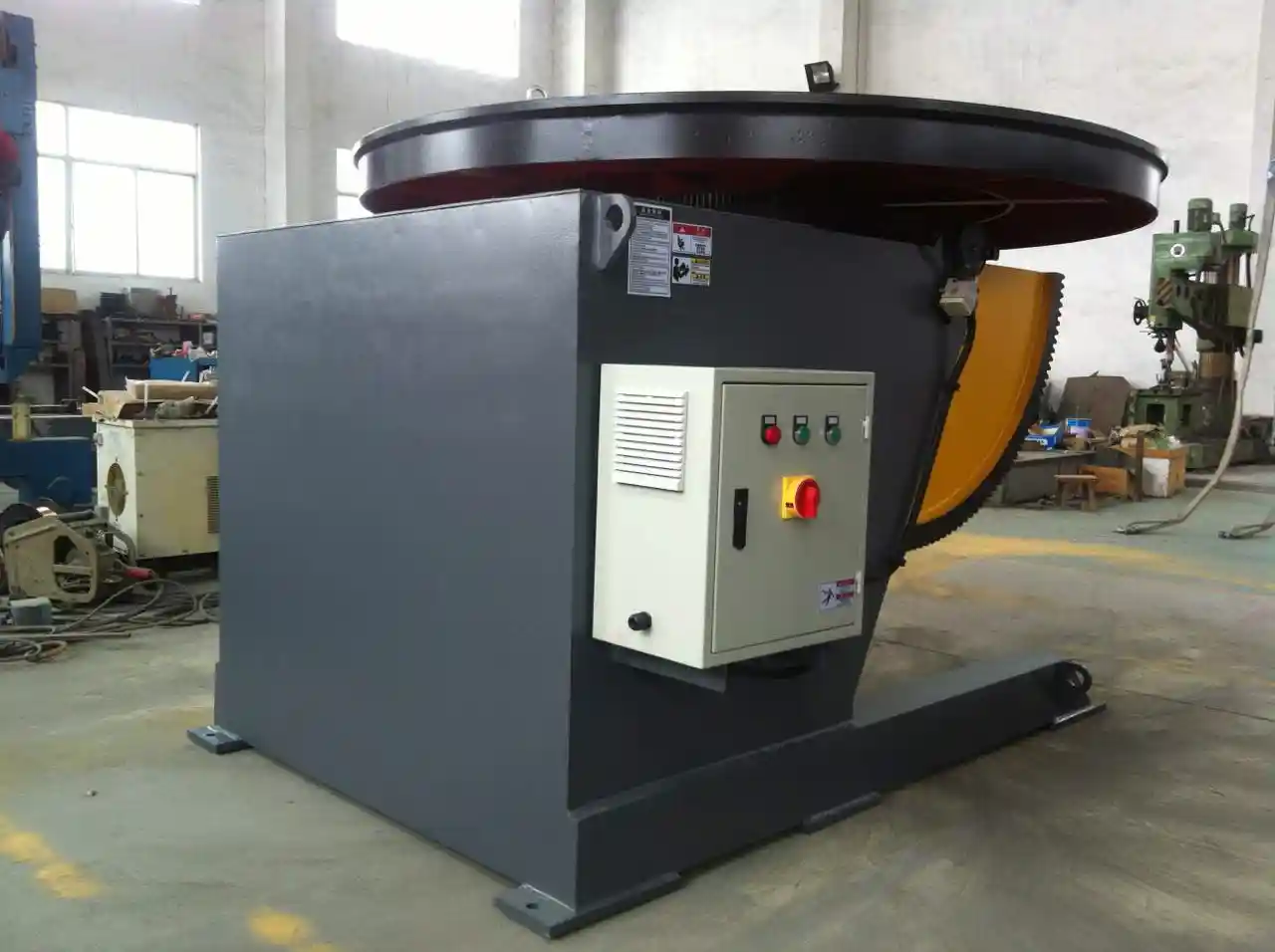
For pipe and cylinder work, the same relationship holds. A fiber laser can cut edges and openings quickly, but the value is only captured when the downstream rotator or positioner holds the part without excessive misalignment. This is why machine selection should consider the whole cutting-to-welding sequence, not just the laser source.
Laser-cut edges and openings affect how well pipe sections align before girth welding. <Проблемы, связанные с несоосностью при сварке труб: как интеллектуальные поворотные устройства для сварки труб повышают коэффициент готовности нефтепроводов> covers controlled rotation and fit-up correction in pipe welding lines.
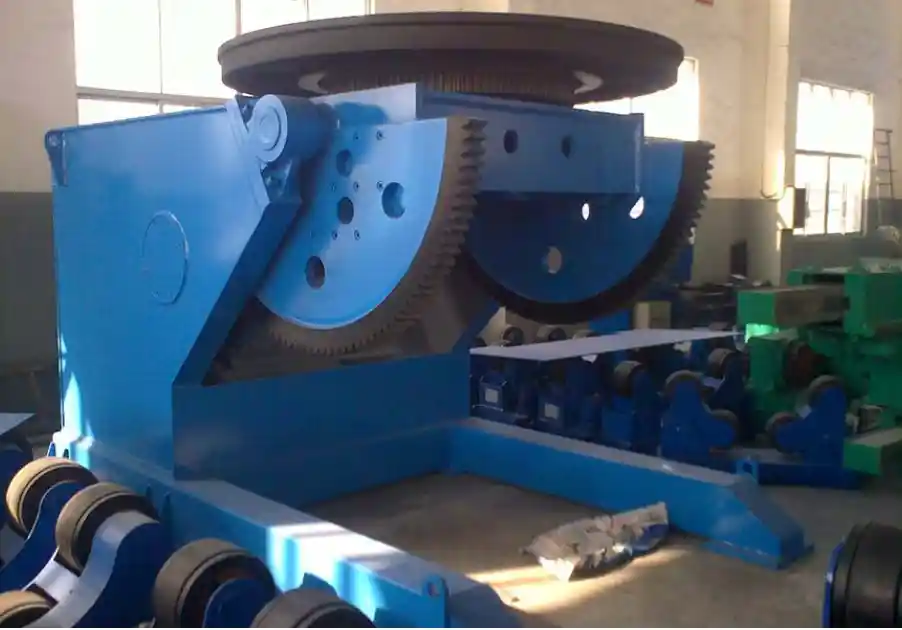
Application Review: Match the Laser to the Line
If you are comparing a fiber cutting cell against a CO2 machine for a planned production line, send your material mix, maximum sheet thickness, tolerance requirements, and target shift volume to jay@weldmc.com. A configuration review should cover laser power, cutting table size, assist gas supply, dust extraction, and how the machine will feed your downstream welding or bending operations.
Machine Selection Checklist
Use the following checklist when evaluating fiber and CO2 cutting machines:
- List all materials and thicknesses processed in a normal month.
- Identify the three highest-volume part families and their tolerance requirements.
- Confirm required edge quality class according to ISO 9013 [2].
- Evaluate available electrical supply, assist gas capacity, and extraction.
- Calculate operating hours per day and expected maintenance resources.
- Check how the cutting machine will integrate with existing material handling, bending, or welding cells.
Request a Machine Configuration Review
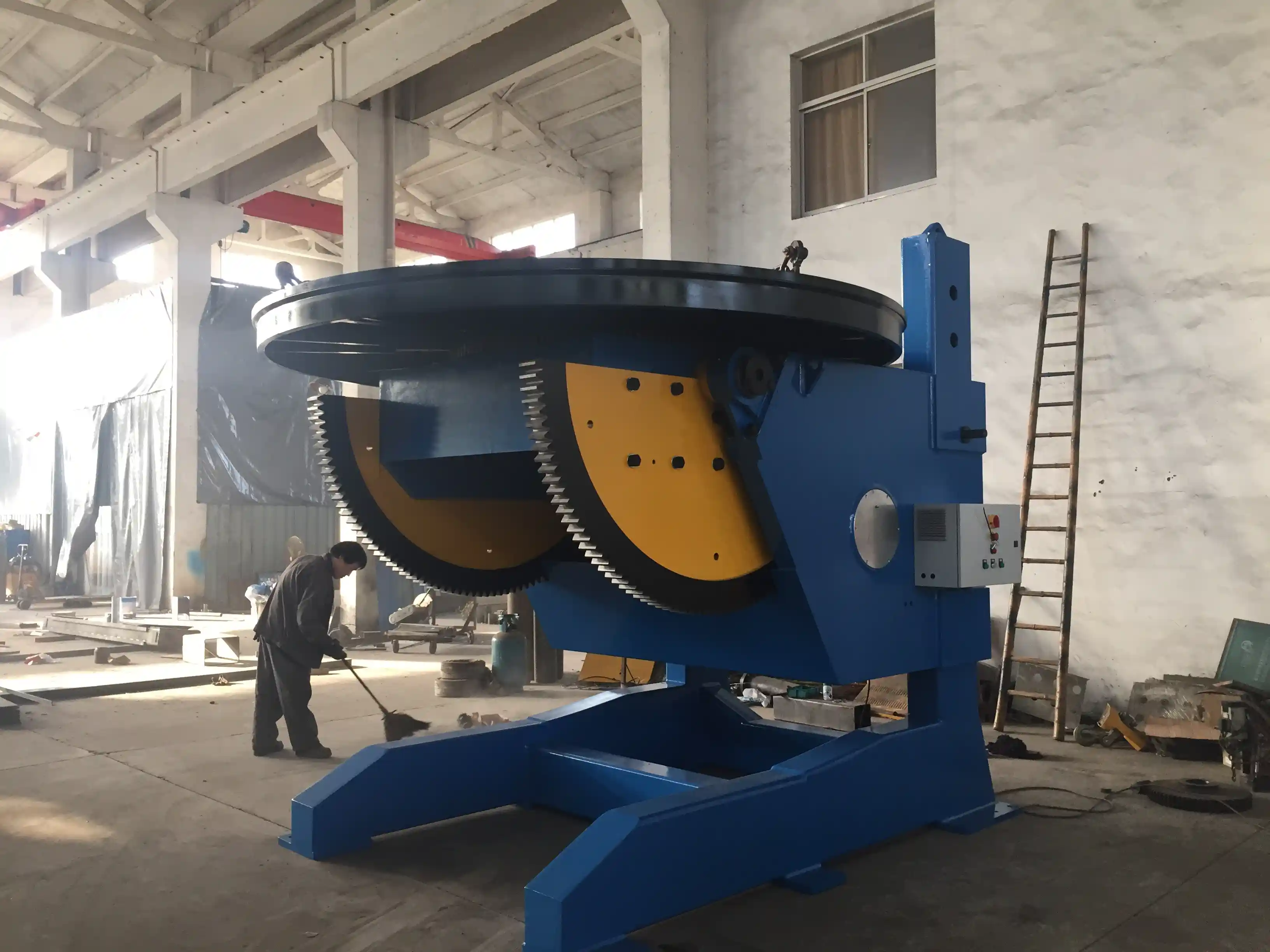
WUXI ABK Machinery Co., Ltd provides support for CNC cutting and welding automation evaluation based on your part range and production volume. Our team can help you compare fiber laser, plasma, and flame cutting options alongside downstream welding positioners, manipulators, and rotator systems.
- Email: jay@weldmc.com
- Тел: +86-510-83555592
- Мобильный: +86-13815101750
- Факс: +86-510-83559158
- Laser cutting machine page: Laser Cutting Machine
- Alternative cutting configurations: Плазменный резак с ЧПУ
Часто задаваемые вопросы
Which laser is better for stainless steel under 10 mm?
Fiber is generally preferred for stainless steel sheet and plate in this range. It offers faster thin-sheet processing, stable focus, and no beam-path alignment between the resonator and cutting head. The final edge quality still depends on power, focus position, assist gas, and cutting parameters.
Can fiber replace CO2 for thick carbon steel?
In many shops, modern high-power fiber systems now cut thick carbon steel that was previously CO2 territory. The decision should be tested on your specific thickness and edge quality requirement because cut kerf, taper, and dross behavior can differ between sources and machine configurations.
Does CO2 still make sense for non-metal cutting?
Yes. CO2 is still a practical choice for plastics, wood, paper, leather, and some composites because of its wavelength compatibility. Fiber lasers are not normally used for those non-metal cutting applications.
Which system is easier to maintain?
Fiber systems usually have fewer exposed optical surfaces and no laser gas path to maintain. CO2 systems require mirror cleaning, alignment checks, and resonator maintenance. Both need disciplined lens, nozzle, chiller, and extraction care.
Which technology has lower operating cost?
Fiber generally has lower energy use and eliminates laser gas cost, but the answer depends on utilization and material mix. A high-shift operation benefits most from fiber efficiency, while a low-volume shop with an existing CO2 process may not recover the cost of changing technology quickly.
Do fiber and CO2 machines need different safety systems?
Both require laser safety enclosures, interlocks, controlled access, and operator training according to IEC 60825-1 and ANSI Z136.1 [3][5]. The specific laser class and enclosure design depend on machine power, open beam areas, and local factory safety requirements.
References
[1] ISO 11146-1:2021. Lasers and laser-related equipment — Test methods for laser beam widths, divergence angles and beam propagation ratios — Part 1: Stigmatic and simple astigmatic beams. International Organization for Standardization.
[2] ISO 9013:2017. Thermal cutting — Classification of thermal cuts — Geometrical product specification and quality tolerances. International Organization for Standardization.
[3] IEC 60825-1:2014. Safety of laser products — Part 1: Equipment classification and requirements. International Electrotechnical Commission.
[4] ISO/TR 11552. Lasers and laser-related equipment — Laser materials processing machines — Performance specifications and benchmarks for cutting of metals. International Organization for Standardization.
[5] ANSI Z136.1-2022. American National Standard for Safe Use of Lasers. Laser Institute of America.
Если вам интересно, ознакомьтесь со следующими статьями по этой теме:
Tired of Complex Welding Challenges? How a 3-Axis Positioner Can Boost Productivity by 70%
Wuxi ABK Professional Welding Rotary Equipment: Precision Welding Solution for Pressure Vessel Manufacturing
Проблемы, связанные с несоосностью при сварке труб: как интеллектуальные поворотные устройства для сварки труб повышают коэффициент готовности нефтепроводов
Освоение тяжелого производства: Как подъемные роликовые стенды стали краеугольным камнем эффективной сварки
 English
  Español
  Français
  Deutsch
  Português
  Русский