When you source welding positioners, rotators, or manipulators, the choice between OEM and brand name equipment determines more than upfront cost. It shapes lead times, after-sales support, and long-term reliability. After twenty years in welding automation manufacturing, I have seen fabrication shops save 30% with well-engineered OEM machinery and others lose far more chasing the lowest bid. The real question is not whether OEM or brand name is better, but how to tell which OEM equipment is built to perform. This guide examines the engineering, cost drivers, and supplier assessment criteria you need to make a sound decision.
What Is the Real Difference Between OEM and Brand Name Welding Equipment?
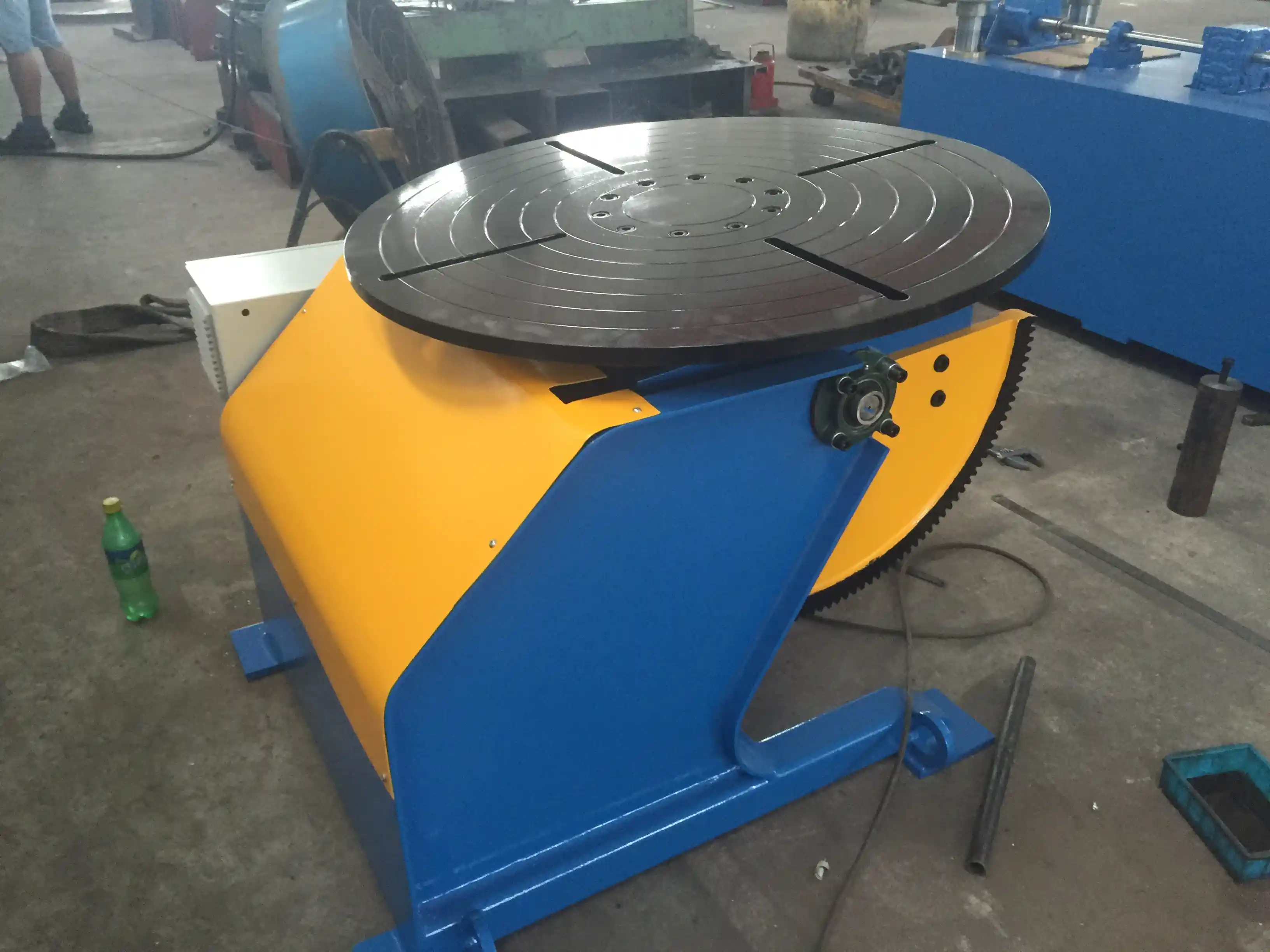
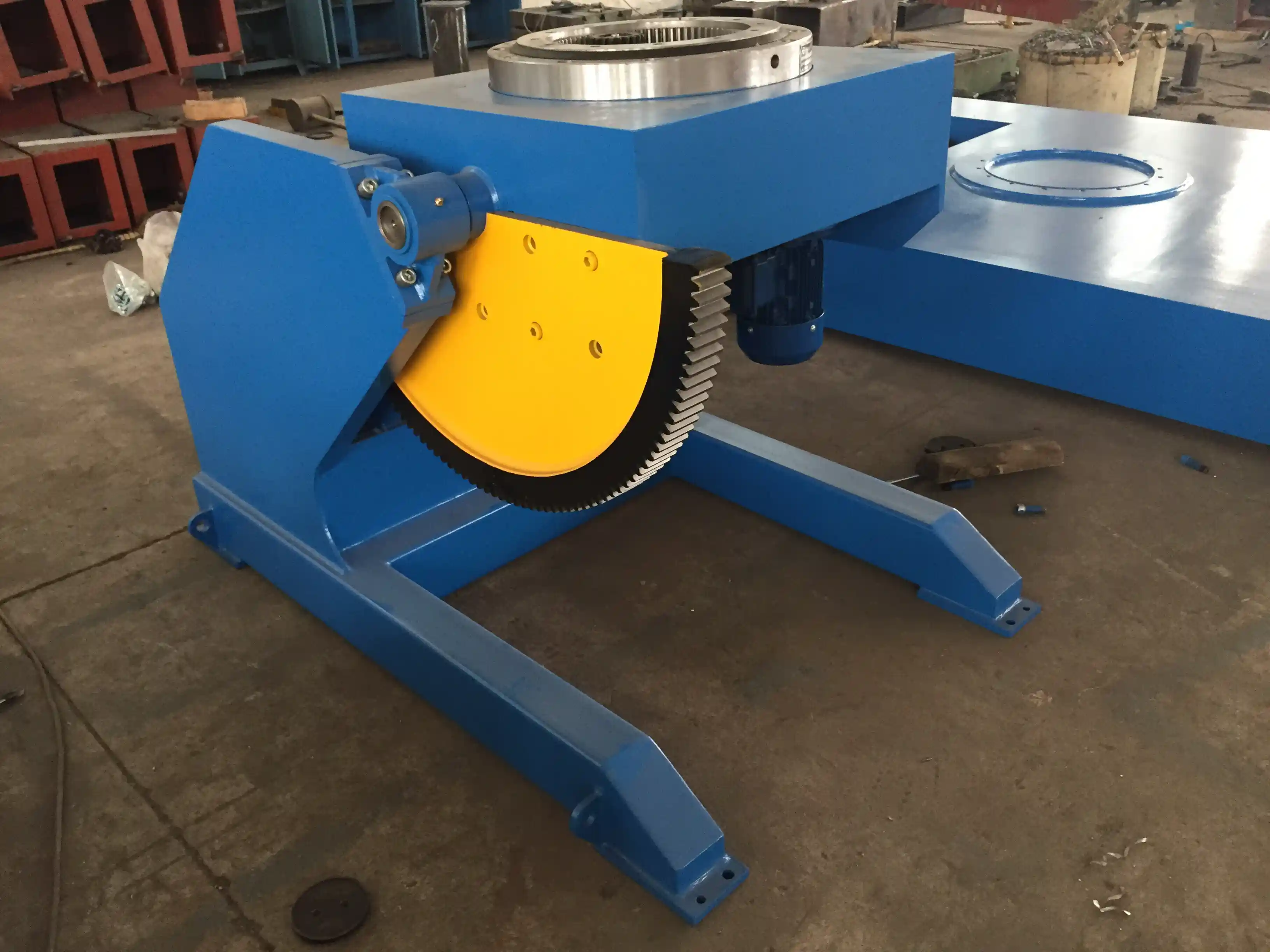
OEM equipment is typically produced by manufacturers who focus on building machines to defined specifications rather than marketing a widely recognized brand. In the welding automation industry, these manufacturers often use the same core components, THK linear guides, SEW reducers, Siemens PLCs, and ZG45 cast steel, that top-tier brands rely on. The primary differences lie in engineering validation, documentation rigor, and global service infrastructure.
A brand-name positioner from a well-established player comes with a known pedigree: detailed test reports, worldwide parts depots, and a price tag that reflects decades of R&D and marketing. An OEM unit from an experienced manufacturer can deliver identical or better performance. Our 3-ton 3-axis positioner, for example, holds ±0.05 mm positioning accuracy with 0.02 mm repeatability, built on a cast base with the same class of components. When we ship a CE-certified positioner to a European pressure vessel fabricator, the machine is electrically identical to what the plant would receive from a multinational brand, just without the premium for the nameplate.
Why Do Brand Name Welding Machines Cost More?
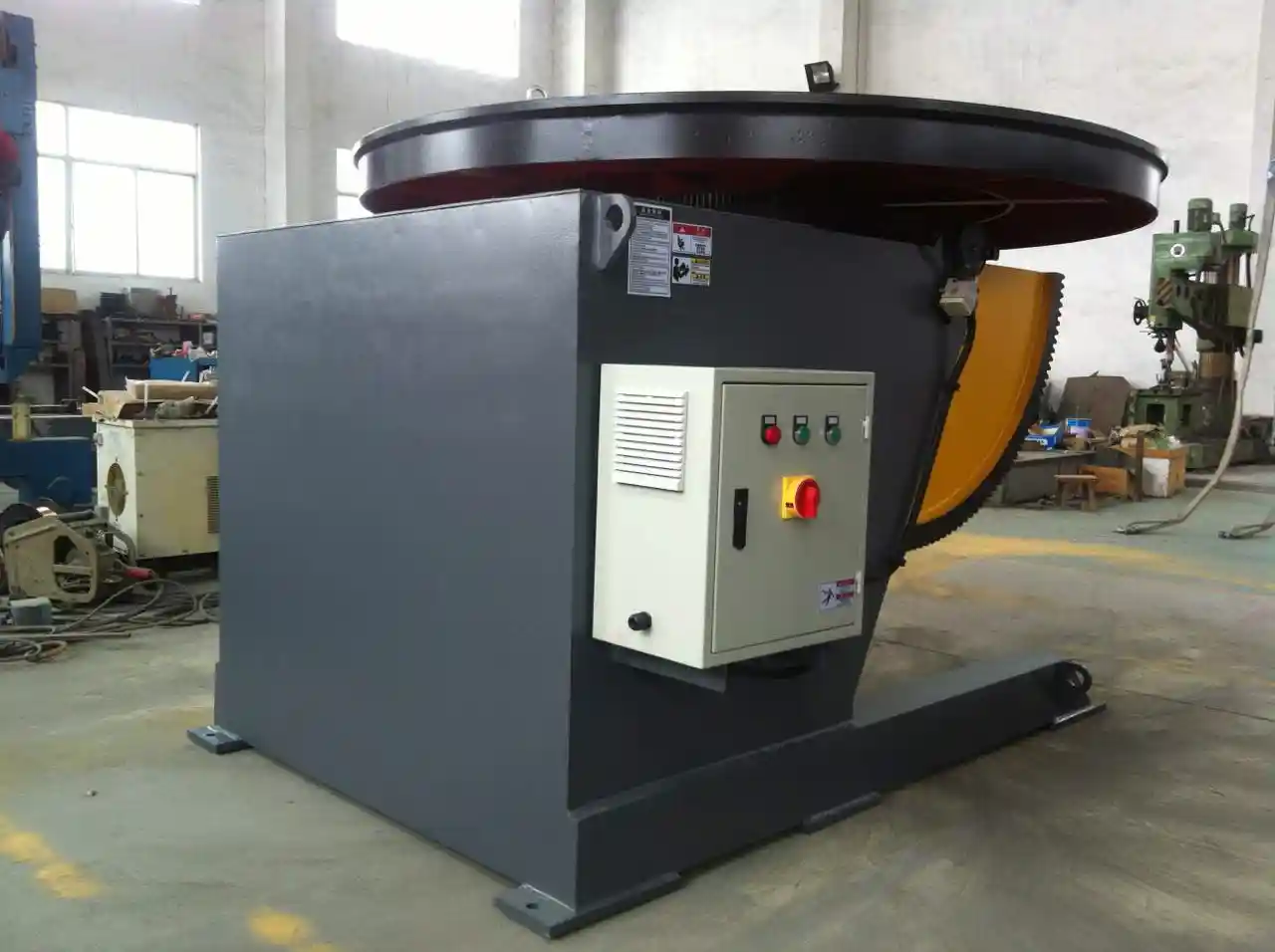
The price difference between OEM and brand-name welding equipment originates from several structural factors that go beyond component cost. Brand-name manufacturers amortize higher marketing expenses, dealer margins, and global certification overhead across each unit. That premium often buys faster local service, ready spare parts, and the reassurance of a warranty backed by a publicly traded corporation. Whether that premium is justified depends on your location, application criticality, and tolerance for supplier due diligence.
| Equipment Type | Brand-Name Price (USD) | OEM Price Range (USD) |
|---|---|---|
| 1-ton fixed height positioner | 12,000 – 18,000 | 8,000 – 12,000 |
| 5-ton adjustable height positioner | 22,000 – 32,000 | 14,000 – 22,000 |
| Rotateur de soudage de 20 tonnes | 35,000 – 50,000 | 22,000 – 35,000 |
| 3-axis precision positioner (2-ton) | 45,000 – 65,000 | 28,000 – 42,000 |
In our workshop, the same engineers who assemble 100-ton rotators for offshore fabricators also build smaller positioners using identical procedures and inspection checklists. The cost advantage comes from a leaner overhead structure and a direct-to-customer supply chain, not from using inferior materials. Buyers who request full documentation, material certificates, runout measurements, and load test videos, can often replicate the brand-name quality assurance experience at a substantially lower cost.
If your project involves vessel diameters over 2 meters or requires custom tilt ranges, the right configuration can mean the difference between a profitable job and a margin-killer. Share your specifications with us at jay@weldmc.com, and we will outline an OEM setup that matches your production requirements.
How Do You Evaluate an OEM Welding Equipment Supplier?
A credible OEM supplier reveals itself through component transparency, manufacturing discipline, and customer references. Begin by requesting a bill of materials for the key drive and guide elements. If the supplier cannot name the linear guide brand or the reducer model, assume they are using unbranded copies with unpredictable wear characteristics. A reputable OEM will tell you exactly what is inside the machine.
Second, ask for test data from a machine they have already shipped, not from a lab prototype. We routinely supply third-party inspection reports showing positioning accuracy across a 360° rotation cycle, because a single-point specification means nothing. The 30-ton adjustable height positioner we delivered last quarter to a boiler manufacturer maintained less than 0.3 mm total indicated runout after 8 hours of continuous welding, documented on video and still available for review.
Third, verify certifications directly. A CE mark on a nameplate is not enough; request the certificate number and confirm its validity through the EU NANDO database. For projects bound by ASME or AWS codes, confirm that the OEM has previously supplied equipment to code shops and can provide project references.
Evaluating a supplier is more than a checklist; it is about confirming the machine will still be holding tolerance a year from now. <Principaux problèmes et solutions de haute précision des positionneurs de soudage dans les secteurs de l'énergie éolienne et de la construction navale : Analyse technique complète> covers how intelligent drive systems and real-time torque monitoring catch misalignment before it compromises a weld pass, something no checklist alone reveals.
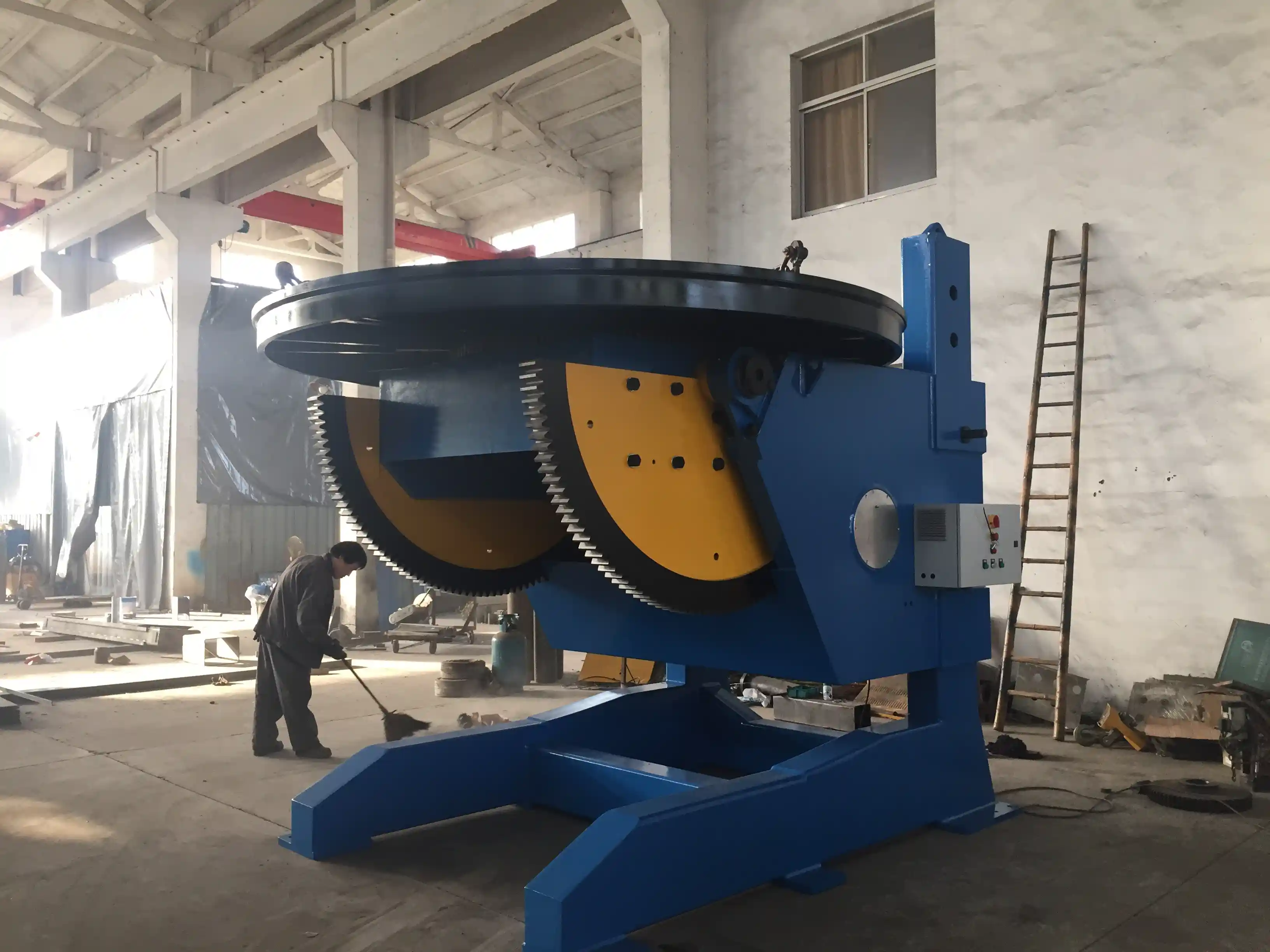
If your application requires extreme tilt angles or multi-axis coordinated motion, the difference between a capable OEM and a questionable one shows up in the software architecture and servo tuning. Share your most demanding weld sequence with the supplier and ask how their machine would execute it. The answer tells you more than any brochure.
What Are Common Pitfalls When Buying OEM Equipment?
The most frequent pitfall is treating price as the sole selection criterion. I have seen a shop import a welding turntable that met the load rating on paper but arrived with chrome-plated rollers that spalled after three months because the manufacturer had substituted a cheaper surface treatment. The $2,500 initial saving evaporated in downtime, rework, and lost production hours.
Another pitfall is underestimating local support. An OEM with no local representative or service partner places the burden of troubleshooting on your own maintenance team. Before placing an order, confirm whether the supplier offers remote diagnostics, video-assisted repair, and an agreed response time for critical failures. We offer WhatsApp video support to customers on three continents; it resolves 80% of issues within hours, though it is not a replacement for an on-site technician.
Documentation gaps are equally dangerous. A thorough OEM will deliver a complete operation manual in English, wiring diagrams, and a spare parts list with interchangeable part numbers. If the manual is a photocopy in a language you cannot read, you are buying a project, not a productive asset.
Even well-engineered machines can underperform if the integration overlooks the specific demands of large-diameter pipe work. <Des soudures parfaites sur des tubes de grand diamètre grâce à un équipement de laminage professionnel> explains how roller material and diameter affect root pass consistency on pipes over 1,200 mm, a detail that separates machines that pass inspection from those that generate rework.
Get a Technical Proposal That Matches Your Workflow
You have now walked through the key differentiators, from component quality to documentation gaps, and you know what separates a reliable OEM machine from a risk. The next step is to put your specific requirements in front of an engineering team that can translate them into a concrete machine configuration, complete with third-party test criteria and a fixed delivery timeline.
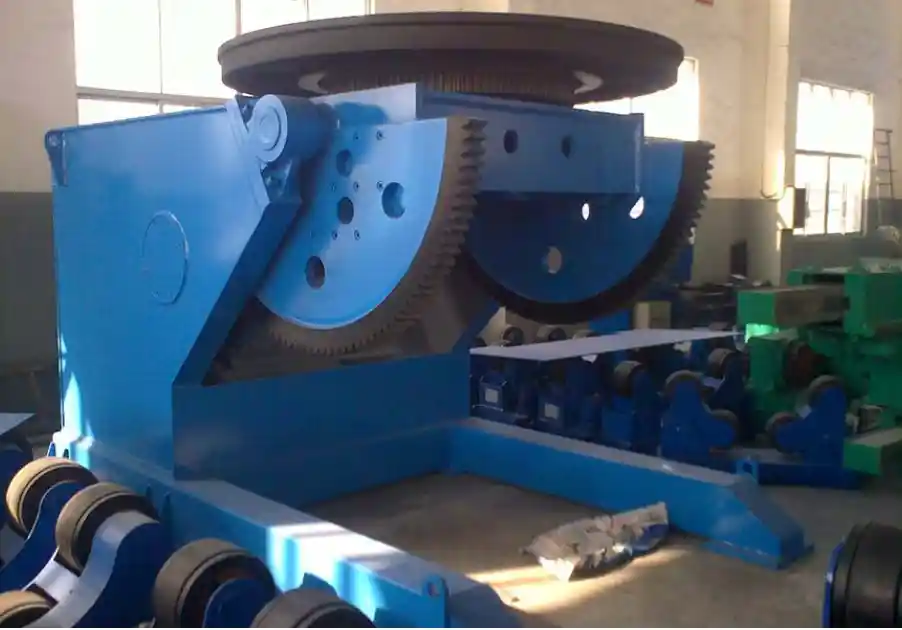
We build welding positioners and rotators up to 100 tons, with CE certification and full component traceability. If your operation needs a 10-ton positioner with 360° continuous rotation, 0–135° tilt, and ABB robot compatibility, we can engineer a solution that matches your process exactly, with video acceptance testing before shipment. Send your part geometry, production volume, and required cycle time to jay@weldmc.com or call +86-510-83555592, and we will return a technical proposal within two working days.
Common Questions About OEM Welding Equipment
Can OEM welding positioners match the accuracy of a brand-name unit?
Yes, and the spec sheet often shows identical or better numbers. The 2-ton 3-axis positioner we manufacture achieves ±0.05 mm positioning accuracy and 0.02 mm repeatability, numbers that align with top-tier brands. The real question is whether the machine maintains that accuracy over time. That depends on the guide system preload, the reducer backlash class, and the frame rigidity, not the nameplate. Always request a complete mechanical schematic and third-party runout inspection before comparing units.
What documentation should I request from an OEM supplier?
A common mistake is assuming OEM documentation will be incomplete. In fact, reputable manufacturers can provide a bill of materials listing bearing and guide rail brands, a CE or equivalent safety certification with verifiable certificate number, and a dimensional inspection report from a finished machine. For code work, also request a list of similar projects completed, with customer contact permissions. These documents create a paper trail that transforms an unknown machine into a known quantity.
Is it harder to get spare parts for OEM equipment?
It can be, but it does not have to be. Reputable OEMs use standardized, off-the-shelf components such as SEW reducers and NSK bearings precisely so that any industrial distributor can supply them. Before ordering, ask the supplier for a standard parts list with manufacturer part numbers and confirm that those numbers are current. The hardest machine to fix is one filled with custom-machined, unlabeled components that only the manufacturer can identify. If your uptime is critical, we can pre-configure a maintenance kit that ships with the machine.
How can I verify an OEM’s build quality without visiting the factory?
In our experience, remote factory acceptance tests catch 90% of quality issues before a machine ships. Request a live or recorded test showing the machine under load cycling through your weld sequence. Look for smoothness at the lowest speed setting; jerky motion at 0.05 RPM reveals gear binding or poor servo tuning that photographs will not catch. Ask for close-up images of the welding on the machine frame itself: clean, continuous welds on the base and column indicate the same care went into the machine that it will deliver to your workpieces. Share your inspection criteria at jay@weldmc.com, and we will structure a remote acceptance procedure that matches your internal standards.
Si cela vous intéresse, consultez ces articles connexes :
Améliorer la qualité et l'efficacité dans la fabrication de réservoirs et d'appareils à pression : La valeur de l'application principale des positionneurs
Des soudures parfaites sur des tubes de grand diamètre grâce à un équipement de laminage professionnel
 English
  Español
  Français
  Deutsch
  Português
  Русский