AISC certification is not a paperwork exercise you pass once and forget. The auditor will walk your shop floor and look at specific equipment capabilities before they ever open a weld procedure file. If your positioner cannot hold rotation tolerance under load or your cutting table produces edges that fall outside the surface roughness window, the quality manual does not matter yet. I have configured production lines for shops pursuing Certified Building Fabricator status, and the single factor that determines whether the process takes three months instead of eighteen is whether the equipment specifications already match what the standard demands before anyone writes a procedure.
What AISC Certification Requires from Fabrication Equipment
AISC certification under the 207 standard evaluates a shop across several categories: Certified Building Fabricator, Certified Bridge Fabricator, and Certified Bridge Fabricator with fracture-critical endorsement. Each tier places progressively tighter demands on process control, and every audit traces process control back to machine capability.
The auditor does not care whether a specific brand name appears on your shop floor. What they evaluate is whether the equipment can produce a repeatable output within the tolerance envelope the code requires. For structural steel, that means AWS D1.1 conformance for welds and dimensional control that matches the approved shop drawings. A welding positioner rated for 5 tons with a published rotation accuracy of ±0.5 degrees is a verifiable specification. A manual chain fall and a tack-weld alignment strategy are not.
Equipment-related audit findings I have seen repeatedly fall into three categories: positioning systems that drift under load and produce inconsistent travel speed, cutting stations that lack documented calibration records, and material handling sequences that introduce distortion before welding begins. Each one is preventable if equipment selection happens with the audit scope in mind.
Welding Systems That Meet Structural Steel Code Requirements
Structural steel shops pursuing AISC certification run predominantly SAW for long seams and FCAW or GMAW for stiffener and connection detail welds. The welding machine itself is rarely the audit problem. The manipulator or positioner that presents the joint and maintains travel speed is where things break down.
For longitudinal beam welding, a column and boom manipulator needs three things to satisfy an auditor: a documented speed calibration showing that travel speed matches the WPS within ±5 percent, mechanical anti-drift design that does not rely on an operator monitoring and correcting, and a rail system with level documentation. Our LH series manipulators, for instance, run on linear guideways with stepless speed control from 0.12 to 1.2 m/min on the boom axis, which stays within D1.1 travel speed ranges for SAW on common structural plate thicknesses. The spec is not the selling point. The fact that the speed can be validated and recorded is what matters during certification.
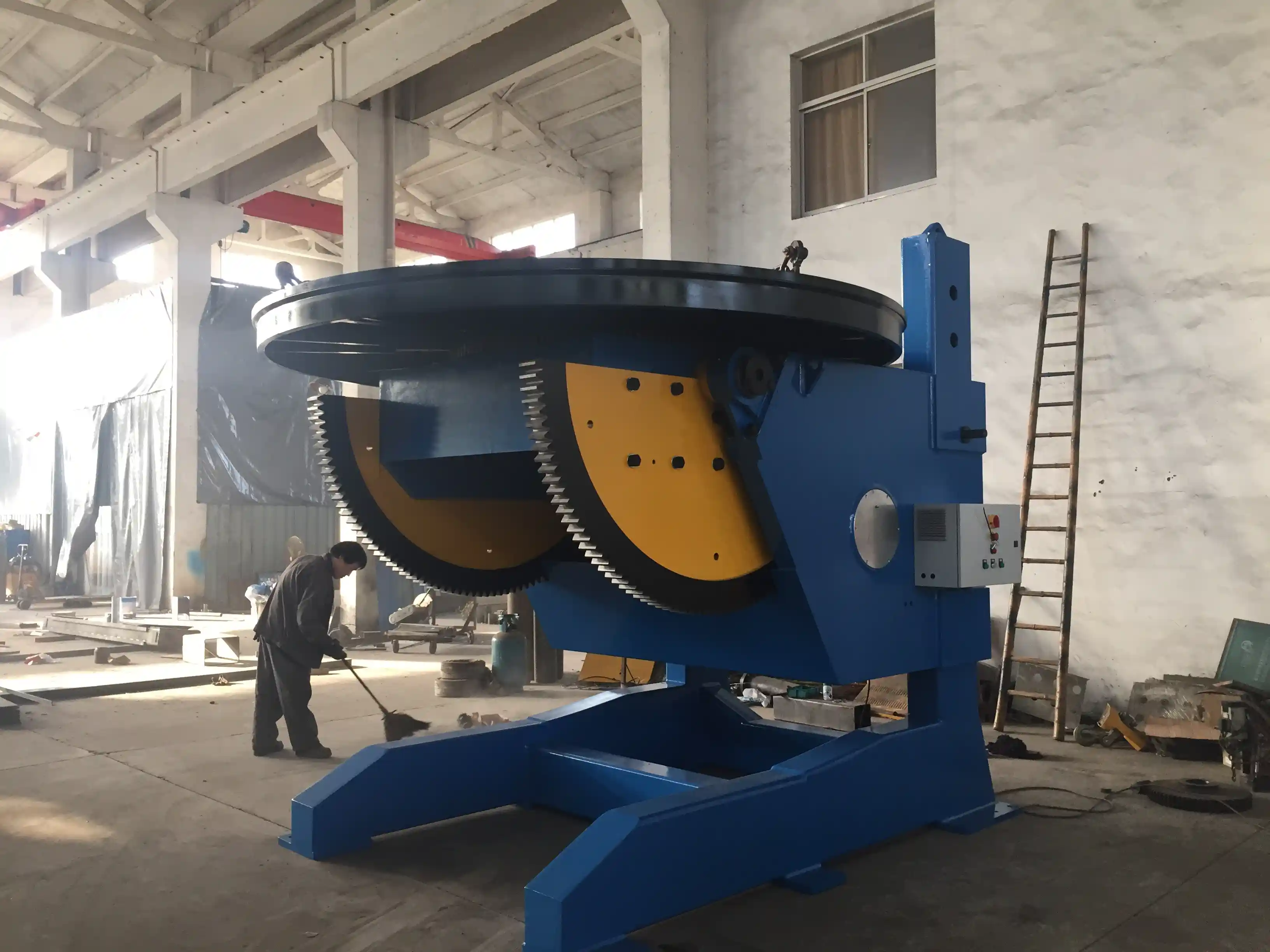
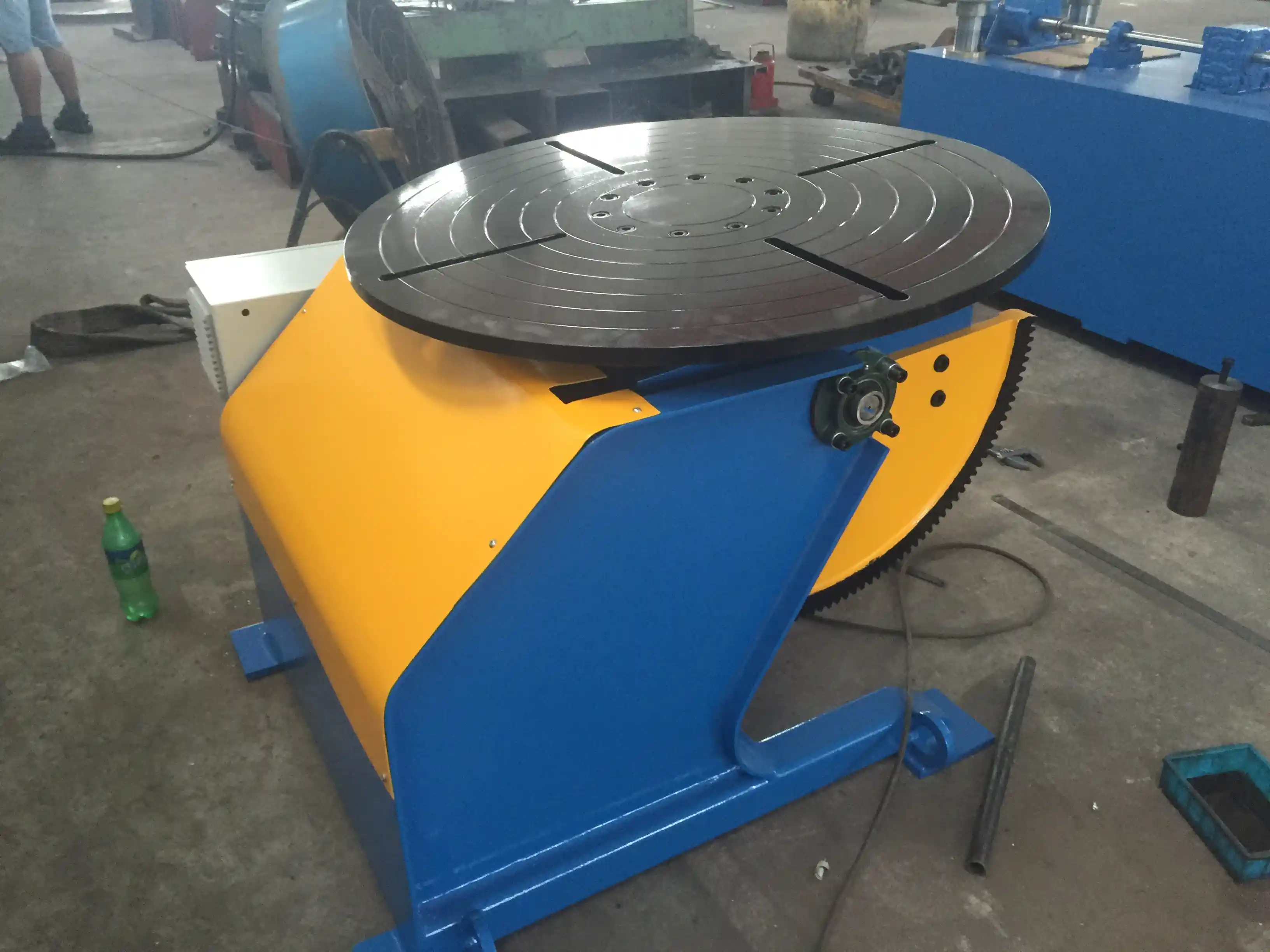
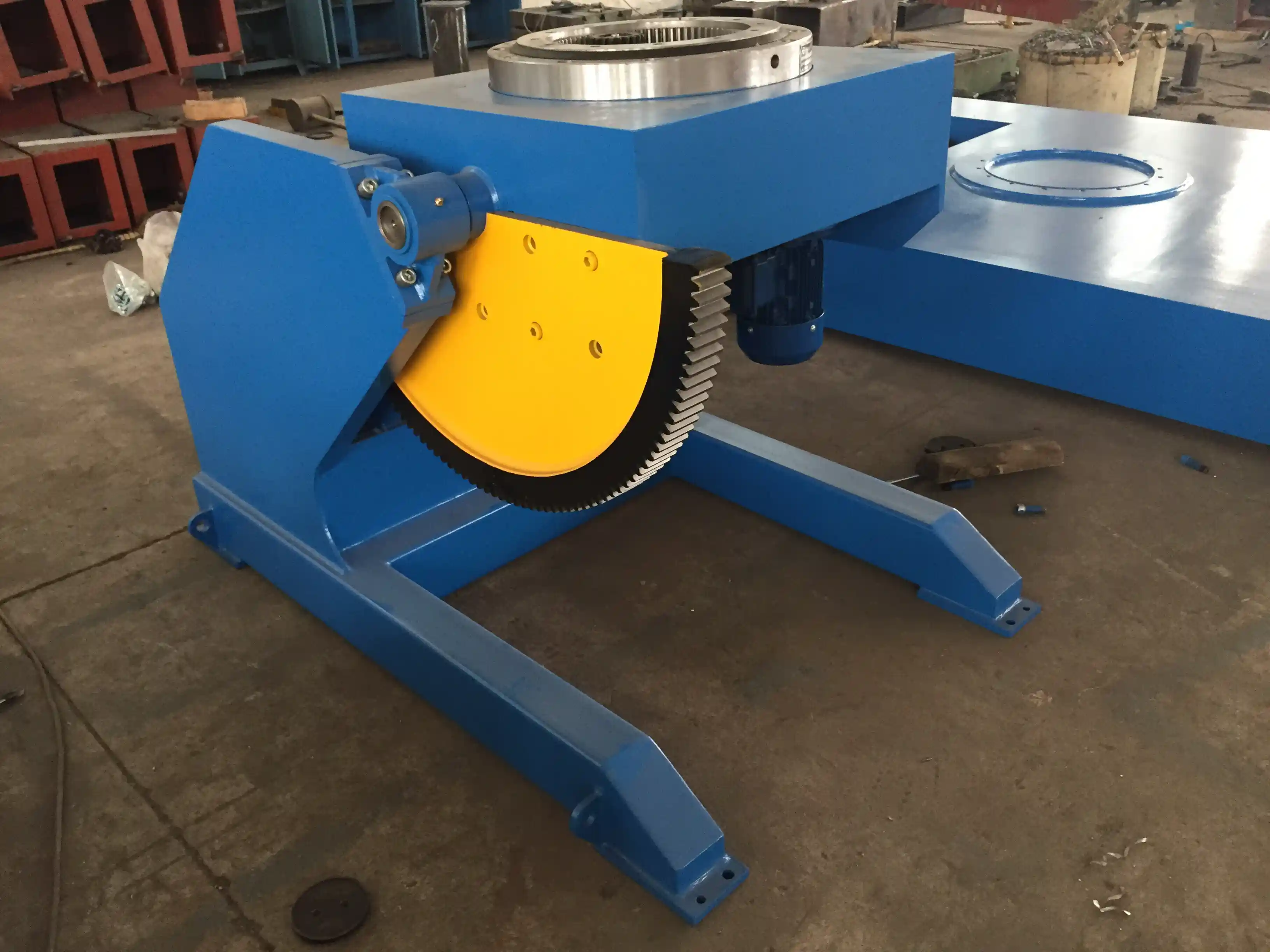
Circumferential and curved structural welds, common in bridge girder stiffeners and tubular connections, shift the audit focus from the manipulator to the positioner. A 3-axis positioner with a published positioning accuracy of ±0.05 mm and repeatability of 0.02 mm gives the auditor a number to check against the calibration log. When a shop tells us their existing positioner “holds well enough,” we typically find that what they mean is the operator compensates for drift manually. That compensation is a non-conformance waiting to happen.
Positioning and Handling Equipment for Certified Shops
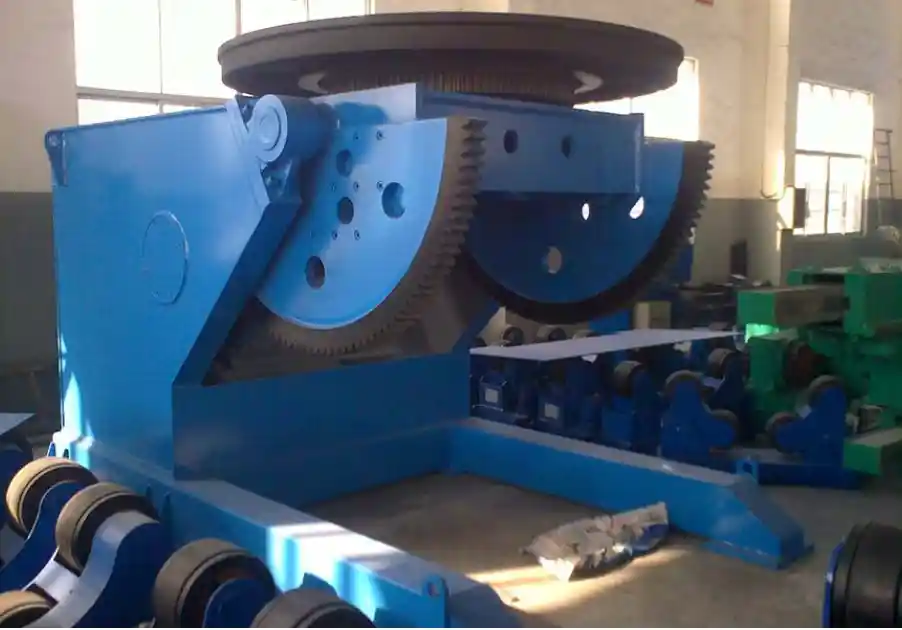
The structural steel fabricators I work with tend to underestimate how much of the AISC audit scope touches positioning. The auditor looks at whether the shop can control fit-up gaps, maintain pre-set welding positions, and handle components without introducing unplanned distortion. A rotator that creeps during circumferential welding creates a variable heat input condition that the WPS does not cover. A positioner that cannot tilt consistently to the flat position for a stiffener weld forces the welder to adapt technique, and adapted technique produces variable results that an inspector will flag.
Head and tail positioners are worth particular attention for structural shops handling long beams and column sections. When both ends are driven and synchronized, the workpiece rotates without torsional stress, which means the weld pool stays where the WPS expects it. For shops running bridge girder work at the fracture-critical level, this synchronization becomes a requirement rather than a nice-to-have, because any weld profile variation that creates a stress riser will fail ultrasonic inspection on the first pass.
The specification that matters most in an audit context is load rating, but not the way most shops think about it. A 5-ton positioner that is consistently loaded to 4.8 tons runs at the edge of its dynamic capacity and will show rotational inaccuracy over time. We size positioners so the rated load exceeds the heaviest component by at least 30 percent, specifically to keep the rotation accuracy stable across a production shift. That 30 percent margin is not in the AISC standard as a number, but if your positioner cannot hold ±0.5 degrees during a full shift run, the auditor will notice the weld quality variation even if they do not measure the positioner directly.
Cutting Equipment Accuracy Standards for AISC Work
Thermal cutting accuracy sits on the audit boundary. AISC 207 does not spell out a cutting machine specification, but it references AWS D1.1, and D1.1 Section 5 covers edge preparation and surface conditions. A CNC plasma or flame cutting table that produces a bevel angle varying more than 2 degrees across a 10-meter beam flange creates a joint geometry that the qualified WPS does not cover. The auditor will trace that back to the cutting station.
What I tell shops preparing for certification is to treat their cutting table like a measuring instrument. Laser calibration of the gantry, documented rail straightness measurements, and torch height control validation should all be part of the pre-audit preparation. If your cutting machine documentation stops at the purchase invoice and a maintenance log that says “checked, OK” every month, you are handing the auditor an open finding.
If your program involves bevel cutting for full-penetration joints on girders or column splices, it is worth confirming whether your current table can hold the bevel angle within tolerance across the full workpiece length before the audit schedule is set. Reach out at jay@weldc.com and we can review the cutting system spec against what D1.1 edge preparation tables actually require.
Quality Control and Documentation Systems
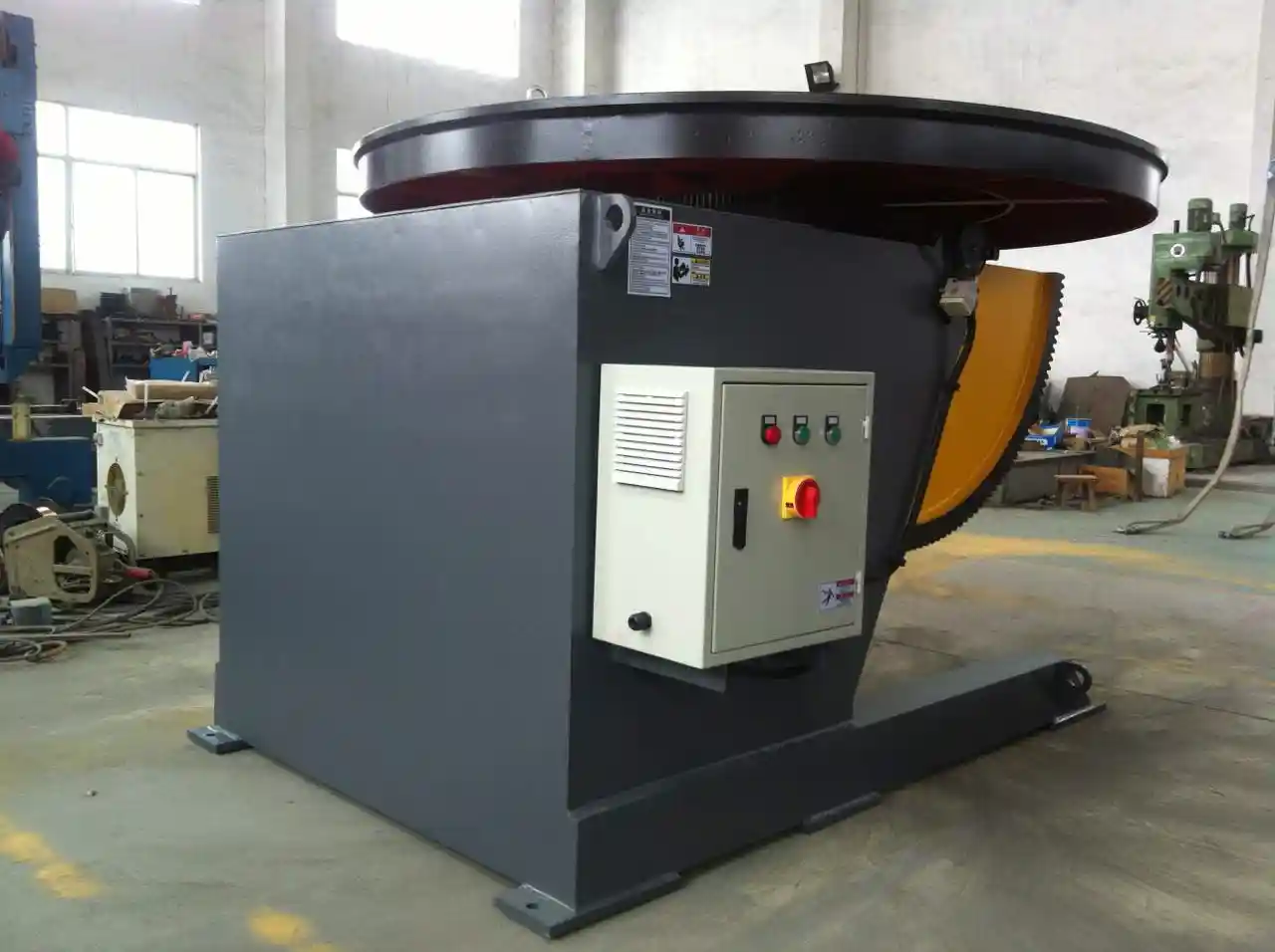
Equipment capability and documentation capability are treated as separate things in most shops, but for AISC certification they are the same system. A welding positioner with integrated data logging records rotation speed, travel speed, and joint position for every pass. A standard positioner with an analog dial records nothing except what the operator writes down afterward. The auditor treats the first as verifiable evidence and the second as a conversation starter.
Modern positioner controls, including the Siemens PLC and HMI touchscreen packages we deploy on our HBJ and LHBJ series, store over 100 preset programs with parameter logging. When an auditor asks to see the welding parameters used on a specific lift on a specific date, the data is retrievable and matches the WPS. Shops that rely on operator notebooks typically spend much more audit time explaining discrepancies between what was written down and what the physical welds show.
Traceability from material receipt through fabrication is the backbone of the AISC quality management system requirement. Equipment that captures process data digitally and links it to heat numbers and work orders closes the traceability loop without adding administrative hours. This is not a software-only problem. The positioner, rotator, or manipulator must have the sensor integration and control architecture to generate the data in the first place. Retrofitting legacy equipment with add-on sensors rarely satisfies an auditor because the data path lacks calibration traceability.
Equipment Investment Planning for Certification
Shops pursuing AISC certification face a capital allocation decision that does not have a one-size-fits-all answer. The equipment categories break down into three priorities: systems that directly affect weld quality verification, systems that affect dimensional control, and systems that improve documentation efficiency. The table below maps common equipment against certification impact.
| Equipment Category | Key Specification for Audit | Typical Investment Priority |
|---|---|---|
| Manipulateur de soudage | Speed calibration documentation, rail alignment records | First priority for beam shops |
| 3-axis positioner | Rotation and tilt accuracy, load margin above max workpiece | First priority for connection detail work |
| CNC cutting table | Bevel angle repeatability, edge surface roughness | Second priority unless bevel-heavy scope |
| Rotateur de soudage | Anti-creep design, speed consistency under variable load | Second priority for cylindrical structural sections |
| Head-tail positioner | Synchronization accuracy, load distribution | Second priority for long member shops |
| Digital control system | Parameter logging, heat number traceability | Third priority unless targeting fracture-critical |
I have watched shops attempt certification with equipment at the edge of its capability envelope, and the result is almost always a longer timeline and higher cost. A 10-ton rotator running at 9.5 tons on every lift produces acceptable welds for about 18 months before the creep becomes measurable. The audit catches the variation before the shop notices it in production. Investing in the next capacity tier at the start eliminates a re-audit cycle and a corrective action report that could have been avoided.
Practical Questions About Structural Steel Fabrication Equipment
Does AISC require specific brands of welding equipment?
No. The standard evaluates process capability, not brand names. What matters is whether your equipment produces output within the tolerance window the code requires and whether you can demonstrate that with calibration records. We have supplied welding systems to AISC-certified shops across multiple countries, and the common thread among shops that pass on the first audit is documented machine accuracy, not a particular manufacturer label.
Our shop welds large columns and beams manually. Is automated positioning really necessary for certification?
It depends on joint complexity and production volume. For a shop running simple fillet welds on standard column-to-base-plate connections, manual positioning with documented fit-up checks can pass. For full-penetration groove welds on bridge girders, especially at the fracture-critical level, the auditor will look for consistent positioning because joint geometry variation produces weld profile variation that UT will catch. In programs we have supported, shops that automated positioning before the audit spent significantly less time on rework and corrective action documentation afterward.
How do we document equipment calibration to satisfy the auditor?
Calibration documentation needs three elements: a reference standard traceable to a recognized measurement system, a recorded before-and-after measurement at defined intervals, and a corrective action log for any out-of-tolerance condition. A simple monthly checkmark in a logbook does not meet this requirement. Most of the positioners and manipulators we supply include calibration procedures in the commissioning documentation, and we recommend shops integrate those procedures into their quality management system from day one rather than scrambling to create them before the audit.
Is retrofitting existing equipment with digital controls accepted, or do auditors expect new machines?
Retrofitting can work for basic data logging if the mechanical base of the equipment is still within its accuracy specification. The problem we see repeatedly is that a shop retrofits digital controls onto a positioner whose mechanical accuracy has already degraded, and the digital readout now displays precise numbers that do not reflect the actual joint position. An auditor who cross-checks the logged data against physical weld measurements will flag the discrepancy. If your existing equipment holds mechanical tolerance, adding digital documentation is cost-effective. If the mechanics are worn, the investment is better directed at a replacement that brings the mechanical and digital systems into alignment.
What is the single most important equipment decision for a shop targeting AISC certification?
The positioning system you use for the majority of your weld joints. Weld quality variation in structural steel fabrication traces back to joint presentation and travel speed consistency far more often than it traces to the welding power source. If your positioner or manipulator can document that it holds the travel speed within the WPS range and presents the joint at the specified angle for every pass, you have addressed the root cause of the majority of audit findings before they occur. Share your shop’s target certification category and typical workpiece range with us at jay@weldc.com or call +86-510-83555592, and we will confirm which positioning configuration matches the audit requirements for your scope.
Si cela vous intéresse, consultez ces articles connexes :
Problèmes d'affaissement des revêtements de pipelines maritimes : comment les supports de rouleaux de peinture intelligents font grimper le taux de réussite à 98%
Une révolution dans le domaine du soudage naval : comment les positionneurs de soudage améliorent la qualité et l'efficacité
Les problèmes de soudage des tours d'éoliennes se répètent : Comment les rotateurs de ligne de culture intelligents augmentent la productivité par 50%
Problèmes de désalignement lors du soudage de tuyaux : comment les rotateurs intelligents de tuyaux améliorent le taux de réussite des soudures sur les oléoducs
Fatigué des défis complexes du soudage ? Comment un positionneur 3 axes peut améliorer la productivité par 70%
 English
  Español
  Français
  Deutsch
  Português
  Русский