Sourcing a welding equipment supplier involves more than comparing price lists and delivery dates. Over the past two decades at WUXI ABK, the inquiries that identify a capable partner are rarely the obvious ones. The questions that matter probe how a supplier designs, builds, and supports machinery after it leaves the factory. A low upfront cost that results in 30% unplanned downtime costs far more than the premium on well-engineered equipment. Procurement engineers and plant managers who shift the conversation from “how quickly can you ship” to “how do you ensure repeatability after 10,000 cycles” end up with production lines that stay online. This article walks through the critical questions that separate experienced manufacturers from resellers, drawn directly from our engineering and project delivery experience.
Questions That Verify Manufacturing Capability and Quality Systems
A supplier’s factory floor tells you more than their certification documents. When evaluating a welding equipment supplier, the first set of questions should dig into how they actually build machines. Many tool resellers can answer brochure questions about a model’s capacity, but they cannot explain why a specific gear reduction ratio was chosen for a 100-ton pipe rotator.
Ask how components are sourced and what percentage of machining is done in-house. In our facility, slewing bearings, reverse gears, and drive reducers undergo incoming hardness testing because a batch of rollers below HRC 55 will wear prematurely on high-cycle wind tower rotators. If the supplier cannot name the sub-supplier for critical casting or bearing components, treat that gap seriously. It means they lack control over the parts most likely to cause early failure.
Next, get specific about quality inspection steps. A worthwhile supplier will walk you through their testing protocol: dimensional checks after stress relief, run-out measurement on assembled drive systems, and full rotation cycle testing under load before crating. We run every 3-axis positioner through at least eight hours of loaded cycling before shipping to catch eccentricity drift. If a factory’s final inspection consists of a brief power-on test, the equipment entering your production line is essentially an unverified assembly.
Technical Questions That Reveal Engineering Depth
Beyond general capabilities, buyers need to verify that a supplier understands the engineering demands of their specific application. This is where many standard RFIs go off track because the questions are too broad. Instead, drill into the mechanical and control details that affect weld quality and uptime.
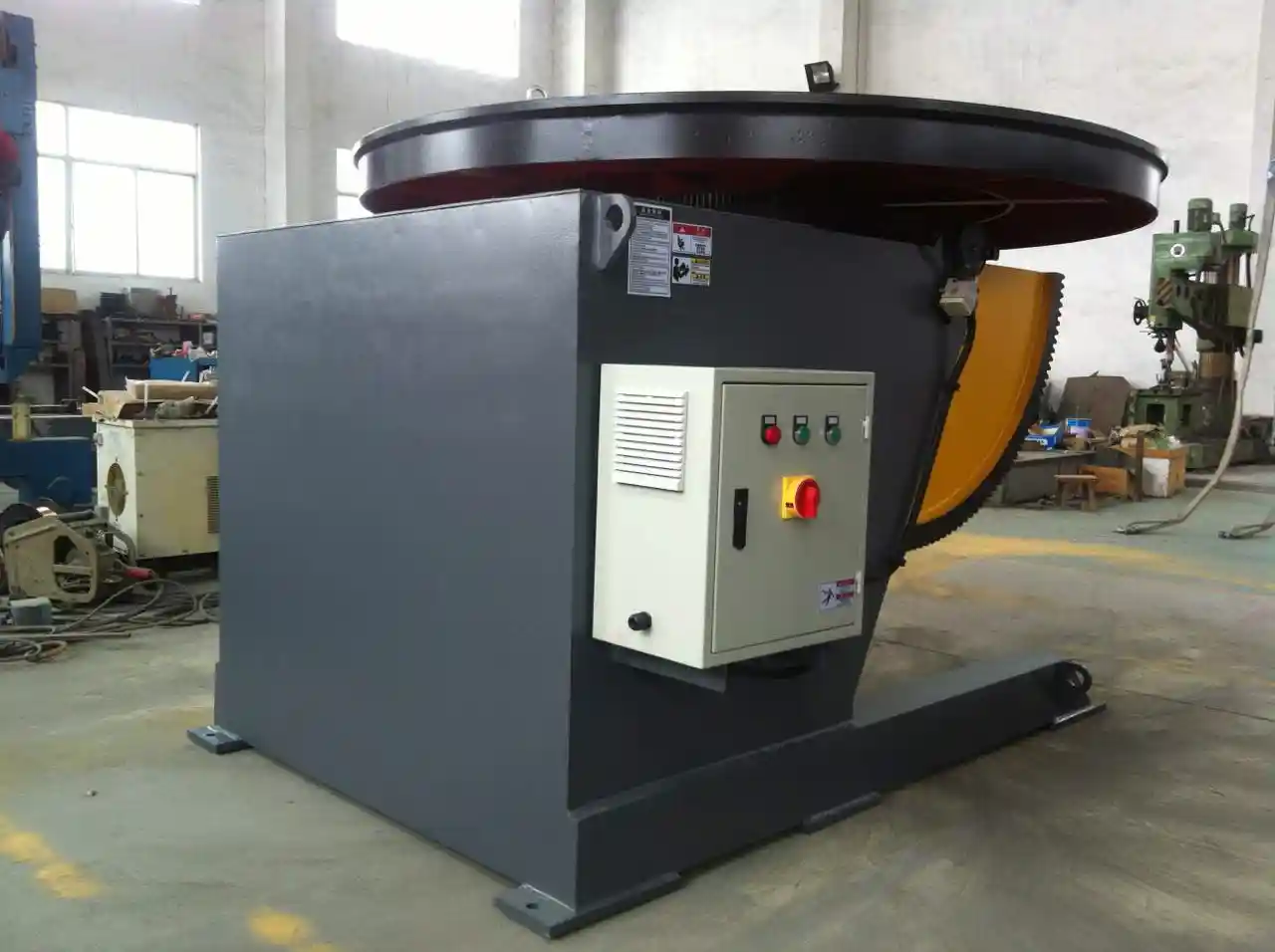
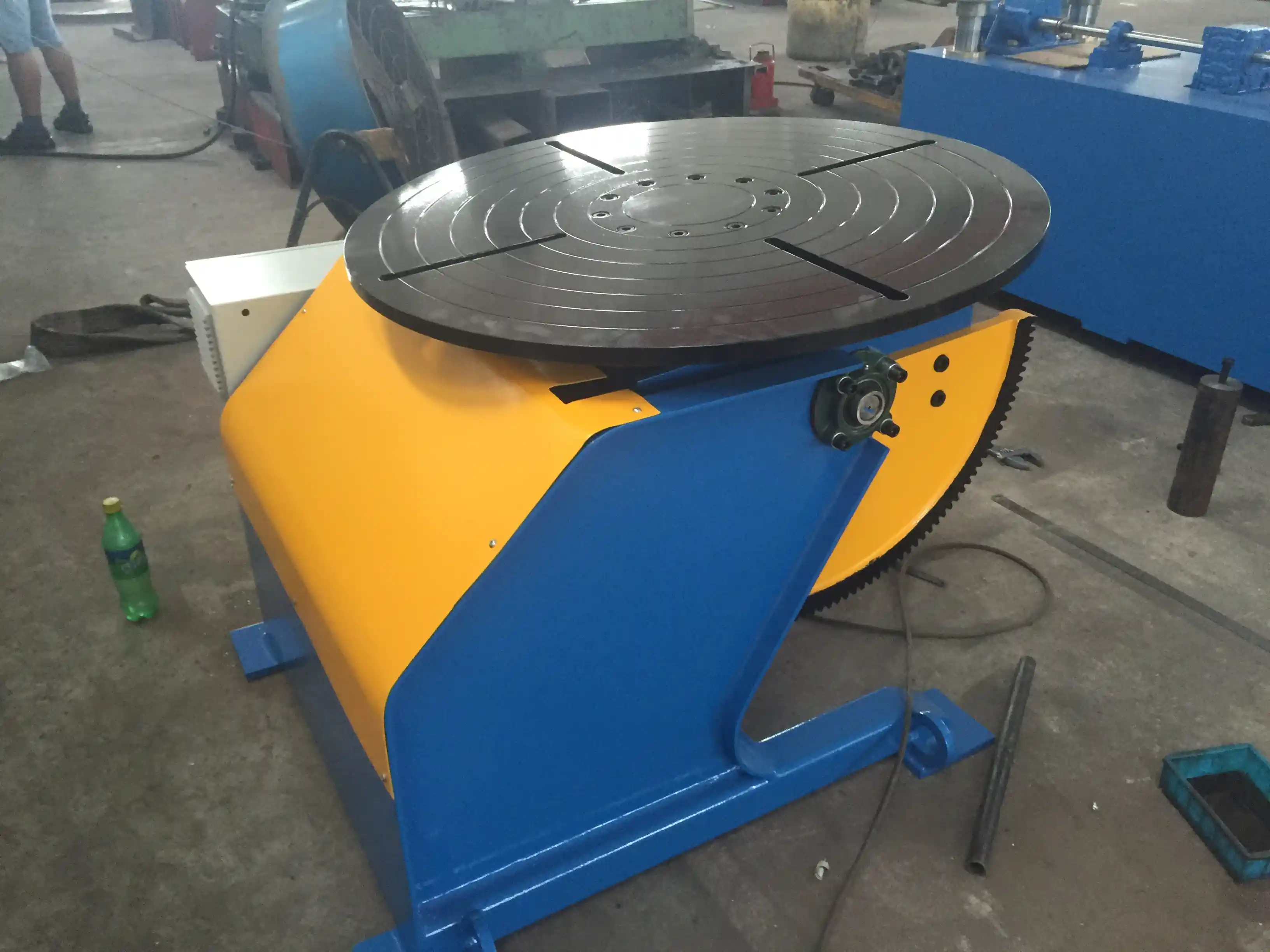
Ask about positioning accuracy under load, not just static nameplate specs. For example, a welding positioner rated for ±0.5° rotation accuracy at 5 tons might degrade significantly when the workpiece has an eccentric center of gravity. Question how the supplier maintains that tolerance across the full tilt and rotation range. We use dual-start worm gear reducers with cycloidal stages to lock backlash below 0.5 arcminutes on our LHBJ-50 models, which matters when welding long crane booms where both ends must align within a millimeter.
When complex part geometries demand precision positioning across multiple axes, <Comment améliorer la qualité du soudage de tubes grâce à un positionneur de soudage de haute précision> covers the mechanical and control strategies that translate positioner accuracy directly into higher weld pass rates.
On the control side, request details about PLC brand and programming logic. We standardize Siemens PLCs with preset programs that include creep-start functionality to prevent wire stick on initial arc strike. If a supplier just says “it has a PLC,” ask whether the control system stores welding programs, supports remote diagnostics, and integrates with your planned robotic systems via common protocols. A proper answer will include I/O mapping specifics.
Matching Equipment Design to Your Production Reality
Standard catalog equipment meets standard applications, but most fabrication projects involve some degree of specialization. The right questions here prevent a situation where a machine fits on paper but compromises throughput in your actual facility layout and workflow.
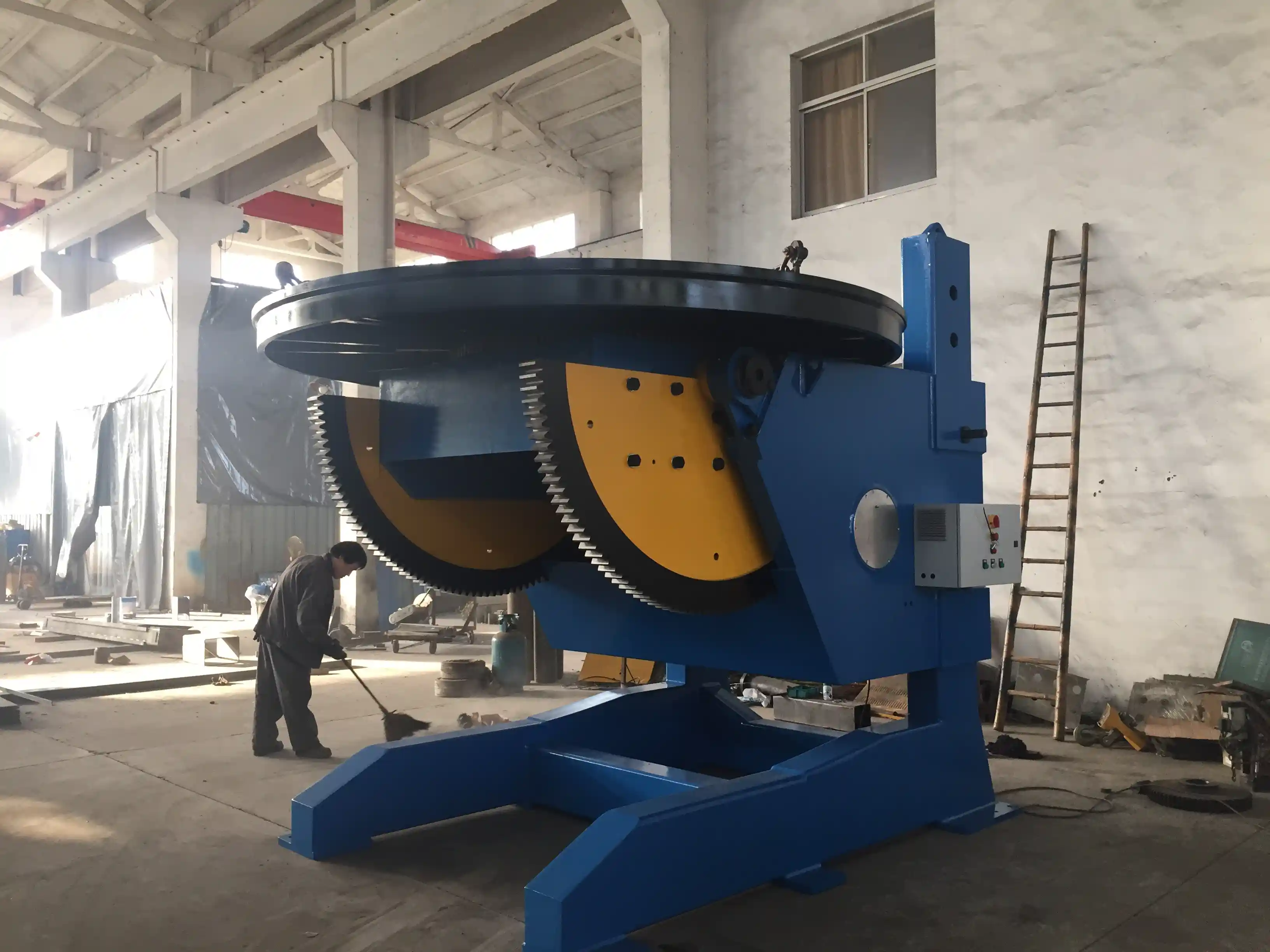
Begin with load distribution and fixture mounting. A 10-ton welding rotator from one supplier might handle 10 tons of balanced cylindrical vessel, but the moment loading from a rectangular structural frame changes everything. Ask how the supplier calculates maximum eccentric moment and what safety margin is built into the slewing bearing selection. In our HBT series head-tail positioners, the maximum eccentric distance is explicitly rated and the base is stress-relieved Q235-A steel box structure to resist deformation under off-center loads.
Then address shop floor integration. If your workshop ceiling clearance is 8 meters and the boom on a manipulateur de soudage reaches 8 meters at full vertical stroke, you are already at risk. We design our LH series with adjustable height rails that can drop the boom for service access without requiring structural modifications to the building. That kind of detail comes from having done installations in tight shipyard shops and vaulted wind tower halls, not just reading a catalog.
Tight workspace constraints often force compromises in welding automation setup. <L'espace de l'atelier est trop petit ? Comment les rampes à colonnes permettent de gagner de l'espace au sol 50% tout en renforçant la sécurité et l'efficacité> explains how integrated column boom designs reclaim usable floor area while maintaining full-position welding capability.
After-Sales Support That Keeps Production Running
The real test of a welding equipment supplier emerges six months after commissioning, when a drive motor needs replacement or exotic spare parts are required. Questions about after-sales should be as rigorous as technical specifications, because a two-week downtime waiting for a replacement cycloidal reducer wipes out any initial cost advantage.
| Support Dimension | Checklist Question | What Experienced Suppliers Provide |
|---|---|---|
| Spare parts inventory | “What spares are stocked locally and what requires factory shipment?” | Sealed bearing kits, drive belts, PLC modules on regional shelf; larger cast components air-freighted within days |
| Remote diagnostics access | “Can your team VPN into the system for live troubleshooting?” | Password-protected remote access with audit logging; common on Siemens-based controls |
| On-site service turnaround | “What is your guaranteed response time for on-site service to [our location]?” | Written SLA with 48-hour dispatch for critical faults; regional service partners |
| Installation and training | “What onsite support is included during commissioning and operator training?” | Minimum 3-day onsite presence; full operation manual and maintenance schedule provided |
Ask whether the supplier provides a full bill of materials with manufacturer part numbers for wear components. Suppliers that guard this information often mark up replacement parts heavily after the warranty period. We release BOMs for all drive and control components, allowing procurement teams to source standard parts like SEW reducers and THK linear guides independently if needed, while still supporting warranty compliance through proper tracking.
After that, pin down what documentation accompanies the machine: electrical schematics, PLC program copies, and mechanical assembly drawings. If the supplier hesitates on any of these, they are either protecting an inflated maintenance contract or they do not have the in-house engineering capability to produce them. Both are red flags.
Commercial Terms and Lead Time Reality
Finally, the commercial negotiation should not be relegated to a separate buyer session. Many operational risks are revealed in how a supplier structures payment, delivery, and warranty. Questions here can surface whether the supplier is intent on a long-term partnership or a one-time sale.
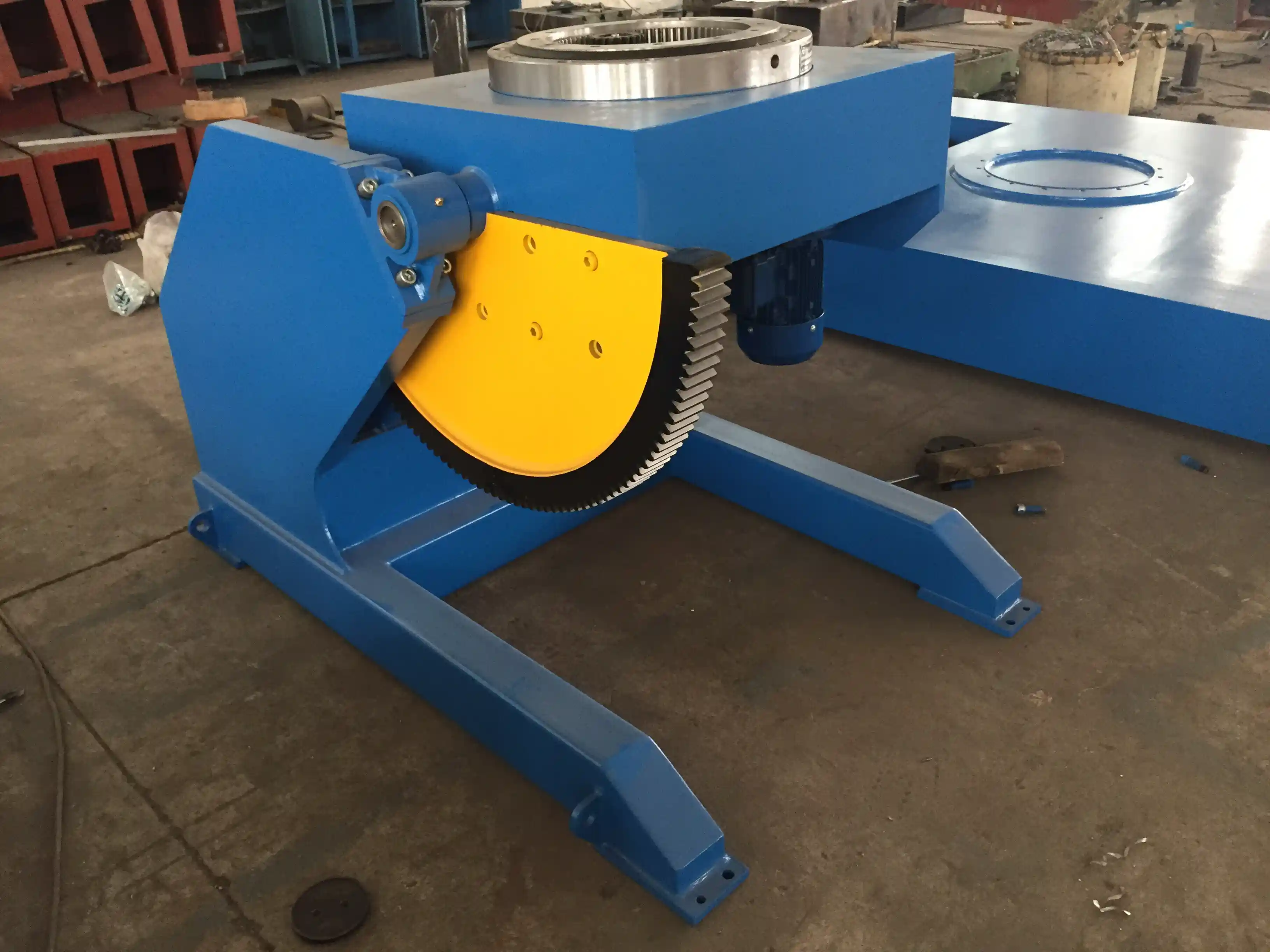
Require a detailed delivery schedule that accounts for procurement of long-lead items. In heavy fabrication equipment, the slewing ring for a 100-ton positioner may have a 12-week lead time from the foundry. A supplier that promises a complete 60-ton fit-up rotator in six weeks is likely cutting corners on bearing quality or planning to substitute a lower-rated component. Our standard lead times reflect actual raw material and outsourced component availability, and we update customers weekly during the build.
Discuss payment milestones tied to verifiable production progress, not arbitrary dates. We recommend a structure such as 30% with order, 30% upon passing factory acceptance testing, and the balance after installation and commissioning. Factory acceptance tests should include load testing beyond nameplate capacity and cycle testing that your engineer can witness either in person or via video stream.
Warranty terms need more than a duration figure. Ask what is excluded and what triggers voiding. For example, if a welding rotator’s roller bearings fail after 18 months, does the warranty cover them if the user did not follow daily slag removal procedures? Clarify whether repair includes parts and labor or just parts. We provide an 18-month warranty with clear maintenance requirements that, when followed, typically extend the service interval far beyond that.
What Procurement Teams Often Miss About Welding Equipment Supplier Selection
If the supplier passes all the questions above, the purchase still carries risks that most manufacturers do not think to ask about until after problems arise. These points come from direct field experience resolving issues that standard checklists missed.
Will the supplier provide technical support in your language during equipment commissioning? We assign an engineer fluent in technical English to every overseas installation and remain available for real-time video consultation during the start-up phase. Miscommunication during setup can introduce errors that take weeks to correct.
Can the supplier accommodate urgent production changes? If your project suddenly requires welding thicker plate than originally specified, can the equipment handle the higher duty cycle without motor overheating or drive wear? Reconfiguring an existing machine is sometimes trivial, sometimes impossible. Ask for the duty cycle rating at maximum load and whether variable frequency drives are sized with headroom for your usage profile.
What is the policy on machine upgrades as technology evolves? A Siemens PLC may have firmware updates that improve motion control. Does the supplier offer a roadmap or remote update capability? We maintain a backward-compatible upgrade path and notify existing customers when new features become available.
If your program involves applications that push duty cycle limits or unconventional workpiece geometries, it’s worth confirming these parameters directly with an engineer before making a deposit. Send your part specifications or project requirements to jay@weldc.com or call +86-510-83555592. We regularly provide pre-sale technical assessments that include stress calculations and cycle time estimates at no cost, because the only way to design reliable equipment is to start from real-world conditions.
Si cela vous intéresse, consultez ces articles connexes :
Les problèmes de soudage des tours d'éoliennes se répètent : Comment les rotateurs de ligne de culture intelligents augmentent la productivité par 50%
Fatigué des défis complexes du soudage ? Comment un positionneur 3 axes peut améliorer la productivité par 70%
Améliorer la qualité et l'efficacité dans la fabrication de réservoirs et d'appareils à pression : La valeur de l'application principale des positionneurs
Manipulateurs de soudage pour la fabrication de tours éoliennes : Révolutionner l'efficacité de la production
 English
  Español
  Français
  Deutsch
  Português
  Русский