We understand that selecting the appropriate tank roller is crucial for the safe and efficient fabrication of large cylindrical workpieces, especially for oil storage tanks. Our experience shows that an informed decision regarding capacity and load rating directly impacts project success and operational longevity. We aim to provide clear guidance to help engineers and fabricators make optimal choices.
Understanding the Critical Role of Tank Rollers in Heavy Fabrication
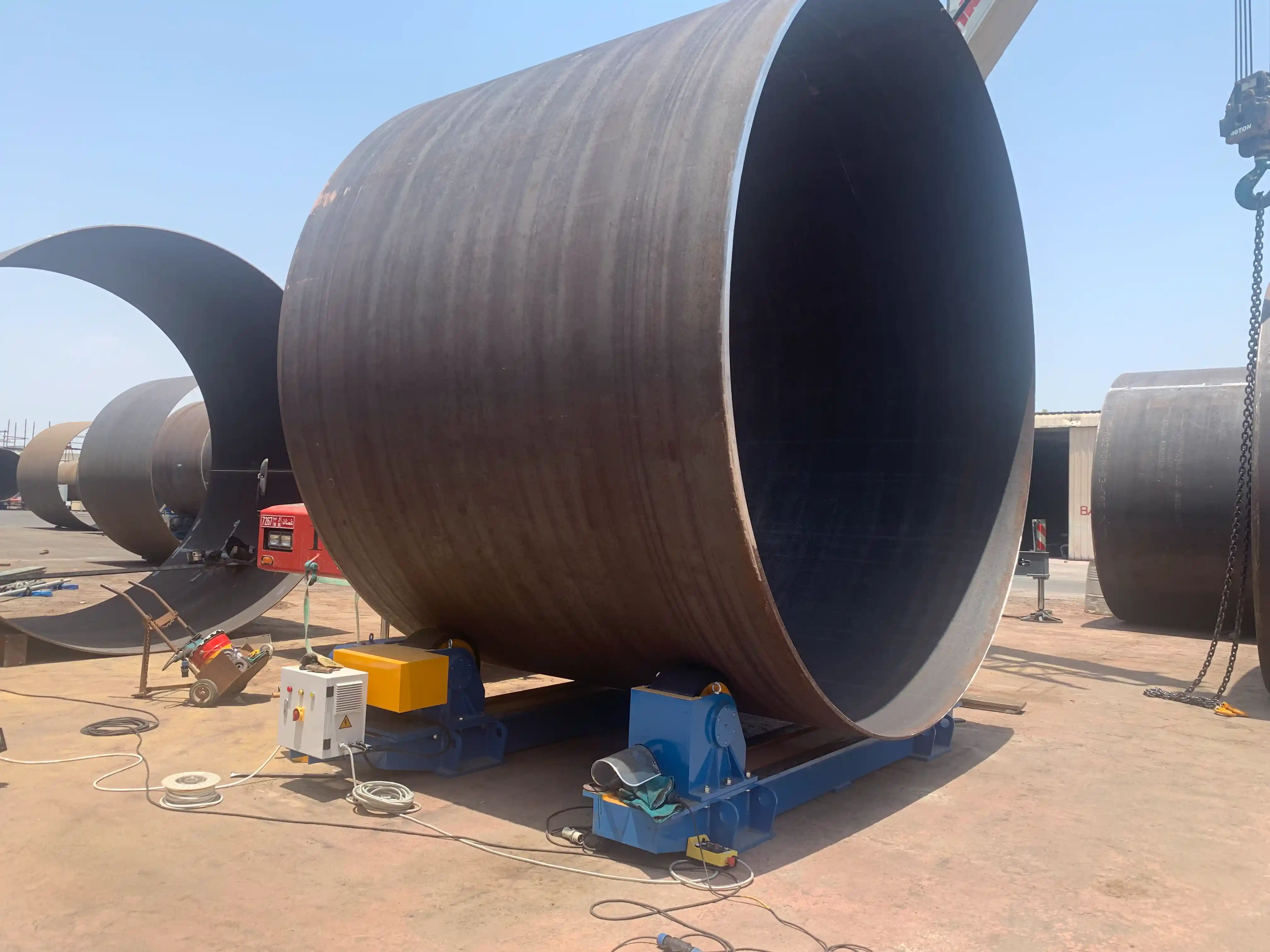
Tank rollers, also known as welding rotators or turning rolls, are essential equipment in heavy fabrication industries. They provide controlled rotation for cylindrical workpieces during welding, cutting, and assembly processes. This controlled movement ensures consistent weld quality and enhances operational safety.
1. The Importance of Proper Equipment for Large-Scale Projects
Large-scale projects, such as the construction of oil storage tanks or pressure vessels, involve massive components. Handling these components requires specialized machinery that can safely support and manipulate their immense weight and dimensions. Incorrect equipment selection can lead to costly delays, material damage, and serious safety hazards. We emphasize that proper equipment is not merely a convenience but a fundamental requirement for project integrity. Investing in reliable tank rollers minimizes risks and maximizes productivity.
2. How Welding Rotators Enhance Efficiency and Safety
Welding Rotator Manufacturers significantly improve efficiency by automating the rotation of heavy workpieces. This eliminates manual repositioning, reducing labor time and physical strain on workers. Precise speed control ensures optimal welding parameters, leading to higher quality welds and fewer reworks. From a safety perspective, these machines stabilize the workpiece, preventing accidental movement or collapse. This controlled environment protects personnel and prevents damage to expensive materials. We often see a direct correlation between the use of advanced rotators and improved project timelines.
Key Factors for Capacity Selection in Oil Storage Tank Fabrication
Choosing the correct tank roller capacity is paramount. We consider several critical factors to ensure the equipment matches the project’s specific demands. These factors prevent overloading and guarantee stable, precise operation.
1. Analyzing Tank Dimensions and Weight for Optimal Support
The first step involves a detailed analysis of the tank’s physical properties.
1. Maximum Weight: Determine the total weight of the tank during the heaviest stage of fabrication, including internal fixtures or welding equipment.
2. Diameter Range: Measure the minimum and maximum diameters of the cylindrical sections to be supported. This ensures the rollers can accommodate the workpiece without slippage or instability.
3. Length: Consider the overall length of the tank to determine the number of roller sets required for adequate support and to prevent sagging.
4. Center of Gravity: Identify the workpiece’s center of gravity. This affects how the load is distributed across the rollers.
We calculate these parameters carefully to select rollers with sufficient capacity and appropriate dimensions. For more insights into optimal equipment usage, consider reading A New Era in Tank Manufacturing: The Art of Precision Collaboration Between Turning Rolls and Manipulators
2. Calculating Static and Dynamic Load Ratings for Tank Rollers
Understanding both static and dynamic load ratings is essential.
* Static Load Rating: This refers to the maximum weight the rollers can support when the workpiece is stationary. It is a straightforward calculation based on the tank’s total weight.
* Dynamic Load Rating: This accounts for additional forces exerted during rotation, welding, and other operations. Factors like rotational speed, acceleration, and deceleration create dynamic stresses. We always recommend selecting rollers with a dynamic load rating that exceeds the calculated maximum dynamic load by a safety margin, typically 20-30%. This prevents premature wear and potential failure.
The distribution of weight across multiple roller units also influences the effective load on each unit. Uneven weight distribution can overstress individual rollers.
3. Considering Material Type and Wall Thickness of Cylindrical Workpieces
The material properties of the tank significantly influence roller selection.
1. Material Strength: High-strength materials like specialized alloys may allow for thinner walls, but the overall weight remains a primary concern.
2. Wall Thickness: Thicker walls generally mean heavier tanks, directly impacting the required load capacity. Thicker walls also affect the rigidity of the workpiece, influencing how it deforms under its own weight.
3. Surface Finish: Some materials require specific roller surface types (e.g., rubber for delicate finishes) to prevent damage.
We ensure the rollers’ material and design are compatible with the workpiece to avoid indentations or surface imperfections.
Navigating Different Types of Tank Rollers and Their Features
WUXI ABK offers a range of tank rollers, each designed for specific applications and operational requirements. Understanding these variations helps in making an informed choice.
1. Standard Welding Rotators for Versatile Applications
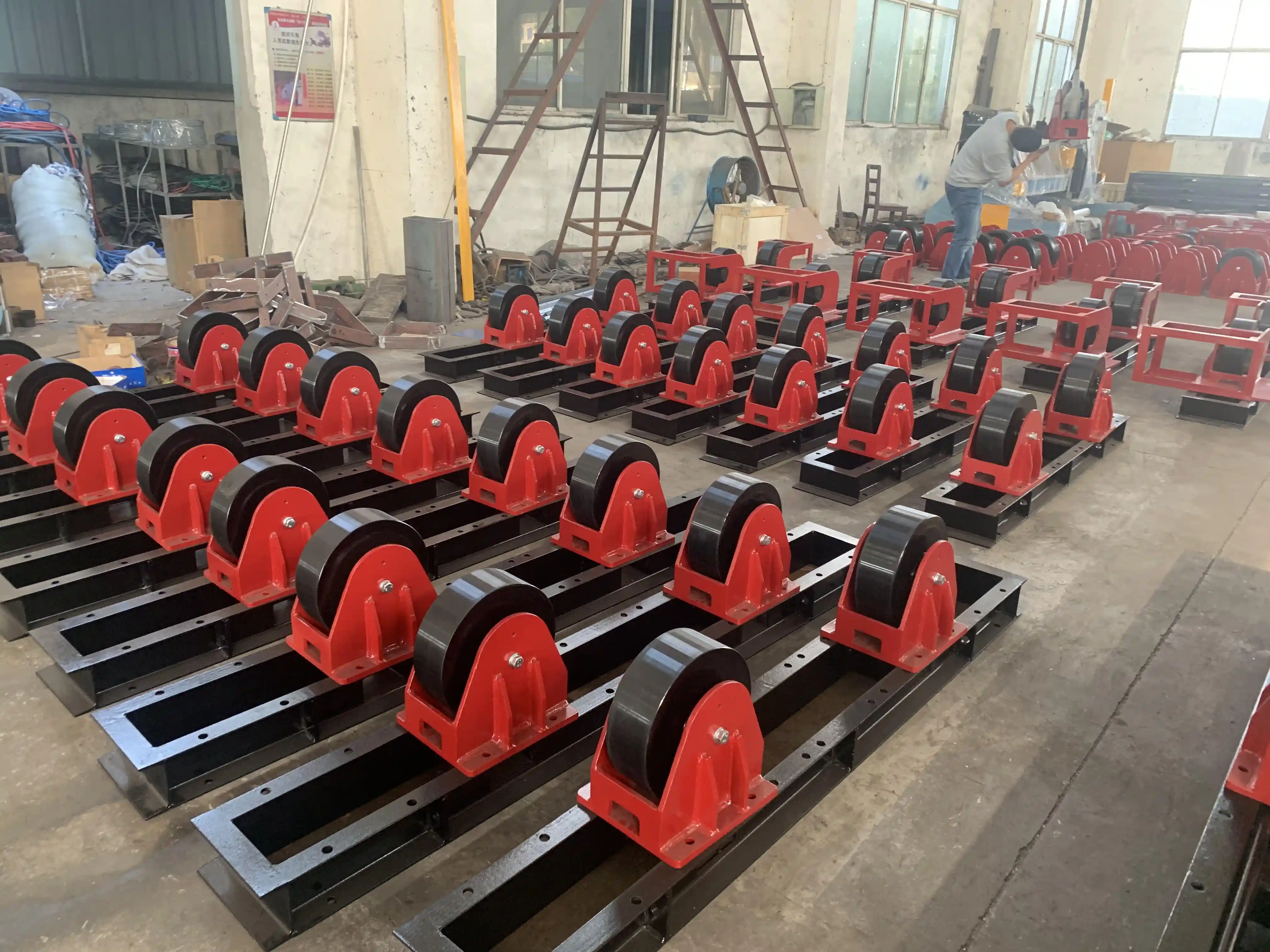
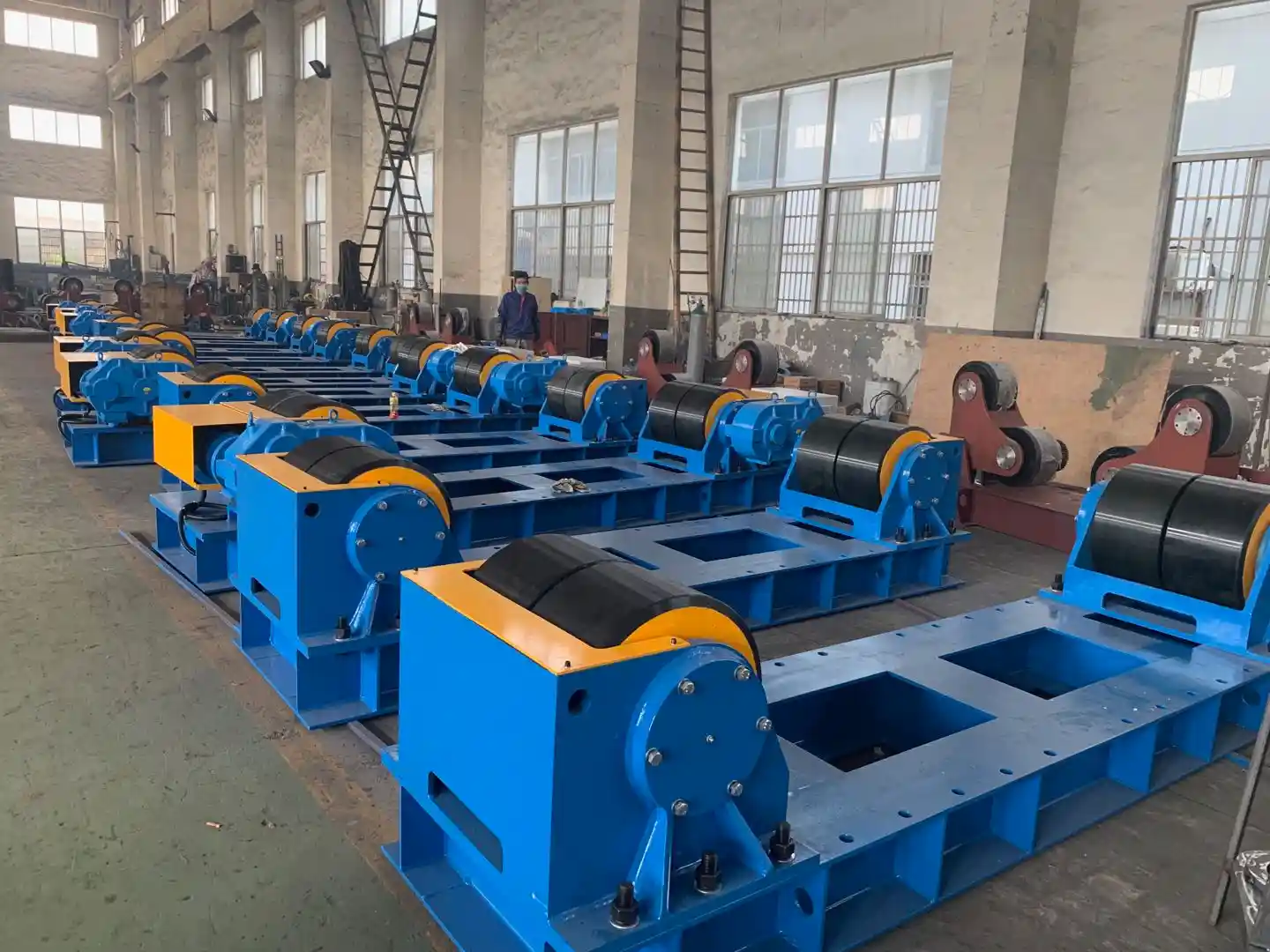
Standard Rotator Suppliers (HGZ Series) are versatile and widely used for general cylindrical welding applications. They offer reliable rotation and support for various tank sizes and weights. For example, the HGZ-5 model supports up to 5 tons, suitable for smaller pressure vessels and pipes, while the HGZ-100 handles up to 100 tons for large-scale projects. These rotators typically feature frequency conversion speed control for precise adjustment and robust steel frames for durability. Their design prioritizes straightforward operation and consistent performance.
2. Adjustable Height Rotators for Enhanced Flexibility
Adjustable Positioner Manufacturers (HGK Series) provide additional flexibility by allowing vertical adjustment of the workpiece. This feature is particularly beneficial when working with tanks of varying diameters or when integrating with other welding equipment, such as welding manipulators. Models like the HGK-300 can handle up to 300 tons and offer hydraulic elevation adjustment, ensuring optimal alignment and ergonomic working heights. This adjustability enhances precision and reduces setup time for complex fabrication tasks. For detailed insights into integrating such equipment, refer to A New Era in Wind Tower Manufacturing: How Welding Manipulators and Turning Rolls Achieve Efficient and Precise Welding.
3. Specialized Fit-Up Rotators for Precision Alignment
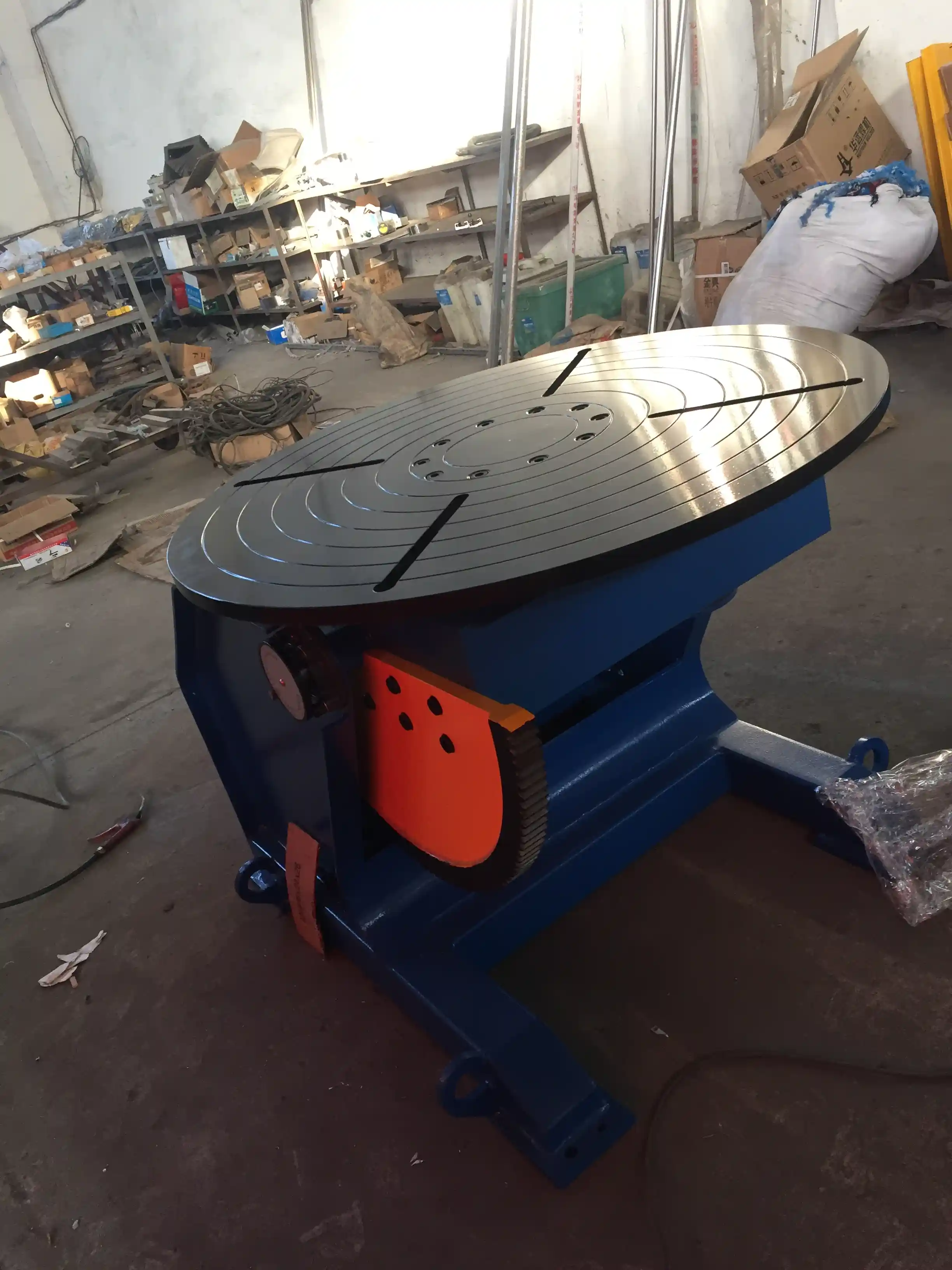
Fit-up rotators are engineered for critical applications where precise alignment of cylindrical sections is paramount. These machines often incorporate hydraulic lifting and clamping mechanisms to achieve exact fit-up before welding. The 40 Ton Pipe Fit-Up Rotator from WUXI ABK, for instance, supports 1.5-6m diameter workpieces with ±0.5mm accuracy, crucial for subsea pipelines and large vessel fabrication. Their advanced control systems ensure minimal misalignment, which is vital for structural integrity and weld quality.
WUXI ABK’s Solutions for Heavy-Duty Tank Fabrication
WUXI ABK provides a comprehensive range of tank rollers designed to meet the rigorous demands of heavy-duty fabrication. Our equipment combines high capacity with precision engineering.
1. High-Capacity Welding Rotators for Large Oil Storage Tanks
For large oil storage tanks, we offer high-capacity Welding Rotator Equipment capable of handling hundreds of tons. Our HGZ-100 model, for example, supports up to 100 tons with a diameter range of 1000-5000mm. These machines feature robust construction, advanced control systems, and anti-creep technology to ensure stable rotation and precise welding. They are specifically designed for continuous operation in demanding environments, such as nuclear power equipment and LNG storage tank fabrication. Our solutions aim to enhance productivity and weld quality for the largest projects.
2. Precision and Stability: Features of WUXI ABK’s Tank Rollers
Our tank rollers are built for both precision and stability.
* ZG45 Cast Steel Rollers: Many models feature ZG45 cast steel rollers with HRC 55-60 hardness, providing superior wear resistance and durability.
* Siemens PLC Control: Advanced Siemens PLC control systems offer precise speed regulation, anti-creep mechanisms, and programmable welding parameters.
* Anti-Creep Technology: This technology ensures the workpiece maintains its position during rotation, preventing axial movement and maintaining weld seam alignment. For a deeper dive into precision, see Welding Rotator Precision Automation for Industrial Fabrication: Expert FAQ Guide.
* Hydraulic Elevation: Adjustable height models include hydraulic lifting for fine-tuning workpiece position.
These features collectively contribute to high-quality welds and reduced operational errors.
3. Matching WUXI ABK Models to Specific Project Requirements
We assist clients in selecting the ideal tank roller by considering their specific project needs.
| Model Series | Load Capacity (Tons) | Vessel Diameter Range (mm) | Key Features | Typical Applications |
| :———– | :——————- | :————————- | :———– | :——————- |
| HGZ (Standard) | 5 – 100 | 250 – 5000 | Frequency conversion speed control, robust steel frame | Pressure vessels, pipes, general fabrication |
| HGK (Adjustable) | 5 – 300 | 250 – 6000 | Hydraulic elevation, anti-creep, PLC control | Wind towers, large pressure vessels, offshore platforms |
| Fit-Up Rotator | 10 – 60 | 1500 – 6000 | Hydraulic alignment, laser guidance, servo drives | Pipeline fit-up, large vessel segments |
This table provides a concise overview, but detailed consultation ensures the best fit for unique project demands. Our team works closely with clients to tailor solutions.
Ensuring Operational Excellence and Longevity of Tank Rollers
Proper operation and maintenance are critical for maximizing the lifespan and performance of tank rollers. We emphasize adherence to best practices for both safety and efficiency.
1. Best Practices for Installation and Setup
Correct installation is the foundation for optimal performance.
1. Level Foundation: Ensure the installation surface is perfectly level and capable of supporting the combined weight of the rotator and workpiece.
2. Secure Anchoring: Properly anchor all roller units to prevent movement during operation.
3. Alignment: Precisely align drive and idler units to ensure smooth rotation and prevent undue stress on components.
4. Power Connection: Verify electrical connections comply with manufacturer specifications and local safety codes.
5. Initial Testing: Conduct thorough dry runs without a workpiece to confirm all functions are operating correctly.
These steps prevent operational issues and ensure long-term reliability.
2. Routine Maintenance and Troubleshooting Tips
Regular maintenance is key to longevity.
* Daily Checks: Inspect rollers for wear, ensure lubrication points are adequately greased, and check for any loose fasteners.
* Weekly Checks: Examine electrical cables for damage, clean control panels, and verify emergency stop functionality.
* Monthly Checks: Torque all bolts, inspect gearboxes for leaks or unusual noises, and test all safety interlocks.
* Annual Servicing: Perform a comprehensive inspection, including bearing replacement if necessary, re-lubrication of all moving parts, and recalibration of positioning systems.
Troubleshooting often involves checking power supply, motor connections, and control system error codes. Consult the operator’s manual for specific diagnostic procedures.
3. Safety Protocols for Operating Heavy-Duty Rotators
Safety is paramount when operating heavy machinery.
1. Operator Training: Ensure all operators receive comprehensive training on the specific equipment and adhere to safety guidelines.
2. Clearance Zones: Establish and enforce strict clearance zones around the rotating workpiece to prevent personnel entry during operation.
3. Emergency Stops: Verify that emergency stop buttons are easily accessible and fully functional.
4. Load Limits: Never exceed the specified load capacity of the tank rollers. Overloading can lead to catastrophic failure.
5. Workpiece Securing: Always ensure the workpiece is securely seated on the rollers before initiating any movement or welding operations.
Adhering to these protocols minimizes the risk of accidents and ensures a safe working environment.
Partner with WUXI ABK for Your Fabrication Needs
Selecting the right tank roller is a critical decision that impacts project efficiency, safety, and overall quality. At WUXI ABK, we combine extensive expertise with a comprehensive range of high-quality welding rotators to provide tailored solutions for your heavy fabrication challenges. Our team is ready to assist you in choosing the perfect equipment that meets your specific capacity and load rating requirements.
Contact us today to discuss your project and discover how our advanced tank rollers can enhance your operations.
Email: jay@weldc.com
Mobile : +86-13815101750
FAQs
1. What is the primary difference between standard and adjustable height welding rotators?
Standard welding rotators (HGZ Series) offer fixed-height support for cylindrical workpieces, providing consistent rotation for welding and assembly tasks. Adjustable height rotators (HGK Series) feature hydraulic or mechanical systems that allow vertical adjustment of the workpiece. This flexibility is crucial for accommodating varying diameters, optimizing ergonomic working heights, and integrating with other automated welding equipment.
2. How do I determine the correct load capacity for my tank roller?
To determine the correct load capacity, calculate the maximum weight of your workpiece during any stage of fabrication, including internal components and welding fixtures. Also, consider the workpiece’s diameter and length to ensure proper support distribution. Always select a tank roller with a static load rating that comfortably exceeds this maximum weight, and account for dynamic loads with an additional safety margin.
3. Can WUXI ABK tank rollers be integrated with automated welding systems?
Yes, WUXI ABK tank rollers are designed for seamless integration with automated welding systems. Many of our models feature advanced Siemens PLC control systems, which allow for precise speed synchronization, programmable welding parameters, and communication with robotic welding cells. This integration enhances automation, improves weld quality, and increases overall production efficiency.
4. What are the common safety features found in WUXI ABK’s tank rollers?
WUXI ABK tank rollers incorporate several safety features. These include easily accessible emergency stop buttons, overload protection systems to prevent damage from excessive weight, and anti-creep mechanisms to maintain workpiece position and prevent axial movement. Robust construction and IP-rated control cabinets also ensure reliable operation in harsh industrial environments, protecting both equipment and personnel.
5. How does the anti-creep mechanism work in heavy-duty welding rotators?
The anti-creep mechanism in heavy-duty welding rotators actively prevents the cylindrical workpiece from moving axially along the rollers during rotation. This is typically achieved through precise electronic control of the drive motors, often combined with sensors that detect any axial shift. The system then automatically adjusts roller speeds to counteract this movement, ensuring the weld seam remains perfectly aligned under the welding torch.
About the Author
Michael Zhou, Project Manager
Michael Zhou, expert in welding automation, specializes in designing and optimizing welding lines and equipment. He helps enterprises improve welding efficiency and achieve higher-quality automated production.
 English
  Español
  Français
  Deutsch
  Português
  Русский