In modern industrial fabrication, the path to repeatable, high-grade welds is rarely a straight line. I have seen talented welders fight inconsistent setups, slow turnarounds, and the constant dance with safety risks. That is why we lean on advanced welding positioners and rotators paired with measurement and control systems, tools that take the variability out of handling. With automation managing orientation, rotation, and feedback, we see notable gains in accuracy, shorter production cycles, and a safer floor.
Understanding the Critical Role of Welding Positioners in Modern Fabrication
Welding positioners and rotators have reshaped how we handle workpieces, changing the daily reality on the shop floor. By precisely orienting parts, these machines put welders in optimal positions. The result is higher weld quality, faster throughput, and a safer, less strenuous workflow.
1. The Evolution of Welding Workpiece Handling
For a long time, welding meant muscling heavy parts into place and hoping nothing slipped. That old approach invited inconsistency and strain. As demand grew for tighter tolerances and repeatable results, simple jigs gave way to mechanical aids, then to automated systems. With modern control integration, we reached a point where accuracy and repeatability are not aspirational, they are built in.
2. Manual Welding Challenges and Limitations
Manual welding brings predictable headaches. Holding parameters steady across complex shapes or heavy components is hard, and it shows in uneven welds, more rework, and longer cycles. Moving large or awkward parts by hand also increases risk and fatigue, and it limits the size and complexity of work that can be tackled efficiently.
3. Introducing Advanced Welding Positioners and Rotators
Advanced positioners and rotators flip that script. They manage orientation, rotation, and tilt with precision, so welders get reliable access and consistent travel speeds. Human error drops, safety improves, and the equipment fits cleanly into automated welding cells that anchor high-output, high-quality production lines.
How Advanced Control Systems Enhance Welding Accuracy and Efficiency
Modern positioners and rotators earn their keep through smart control. The intelligence behind motion, feedback, and protection makes precise handling routine, which translates into better welds and leaner operations.
1. Integrating PLC and HMI for Seamless Operation
Programmable Logic Controllers and Human-Machine Interfaces do the heavy lifting behind the scenes. PLCs run motion sequences and safety interlocks with dependable timing. HMIs give operators an intuitive way to program, monitor, and tune parameters. That reduces training time and takes friction out of complex tasks. For example, the 1-ton 3-axis welding positioner utilizes a Siemens PLC and a 10-inch HMI for precise control.
2. Achieving Unprecedented Precision with Servo Drives and Encoders
When accuracy matters, servo drives and encoders are the pair you want. Servo motors deliver responsive, precise motion, while encoders report position and speed in real time. The closed loop keeps the workpiece exactly where it should be. The WUXI ABK 3-Ton 3-Axis Welding Positioner achieves ±0.05 mm positioning accuracy and 0.02 mm repeatability through its servo-driven system.
If you’re interested, check 《Tired Of Complex Welding Challenges How A 3 Axis Positioner Can Boost Productivity By 70》.
3. The Impact of Stepless Speed Regulation on Weld Quality
Stepless speed regulation, often via AC frequency drives, lets you fine-tune rotation without steps or jumps. Stable, precise speed helps keep bead shape and penetration consistent. That control avoids undercutting or overbuild and raises overall weld quality. The WUXI ABK Adjustable Height Welding Rotator Series offers stepless speed control from 0.5-3 RPM.

4. Real-Time Monitoring and Feedback Mechanisms
Real-time monitoring gives operators immediate visibility. With sensors watching position, speed, temperature, and current, the control system can correct on the fly and keep work within spec. Remote diagnostics on advanced systems add a layer of predictive maintenance, which the maintenance team appreciates on busy days.
Exploring the Diverse Range of Welding Positioners and Their Applications
WUXI ABK offers a wide lineup of welding positioners and rotators tailored to different workloads, part geometries, and welding processes. The right match keeps performance up across varied applications.
1. Welding Manipulators for Longitudinal and Circumferential Seams
Welding manipulators, also known as column and boom systems, give reach and steadiness for long straight seams and large circumferential welds. With high-strength box beams and linear guideways, they stay rigid while moving smoothly. The LH8080 welding manipulator, for example, offers 8000 mm horizontal and vertical travel, supporting precise welding on large pressure vessels and wind towers. They are a staple wherever consistent torch positioning over long runs is the norm.
If you’re interested, check 《Welding Manipulators For Wind Tower Fabrication Revolutionizing Production Efficiency》.
2. Multi-Axis Welding Positioners for Complex Geometries
Multi-axis positioners manage rotation, tilt, and turning at once, which is exactly what complex parts require. They shine in robotic cells with intricate paths. The Triple Axis Positioner offers a 5-ton capacity with ±0.05 mm positioning accuracy, a fit for automotive components and structural steel assemblies. The payback shows up in shorter setups and cleaner results on demanding parts.
3. Welding Turntables for Rotational Welding Tasks
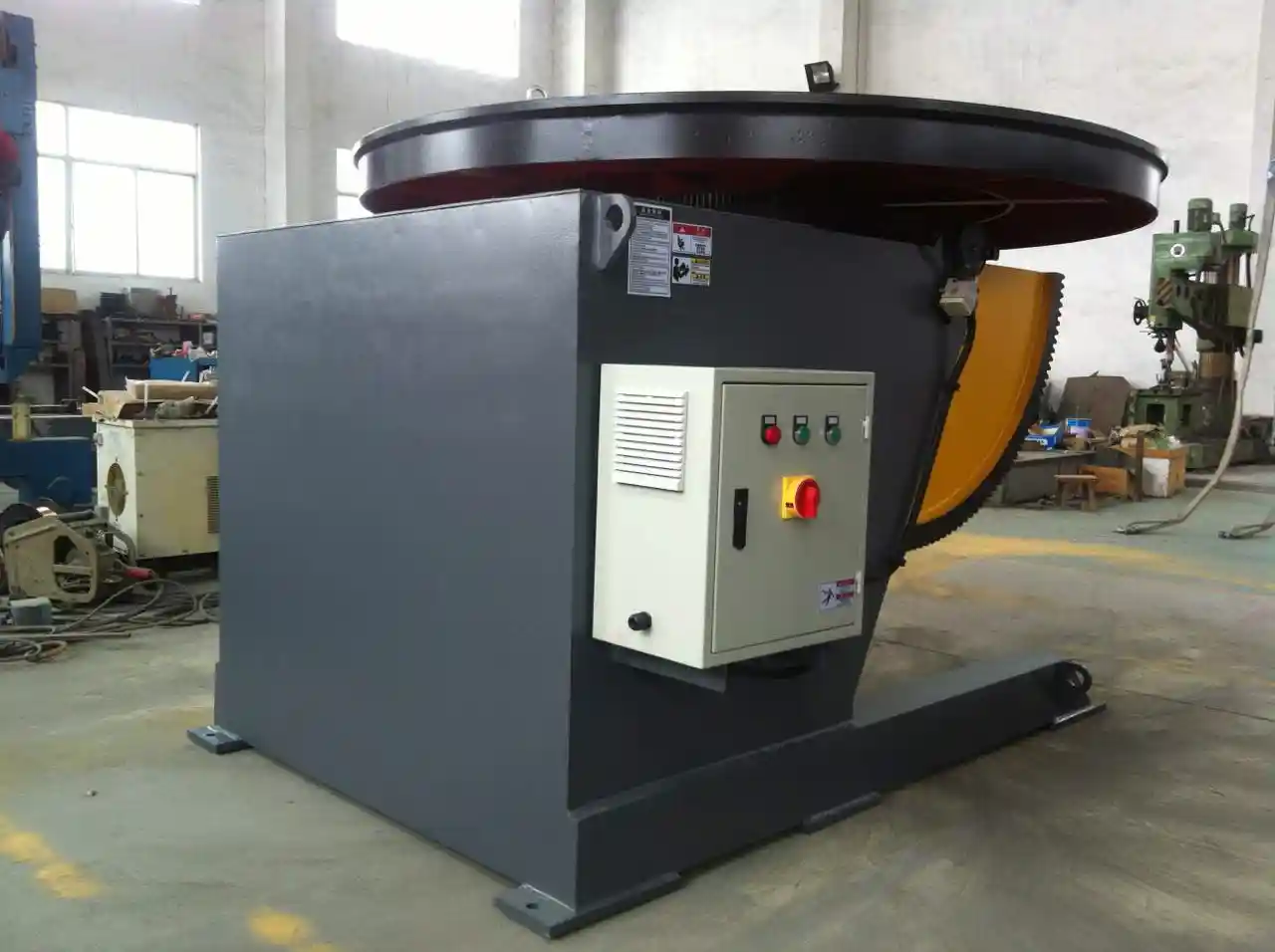
Turntables handle cylindrical and circular components with controlled 360° rotation, making circular welds straightforward. The 1-ton Welding Turntable (HB-10) has a 1200mm worktable and a Siemens PLC control system that stores multiple welding programs. Common uses include pipe and flange work, pressure vessel fabrication, and wind power flange prefabrication.
If you’re interested, check 《Excessive Misalignment In Pipeline Welding Wuxi ABK Welding Turntable Precision Positioning Solution》.
4. Adjustable Height and Fit-Up Rotators for Large Workpieces
Adjustable height and fit-up rotators are built for heavy cylindrical sections such as pipes, tanks, and wind tower segments. Height adjustment keeps welding ergonomics in check and aligns with upstream or downstream equipment. Fit-up rotators, like the Heavy Duty Fit-Up Rotator, bring sections into precise alignment before welding, tightening gaps and improving joint quality. On large shells, no one misses wrestling a misaligned seam.
5. Head and Tailstock Positioners for Extended Components
Head and tailstock systems support long, slender parts from both ends. A motorized headstock and a free-rolling tailstock work together for synchronized rotation and accurate positioning. The WUXI ABK HBT series Head & Tail Welding Positioners offer models up to 3 tons, with ±0.5° positioning accuracy and continuous 360° rotation. Ideal for pipes, shafts, and structural elements that need full-length support.
Key Features and Technical Specifications of High-Performance Welding Equipment
Performance rests on mechanical strength and the right specs. Knowing the details helps match the machine to the job without guesswork.
1. Load Capacity and Dynamic Load Considerations
Load capacity defines the maximum safe weight. Dynamic capacity tells you what the machine can keep stable while moving. That matters when offsets and inertia come into play. For instance, a 1-ton 3 Axis Positioner has a maximum load of 1 ton but can handle a dynamic load of 5 tons, which adds stability with off-center workpieces. We ensure our equipment exceeds static and dynamic load requirements for safety and longevity.
2. Rotational Speed, Tilt Range, and Positioning Accuracy
Control over speed, tilt, and positioning accuracy shows up directly in weld appearance and rework rates. Stepless regulation lets operators dial in the rotation for the bead they want. A wide tilt range opens the door to downhand welding on various joint types. High accuracy, in millimeters or degrees, keeps placements consistent. The Fixed Height Positioner offers ±0.5° rotation accuracy.
3. Robust Construction Materials and IP Ratings for Durability
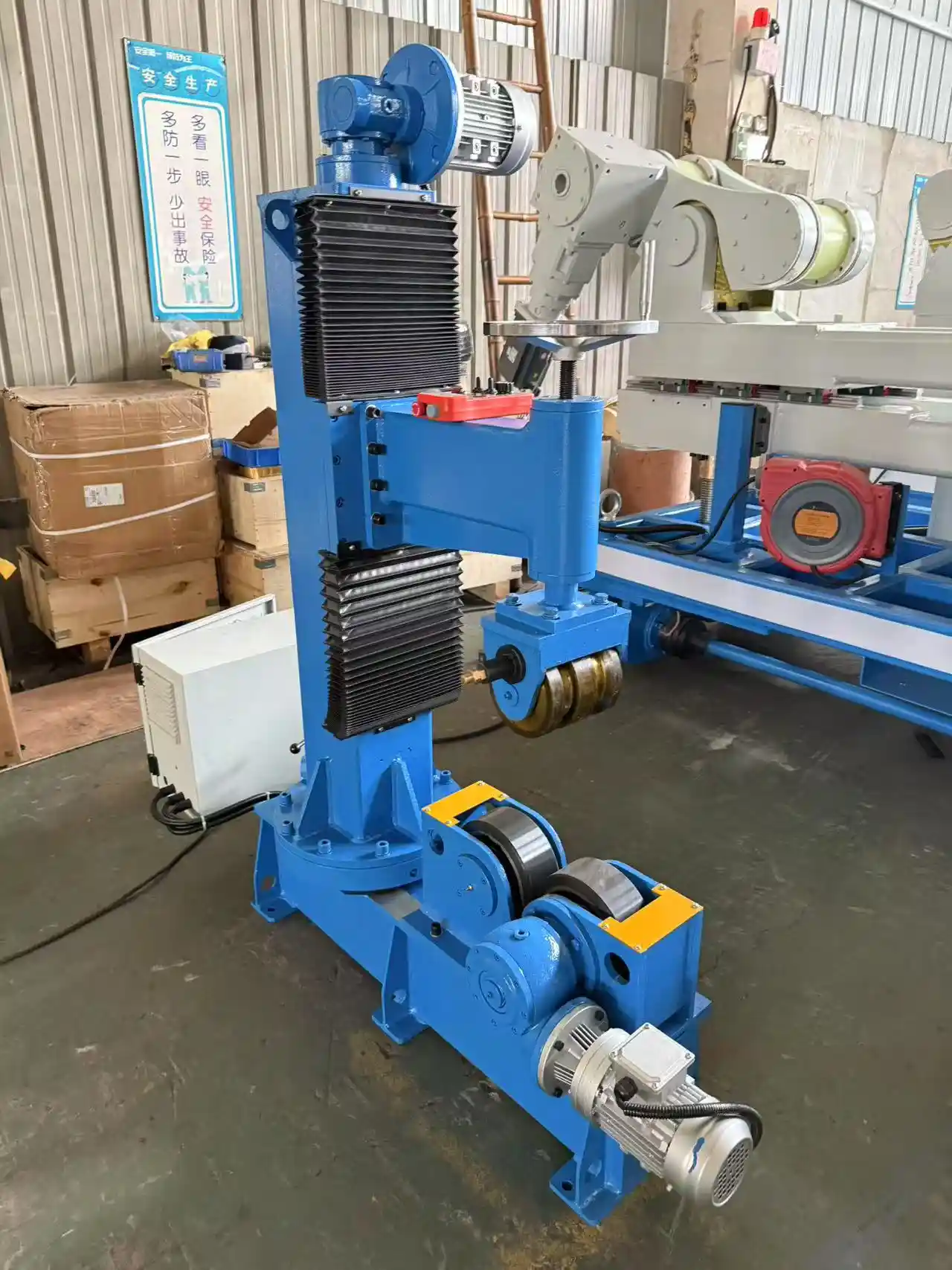
Our frames use heavy-duty Q235-A steel box-type bases with reinforced members to resist flex under static and dynamic loads. IP ratings, such as IP54, guard against dust and water, a must for reliability on a busy floor. Those choices extend service life and cut maintenance.
4. Compatibility with Robotic Welding Systems
Positioners and rotators are built for direct integration with robotic welding systems, so fully automated cells can run at high productivity and precision. Our 3 Axis Welding Positioner works with ABB, KUKA, and FANUC, which makes advanced automation projects straightforward. This alignment supports Industry 4.0 initiatives.
5. Safety Features and Certifications for Industrial Environments
Safety starts in the design. Overload shutdown, emergency braking, and anti-fall safety pins are part of the package, along with electrical protections for shorts and surges. Certifications such as CE and ISO 9001:2015 demonstrate compliance with international safety and quality standards, giving operators a safer workspace.
Maximizing Productivity and Longevity Through Proper Maintenance and Operation
Attention to upkeep pays back quickly with precision equipment. A steady routine keeps performance stable and downtime under control.
1. Daily Checks and Routine Cleaning Procedures
Daily walkarounds catch problems early. Look for wear, damage, or loose connections. Clear slag and dust so nothing binds motion or compromises electrical components. These habits keep the system responsive and predictable.
2. Scheduled Inspections and Component Replacements
Set monthly or quarterly checkpoints for bolt torque, drive condition, and safety interlocks. Once a year, go deeper, replace worn bearings and seals, re-lubricate moving parts, and assess worm gear wear. Sticking to the schedule prevents bigger failures and extends service life.
3. Calibration and Recalibration for Sustained Accuracy
Accuracy drifts with time and environment. Regular calibration keeps the machine within stated tolerances. Plan recalibration annually or after major repairs to maintain specified precision and protect weld quality.
4. Troubleshooting Common Issues and Preventing Downtime
Train operators to notice odd noises, uneven rotation, or control errors and to act quickly. Early fixes stop small issues from turning into outages. Layering in predictive tools, including remote diagnostics, trims unplanned downtime even further.
5. Training and Skill Development for Operators
Well-trained operators get the most from the equipment while keeping risk down. Teach functionality, safety protocols, and maintenance practices. Keep skills current as technology moves forward, and output quality will reflect it.
Partner with WUXI ABK for Advanced Welding Solutions
WUXI ABK MACHINERY CO., LTD. has been a professional manufacturer of welding equipment and CNC cutting machines since 1999. We specialize in providing high-precision welding positioners and rotators that enhance efficiency, accuracy, and safety in industrial fabrication. Our expertise spans wind tower welding lines, H-beam welding lines, and pipe welders. Contact us today to discuss your specific welding automation needs and discover how our solutions can optimize your production processes.
Courriel : jay@weldc.com
Mobile : +86-13815101750
Tél : +86-510-83555592
FAQ
1. What is the primary benefit of using a welding positioner?
The primary benefit is precise manipulation of workpieces, which lets welders consistently work in the downhand position. That raises weld quality, reduces fatigue, and improves safety by cutting back on manual handling of heavy or awkward components.
2. How do control systems improve welding quality?
PLCs and HMIs enable exact control of rotational speed, tilt angles, and positioning accuracy. They keep parameters consistent, reduce human error, and enable real-time monitoring and adjustments, which produces superior, repeatable welds.
3. Can these welding positioners integrate with robotic welding cells?
Yes. Many of our positioners are designed to integrate with robotic cells. Interfaces support ABB, KUKA, and FANUC, enabling fully automated processes with higher productivity and precision.
4. What factors should be considered when choosing a welding rotator?
Match the rotator to the workpiece load, diameter range, and needed rotational speed. Consider tilt range, positioning accuracy, and compatibility with your welding systems. Look at frame materials, IP rating, and built-in safety features for durability and safe operation.
5. How often should welding positioners be calibrated?
Calibrate annually, or after significant repairs or component changes. Regular calibration preserves specified positioning accuracy and repeatability, which keeps weld quality high and prevents slow drift over time.
 English
  Español
  Français
  Deutsch
  Português
  Русский