Water jet cutting earns its place in fabrication because it cuts without a heat-affected zone, handles metals and nonmetals, and leaves little or no thermal distortion. The practical question is not whether water jet cutting works, but whether a portable unit or a stationary table fits the work better. That decision affects material range, part tolerance, production speed, setup time, floor-space planning, and total operating cost.
How the Two System Classes Differ
Portable water jet cutting systems are built for mobility. The pump, water handling, and cutting head are usually arranged so one team can move the equipment to a job site, a large structure, or an area where a fixed cutting table cannot be installed. These systems often favor access over speed and repeatability, making them useful for field modifications, maintenance cuts, and low-volume project work.
Stationary water jet cutting systems use a rigid machine frame, CNC motion control, and a fixed cutting table. The pump and abrasive feed remain in place, and the cutting head moves over the workpiece. This arrangement produces consistent travel speed, predictable standoff, and repeatable geometry across production runs. A stationary Découpeur à jet d'eau is easier to integrate with material loading, abrasive removal, and enclosure systems.
| Factor | Portable Water Jet Cutting | Stationary Water Jet Cutting |
|---|---|---|
| Mobility | High; moves to the workpiece | Low; workpiece moves to the machine |
| Part repeatability | Depends on operator or portable gantry accuracy | Higher with CNC control and fixed rails |
| Production volume | Low to moderate | Moderate to high |
| Material size | Limited by portable frame or manual reach | Larger table and gantry work envelope |
| Pressure class | Often lower for practical mobility | Commonly configured at 60,000 psi class and above |
| Water and abrasive handling | Simpler setup, more manual handling | Integrated feed, catch tank, and abrasive removal |
| Capital cost | Generally lower | Generally higher |
| Cost per part | Higher for large volumes | Lower when utilization is high |
When a Portable System Makes Sense
Portable water jet cutting is strongest when the job cannot come to the machine. On-site repair, ship maintenance, tank modification, pipeline work, and construction projects often require cutting in place or in restricted spaces. In these situations, moving a compact cutting package is faster and safer than disassembling a large workpiece.
A portable system also makes sense for shops with limited capital or limited floor space. The entry cost is usually lower, and the equipment can be stored when not in use. Low-volume fabricators that cut mixed materials and do not need high throughput can use a Portable Water Cutter without committing to a dedicated cutting cell.
The trade-off is control. Hand-guided or small portable gantry systems are more sensitive to standoff, speed changes, and operator technique. They can produce good results, but the edge band may be wider and the cut geometry may be less repeatable than a stationary CNC system. Portable equipment is therefore better for applications where tolerance is functional rather than extremely tight.
When a Stationary System Is the Better Investment
A stationary water jet cutting table pays off when cutting volume, part consistency, or material thickness increases. The fixed frame supports stable acceleration, controlled speed, and consistent nozzle-to-workpiece distance. Those factors improve cut quality, reduce taper variation, and make it easier to repeat the same part over multiple shifts.
Stationary systems also handle the supporting infrastructure better. Abrasive feed, water filtration, catch tanks, and high-pressure plumbing are designed into the machine layout. This reduces manual handling and helps the cutting process stay stable. Shops that cut thick plate, hardened materials, or large sheets usually benefit from the larger table and stronger pump package available in fixed systems.
For production environments, the cost calculation should include utilization, not just purchase price. A stationary unit with higher throughput can produce a lower cost per part even though the initial investment is larger. That advantage only appears when the machine is cutting enough hours per week to spread the fixed cost across many parts. A Water Jet Cutting Suppliers consultation can help clarify table size, pump selection, and abrasive handling requirements.
Material, Edge Quality, and Precision Considerations
Water jet cutting covers a wide range of materials, including carbon steel, stainless steel, aluminum, stone, glass, composites, rubber, and plastics. Pure water cuts soft materials. Abrasive water jet cutting adds garnet or another abrasive to cut metals and hard nonmetals. Stationary systems are easier to keep in the proper speed range across thick sections because the motion and abrasive delivery remain consistent.
Edge quality is rarely just about visual appearance. Taper, striation depth, kerf width, and dimensional accuracy should be evaluated against an agreed quality class. The Water Jet Technology Association recommends documenting pressure, abrasive type, orifice size, nozzle size, and standoff as part of process control [1]. Many shops use the classification approach in ISO 9013:2017 or customer-specific acceptance criteria when defining acceptable cut quality [3].
Safety is also a process requirement. High-pressure water and abrasive streams can cause serious injury, so operators need training, proper guarding, and personal protective equipment. Stationary cutting tables must meet general machine guarding requirements, and portable systems need the same control discipline even when used in the field [2].
Cost, Maintenance, and Shop Integration
Portable systems usually cost less to buy and can be mobilized quickly, but they require more operator attention and more frequent handling of water and abrasive. Stationary systems require a more complete installation plan: clean water supply, drainage, electrical service, abrasive storage, and dust or mist control. That setup cost is often offset by lower labor per part and better process stability.
Maintenance differs by design. Portable units need protection from site dust, water quality problems, and transport damage. Stationary machines need scheduled inspection of high-pressure seals, check valves, orifices, and mixing tubes. In both cases, water quality and filtration have a direct effect on component life and cut consistency.
Need a quick equipment recommendation? Send your material list, thickness range, and expected weekly cutting hours to jay@weldc.com or call +86-13815101750. A clear cutting schedule is the fastest way to determine whether a portable or stationary system will cost less in practice.
A Practical Decision Framework
When the choice is still open, work through the following questions:
- Does the cutting happen in one location or at many job sites?
- Can the workpiece be moved to a table, or does the cutter need to move to the workpiece?
- What materials and thicknesses are most common?
- What edge quality and dimensional tolerance do the parts require?
- How many cutting hours per week will the system actually run?
- Is there adequate floor space and water handling for a fixed table?
- Will operator training and process documentation be easier to maintain with a CNC system?
Once those questions are answered, the decision usually becomes clearer. Choose portable for field access, low volume, and flexibility. Choose stationary for production volume, tighter geometry, and lower cost per part at high utilization.
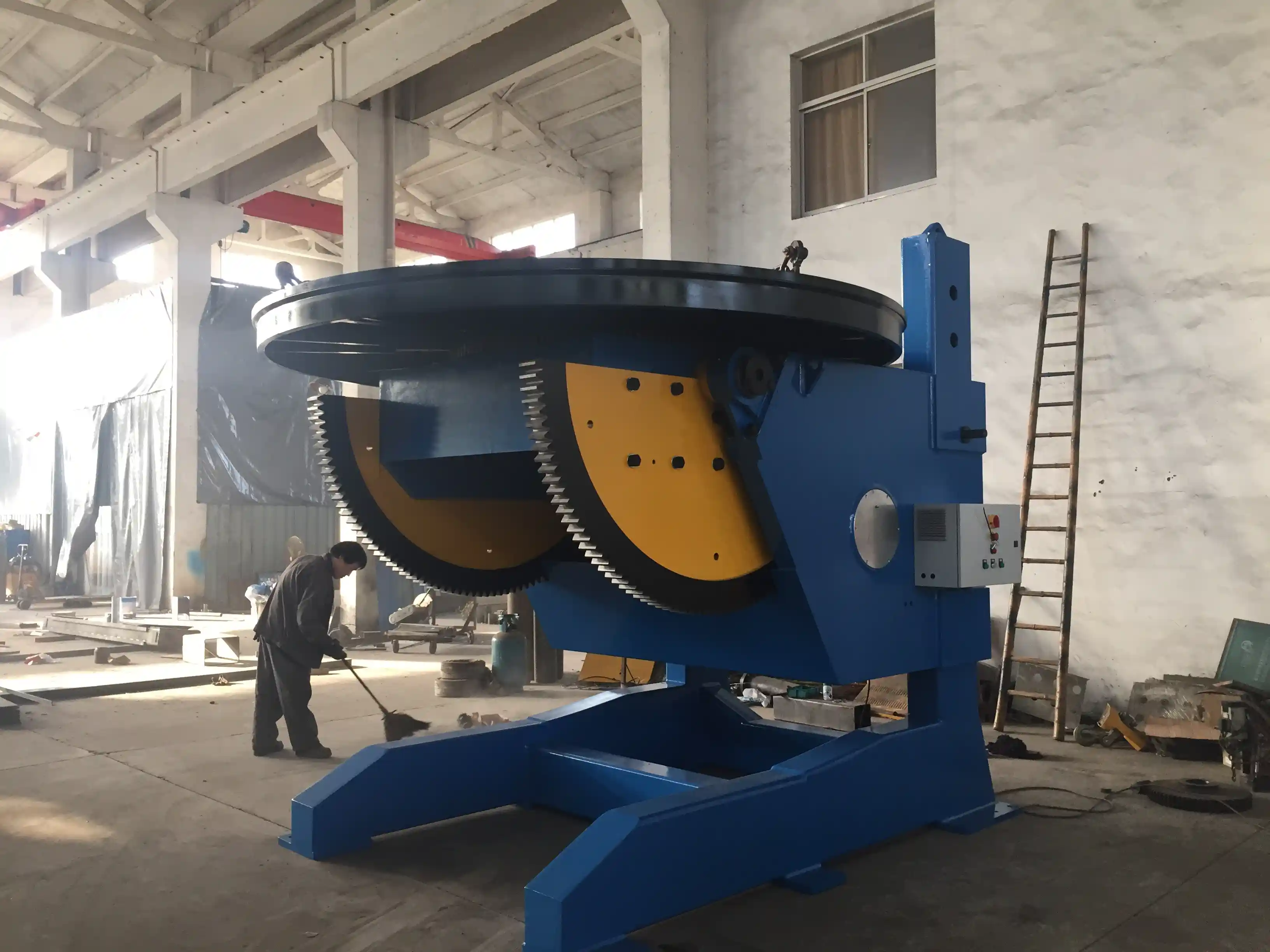
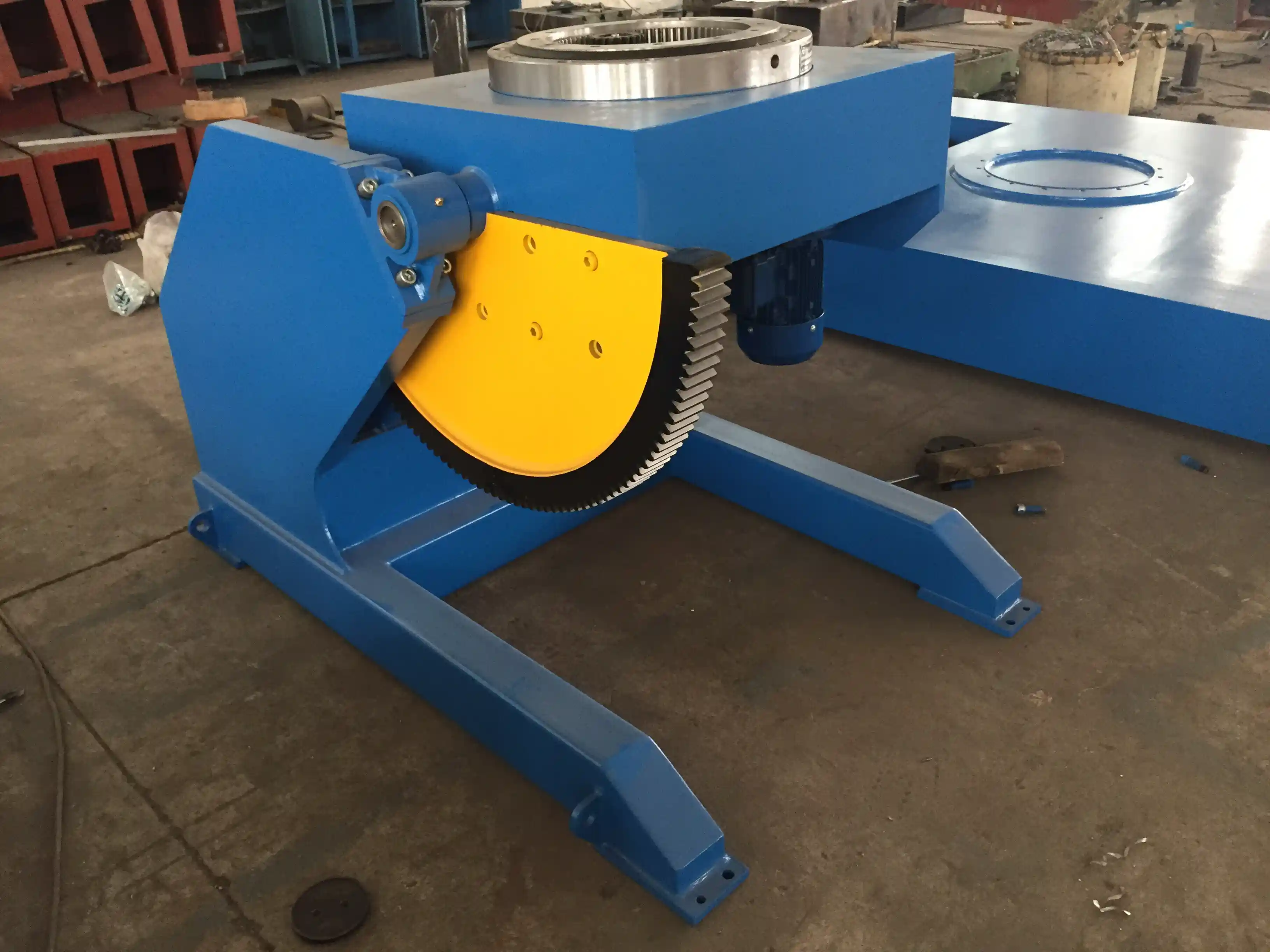
For shops that cut and weld large fabrications, the selection logic is similar: match capacity and handling capability to the workpiece. <WUXI ABK Professional Welding Rotary Equipment: Precision Welding Solution for Pressure Vessel Manufacturing> covers how precision rotary equipment supports pressure-vessel fabrication.
Request a Water Jet Cutting Recommendation
The right answer depends on your specific cutting mix and facility constraints. Send the following details to receive a practical recommendation:
- Whether you are comparing a portable system, a stationary table, or both
- Material types and maximum thickness
- Typical part dimensions
- Required edge quality or tolerated dimensional error
- Available floor space and water/electrical service
- Weekly cutting volume
Contact WUXI ABK Machinery Co., Ltd. by email at jay@weldc.com or by mobile at +86-13815101750. For portable field applications, a Portable Water Cutting Suppliers review can clarify pressure class, weight, and site support requirements. For fixed production cells, a stationary Water Jet Cutting Suppliers review can help match table size, pump output, and abrasive handling to the expected workload.
Questions fréquemment posées
What is the main difference between portable and stationary water jet cutting?
Portable systems move to the workpiece and are generally lighter, simpler, and meant for lower-volume or field work. Stationary systems use a fixed CNC table and motion platform, providing more consistent speed, positioning, and part repeatability.
Can portable water jet systems cut thick steel?
Portable systems can cut many metals when equipped for abrasive water jet cutting, but practical cutting speed and edge control are often lower than for a stationary machine. The feasible thickness depends on pump pressure, available flow, abrasive delivery, and the specific portable motion system.
Which type is less expensive to operate?
Portable equipment usually has a lower purchase price, but stationary equipment often has lower cost per part at high utilization. The best comparison includes electricity, water, abrasive consumption, labor, maintenance, and the value of repeatable cut quality.
Does a stationary water jet cutting machine require a special facility?
It typically requires a level floor, clean water supply, drainage, adequate electrical service, abrasive storage, and mist or noise control. The machine footprint must also allow material loading and maintenance access.
What materials can water jet cutting handle?
Water jet cutting handles carbon steel, stainless steel, aluminum, stone, glass, composites, plastics, rubber, and other materials. Pure water is sufficient for many soft materials, while abrasive water jet cutting is used for metals and hard nonmetals.
References
[1] Water Jet Technology Association, Recommended Practices for the Use of High-Pressure Waterjetting Equipment, WJTA, current edition.
[2] U.S. Department of Labor, Occupational Safety and Health Administration, 29 CFR 1910.212, General Requirements for All Machines.
[3] ISO 9013:2017, Thermal Cutting — Classification of Thermal Cuts — Geometrical Product Specification and Quality Tolerances, International Organization for Standardization.
Si cela vous intéresse, consultez ces articles connexes :
Une révolution dans le domaine du soudage naval : comment les positionneurs de soudage améliorent la qualité et l'efficacité
Wind Tower Welding Challenges: How Advanced Hydraulic Lifting Systems Boost Production by 40%
Déport excessif lors du soudage de conduites : solution de positionnement de précision avec plateau tournant de soudage Wuxi ABK
Des soudures parfaites sur des tubes de grand diamètre grâce à un équipement de laminage professionnel
Une valeur d'application exceptionnelle : Comment les positionneurs de soudage à hauteur fixe favorisent les progrès dans l'industrie de l'offshore et de la construction navale
 English
  Español
  Français
  Deutsch
  Português
  Русский