HVAC manufacturing keeps getting tighter. Tolerances shrink, efficiency targets climb, and the pressure to produce more with less never lets up. Getting components right—consistently, at volume—takes more than good intentions. It takes equipment that holds position, processes that repeat, and planning that accounts for what actually happens on a production floor.
Setting Up HVAC Component Production Lines That Actually Work
Good production starts before the first machine gets bolted down. Layout decisions made early ripple through everything that follows—material flow, operator access, maintenance windows, future expansion. Get the floor plan wrong and you’re fighting it for years.
Technology selection matters just as much. Matching equipment capability to part requirements sounds obvious, but the details trip people up. A machine that handles today’s volume might choke when demand spikes. Automation that looks impressive in a demo can become a headache if it doesn’t integrate with existing systems.
The goal isn’t the fanciest setup. It’s one where parts move smoothly, bottlenecks stay rare, and quality holds steady shift after shift.
Picking Equipment That Fits the Job
Equipment specs tell part of the story. Real-world performance fills in the rest.
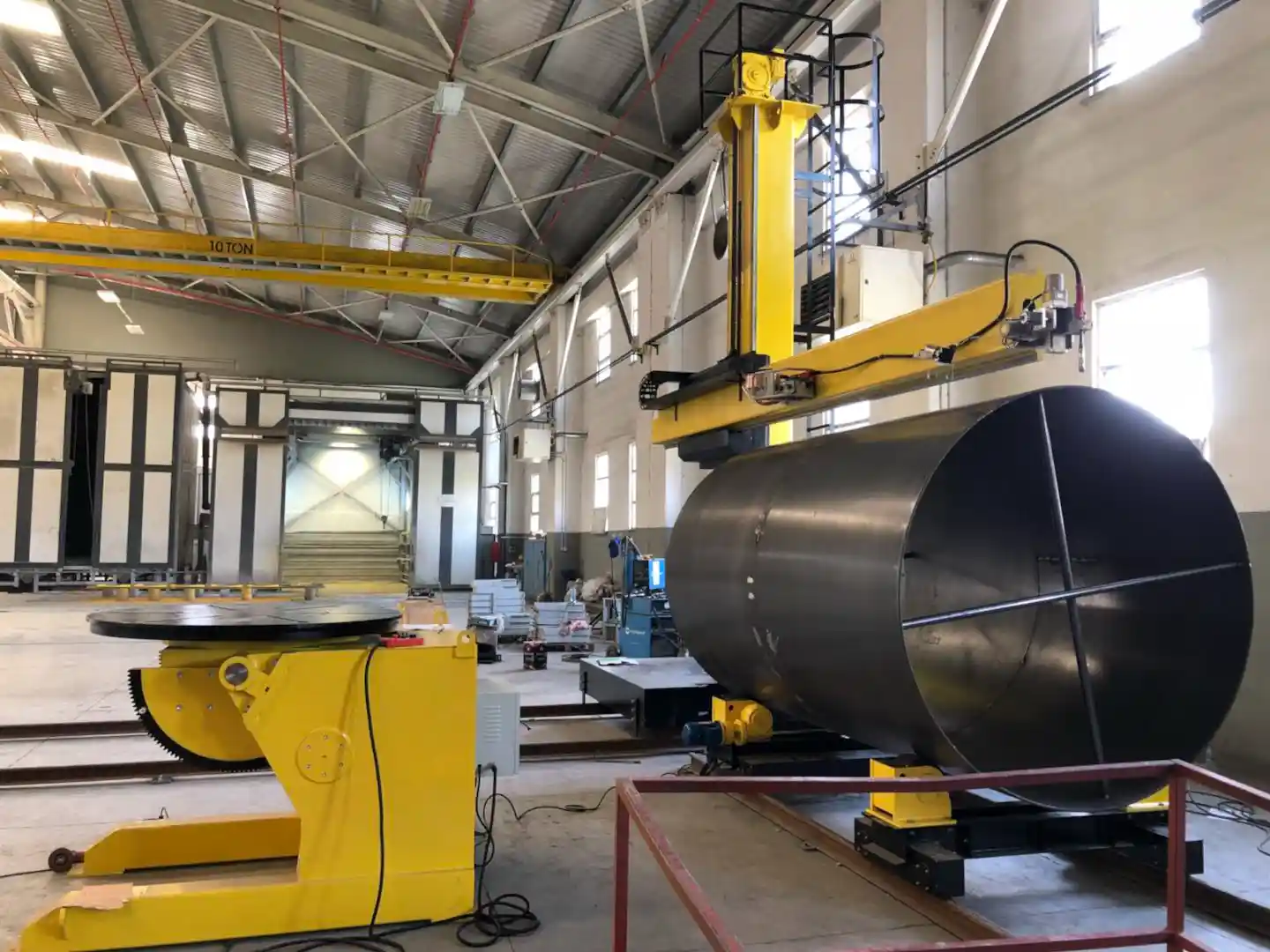
For welding operations, positioning accuracy drives joint quality. The LH8080 welding manipulator holds ±0.1 mm/m—tight enough for longitudinal and circumferential seam work on pressure-critical components. Three-axis positioners push tighter still, hitting ±0.05 mm positioning with 0.02 mm repeatability. That kind of consistency matters when robotic welding cells need to hit the same spot thousands of times.
Capacity, automation level, and room to grow all factor into the decision. Buying exactly what you need today usually means buying again sooner than you’d like.
| Equipment Type | Key Feature | Precision | Applications |
|---|---|---|---|
| Manipulateur de soudage | High-strength box-beam structure | ±0.1 mm/m | Boiler, pressure vessel, wind tower welding |
| Positionneur de soudage à 3 axes | Servo-driven, continuous rotation | ±0.05 mm | Automotive, aerospace, heavy equipment welding |
| Table tournante de soudage | ISO 5 grade worm gear transmission | ±0.5 degrees | Pipe, flange, pressure vessel welding |
| Adjustable Height Rotator | Self-aligning rollers, hydraulic elevation | ±0.1mm positioning | Pipe, pressure vessel, wind tower fabrication |
Fabrication and Welding That Hold Up
Sheet metal work and welding form the backbone of most HVAC component production. The techniques have evolved considerably. Laser cutting delivers edges that used to require secondary operations. Robotic welding lays down consistent beads faster than manual processes ever could.
But equipment only performs as well as its setup allows. Manipulators and positioners do the unglamorous work of presenting parts at the right angle, the right height, the right orientation. When that foundation holds solid, weld quality follows.
What Automation Actually Changes
Automation shifts the equation in predictable ways. Labor costs drop. Throughput climbs. Consistency improves because machines don’t get tired or distracted.
The gains show up in the numbers. A 2-ton three-axis positioner running at 0.05 mm positioning accuracy and 0.02 mm repeatability doesn’t drift over a shift. It doesn’t have good days and bad days. Parts come out the same whether it’s 7 AM or 3 AM.
Defect rates fall. Rework shrinks. The production floor gets quieter in a certain way—fewer problems demanding attention, more predictable output.
Quality Control That Catches Problems Early
Testing and inspection can’t be afterthoughts. By the time a defective component reaches final assembly, the cost of catching it has multiplied.
Dimensional checks confirm parts match specifications. Weld inspection—ultrasonic, X-ray—finds subsurface defects that visual inspection misses. Leak testing on sealed components catches failures before they become field problems. Material verification ensures incoming stock meets requirements.
The frequency and method depend on the component and the consequences of failure. Some checks happen on every piece. Others sample batches. The right approach balances thoroughness against practical constraints.
| Quality Check | Description | Frequency | Equipment Used |
|---|---|---|---|
| Dimensional Accuracy | Verifying component dimensions against specifications | Batch sampling | CMM, Laser Scanner |
| Weld Integrity | Inspecting welds for defects like porosity or cracks | Continuous | Ultrasonic Testing, X-ray |
| Leak Testing | Checking sealed components for leaks | 100% | Helium Mass Spectrometer, Pressure Decay |
| Material Hardness | Ensuring material properties meet standards | Per lot | Hardness Tester |
| Surface Finish | Assessing surface quality for corrosion resistance | Visual inspection | Roughness Tester |
Keeping Materials Moving
Supply chain management sounds abstract until a missing component shuts down a production line. Then it becomes very concrete, very fast.
Smart sourcing builds relationships with suppliers who deliver consistently. Inventory management balances carrying costs against stockout risks. Distribution planning gets finished goods where they need to go without excessive handling or delay.
Lean principles help here. Reducing waste, minimizing work-in-progress, keeping flow smooth—these aren’t just buzzwords when applied thoughtfully. They translate to shorter lead times and lower costs.
For more on improving welding operations specifically, 《Low Efficiency in Pipeline Group Welding: How Intelligent Roller Racks Increase Productivity by 50%》 covers some relevant ground.
Where HVAC Manufacturing Is Heading
The technology keeps advancing. AI-driven process optimization, IoT-enabled monitoring, sustainability requirements—these aren’t distant possibilities anymore. They’re showing up on production floors now.
Smart factory concepts are moving from pilot projects to standard practice. Machines that report their own status, predict maintenance needs, and adjust parameters automatically are becoming expected rather than exceptional.
Sustainability pressures will intensify. Energy consumption, material waste, process emissions—all face increasing scrutiny. Manufacturing methods that seemed acceptable five years ago may not pass muster five years from now.
Welding Technology for Volume Production
High-volume HVAC work demands welding approaches that scale. Speed matters, but not at the expense of quality. Precision matters, but not if it slows production to a crawl.
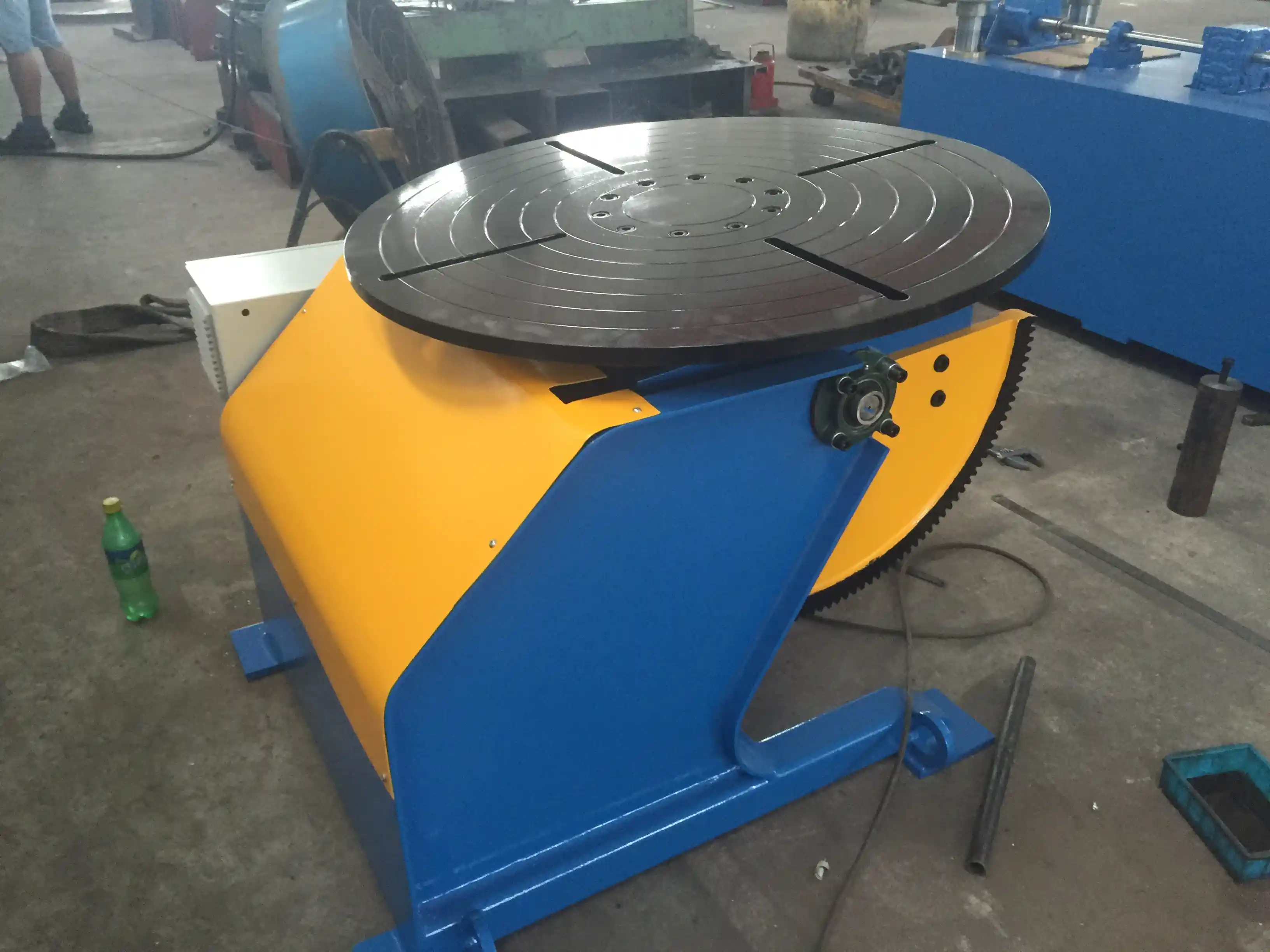
Robotic welding paired with capable positioning equipment threads that needle. A three-axis positioner presenting parts to a welding robot can maintain both pace and accuracy across long production runs. Material compatibility has expanded too—aluminum, stainless steel, and other alloys common in HVAC work all respond well to current techniques.
Meeting aggressive production schedules while holding quality standards requires this kind of capability working together.
Working with WUXI ABK MACHINERY CO., LTD
Twenty-plus years in welding and CNC cutting solutions has taught us what works on production floors and what looks good only in specifications. We design, implement, and optimize production lines for manufacturers who need equipment that performs day after day.
If you’re planning a new line or looking to improve an existing one, we should talk. Reach out at jay@weldc.com or call +86-13815101750.
Frequently Asked Questions
What types of HVAC components can WUXI ABK MACHINERY CO., LTD’s equipment produce?
Our welding and CNC cutting machinery handles a broad range of HVAC components. Ductwork, evaporator and condenser coils, compressor housings, structural elements—the equipment adapts to different part geometries and material types. We work with manufacturers to match solutions to their specific production requirements.
How does WUXI ABK MACHINERY ensure the quality and reliability of its HVAC manufacturing solutions?
Quality starts with equipment design and carries through manufacturing and support. Our machines incorporate precise control systems and robust construction. We also provide training and ongoing support because even well-designed equipment needs proper operation and maintenance to deliver consistent results.
Can WUXI ABK MACHINERY provide custom solutions for unique HVAC component production challenges?
Yes. Standard equipment handles standard problems. When production challenges fall outside typical parameters, we develop custom-engineered approaches. Our team works through specific requirements, identifies appropriate technologies, and designs solutions that address the actual manufacturing need rather than forcing a generic answer.
 English
  Español
  Français
  Deutsch
  Português
  Русский