Improving first-pass weld quality is the most direct way to bring inspection and repair time under control. Most shops focus on welding parameters and operator training, but the equipment that positions and moves the workpiece is often the hidden source of inconsistency. After twenty years of designing and integrating welding automation systems, I have seen a precision positioner cut rework rates by more than half simply by eliminating alignment drift and travel-speed variation that cause undercut, lack of fusion, and missed joints. This article explains how the machines that hold and turn your work — welding positioners, manipulators, and rotators — play a decisive role in first-pass weld success and how to select equipment that slashes inspection and repair hours.
The Real Cost of Poor First-Pass Weld Quality
When a weld fails inspection, the immediate cost is repair labor, but the bigger hit comes from the inspection time itself — every seam must be checked again after rework, and often the schedule slips. In heavy fabrication, a single rework cycle can consume four to six hours of a qualified inspector’s time and tie up the welding station for another shift. Less obvious is the compounding effect on first-pass yield: if repair rates climb, production throughput drops, and overtime increases. In my work with boiler panel and wind tower lines, I have found that shops with high rework — above 8 to 10 percent — often blame their welders, but when we measure the process, the equipment is contributing more variation than anyone expects. The key metrics to watch are first-pass yield and repair rate; quality programs that track both see payback in weeks, not months.
Why Welding Equipment Precision Matters More Than You Think
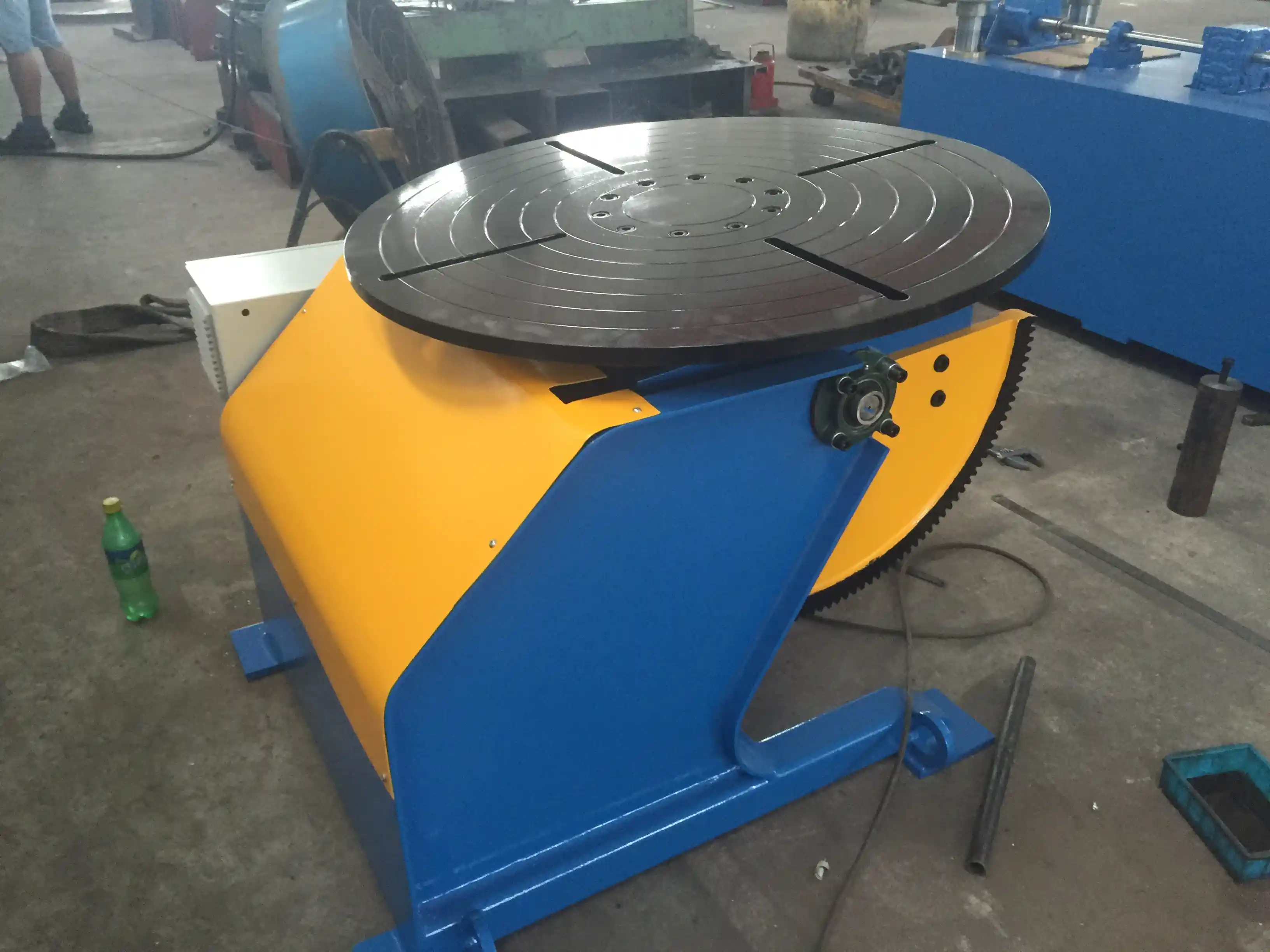
Welding defects like undercut, lack of fusion, and misshapen beads often trace back to the same root cause: the workpiece did not stay where the welder needed it. Even a small misalignment — a 0.2 mm drift over a 2-meter seam — forces the torch to chase the joint, and arc length changes create inconsistent penetration. I have measured travel speed on manual manipulators that varied by 10 to 15 percent along a single pass because of worn gears or uncalibrated drives. In our own assembly work, when we upgraded from a conventional rotator to a servo-driven positioner with ±0.1 mm repeatability, the number of undercut defects on longitudinal seams dropped by 60 percent without touching the weld procedure. That experience is not unique: any shop that eliminates machine-induced motion variation consistently sees fewer repairs and faster inspection cycles.
How Precision Positioners and Manipulators Improve First-Pass Weld Quality
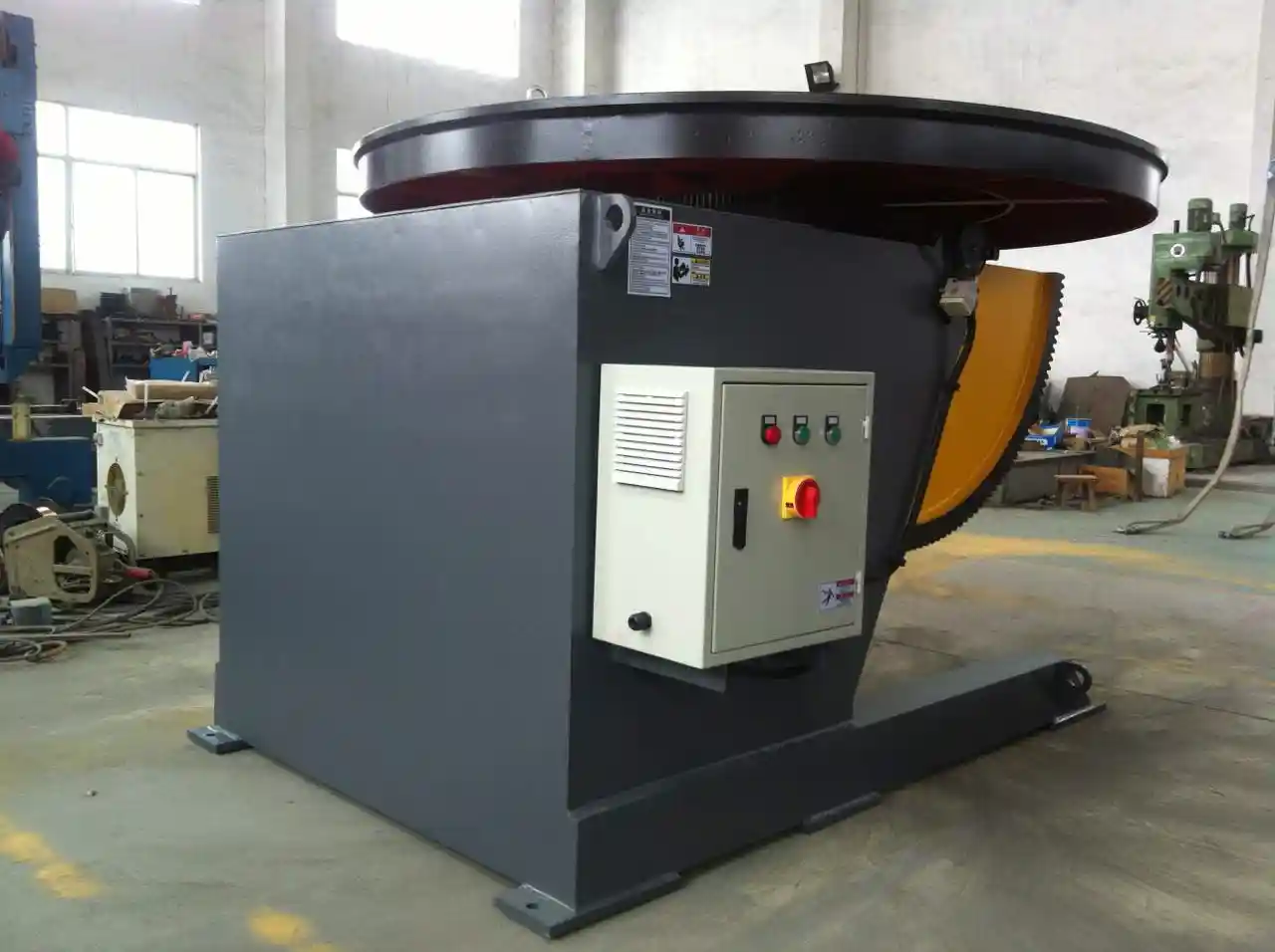
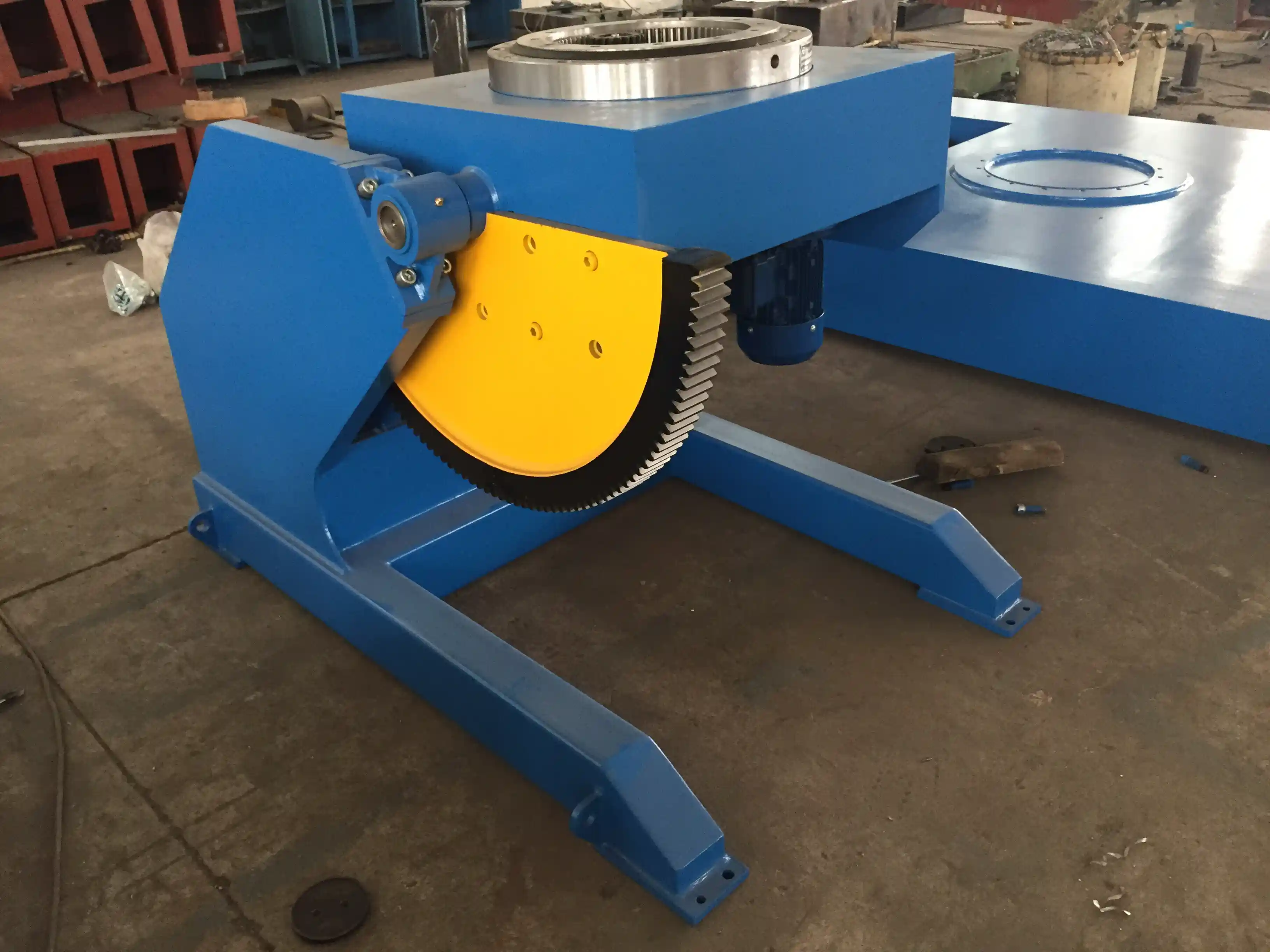
The welding process draws most of the attention, but the machine that holds and moves the workpiece is what turns a good welder into a reliable production system. Modern precision positioners maintain angular accuracy within ±0.5 degrees and linear positioning as tight as ±0.05 mm, which means the joint stays exactly where the torch needs it, pass after pass. This is especially important for long, heavy components — wind tower cans, pressure vessel shells, H-beam assemblies — where gravity and uneven loading can pull a less rigid machine out of alignment.
The table below compares several positioner configurations commonly used in fabrication shops. Even small differences in accuracy can have a large impact on first-pass weld yield.
| Equipment | Capacité de charge | Précision du positionnement | Plage d'inclinaison | Key Feature |
|---|---|---|---|---|
| 1 tonne Positionneur à 3 axes | 1 tonne | ±0,05 mm | 0–90° | Servo-driven for robotic integration |
| Positionneur 2 tonnes 3 axes | 2 tonnes | ±0,05 mm | 0–90° | Cast base, high rigidity |
| HBJ-10 Fixed Height Positioner | 1 tonne | ±0,5° | 0–120° | Compact, 100+ preset programs |
| HBJ-50 Fixed Height Positioner | 5 tonnes | ±0,5° | 0–120° | Heavy steel base, conductive slip rings |
What the numbers do not show is consistency over time. A positioner that holds its accuracy after thousands of cycles matters more than a single-digit specification. In heavy fabrication, I have seen units that still deliver ±0.05 mm repeatability after five years of continuous duty, provided they are sized correctly for the load and maintained per schedule.
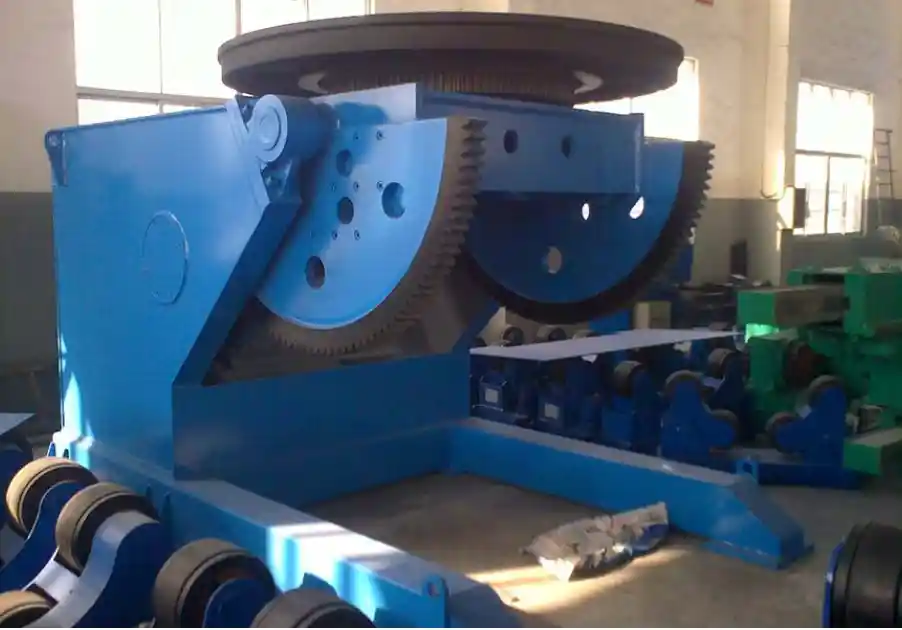
If your workpieces exceed three meters in length or require multi-axis tilting, the risk of misalignment grows fast. A positioner with insufficient rigidity or the wrong configuration creates new quality problems instead of solving them. To confirm the right capacity and control options for your parts, email jay@weldc.com with your part dimensions and weight.
Integrating Precision Equipment: Payback and Real-World Results
Integrating Automated Positioning into Your Process
Switching to precision positioning equipment changes how you think about fixturing, joint preparation, and even the sequence of operations. Most modern positioners use standard control protocols and can connect directly to ABB, KUKA, or FANUC robots without external interface boxes. I have integrated systems into both new and existing production lines, and the key to success is planning the layout so the workpiece flows naturally from tack-up to final weld without extra handling.
One common mistake is overspecifying: a 3-axis positioner with sub-millimeter repeatability handles complex parts well, but a simple fixed-height rotator may be all that a pipe shop needs. We usually recommend that fabricators start by mapping their highest-rework part numbers and then match the equipment to those specific requirements. That approach avoids overspend and targets quality improvement where it hits the bottom line fastest.
Calculating the Payback in Repair and Inspection Hours
The savings from improved first-pass weld quality appear in three places: repair hours eliminated, inspection hours freed, and throughput gained. In a mid-size structural fabrication shop, moving from a 90 percent first-pass yield to 96 percent — a realistic gain with precise positioning — saves roughly 25 hours of rework per 100 seams. At typical shop rates, that alone recovers the cost of a mid-range positioner in under a year, not counting the additional output.
But payback is not just about rework. Once inspectors trust the machine to hold position, they often shift from 100 percent NDT to spot-checking, which further compresses lead times. One wind tower line we supported saw inspection time drop by nearly a third after integrating servo-driven positioners because the weld quality became so uniform that radiography intervals could be extended. Every fabrication environment is different, but the trend is consistent: the equipment that delivers repeatable motion pays for itself faster than most shops expect.
Cut Inspection and Repair Time with the Right Equipment
Weld rework and slow inspection cycles chip away at profit margins every day, but the root cause is frequently the machine, not the man. A precision welding positioner or manipulator eliminates the alignment drift and speed variation that cause undercut, incomplete fusion, and mismatched joints — defects that drive up repair hours and inspection backlogs. We have helped fabricators across wind energy, pressure vessel, and structural steel production integrate the exact equipment that matches their part size, weight, and quality requirements.
To discuss your current repair rates and find the right configuration for your shop, call us at +86-510-83555592 or email jay@weldc.com. Send your part dimensions and typical throughput, and I will help you calculate the potential payback for your specific operation.
What Fabricators Ask About Welding Equipment and Quality
Can a precision positioner eliminate all welding defects?
No single piece of equipment can remove every variable from welding. You still need correct parameters, proper filler metal, and clean joints. But a positioner removes two of the most stubborn sources of rework: inconsistent travel speed and workpiece misalignment. In many shops we have worked with, defects traceable to machine motion account for 30 to 50 percent of total rework, so eliminating that category alone often cuts repair time by a third or more.
How do I tell if our current equipment is hurting first-pass quality?
A common misconception is that weld defects are always a welder problem. The truth is that machine-induced variation leaves distinct signatures. Look for weld bead width that varies along the seam, undercut that appears consistently on one side, or frequent stop-start points where the operator had to reposition. A simple test is to measure travel speed with a tachometer: variation above 5 percent indicates the drive system is contributing to quality trouble. We often run this check when auditing a line and find it a quick way to separate equipment issues from technique problems.
What does automation mean for our welders — do they need retraining?
It depends on the control interface. Modern positioners with Siemens PLCs and touchscreen interfaces store multiple preset programs, so operators learn to select a part number and start the cycle within a few hours. In our installations, shops report that existing welders adapt quickly because the automated motion makes their work easier, not harder. The real shift is toward process monitoring rather than constant manual adjustment, which most experienced welders welcome.
What is a realistic payback period for a welding positioner?
In programs we have supported, payback depends heavily on throughput, but if you are currently reworking more than 5 percent of welds, the equipment can pay for itself in six to twelve months through saved repair hours alone. One pressure vessel shop recovered the investment in seven months after reducing rework by 40 percent. The faster your production volume, the quicker the return. To get a rough payback estimate for your mix, send your monthly weld volume and average rework rate to jay@weldc.com — I will run the numbers with our application data.
Si cela vous intéresse, consultez ces articles connexes :
Les problèmes de soudage des tours d'éoliennes se répètent : Comment les rotateurs de ligne de culture intelligents augmentent la productivité par 50%
Des soudures parfaites sur des tubes de grand diamètre grâce à un équipement de laminage professionnel
Améliorer la qualité et l'efficacité dans la fabrication de réservoirs et d'appareils à pression : La valeur de l'application principale des positionneurs
 English
  Español
  Français
  Deutsch
  Português
  Русский