In modern cylindrical tank manufacturing, achieving high quality and efficiency is paramount. We observe that integrating advanced rotators with sophisticated welding systems is critical for meeting stringent industry demands. This synergy not only enhances production efficiency but also ensures the structural integrity of the final product. Our focus is on demonstrating how these advanced technologies streamline processes and elevate overall output quality.
Foundational Principles of Cylindrical Tank Fabrication
Cylindrical tank fabrication involves a series of complex processes, from material selection to final assembly. Achieving optimal tank fabrication efficiency requires careful attention to each stage. We recognize that pressure vessel manufacturing, for example, demands exceptional precision and adherence to strict welding standards. The inherent complexities necessitate robust planning and advanced machinery.
Material Selection and Preparation for Tank Shells
The initial phase of cylindrical tank production involves meticulous material selection and preparation. We typically work with various steel tank materials, chosen for their strength and corrosion resistance. Plate rolling forms the cylindrical sections, followed by precise edge preparation. This preparation is crucial for achieving superior welds, minimizing defects, and ensuring structural integrity.
Precision Rotator Systems in Tank Welding Operations
Precision rotational welding equipment is indispensable for modern tank fabrication. These systems, often referred to as welding positioners or tank turning rolls, allow for precise manipulation of workpieces. Our experience shows that these devices are fundamental for achieving consistent, high-quality circumferential welding. They significantly improve weld quality and operational safety.
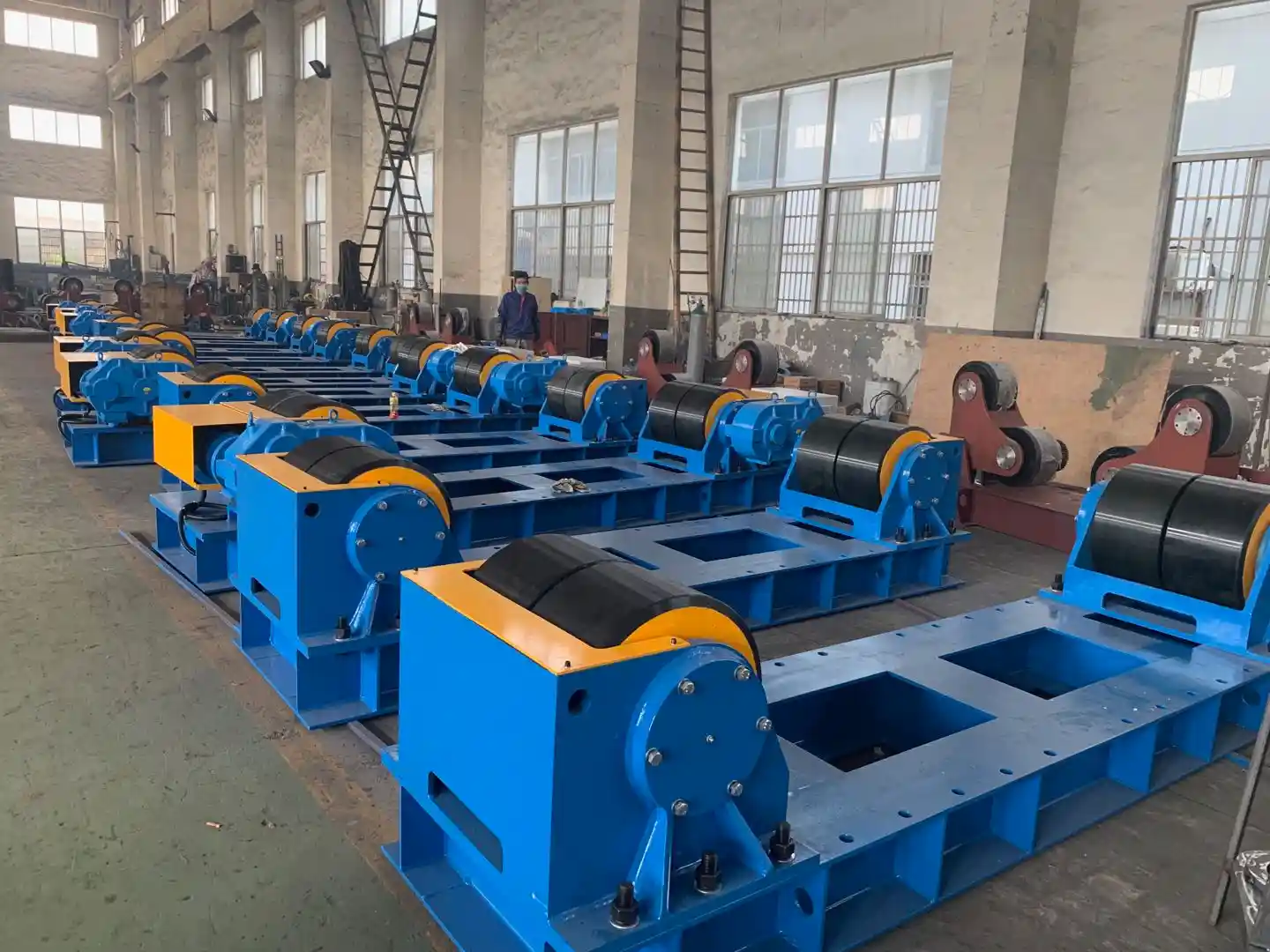
Table: Types of Welding Rotators and Their Applications
| Rotator Type | Load Capacity (Tons) | Vessel Diameter Range (mm) | Key Applications |
|---|---|---|---|
| HGZ-5 | 5 | 250-2300 | Pressure vessels, pipe girth welding |
| HGZ-20 | 20 | 500-3500 | Large storage tanks, chemical reactors |
| HGZ-40 | 40 | 600-4200 | Offshore platforms, boiler manufacturing |
| HGZ-100 | 100 | 1000-5000 | Nuclear power equipment, LNG tanks |
How Welding Rotators Enhance Cylindrical Tank Production
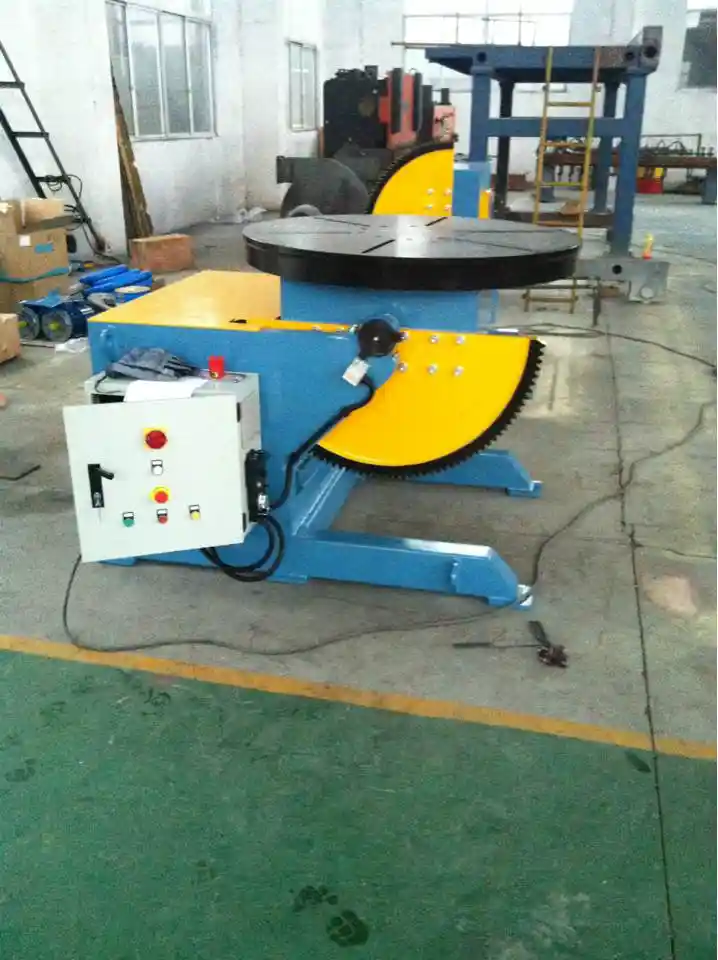
Welding rotators significantly enhance cylindrical tank production by providing controlled movement and positioning of the workpiece. This controlled rotation ensures consistent weld penetration and bead geometry, leading to higher welding productivity. Operators can maintain optimal torch angles and travel speeds, which improves weld consistency and reduces rework. Furthermore, these systems enhance ergonomics in welding, reducing physical strain on operators and improving safety. For example, our HGZ-60 Standard Pipe Welding Rotator, with a 60-ton capacity, provides 0.5-15 RPM stepless speed control, ensuring <0.1mm runout accuracy for large cylindrical containers.
Article Recommendation: If you’re looking to improve the quality of your pipe welding, consider reading our detailed analysis on 《Comment améliorer la qualité du soudage de tubes grâce à un positionneur de soudage de haute précision》.
Advanced Welding Integration for Optimal Tank Quality
Integrating advanced welding systems with precision rotators is crucial for optimal tank quality. Automated welding systems, such as submerged arc welding (SAW) and gas metal arc welding (GMAW), offer superior control and repeatability. This synergy ensures structural integrity and boosts production efficiency. We focus on welding process optimization to achieve defect-free welds consistently.
Comparison Chart: Welding Processes for Cylindrical Tanks
| Welding Process | Advantages | Disadvantages | Typical Applications |
|---|---|---|---|
| SAW | High deposition rate, deep penetration | Limited to flat/horizontal, flux handling | Thick plates, long seams |
| GMAW | Versatile, high speed | Spatter, shielding gas required | Thin to medium plates, various positions |
| TIG | High quality, precise | Slow, low deposition rate | Thin materials, root passes |
Benefits of Integrating Automated Welding with Rotators
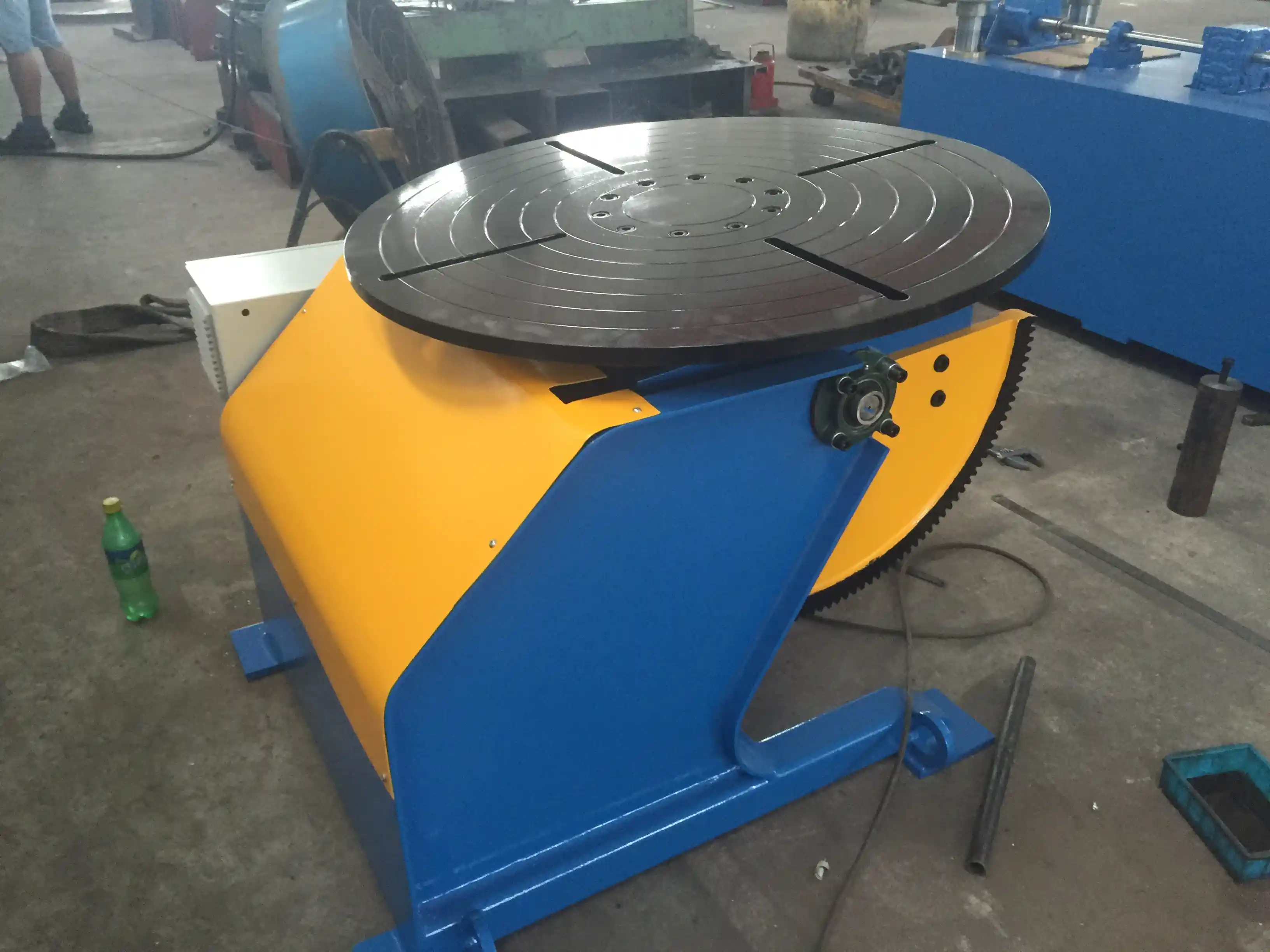
Integrating automated welding with rotators offers numerous benefits. It facilitates robotic welding for tanks, achieving high precision and repeatability. This combination significantly reduces manual labor, minimizing human error and increasing production speed. The result is improved weld quality, reduced material waste, and enhanced cost-effectiveness. Our 3-axis welding positioners, like the Positionneur de soudage à 3 axes 3 Tons, achieve ±0.05 mm positioning accuracy and 0.02 mm repeatability, ideal for automated fabrication.
Strategic Workflow Optimization for Tank Fabrication Lines
Strategic workflow optimization is essential for streamlining the entire tank manufacturing process. This involves designing an efficient tank production line, incorporating lean manufacturing welding principles, and identifying fabrication bottlenecks. Our approach focuses on seamless integration of equipment and processes to maximize throughput and quality.
Flowchart: Integrated Tank Production Workflow
- Material Preparation
- Plate Rolling
- Edge Preparation
- Fit-Up
- Circumferential Welding
- Longitudinal Welding
- Inspection
- Post-Weld Treatment
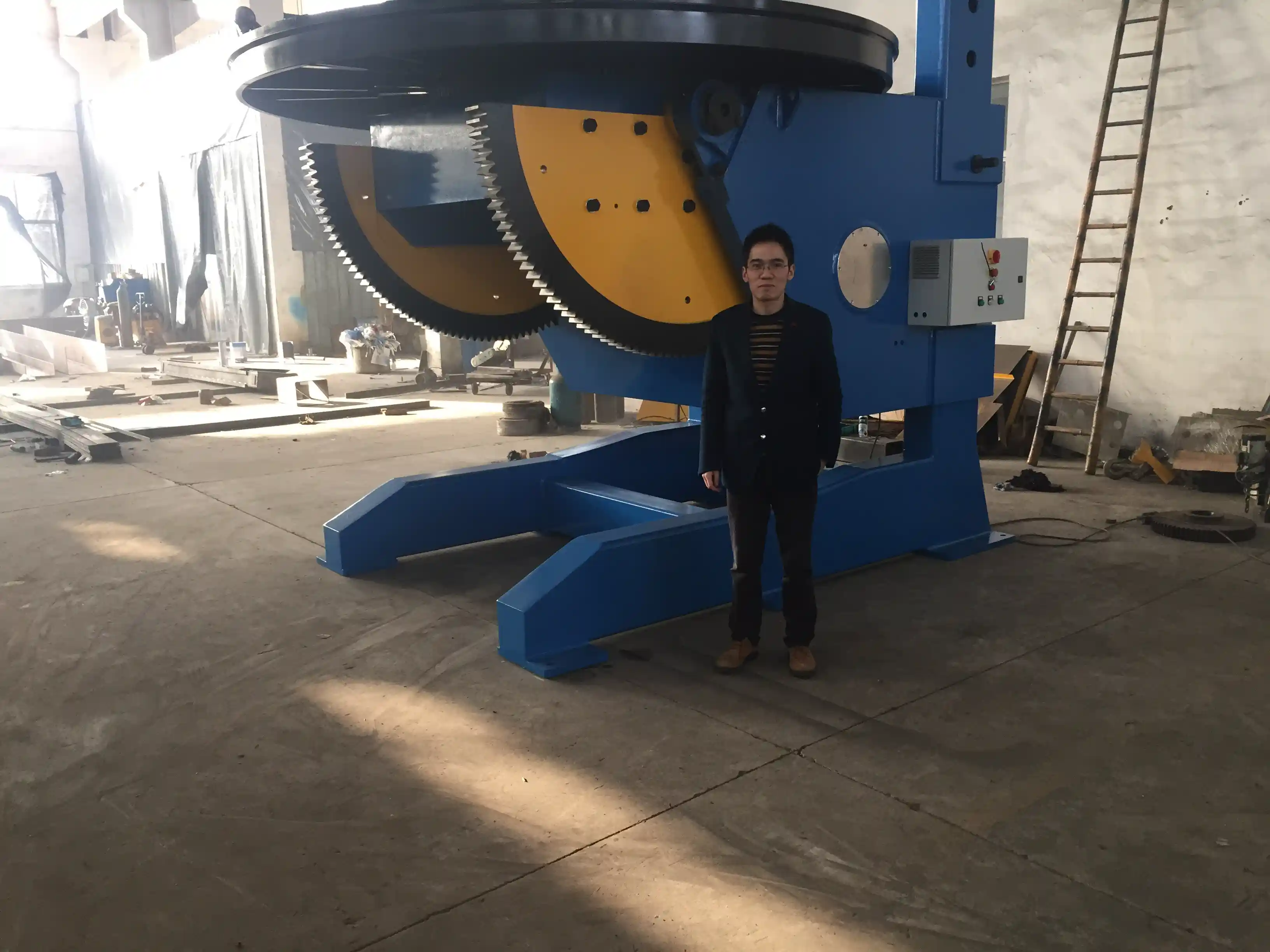
We utilize Manipulateur de soudages for precise longitudinal and circumferential seam welding. For example, our LH8080 model offers 8000 mm horizontal and vertical travel with ±0.1 mm/m positioning accuracy. This precision is critical for maintaining tight tolerances throughout the fabrication process. The strategic placement of equipment, such as our Adjustable Welding Positioner 30 Tons, allows for optimal material flow and reduced handling.
Future Trends in Cylindrical Tank Welding Technology
The future of cylindrical tank welding technology is driven by smart welding technology and Industry 4.0 welding principles. We anticipate further advancements in automation, including more sophisticated robotic systems and real-time data analytics. Additive manufacturing tanks, while still emerging, could revolutionize certain components. Our commitment extends to sustainable welding practices, reducing energy consumption and waste.
These trends will lead to even greater precision, efficiency, and environmental responsibility in manufacturing. We are actively exploring innovations to maintain our leadership in this evolving field. The development of advanced sensors and AI-driven control systems will enable predictive maintenance and adaptive welding processes.
Enhance Your Tank Production with WUXI ABK
We understand the critical need for high-quality, efficient cylindrical tank manufacturing. Our integrated rotator and welding solutions are designed to meet these demands, offering unparalleled precision and productivity. Investing in advanced machinery from WUXI ABK MACHINERY CO., LTD. provides a significant competitive advantage. We are dedicated to delivering innovative solutions that optimize your production lines and elevate your product quality.
Frequently Asked Questions About Tank Welding Integration
How do welding rotators enhance cylindrical tank production?
Welding rotators enhance cylindrical tank production by providing precise control over workpiece rotation. This control allows for optimal welding positions, leading to consistent weld quality and reduced defects. They improve welding productivity by enabling continuous circumferential welding, minimizing stops and starts. Our Adjustable Rotator Manufacturers offer various models, like the HGK-20, which features hydraulic elevation and automatic centerline alignment for enhanced precision.
What are the benefits of integrating automated welding with rotators?
Integrating automated welding with rotators offers significant benefits, including enhanced precision and repeatability. This combination facilitates robotic tank welding, reducing manual labor and increasing throughput. It leads to substantial production cost reduction through minimized material waste and rework. For example, our Positionneur à trois axes 5 Tons, compatible with ABB, KUKA, and FANUC robots, ensures high accuracy with ±0.05 mm positioning.
Which welding technologies are best for large cylindrical tanks?
For large cylindrical tanks, Submerged Arc Welding (SAW) and Gas Metal Arc Welding (GMAW) are typically the most effective technologies. SAW offers high deposition rates and deep penetration, ideal for thick sections and long seams. GMAW provides versatility and high-speed welding for various applications. Our Submerged Arc Welding Suppliers provide equipment designed for robust performance in demanding environments.
Elevate your cylindrical tank production capabilities with WUXI ABK MACHINERY CO., LTD.’s advanced welding and rotator solutions. Contact us today for a consultation tailored to your specific fabrication needs and achieve unparalleled efficiency and quality. Mobile: +86-13815101750 | Email: jay@weldc.com
 English
  Español
  Français
  Deutsch
  Português
  Русский