When production engineers compare laser cutting and water jet cutting, the central question is rarely which machine is better. It is which process handles a given material, thickness, and edge-quality requirement at the lowest realistic cost. A laser cutting machine removes material with focused light and heat. A water jet cutter removes material with high-pressure water and abrasive erosion. That basic difference drives most material-compatibility decisions.
How Laser Cutting and Water Jet Cutting Remove Material
A laser cutting machine uses a focused beam to melt, burn, or vaporize material along a narrow kerf. Fiber lasers are effective on most metals, while CO2 lasers are still used for many nonmetals. Because the process is thermal, laser cutting always produces some heat input. The practical result is a heat-affected zone, possible edge oxidation, and a cut surface whose geometry is commonly evaluated against ISO 9013 thermal-cut quality classes [1].
Water jet cutting works differently. A pump pressurizes water, and a nozzle directs the stream at the workpiece. For hard materials, abrasive particles are added to the stream. The material is removed by erosion rather than melting, so the workpiece remains relatively cool. This is why water jet cutting is often selected for heat-sensitive alloys, laminates, and materials that cannot tolerate thermal distortion.
Security and operating discipline also differ. Laser equipment is governed by laser-safety standards such as ANSI Z136.1 [2]. High-pressure waterjet systems require pump, hose, and nozzle controls described in WJTA recommended practices [3].
Material Compatibility at a Glance
The table below summarizes practical compatibility for common fabrication materials. It does not replace application testing, but it shows where each process usually has an advantage.
| Matériau | Laser cutting compatibility | Water jet cutting compatibility | Practical notes |
|---|---|---|---|
| Carbon steel | Good for thin and medium plate | Good across most thicknesses | Laser is faster on gauge material; water jet avoids heat edge effects on thicker sections |
| Stainless steel | Good with fiber laser and nitrogen assist | Bon | Water jet avoids heat tint and preserves corrosion resistance |
| Aluminum | Good with fiber laser | Bon | CO2 laser is limited by reflectivity; water jet produces no heat-affected zone |
| Copper and brass | Moderate with fiber laser | Bon | High reflectivity and thermal conductivity make laser cutting slower on thick sections |
| Titanium | Good with fiber laser and inert assist gas | Bon | Laser needs controlled gas coverage; water jet may embed abrasive at the cut surface |
| Plastics | Good for acrylic and some thermoplastics | Good for most plastics | Laser can discolor or melt sensitive polymers; water jet avoids heat but may wet porous materials |
| Composites | Limitée | Bon | Laser can delaminate or char resin; water jet is usually preferred |
| Glass, stone, ceramic | Poor to unsuitable | Bon | Water jet is the dominant cold-cutting option for these brittle materials |
Material behavior varies by grade, surface condition, and thickness. Standard material-property references provide the thermal conductivity, reflectivity, and density values that guide laser and abrasive water jet parameter selection [4].
Ferrous Metals: Carbon Steel and Stainless Steel
Carbon steel is the most common metal in structural fabrication. Fiber laser cutting is highly productive on thin and medium plate. The cut is square, repeatable, and fast enough to support high-volume blanking. On thicker plate, the heat budget rises, and edge quality depends on the assist gas, nozzle alignment, and machine acceleration. Shops that cut heavy carbon plate often keep a CNC flame cutting machine or CNC plasma cutting machine as a lower-cost supplement for less dimensionally demanding parts.
Stainless steel exposes a different decision parameter: surface condition. Fiber laser with nitrogen assist can produce a clean edge, but the cut remains a thermal process. For food-grade or corrosion-critical parts, water jet cutting avoids heat tint and oxide formation. This is why many fabricators use laser for internal stainless parts and water jet for exposed or hygienic surfaces.
Thick carbon steel also exposes the real limitation of a cutting decision: the cut is not the finished part. After plate is cut, weld fit-up and positioning determine whether the dimensional gains survive downstream.
After cutting, downstream positioning determines how much of the cut accuracy survives into the finished assembly. <Le pilier central de la fabrication lourde : Les performances exceptionnelles des supports à rouleaux dans les processus clés> covers how roller stands keep heavy sections stable during critical fabrication steps.
Non-Ferrous Metals: Aluminum, Copper, Brass, and Titanium
Aluminum is where the laser-versus-water-jet discussion becomes sharply material-specific. Fiber laser cuts aluminum well, but CO2 laser cutting is limited by the metal’s reflectivity. Water jet cutting eliminates the heat-affected zone, which is useful when subsequent welding or forming requires the original temper condition. The trade-off is usually processing speed and abrasive cost.
Copper and brass amplify the reflectivity problem. Fiber lasers can process these materials, but cutting speed drops as thickness rises. Water jet cutting cuts copper and brass cleanly without the same thermal-management burden. For busbar, electrical contact, and heat-exchanger components, water jet is often the safer default unless the part geometry strongly favors laser speed.
Titanium is more demanding in both processes. Laser cutting requires high-purity assist gas to control edge contamination and oxidation. Water jet cutting avoids heat input but can embed abrasive particles in the cut face. In either case, the cut edge must be validated before welding. This is especially true for pipe, flange, and pressure-boundary parts where misalignment after cutting leads directly to weld defects.
In pipe and vessel fabrication, edge preparation and joint alignment decide final weld quality. <Déport excessif lors du soudage de conduites : solution de positionnement de précision avec plateau tournant de soudage Wuxi ABK> covers precision positioning methods that help hold cut-and-fit parts within tolerance.
Non-Metals: Plastics, Composites, Glass, Stone, and Ceramics
Plastics illustrate how process selection changes outside the metal shop. Laser cutting is excellent for acrylic and some thin thermoplastics, but it can discolor polycarbonate or release fumes from certain polymers. Water jet cutting avoids heat, but not every plastic can tolerate water exposure or edge wetting. Porous plastics may need cleaning before bonding or coating.
Composites usually favor water jet cutting. Laser heat can char the resin matrix, cause delamination, or damage fiber properties. Water jet cutting produces less thermal change, although the operator must control abrasive embedding and water intrusion at the cut edge.
Glass, stone, and ceramics are among the clearest water jet applications. The cold, abrasive process cuts these brittle materials with less fracture risk than many mechanical methods. Laser cutting is generally unsuitable for stone and ceramic and is limited on most glass.
Material compatibility check: If your mix includes reflective metals, thick plate, and nonmetals, send the material list to jay@weldc.com. Include maximum thickness, required edge quality, and monthly cut area. A practical comparison can then be made across laser, water jet, and hybrid cutting options.
Choosing the Right Cutting Machine for Your Material Mix
The best machine decision starts with a ranked material list. If the shop cuts mostly carbon steel and stainless steel from 1 mm to 15 mm, a CNC laser cutting machine is often the fastest solution. If the workload includes copper, aluminum, thick plate, composites, glass, or stone, a CNC water jet cutting machine provides broader compatibility with less heat-related rework.
Operating cost also separates the two processes. Laser cutting consumes assist gas, nozzles, lenses, and electrical power. Water jet cutting consumes water treatment, high-pressure pump maintenance, and abrasive. A misleading comparison that ignores abrasive consumption will understate water jet costs just as a comparison that ignores assist-gas volume will understate laser costs.
For mixed-carbon steel shops, the most economical cell often combines laser cutting for accuracy and speed with flame or plasma cutting for thick sections. This is not a purity argument. It is a capacity-planning decision based on the number of parts that require high tolerance versus the number that require only rough blanking.
WUXI ABK supplies CNC laser cutting machines and CNC water jet cutting machines for fabrication environments that move between thin sheet, heavy plate, and nonmetal work. For shops that process thick carbon plate at lower cost, CNC flame cutting machines and CNC plasma cutting machines can complete the cutting cell. The aim is not to force one technology into every job but to match each material group to the process that preserves its properties and tolerance at a controllable cost.
For thick-section work, the cut edge must support stable fit-up and weld preparation. <Wind Tower Welding Challenges: How Advanced Hydraulic Lifting Systems Boost Production by 40%> covers production challenges where the cut-to-weld transfer directly affects cycle time and quality.
The cut part is only one station in a fabrication line. Once the material leaves the cutting table, downstream handling and positioning determine whether the cut tolerance holds. For shops that combine cutting with automated welding and heavy-part positioning, the downstream cell must be designed with the same attention as the cutting head.
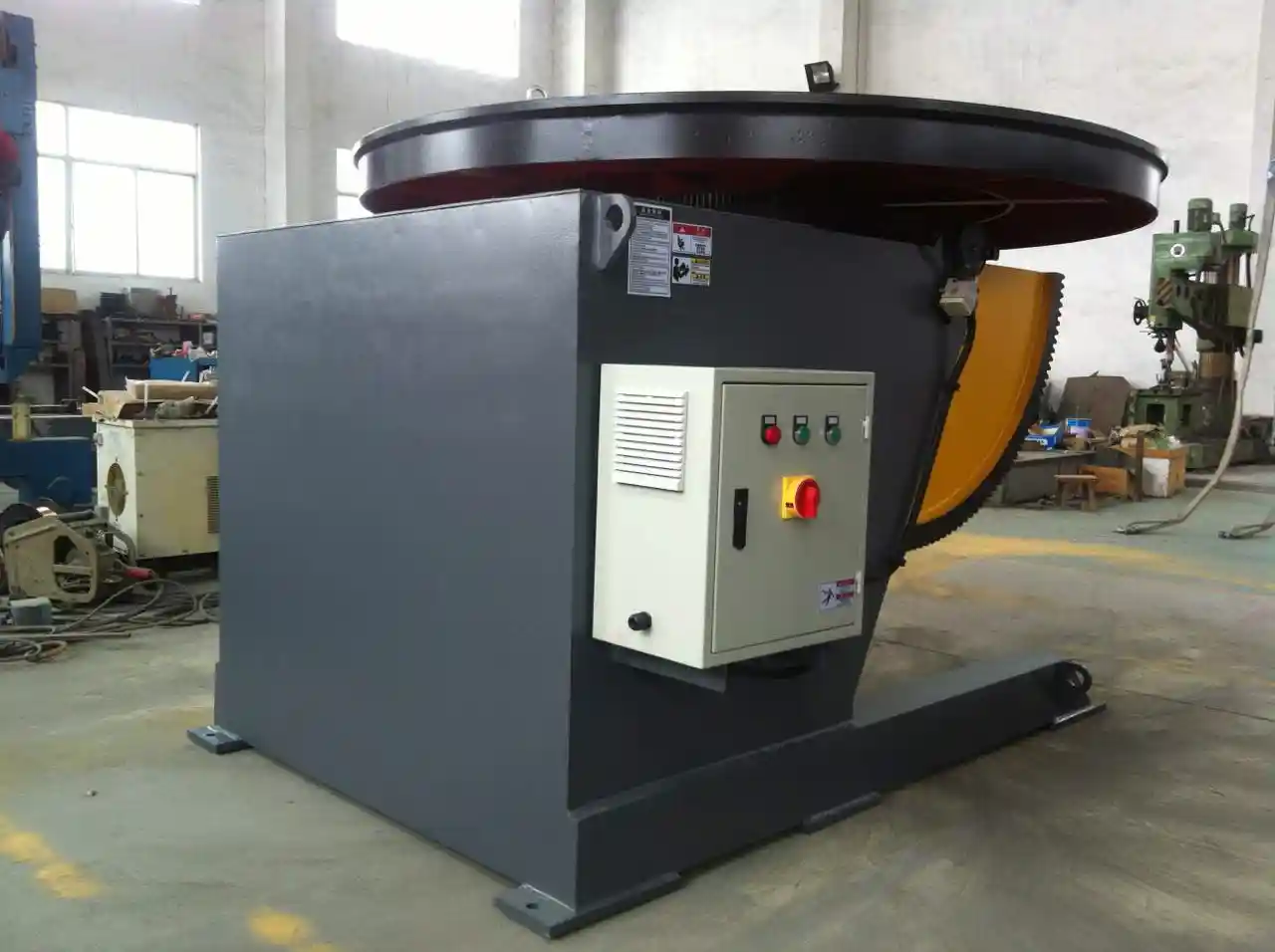
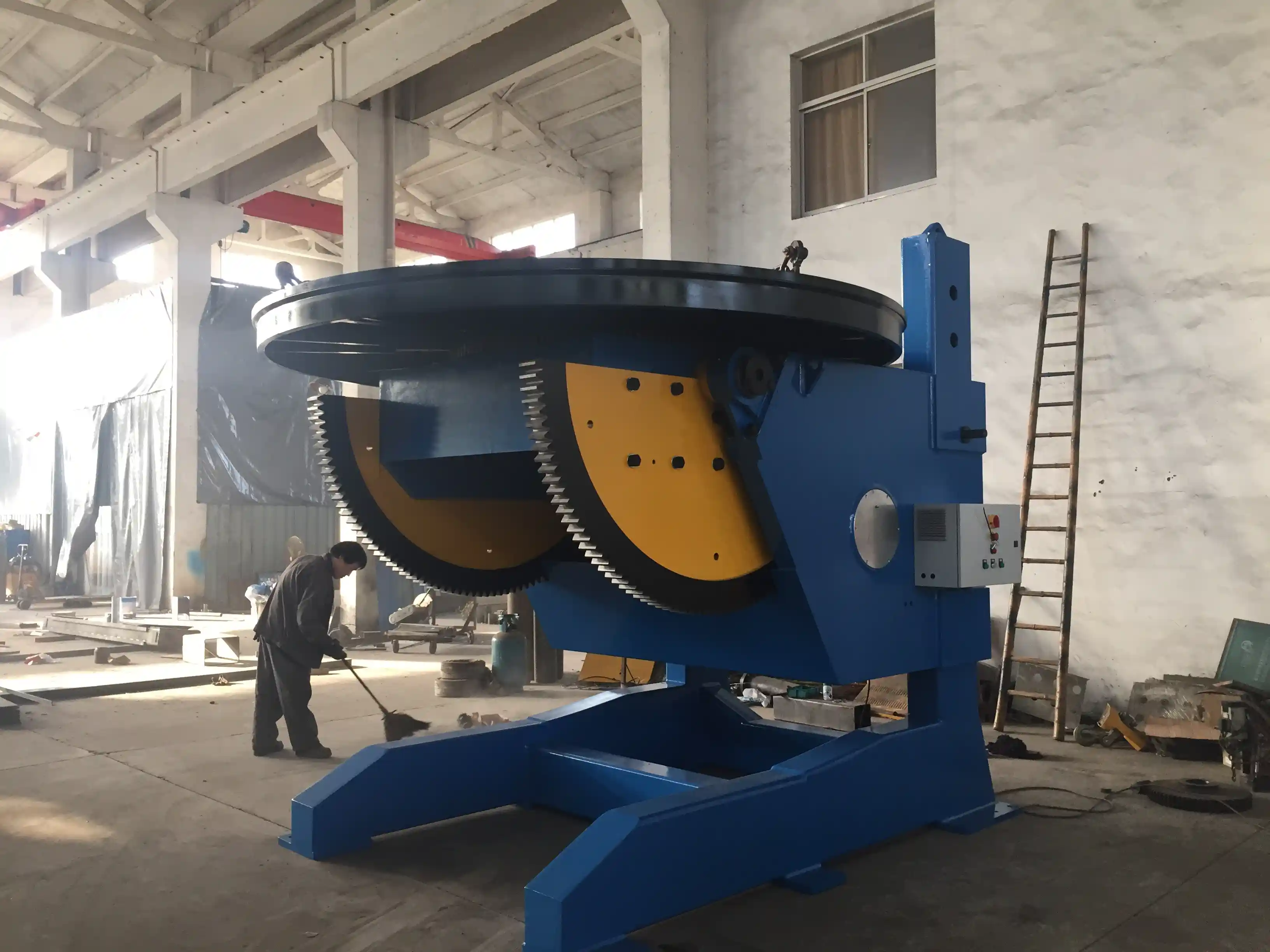
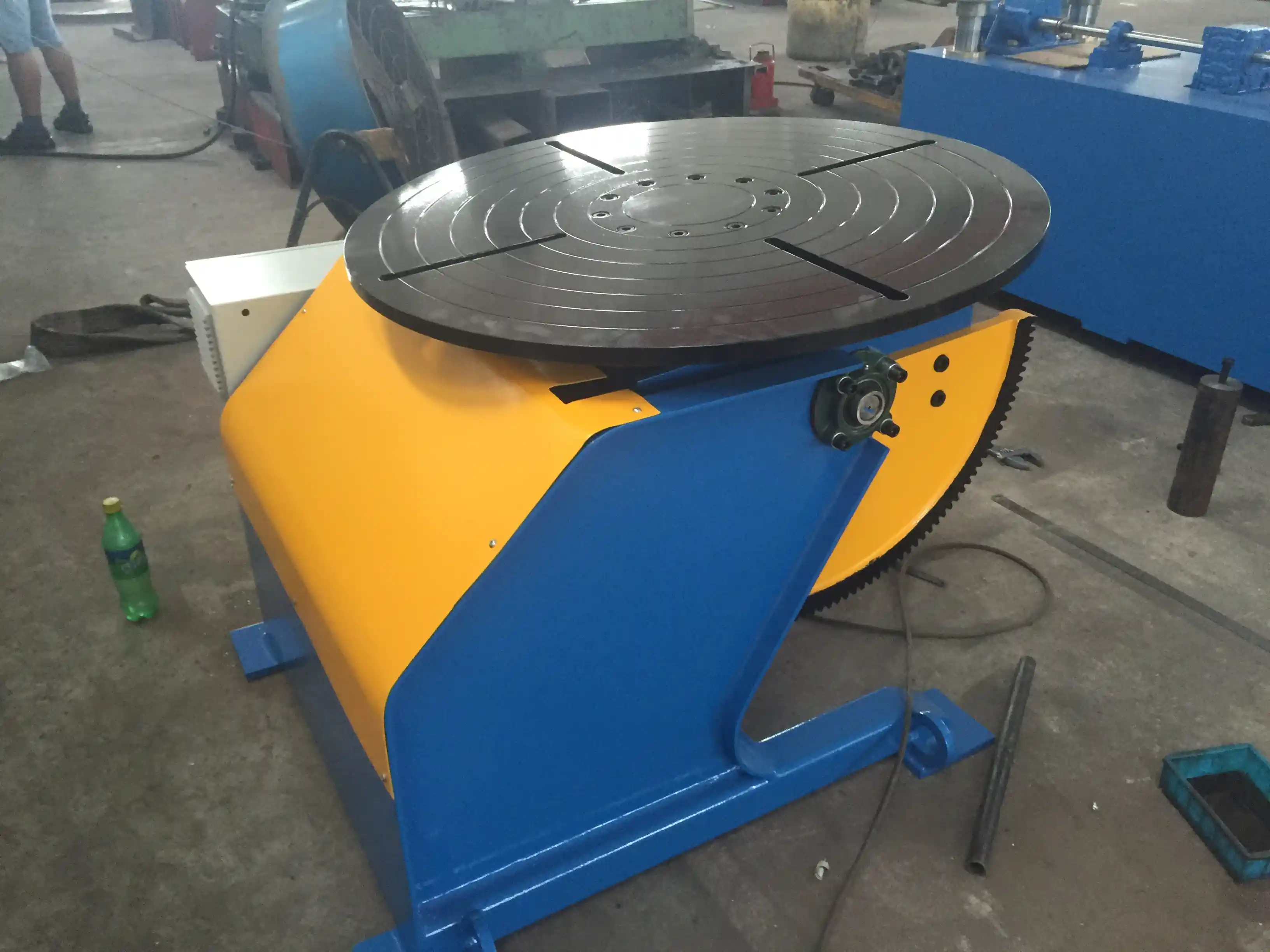
Get a Cutting System Recommendation
Tell us the materials you cut, the thickness range, and the weekly production volume. Contact WUXI ABK MACHINERY CO., LTD at jay@weldc.com or +86-510-83555592. We can recommend a dedicated laser or water jet cell, or a mixed configuration with flame and plasma support.
FAQ
Is laser cutting faster than water jet cutting on steel?
On thin and medium steel plate, laser cutting is usually faster. On very thick steel, the speed advantage narrows, and water jet cutting may become more practical when heat input must be avoided.
Can water jet cutting eliminate the heat-affected zone?
Water jet cutting is a cold process, so it does not produce a thermal heat-affected zone in the same way as laser cutting. It can still leave abrasive wear, wet edges, or slight taper, depending on the material and machine parameters.
Which process is better for aluminum?
Fiber laser cutting is often better for high-volume aluminum parts where speed is important. Water jet cutting may be better when the part must retain temper, avoid edge melting, or accept forming and welding without thermal damage.
Does laser cutting work on copper and brass?
Fiber laser cutting can process copper and brass, but thickness, reflectivity, and thermal conductivity reduce cutting speed. Water jet cutting is often more stable for thick or highly reflective copper parts.
Can water jet cutting process all materials?
Water jet cutting is extremely versatile, but not universally free of limitations. Very hard materials may cut slowly, abrasive cost rises with thickness, and porous materials can absorb water. The right choice still depends on part geometry and finishing requirements.
What is the best way to decide without testing?
Create a shortlist of materials, thicknesses, tolerance requirements, and monthly production volume. Compare typical cut quality, operating cost, and downstream work. When the material mix is broad, a mixed cutting cell may be more economical than forcing a single process.
References
[1] ISO 9013:2017, Thermal cutting — Classification of thermal cuts — Geometrical product specification and quality tolerances, International Organization for Standardization, Geneva, Switzerland, 2017.
[2] ANSI Z136.1-2022, American National Standard for Safe Use of Lasers, Laser Institute of America, Orlando, FL, 2022.
[3] WJTA, Recommended Practices for the Use of High-Pressure Waterjetting Equipment, WaterJet Technology Association, St. Louis, MO, 2021.
[4] ASM International, ASM Handbook, Properties and Selection: Nonferrous Alloys and Special-Purpose Materials, Vol. 2, ASM International, Materials Park, OH.
Si cela vous intéresse, consultez ces articles connexes :
Le pilier central de la fabrication lourde : Les performances exceptionnelles des supports à rouleaux dans les processus clés
Déport excessif lors du soudage de conduites : solution de positionnement de précision avec plateau tournant de soudage Wuxi ABK
Wind Tower Welding Challenges: How Advanced Hydraulic Lifting Systems Boost Production by 40%
Des soudures parfaites sur des tubes de grand diamètre grâce à un équipement de laminage professionnel
 English
  Español
  Français
  Deutsch
  Português
  Русский