Used vs new equipment for startups isn’t a simple price comparison. A used welding positioner sold at 40% below list price can still end up costing more than a new unit if its positioning accuracy has degraded beyond the project’s tolerance spec. I’ve spent two decades integrating welding automation systems for boiler shops, wind tower lines, and structural fabricators, and I’ve seen startups make both smart and expensive equipment decisions. The difference comes down to understanding the hidden technical risks that a purchase order won’t show you.
Understanding the Real Cost Components
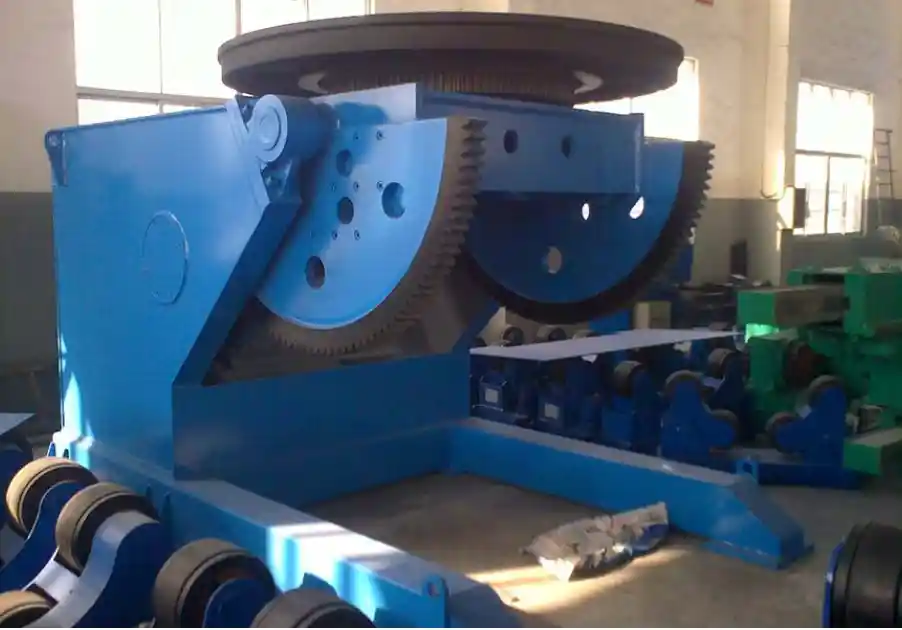
Startups typically focus on the sticker price. A used 5-ton welding positioner might appear at $8,000 while a new equivalent lists at $15,000. That spread looks like an easy win, but the total cost of ownership tells a different story. New equipment includes a 12 to 18 month warranty covering drive motors, reducers, and control systems. Used equipment, by contrast, often requires an immediate bearing replacement, gearbox inspection, and electrical rework before it can hold a program.
Downtime is the next multiplier. A positioner with worn slewing bearings drifts off-center mid-weld, creating a repair backlog that delays downstream assembly. We recently recalibrated a six-year-old rotator for a tank fabrication startup where the accumulated creep had introduced 1.2 mm of misalignment per revolution. The fix required new ZG45 alloy rollers and a control system upgrade, costing the startup $4,200 and two weeks of lost production. Add those numbers to the purchase price, and the used machine came within $800 of the new unit without the warranty or the most recent drive technology.
| Cost Category | New Equipment Example | Used Equipment Risk |
|---|---|---|
| Purchase Price | $15,000 (HBJ-50 positioner) | $8,000 (similar model, 5+ years) |
| Immediate Repairs | $0 (warranty covers first 12 months) | $2,500–$5,000 (bearings, motor, controls) |
| Warranty Period | 12–18 months | None or 30-day guarantee |
| Downtime Risk | Under 5% in year one | 15–25% until proven stable |
| After-Sales Support | Factory engineer remote diagnostics | Minimal; depends on reseller |
Hidden Technical Risks in Used Fabrication Equipment
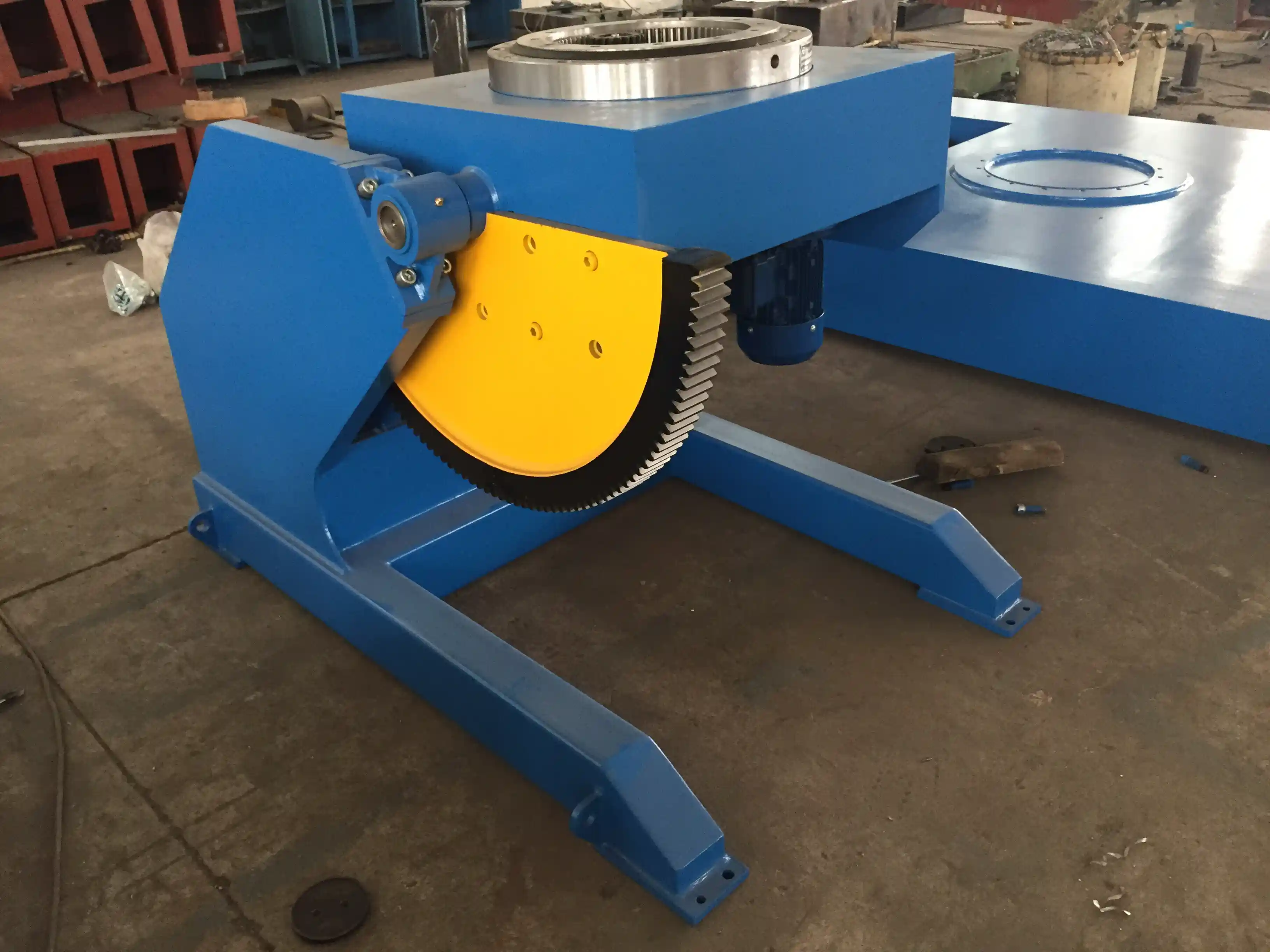
The wear that matters most to a startup isn’t visible on a datasheet. Welding positioners and rotators rely on a chain of precision components: slewing bearings rated at ±0.05° accuracy, cycloidal reducers, and frequency drives programmed for stepless speed control. After several years of multi-shift use, the backlash in the worm gear increases just enough that the table overshoots during tilt and rotation, making it impossible to maintain a consistent weld profile.
I’ve measured used positioners where the repeatability had slipped from 0.02 mm to 0.5 mm. For a pipe-to-flange application that’s unacceptable. The operator compensates by slowing down and adding extra passes, and that erases the cost advantage within a few projects. On CNC plasma tables, worn linear guides and torch height control from a machine that ran abrasive cutting in a dusty shop introduce kerf width variation that an entry-level controller can’t correct in real time. That scrap rate adds up faster than most shop managers expect.
If your program involves precision welding with tight tolerances or multi-axis coordination, it is worth confirming positioning accuracy and drive condition with a qualified technician before finalizing your equipment list. Reach out at jay@weldc.com if you need a technical reference for what to measure.
Inspecting Used Equipment: A Startup Buyer’s Checklist
A visual inspection isn’t enough. I carry a dial indicator and a laser alignment tool when evaluating used machinery. Start by clamping a reference part on the worktable and running a programmed tilt-rotate cycle. A machine in good condition should return to its start position within 0.1 mm. Check for uneven motor current draw during acceleration; that often signals a binding reducer or misaligned gear mesh. Look inside the electrical cabinet. If you see aftermarket contactors, spliced cables, or a controller with a decommissioned firmware version, the integration effort just became significantly larger than planned.
Request the machine history log if one exists. On newer PLC-driven equipment, fault codes and axis parameter changes are stored and can be exported. For a used positioner without that data, assume that the grease has oxidized in the main bearing and that the lift cylinder seals—if hydraulic—have begun to harden. These aren’t deal-breakers at the right discount, but they must be factored into the commissioning budget. A $1,200 seal replacement is manageable; a cracked ZG45 roller due to long-term overload is not, because the metallurgical failure typically extends into the shaft seat and requires machine shop intervention.
Why New Equipment Can Be the Smarter Long-Term Investment
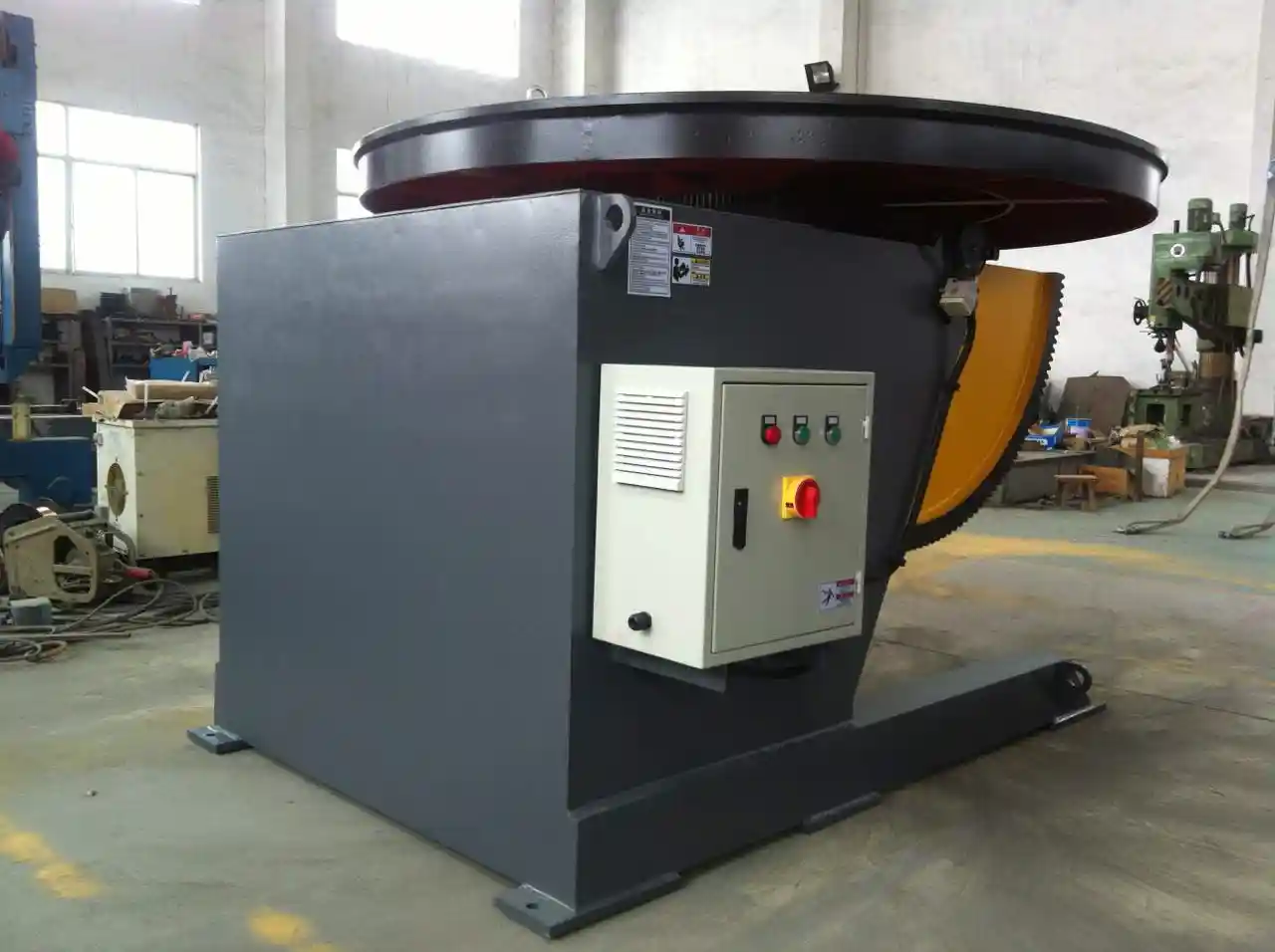
A new positioner from a supplier with an ISO 9001 certified manufacturing process arrives with full documentation: stepless speed curves from 0.05 to 0.5 RPM, verified repeatability of 0.02 mm, and an IP54-rated control cabinet that has never been opened in a dusty shop. WUXI ABK’s 5-ton HBJ-50, for example, ships with a Siemens PLC and 100 preset welding programs, which means the startup isn’t spending engineering time writing parameter tables from scratch. The CE certification simplifies acceptance with third-party inspectors, a consideration that often gets overlooked until a project is on hold waiting for compliance paperwork.
Warranty coverage backs those claims. If a drive fault develops, remote diagnostics via the supplier’s support team can often resolve it the same day. That kind of response time keeps a startup’s production schedule intact in a way that a one-off used purchase cannot. New equipment also integrates more cleanly with robotic cells. The positioner’s I/O panel and communication protocol match the robot controller without a middleware adapter, something that used machines built on older standards rarely support without expensive retrofitting.
Where to Source Equipment: Direct Manufacturer vs Used Marketplaces
Chinese industrial auctions and used machinery resellers list a wide range of equipment at attractive prices, but they come with limited recourse. The seller’s six-month guarantee means you are responsible for return freight if the machine fails, and troubleshooting stops as soon as the unit is uncrated. A manufacturer like WUXI ABK supplies equipment directly with factory testing videos, full calibration records, and an engineer who can walk your team through the installation over a video call. That kind of handover accelerates startup by days, not hours.
There is a place for used equipment sourced from a known shop upgrade, where you can speak to the previous operator and confirm the maintenance history. A carefully chosen used rotator from a lightly loaded inspection station, for example, can serve a sanding or fit-up operation without threatening weld quality. The key is matching the machine’s capabilities to a task that is not sensitive to position drift. For the main production line, where every hour of downtime cascades into delayed shipments, new equipment backed by a manufacturer’s reputation should be the default.
Making the Decision: When Used Equipment Makes Sense
Used equipment is a viable choice when the process is low-precision, the production volume is small, and the startup has in-house maintenance expertise. I’ve seen a startup build a profitable tube-to-tube welding cell around a reconditioned 1-ton positioner because their tolerance window was ±1.0 mm and the operator could compensate for small deviations. The savings funded a better welding power source, and the ROI broke even in four months.
When the product spec narrows—wind tower flanges, pressure vessel girth seams, or any application where a NDT inspector will scan every joint—new precision positioning equipment is not a luxury. It is the only path to consistent quality. The decision isn’t really between used and new; it’s between buying a machine that fits the project’s risk profile and buying one that will need constant babysitting. Choose the tool that matches the standard you have to meet.
Common Questions About Equipment Decisions for Fabrication Startups
What is the biggest hidden cost of buying used welding equipment?
Prescheduled downtime. A used positioner that runs reliably for three weeks and then loses positioning accuracy for a day while you source a replacement reducer costs far more in lost production than the savings on the purchase price. I’ve seen startups where one such event delayed a contract delivery, triggering penalty clauses that exceeded the cost of a new machine. When evaluating a used purchase, factor in at least two days of unplanned downtime per quarter as a baseline, and compare that against the predictable performance of new equipment with full support.
Can used equipment ever meet the same quality standards as new equipment?
It can, but only if the machine’s maintenance history is documented and its key parameters—backlash, runout, repeatability—are measured and within spec before purchase. We recently supported a startup that bought a used 3-axis positioner from a wind tower manufacturer who was upgrading their line. Because the seller shared calibration logs and allowed a pre-purchase inspection under load, the startup acquired a machine that held ±0.05 mm accuracy for another two years. Without that documentation, the same model could have been a risk. The difference is the paper trail, not the brand.
How do I decide between new equipment from a Chinese manufacturer and used European equipment?
This is a common dilemma. A used European positioner from 2010 might have accumulated 15,000 operating hours. A new Chinese positioner from a quality-focused supplier ships with current drive technology, CE certification, and a warranty. We build our positioners with THK linear guides and SEW reducers, the same component brands used in European machines, because the performance comes from the drive chain, not the country of origin. Evaluate the specific unit, not the label. A used machine is only as good as its last overhaul; a new machine from a traceable factory is a known quantity.
What is the minimum I should budget for a new welding positioner for a startup fabrication shop?
A reliable 1-ton positioner suitable for pipe and small structural work starts around $5,000 to $7,000 from a direct manufacturer, with frequency drive control and ±0.5° accuracy. A 3-ton unit with PLC control and 0.02 mm repeatability costs roughly $12,000 to $16,000. These prices include commissioning support and a warranty period that covers parts and labor. That is a critical differentiator for a startup: the warranty buys you a year of predictable costs, which is exactly what a new operation needs to stabilize cash flow.
Does WUXI ABK offer any trial or test arrangement before purchasing?
We provide detailed testing videos, calibration data, and real-time factory acceptance documentation for every positioner or rotator we ship. For larger project packages, we can arrange a factory visit or pre-shipment inspection by a third-party agency. If your startup has a specific weld procedure or component dimensions, we can simulate the load and motion profile in our test bay and share the results. Send your part number, weight, and required tolerance to jay@weldc.com, and we’ll confirm which model matches your application.
Si cela vous intéresse, consultez ces articles connexes :
Comment améliorer la qualité du soudage de tubes grâce à un positionneur de soudage de haute précision
Wuxi ABK Professional Welding Rotary Equipment: Precision Welding Solution for Pressure Vessel Manufacturing
Des soudures parfaites sur des tubes de grand diamètre grâce à un équipement de laminage professionnel
 English
  Español
  Français
  Deutsch
  Português
  Русский