
H-beam fabrication has always been a balancing act. You push for faster output, but quality slips. You invest in skilled welders, but they’re harder to find each year. The math keeps getting tighter. Automated H-beam welding lines change that equation entirely. They don’t just speed things up—they stabilize the whole operation. Consistent welds, predictable throughput, fewer hands needed on the floor. For manufacturers watching margins shrink while demands grow, these systems offer a path forward that actually holds up under pressure.
What Makes Automated H-Beam Welding Lines Different
Automated H-beam welding lines reshape fabrication by removing the variability that slows everything down. These systems combine robotics with process control that keeps every weld within spec, regardless of shift changes or operator fatigue. Manual welding depends on individual skill. Automation depends on programming and calibration—factors you can control and replicate.
A typical automated line handles material from the moment it enters until the finished H-beam rolls off the other end. Conveyors, positioning systems, and robotic arms work in sequence. There’s no waiting for someone to move a piece or set up the next fixture. This continuous flow cuts idle time and keeps machines running at capacity.
Real-time monitoring adds another layer. Sensors track arc parameters, travel speed, and positioning. When something drifts, the system adjusts or flags it before a defect forms. This kind of feedback loop is difficult to achieve with manual processes, where problems often surface only during inspection.
The productivity gains show up in the numbers. Cycle times drop. Throughput climbs. Rework falls. For heavy steel structure production, where every hour of downtime costs money, these improvements compound quickly. Our Manipulateur de soudage systems deliver positioning accuracy of ±0.1 mm/m, which translates directly into fewer rejected pieces and faster completion times.
Speed and Precision Working Together
Robotic welding achieves something manual processes struggle with: repeatable accuracy at high speed. The torch follows the same path, at the same angle, with the same parameters, every single time. This consistency eliminates the small variations that add up to quality problems.
Specialized fixtures hold workpieces steady during welding. This stability allows faster travel speeds without sacrificing penetration or bead quality. The result is shorter cycle times and stronger welds—a combination that’s hard to achieve when human hands are guiding the torch.
Defect rates drop significantly. Fewer repairs mean less time spent fixing problems and more time producing finished goods.
Keeping Everything Moving in Sync
An H-beam welding line works best when every component operates as part of a single system. Material handling, welding stations, and unloading all need to match pace. When one stage falls behind, the whole line slows down.
Automated systems coordinate these movements through centralized control. Conveyors deliver components to welding stations at the right moment. Robotic arms position pieces without waiting for manual setup. Finished beams move to the next stage automatically.
This synchronization eliminates the gaps that accumulate in manual operations. No one is waiting for a crane. No one is looking for the right fixture. The line runs at a steady pace, and that predictability makes scheduling and delivery commitments much easier to keep.
Reducing Labor Costs Without Losing Capability
Labor represents one of the largest ongoing expenses in H-beam fabrication. Automated welding lines cut that cost substantially by handling tasks that would otherwise require multiple skilled workers.
The savings go beyond wages. Training costs drop because operators need to learn system management rather than manual welding technique. Benefits, overtime, and turnover expenses all decrease when fewer people are needed on the production floor.
This doesn’t mean eliminating skilled workers entirely. It means redirecting their expertise. Experienced welders become programmers, quality inspectors, or maintenance specialists. Their knowledge of the process makes them valuable in roles that leverage automation rather than compete with it.
The skilled welder shortage isn’t going away. Fewer young workers are entering the trade, and experienced welders are retiring. Automation provides a buffer against this labor market reality. Production capacity stays stable even when hiring becomes difficult.
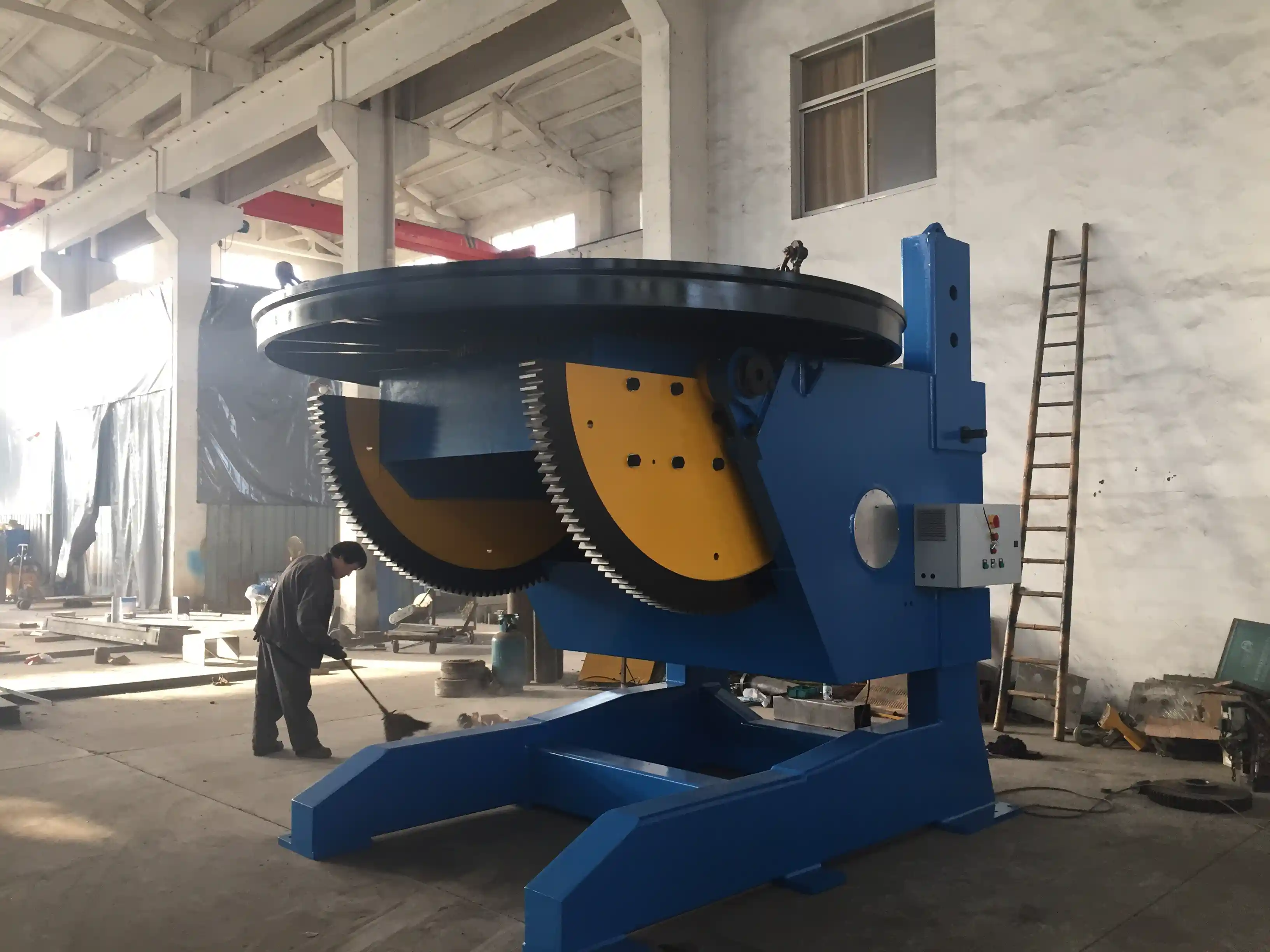
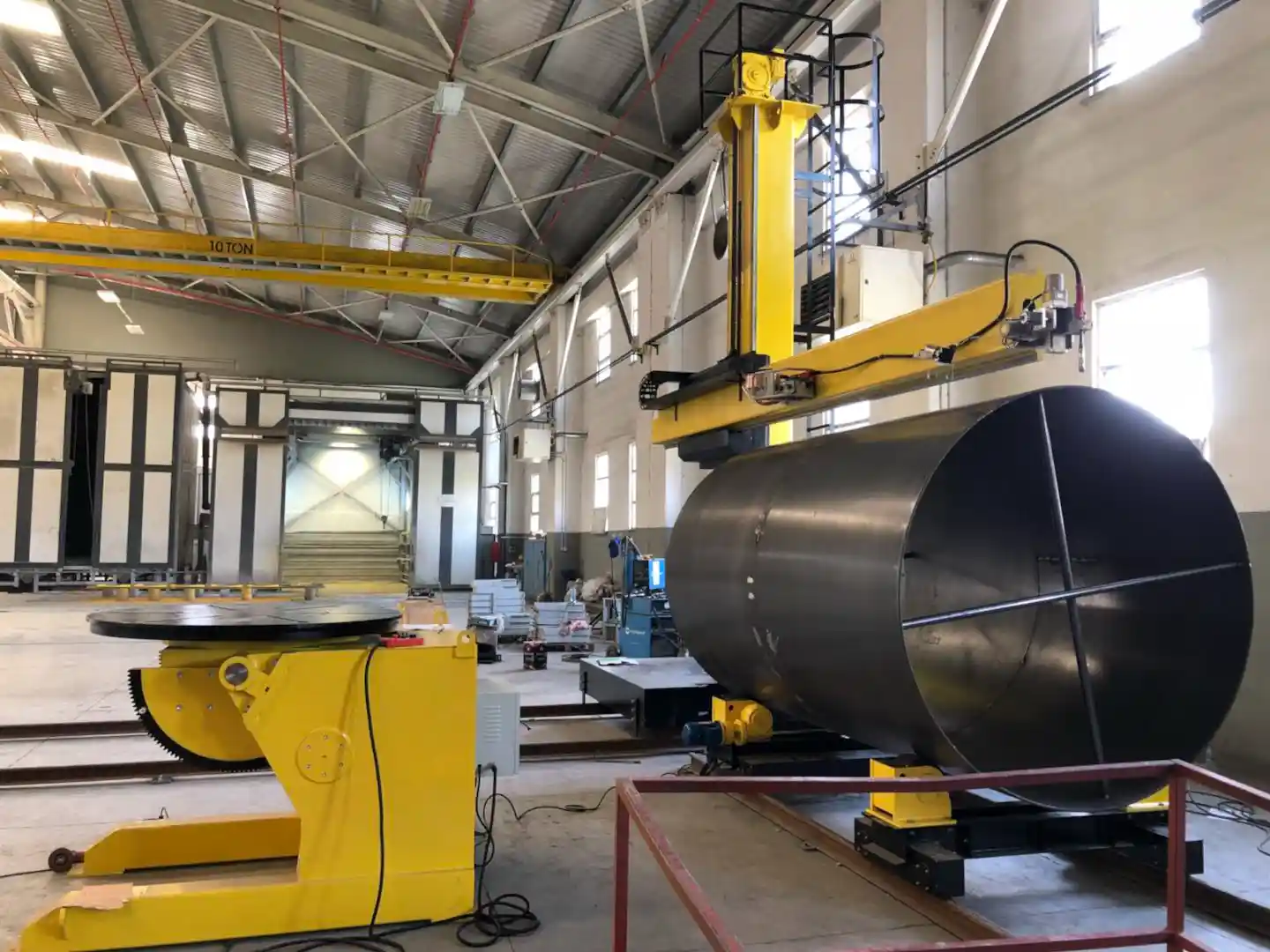
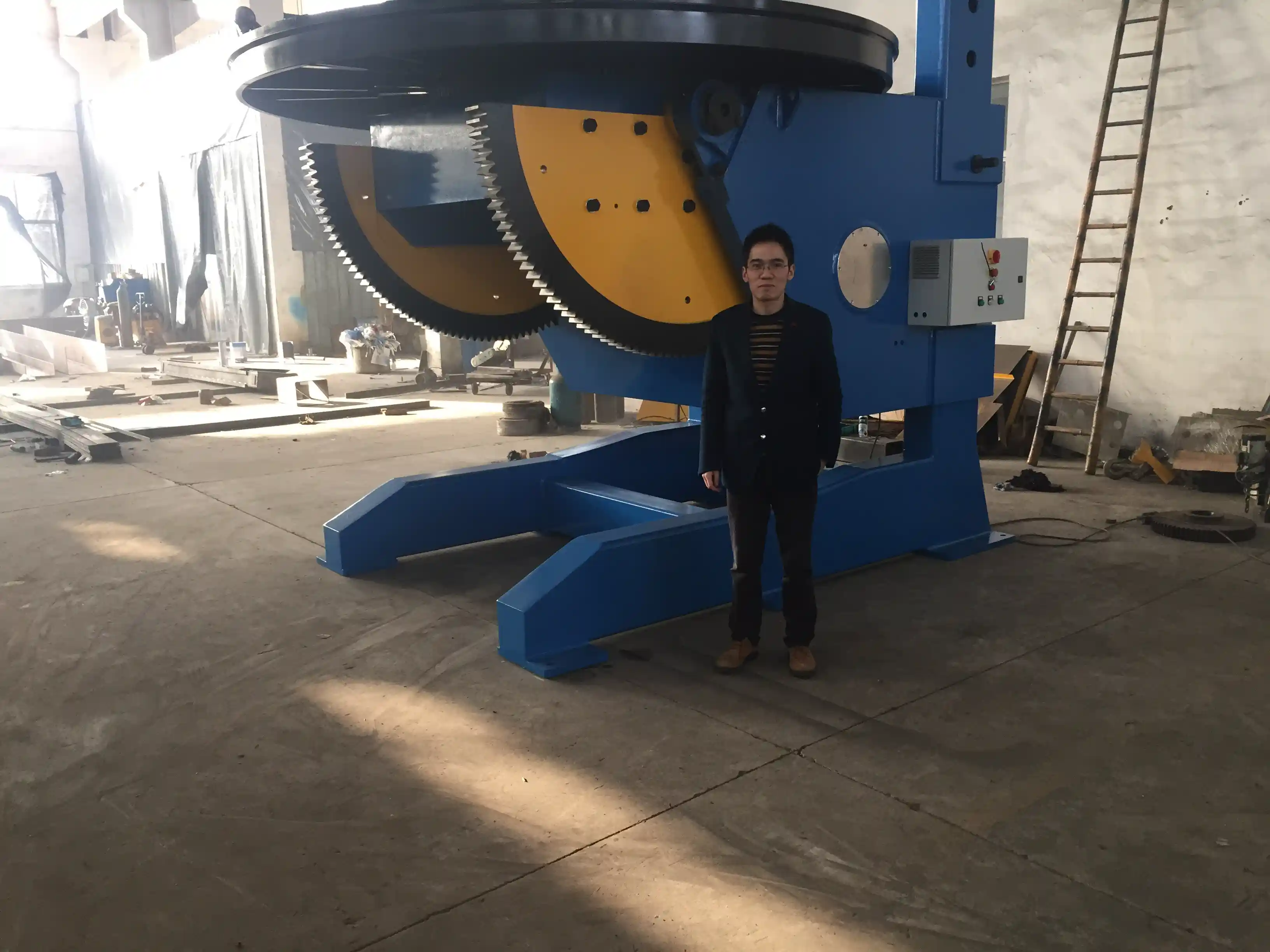
Notre Positionneur de soudage à 3 axes et Positionneur à trois axes integrate into automated lines to handle positioning tasks that would otherwise require constant manual adjustment. This reduces the hands-on time needed for each piece and allows operators to manage multiple stations simultaneously.
| Fonctionnalité | Manual H-Beam Welding | Automated H-Beam Welding Line |
|---|---|---|
| Labor Requirement | High (multiple skilled welders) | Low (operators, programmers) |
| Weld Speed | Variable, dependent on welder skill | Consistent, high-speed |
| Taux de reprise | Higher due to human error | Nettement plus bas |
| Operational Cost | High (wages, benefits, training) | Reduced (energy, maintenance) |
| Incidents liés à la sécurité | Higher risk of injury | Dramatically reduced |
| Production Throughput | Lower, inconsistent | Higher, consistent |
Addressing the Welder Shortage Directly
Finding qualified welders has become a genuine constraint for many fabricators. The problem isn’t temporary—demographic trends suggest it will persist for years.
Automation changes the equation. Instead of needing a dozen skilled welders to run a shift, you need a few operators who understand the system and can respond to alerts. The welding itself happens automatically, following programs that encode the expertise of your best people.
This approach also creates a path for workforce development. Workers who might not have the manual dexterity for high-quality welding can still contribute through system operation and maintenance. The barrier to entry shifts from physical skill to technical understanding.
Better Welds and Safer Conditions
Automated H-beam welding lines produce more consistent welds than manual processes. The robot doesn’t get tired at the end of a shift. It doesn’t have a bad day. Every weld follows the same parameters, and those parameters are documented and verifiable.
This consistency matters for quality assurance. When inspectors review automated welds, they’re checking that the system performed as programmed. When they review manual welds, they’re assessing individual technique. The former is more predictable and easier to certify.
Safety improves significantly as well. Welding exposes workers to fumes, UV radiation, heat, and the risk of burns. Automation moves people away from these hazards. Operators monitor the process from control stations rather than standing next to the arc.
The reduction in workplace incidents has real financial implications. Fewer injuries mean lower insurance costs, less lost time, and better retention. Workers prefer environments where they’re not constantly exposed to risk.
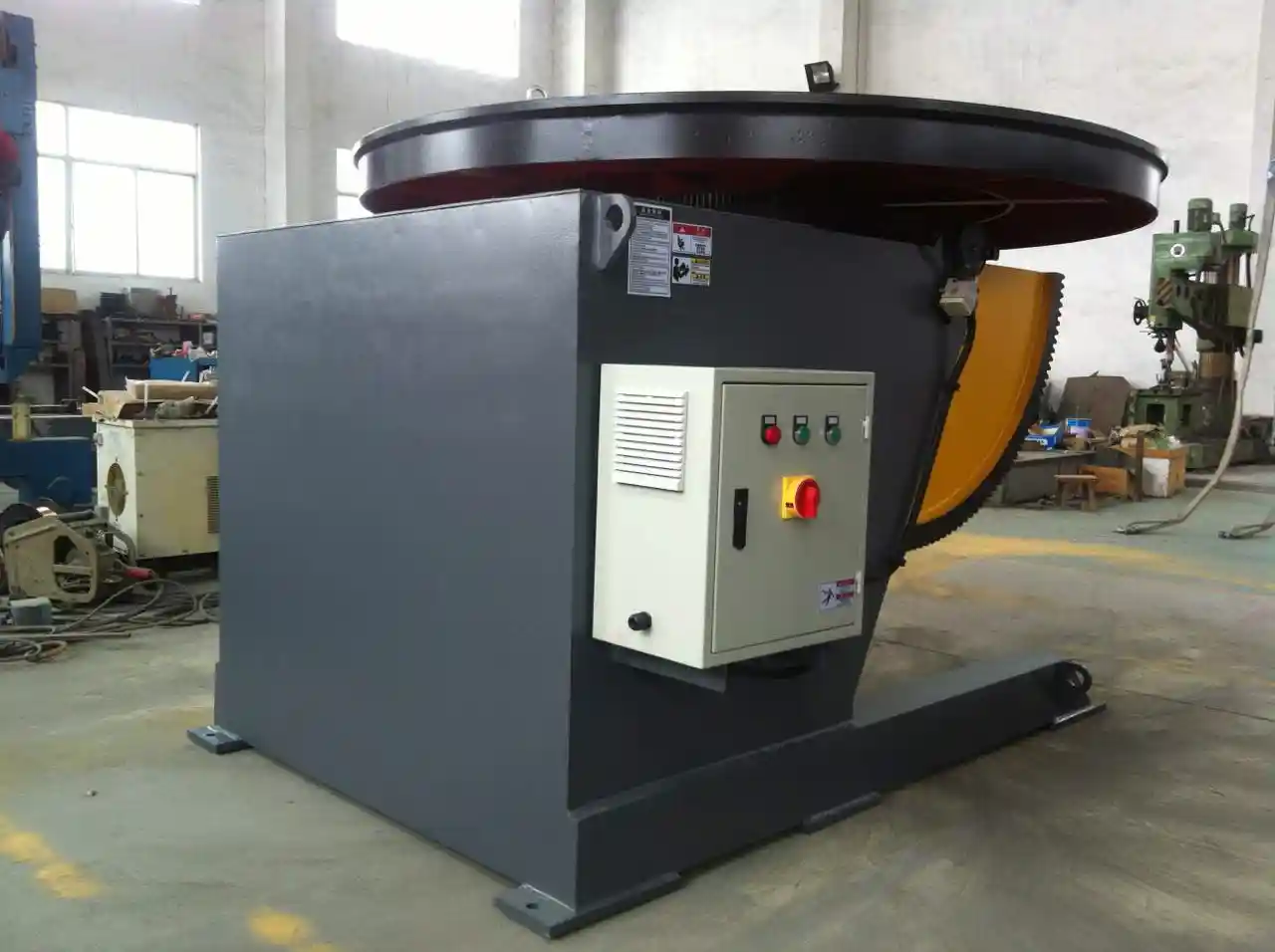
Notre Équipement de rotation pour le soudage includes safety interlocks and precise controls that prevent operation outside safe parameters. These features protect both the equipment and the people working around it.
Understanding the Financial Return
The decision to invest in an H-beam welding line comes down to numbers. What does it cost, and what does it save?
Capital expenditure covers the equipment, installation, and initial programming. This is the upfront investment that appears on the balance sheet. Operating expenditure includes energy, maintenance, and the reduced labor costs that follow automation.
The payback calculation compares these costs against the savings generated. Labor reduction is usually the largest factor, but increased throughput matters too. If the same facility can produce more H-beams per month, fixed costs spread across more units. Per-piece costs drop.
Rework reduction adds another layer of savings. Every defective weld that doesn’t happen is time and material that doesn’t get wasted. Over a year of production, these avoided costs accumulate.
Most manufacturers see payback periods between 18 and 36 months, depending on their starting point. Facilities with high labor costs or significant rework rates tend to recover their investment faster. High-volume operations benefit from the throughput gains.
Factors That Affect Payback Speed
Several variables influence how quickly an H-beam welding line pays for itself.
Current production volume matters. Higher volume means more opportunities to capture savings on each piece. A facility running two shifts will see faster returns than one running a single shift at partial capacity.
Existing labor costs play a significant role. Regions with higher wages or difficulty finding skilled workers will see larger savings from automation.
Equipment utilization is often overlooked. A well-maintained line running at high capacity generates more value than one that sits idle due to breakdowns or scheduling gaps. Preventive maintenance and efficient production planning both contribute to faster payback.
Tailoring the System to Your Operation
No two fabrication facilities are identical. H-beam dimensions vary. Production volumes differ. Available floor space constrains layout options. An effective automated welding line accounts for all of these factors.
Customization starts with understanding what you’re building and how much of it. A facility producing large structural beams for bridges has different requirements than one making smaller beams for commercial buildings. The welding parameters, handling equipment, and line layout all need to match the application.
Modular design allows systems to grow with demand. Starting with a configuration that handles current volume, then adding capacity as orders increase, avoids overinvestment while preserving flexibility.
Integration with existing equipment matters too. Most facilities have some automation already—cutting systems, material handling, inspection stations. A new welding line should connect with these systems rather than creating isolated islands of automation.
Training ensures the investment delivers its full potential. Operators need to understand the system well enough to keep it running efficiently and recognize when something needs attention. Maintenance staff need the skills to perform routine service and diagnose problems before they cause extended downtime.
Adapting to Specific Production Requirements
Flexibility is built into modern H-beam welding lines. Different beam sizes can run on the same equipment with appropriate setup changes. Material variations—different steel grades, different thicknesses—can be accommodated through programming adjustments.
This adaptability matters for fabricators serving diverse markets. A single line can handle multiple product types, reducing the need for dedicated equipment for each application.
Engineering consultation identifies the right configuration for each situation. The goal is a system that handles current production efficiently while accommodating reasonable growth and product mix changes.
Working with WUXI ABK MACHINERY CO., LTD.
WUXI ABK MACHINERY CO., LTD. has been building welding and cutting solutions since 1999. Our focus is on systems that deliver measurable improvements in productivity and cost structure.
H-beam welding lines represent a significant investment. The decision deserves careful analysis and honest conversation about what automation can and cannot accomplish in your specific situation. We provide that consultation as part of our process.
Our engineering team works with clients to understand their production requirements, facility constraints, and business objectives. The result is a system configured for their operation, not a generic solution that requires compromise.
Contact us to discuss your H-beam fabrication challenges. Email jay@weldc.com or call +86-510-83555592.
Frequently Asked Questions About H-Beam Welding Automation
What are the primary benefits of automating H-beam welding?
The most immediate benefits are labor cost reduction and production consistency. Automated lines require fewer workers while producing more uniform welds at higher speeds. Quality improves because the process follows programmed parameters rather than depending on individual technique. Safety improves because workers spend less time exposed to welding hazards. These factors combine to lower per-piece costs and improve competitive positioning.
What are the maintenance requirements for automated welding equipment?
Automated H-beam welding lines need regular preventive maintenance to perform reliably. This includes calibration checks on positioning systems, inspection of wear components like torch tips and drive mechanisms, and software updates as needed. Most facilities establish weekly, monthly, and annual maintenance schedules. Proper maintenance extends equipment life and prevents unplanned downtime. We provide service plans and training to help clients maintain their systems effectively.
How does an H-beam welding line contribute to overall manufacturing efficiency?
An integrated H-beam welding line streamlines the entire fabrication process. Material moves through the system without manual handling delays. Consistent weld quality reduces inspection time and eliminates rework. Energy consumption becomes more predictable because the system operates at steady parameters rather than varying with operator technique. These improvements reduce per-unit costs and shorten project timelines, making the entire operation more competitive.
Si cela vous intéresse, consultez ces articles connexes :
Les problèmes de soudage des tours d'éoliennes se répètent : Comment les rotateurs de ligne de culture intelligents augmentent la productivité par 50%
Wuxi ABK Professional Welding Rotary Equipment: Precision Welding Solution for Pressure Vessel Manufacturing
 English
  Español
  Français
  Deutsch
  Português
  Русский