Boiler Tube-to-Header Welding Defects: Quality Control and Prevention
The first time I saw a tube-to-header weld fail under pressure, the sound stayed with me longer than the paperwork that followed. These joints sit at the heart of every high-pressure steam system, quietly holding together components that operate under conditions most materials would rather avoid. When they hold, nobody thinks about them. When they don’t, everyone does. Getting the quality control right on these welds isn’t just about meeting code requirements—it’s about understanding why certain defects form and how to stop them before they start.
Why Tube-to-Header Welds Determine Boiler System Performance
The tube-to-header weld functions as the primary connection point in modern boiler components. These welds bond heat exchange tubes to headers, which serve as integral elements within heat exchangers et récipients sous pression. The connection faces extreme thermal cycling, sustained high pressures, and corrosive operating environments simultaneously.
A sound weld maintains the structural integrity of the complete boiler assembly. When these joints fail, the consequences extend beyond steam leaks—ruptures create genuine safety hazards for personnel and equipment alike. Meeting safety standards goes beyond regulatory compliance. It represents the baseline for preventing incidents that no amount of insurance can truly cover.
Les material science governing these welds and the joint design decisions made early in fabrication determine whether defects appear months or years into service. Operational efficiency depends directly on weld quality, since even minor flaws can propagate under cyclic loading. WUXI ABK MACHINERY CO., LTD has focused on equipment that improves these critical connections since 1999, recognizing that the weld itself is only as good as the process that creates it.
Recognizing Welding Defects in Tube-to-Header Joints
Effective quality control starts with accurate defect classification. Tube-to-header welds develop specific flaw types that compromise performance in predictable ways.
Porosity appears as gas pockets trapped within the weld metal during solidification. Cracks form at the surface, subsurface, or internally, each presenting different detection challenges. Lack of fusion occurs when weld metal fails to bond properly with base material or previous passes—a defect that hides well but fails quickly under load.
Incomplete penetration means the weld metal doesn’t extend through the full joint thickness, reducing the effective cross-section carrying the load. Undercut creates grooves melted into base metal adjacent to the weld toe, acting as stress concentrators. Slag inclusions trap non-metallic solids within the weld, creating weak points. Distortion results from uneven heating and cooling during the welding process itself.
These weld discontinuities sometimes appear during visual inspection, though most require more sophisticated detection methods to identify reliably.
Which Welding Defects Pose the Greatest Risk to Boiler Tube-to-Header Joints
The defects that threaten structural integrity most directly are those requiring immediate failure analysis. Cracks top this list, particularly fatigue cracks et stress corrosion cracking that propagate under operational loads combined with corrosive conditions.
Lack of fusion and incomplete penetration rank similarly high because they reduce the actual load-bearing area of the weld. The joint appears complete from the outside while carrying only a fraction of its designed capacity. These defects lead to sudden failures rather than gradual degradation, making them especially dangerous.
Their presence typically requires immediate repair or component replacement—there’s no safe middle ground with defects that can cause catastrophic failure.
What Causes Tube-to-Header Welding Flaws During Production
Understanding root defects enables effective prevention rather than reactive repair. Multiple factors contribute to welding flaws, often in combination.
Inadequate welding procedures or incorrect welding parameters—current, voltage, travel speed—frequently produce poor weld quality. The relationship between these variables and the resulting weld isn’t always intuitive, which is why procedure development matters so much.
Improper welder qualification or insufficient training introduces human error into a process that tolerates very little. Material compatibility issues arise when filler metals or base materials don’t match the application requirements. The metallurgy of dissimilar metal joints adds another layer of complexity.
Insufficient preheating or improper post-weld heat treatment (PWHT) creates residual stress that increases cracking susceptibility over time. Joint preparation errors—incorrect bevel angles, poor fit-up—compound other problems. Equipment malfunction or outdated welding equipment introduces inconsistencies that even skilled welders cannot fully compensate for.
Preventing Tube-to-Header Welding Defects Through Process Control
Preventing welding defects requires a systematic approach built around l'assurance qualité. Rigorous optimisation des processus and continuous welder certification programs form the foundation.
Adherence to ASME codes et EN standards isn’t optional for maintaining welding integrity. These standards exist because they codify lessons learned from failures—ignoring them means repeating mistakes others have already made.
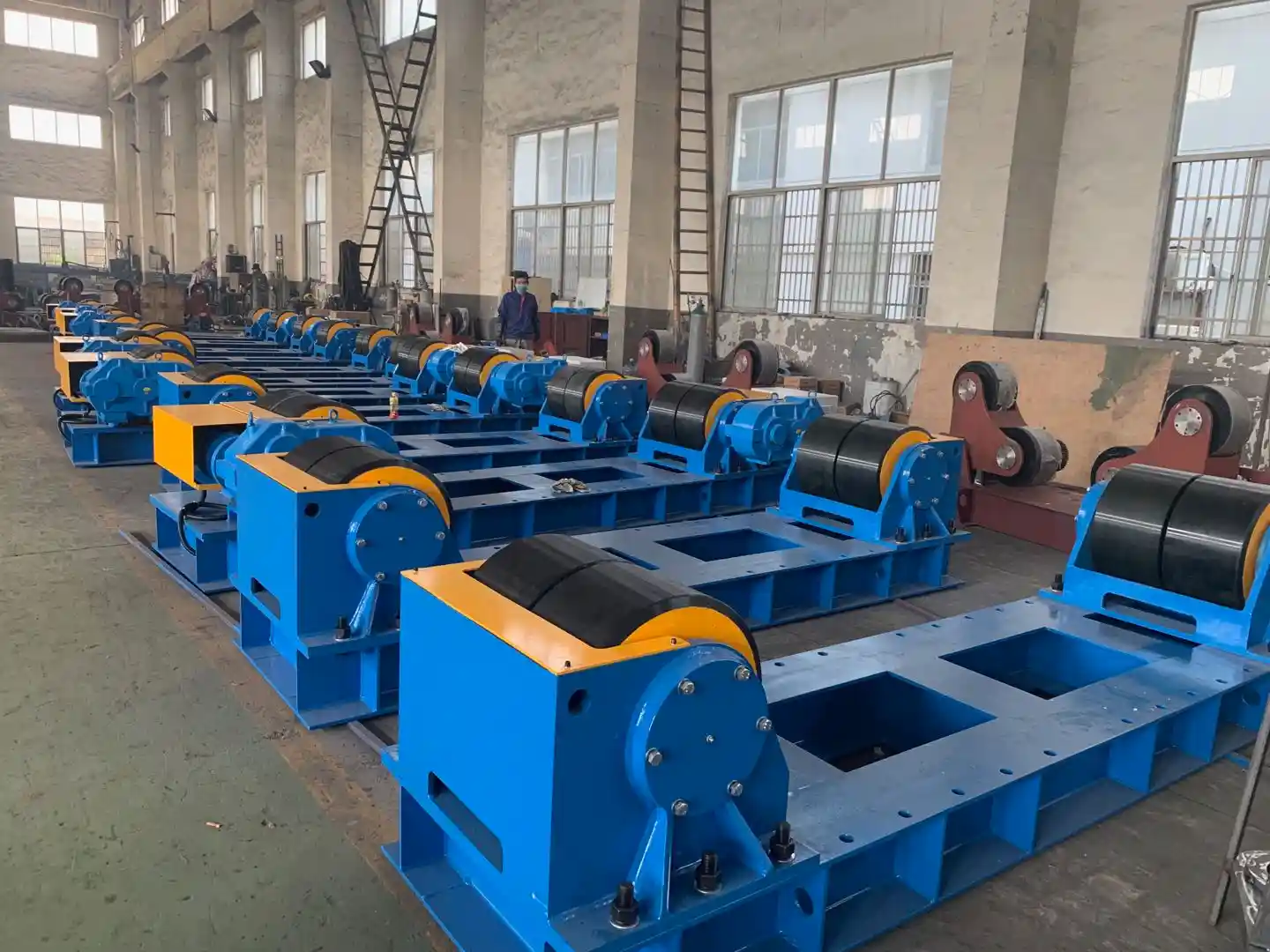
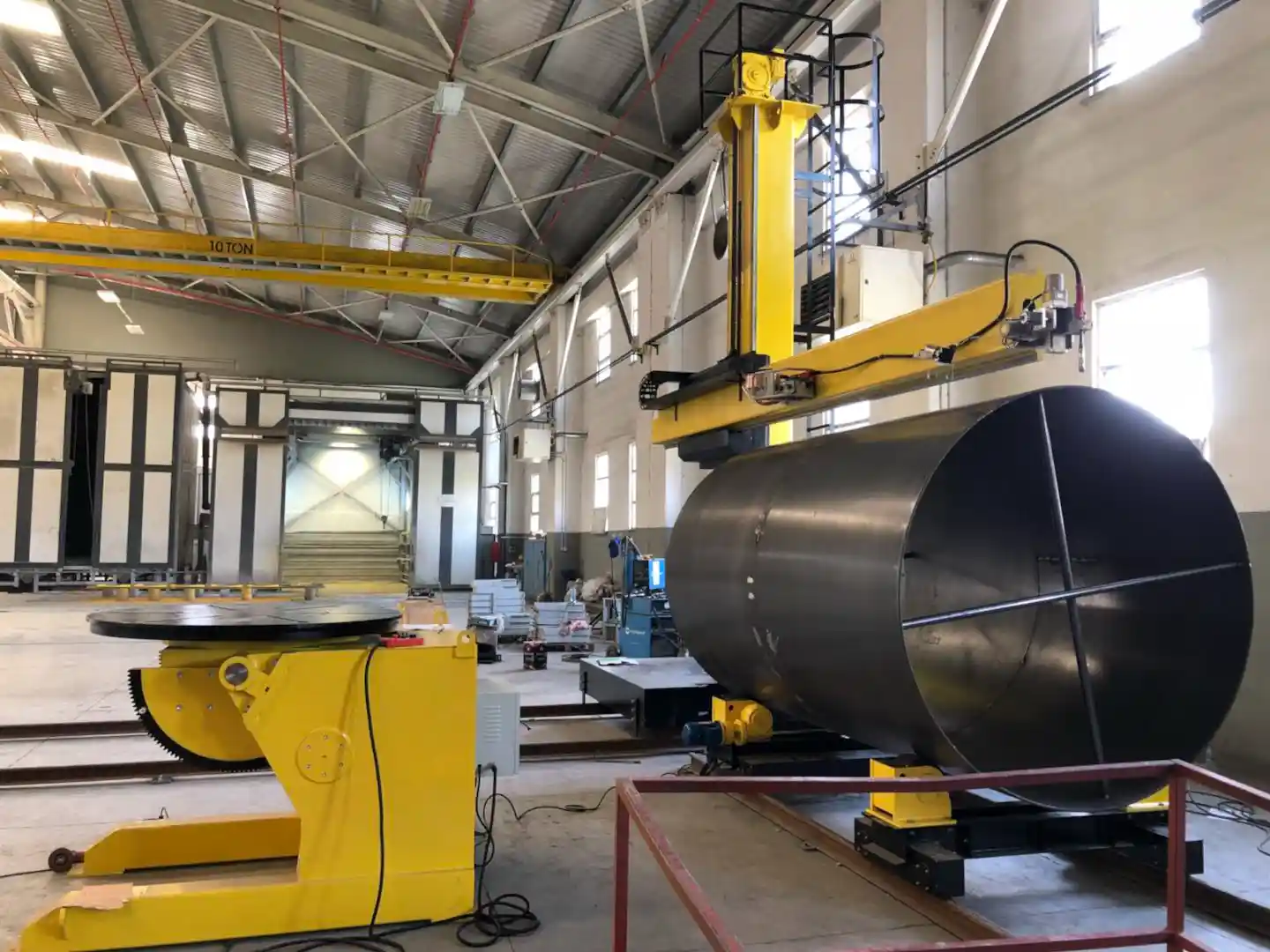
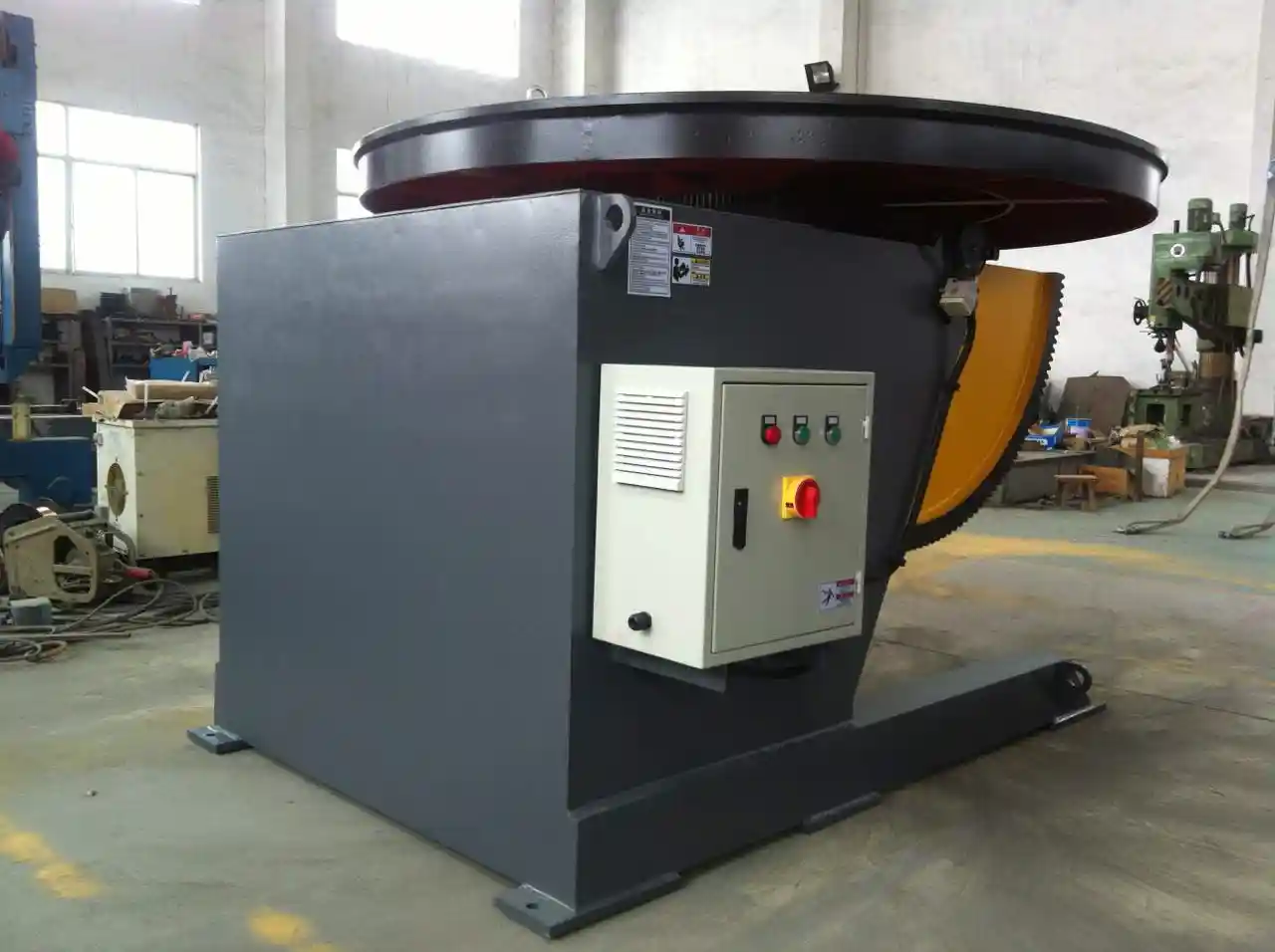
Advanced technology significantly reduces defect rates when properly implemented. Automated welding systems using a Manipulateur de soudage ou Positionneur à 3 axes provide superior control over welding parameters. These systems maintain consistent bead placement and heat input throughout the weld, eliminating the variability that comes with operator fatigue.
Robotic welding solutions enhance precision further, particularly for complex geometries where manual access is limited. Detailed WPS (Welding Procedure Specification) et PQR (Procedure Qualification Record) documents guide every joint, ensuring that what worked in qualification testing gets replicated in production.
| Fonctionnalité | Soudage manuel | Automated Welding (WUXI ABK) |
|---|---|---|
| Cohérence | High variability | High, repeatable precision |
| Defect Rate | Higher, prone to human error | Significantly lower, controlled parameters |
| Vitesse | Slower, dependent on welder skill | Faster, continuous operation |
| Précision | Dependent on welder skill and fatigue | High, often ±0.05 mm positioning accuracy |
| Coût | Lower initial, higher long-term rework | Higher initial, lower long-term operational costs |
| Sécurité | Higher exposure to hazards | Reduced operator exposure to arc and fumes |
How Welding Procedure Qualification Affects Long-Term Boiler Reliability
Proper welding procedure qualification serves as a cornerstone of reliability engineering for boiler systems. The process involves developing and testing WPS documents that detail all essential welding variables—not just the obvious ones, but the parameters that seem minor until they cause problems.
Les PQR formally records test results, demonstrating that a specific procedure produces sound welds meeting code compliance requirements under ASME or EN standards. This documentation isn’t bureaucratic overhead; it’s proof that the procedure works.
Qualified procedures minimize variations in weld properties, which translates directly to predictable long-term performance. When every weld follows a proven procedure, the quality of boiler components becomes consistent rather than dependent on which welder happened to be on shift. This consistency forms a critical element of comprehensive quality management systems.
NDT Methods for Verifying Tube-to-Header Weld Quality
Non-destructive testing (NDT) verifies weld quality without damaging the component being tested. Various inspection standards guide method selection and application.
Radiographic testing uses X-rays or gamma rays to reveal internal flaws—porosity, slag inclusions, cracks that never reached the surface. The resulting images provide permanent records of weld condition at the time of inspection.
Ultrasonic testing employs high-frequency sound waves to locate subsurface discontinuities. The method excels at finding planar defects like lack of fusion that radiography might miss depending on orientation.
Eddy current testing detects surface and near-surface cracks effectively, particularly in non-ferrous materials where magnetic methods won’t work. Magnetic particle inspection reveals surface and slightly subsurface flaws in ferromagnetic materials quickly and economically.
Penetrant testing identifies surface-breaking defects through capillary action, making it useful for confirming crack indications found by other methods.
These techniques form the backbone of quality control in boiler fabrication and ongoing boiler maintenance. Defect detection capability varies by method, so selection depends on material properties, joint geometry, and the specific defect types anticipated.
| Méthode CND | Detectable Defects | Avantages | Limites |
|---|---|---|---|
| Radiographic Testing (RT) | Porosity, slag, cracks, lack of fusion | Internal flaws, permanent record | Radiation hazard, orientation sensitive, surface flaws |
| Ultrasonic Testing (UT) | Cracks, lack of fusion, inclusions | Internal flaws, no radiation, depth sizing | Surface condition critical, operator skill dependent |
| Magnetic Particle (MPI) | Surface & near-surface cracks | Fast, cost-effective, no surface preparation | Only ferromagnetic materials, surface must be clean |
| Liquid Penetrant (PT) | Surface-breaking flaws | Simple, low cost, portable | Only surface flaws, surface must be clean |
| Eddy Current Testing (ET) | Surface & near-surface cracks | Fast, no couplant, automated | Only conductive materials, limited depth |
Selecting NDT Methods for Tube-to-Header Weld Inspection
For detecting tube-to-header welding flaws, combining multiple NDT methods typically yields the most reliable results. No single technique catches everything.
Ultrasonic testing works well for internal flaws like lack of fusion and subsurface cracks, offering good depth penetration and the ability to size defects. Radiographic testing provides visual documentation of internal volumetric defects—porosity and slag inclusions show up clearly on film or digital images.
For surface-breaking flaws, magnetic particle inspection ou penetrant testing offer quick, cost-effective inspection techniques that can be applied in the field. ASME Section V provides comprehensive guidelines for selecting and applying these methods during boiler inspection et flaw detection activities.
The choice often comes down to what defects you’re most concerned about finding, balanced against practical constraints like access, time, and cost.

Common Questions About Boiler Tube-to-Header Welding Defects
How Often Should Tube-to-Header Welds Undergo Inspection
Inspection frequency depends on several factors: boiler type, operating conditions, equipment age, and applicable regulatory requirements under ASME codes or equivalent standards. Regular visual inspections during operation catch obvious problems early.
Scheduled non-destructive testing methods—ultrasonic or radiographic testing—typically occur during planned outages or at intervals mandated by service life calculations. High-stress locations or welds with previous repair history may warrant more frequent examination. These inspections directly support operational efficiency et safety standards compliance.
Can Automated Welding Reduce Tube-to-Header Defect Rates
Automated welding systems significantly reduce tube-to-header welding defects when properly implemented. The improvement comes from superior consistency, precision, and control over welding parameters compared to manual methods.
Human error decreases because the system maintains the same travel speed, arc length, and heat input throughout the weld regardless of shift length or operator fatigue. The Manipulateur de soudage et Positionneur de soudage à 3 axes products from WUXI ABK MACHINERY CO., LTD demonstrate this precision in production environments where defect rates matter.
What Happens When Welding Defects Go Unrepaired
Unaddressed welding defects in boiler systems lead to consequences that compound over time. Operational efficiency degrades as minor leaks develop. Maintenance costs increase as repairs become more extensive. Premature component failure becomes likely rather than possible.
Safety hazards escalate from theoretical to immediate—leaks become ruptures, and ruptures don’t wait for convenient timing. Regulatory non-compliance brings its own penalties. The costs of proactive quality control look modest compared to unplanned shutdowns, environmental incidents, or the alternatives that nobody wants to discuss.
Working with WUXI ABK on Welding Quality Improvement
Maintaining tube-to-header weld integrity requires both knowledge and equipment capable of delivering consistent results. WUXI ABK MACHINERY CO., LTD has specialized in advanced welding equipment and CNC cutting machines since 1999, developing solutions for precise, defect-free boiler production.
Our equipment addresses the process control challenges that lead to welding defects in the first place. Contact us at jay@weldc.com or call +86-510-83555592 to discuss how our welding solutions might fit your manufacturing requirements.
Si cela vous intéresse, consultez ces articles connexes :
Rotateur de soudage Automatisation de précision pour la fabrication industrielle : Guide FAQ des experts
Maîtriser la fabrication lourde : Comment les supports à rouleaux grimpants deviennent la pierre angulaire d'un soudage efficace
L'espace de l'atelier est trop petit ? Comment les rampes à colonnes permettent de gagner de l'espace au sol 50% tout en renforçant la sécurité et l'efficacité
Des soudures parfaites sur des tubes de grand diamètre grâce à un équipement de laminage professionnel
 English
  Español
  Français
  Deutsch
  Português
  Русский