Investing in a boiler production line means committing serious capital before you see a single unit roll off the floor. The numbers involved can be sobering, but they’re also predictable once you understand where the money actually goes. This analysis breaks down the capital requirements, ongoing operational costs, and the math behind reaching profitability. The goal here is practical: give you a framework for calculating when your investment starts paying back and how to improve those numbers.
What You’re Actually Paying For Upfront
Setting up a boiler production line isn’t cheap, and the costs extend well beyond buying machines. The initial outlay covers everything from specialized fabrication equipment to getting your facility ready to handle it. Getting these numbers right early prevents the kind of budget surprises that derail projects.
Equipment and Facility Preparation
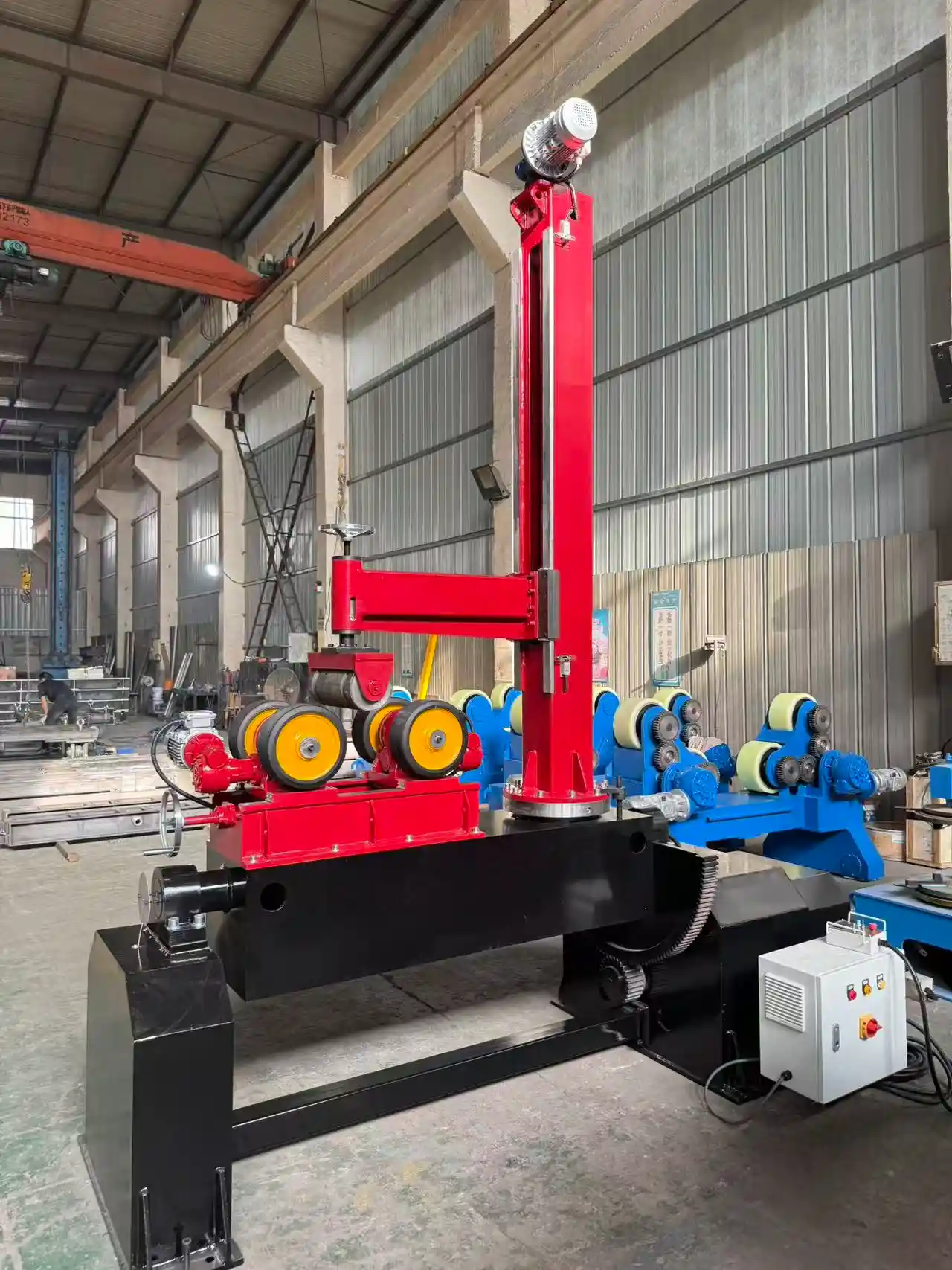
The machinery forms the backbone of your operation. You’re looking at advanced welding systems, CNC cutting equipment, and positioning devices that handle the precision work modern boilers demand. A welding manipulator with 8000mm horizontal and vertical travel handles longitudinal and circumferential seam welding on larger vessels. A 3-ton 3-axis welding positioner delivering ±0.05 mm positioning accuracy becomes necessary for complex fabrications where tolerances matter.
Beyond the machines themselves, your facility needs work. Site preparation, utility infrastructure, and structural modifications to accommodate heavy equipment all add to the initial bill. These costs vary significantly based on whether you’re retrofitting an existing space or building from scratch.
Getting Systems Running and People Trained
Buying equipment is one thing. Making it work together is another expense entirely. Integrating robotic welding cells with automated material handling requires specialized setup and calibration. When you’re connecting a 1-ton 3-axis welding positioner to ABB, KUKA, or FANUC robots, you need people who know both systems.
Training costs often get underestimated. Your operators need to run this equipment safely and efficiently. Your maintenance staff needs to keep it running. Skimping here shows up later as downtime, quality issues, and safety incidents. Budget for it properly.
Managing the Costs That Never Stop
Once production starts, the bills keep coming. How well you manage these ongoing expenses determines whether your break-even calculation stays on track or slides further out. The difference between a profitable operation and a struggling one often comes down to operational discipline.
Materials and Energy
Steel plates, tubes, and welding consumables represent your largest variable costs. Every unit you produce consumes these materials, and waste directly erodes margins. CNC plasma cutters and laser cutting machines help here by optimizing cutting patterns and reducing scrap.
Energy consumption adds up faster than most people expect. Running welding equipment, material handling systems, and facility climate control creates substantial utility bills. Scheduling machine usage during off-peak hours, maintaining equipment for optimal efficiency, and investing in energy-saving technology all contribute to keeping these costs manageable.
Labor and Keeping Equipment Running
Automation changes the labor equation but doesn’t eliminate it. Robotic welding systems using 3-axis positioners reduce the number of manual welders you need while increasing output consistency. However, you now need programmers, technicians, and maintenance specialists who command higher wages.
Preventive maintenance isn’t optional. Daily checks, regular calibration, and scheduled component replacement cost money upfront but prevent the far more expensive problem of unexpected breakdowns. A welding positioner that fails mid-production doesn’t just need repair; it stops your entire line.
Understanding Where Your Revenue Comes From
Production capacity means nothing without customers willing to pay. Aligning what you can make with what the market actually wants requires honest assessment of demand and competitive positioning.
Pricing and Competition
Your pricing strategy needs to reflect both your costs and your market position. A boiler designed for renewable energy applications typically commands higher prices than standard industrial units. The precision enabled by high-quality welding equipment can justify premium pricing if you’re targeting applications where quality matters.
Watch your competitors, but don’t let them dictate your strategy. Understanding their pricing helps you position yourself, but racing to the bottom on price rarely ends well. Find where you can differentiate and price accordingly.
Si vous êtes intéressé, consultez 《Solution révolutionnaire pour le soudage des appareils à pression : Analyse technique des positionneurs de soudage rotatifs à 360 degrés》.
The Break Even Math
This calculation tells you how many units you need to sell before you stop losing money. It’s straightforward arithmetic, but getting the inputs right requires honest accounting of all your costs.
The formula:
BEP (Units) = Fixed Costs / (Per-Unit Selling Price – Per-Unit Variable Costs)
Fixed costs include rent, administrative salaries, insurance, and equipment depreciation. Variable costs tie directly to production volume: materials, direct labor, and energy per unit. The selling price is your average realized price per boiler.
| Category | Value |
|---|---|
| Total Fixed Costs | $5,000,000 |
| Average Per-Unit Selling Price | $50,000 |
| Average Per-Unit Variable Costs | $30,000 |
| Break-Even Point (Units) | 250 boilers |
At these numbers, you need to sell 250 boilers before you cover your costs. Every unit after that contributes to profit. This calculation should inform your production targets and sales forecasts. If the market can’t absorb 250 units at your price point, you have a problem that needs addressing before you commit capital.
Reducing Risk and Improving Returns
Every investment carries risk. The question is whether you’ve identified the major ones and have plans to address them. Smart operators focus on factors they can control while building resilience against those they can’t.
Several approaches consistently improve outcomes:
Technology upgrades should be ongoing, not one-time events. Automatic welding rotators and heavy-duty fit-up rotators continue improving in capability. Staying current keeps you competitive.
Process optimization means constantly looking for waste and inefficiency. Lean manufacturing principles apply here as well as anywhere.
Market diversification reduces your exposure to any single customer or sector. When one market softens, others may remain strong.
Workforce development keeps your team capable of handling new equipment and processes. The investment in training pays back through reduced errors and better utilization.
Preventive maintenance programs cost money but prevent the far more expensive alternative of unplanned downtime.
Frequently Asked Questions About Boiler Production Line Investment
What are the key cost components of a new boiler production line?
Initial capital goes toward specialized welding equipment, CNC cutting machines, fabrication machinery, infrastructure development, installation, automation integration, and workforce training. Ongoing operational costs include raw materials, energy consumption, labor, and maintenance. Both categories significantly impact your total investment and break-even timeline.
How long does it typically take for a boiler manufacturing plant to achieve profitability?
The timeline varies based on initial investment size, operational efficiency, market demand, and pricing strategy. A thorough break-even analysis factoring in fixed costs, variable costs, projected sales volume, and unit pricing provides your specific answer. Most operations reach profitability within 3 to 7 years, though scale and market conditions create significant variation.
What advanced technologies can optimize boiler production line efficiency and reduce costs?
Robotic welding systems, automated material handling, CNC plasma and laser cutting machines, and integrated production management software all contribute to efficiency gains. These technologies reduce labor costs, minimize material waste, enhance precision, and increase throughput. The combined effect accelerates your path to profitability.
Optimize Your Boiler Production Line with WUXI ABK MACHINERY CO., LTD.
Ready to build a high-efficiency boiler production line with optimized investment and a clear path to profitability? WUXI ABK MACHINERY CO., LTD. has been a trusted partner in welding and CNC cutting solutions since 1999. Our expertise in wind tower welding lines, H beam welding lines, pipe welders, and more ensures your project benefits from unparalleled quality and innovation. Contact us today to discuss your specific requirements and leverage our 25+ years of experience to achieve your financial and operational goals. Email: jay@weldc.com | Mobile: +86-13815101750
 English
  Español
  Français
  Deutsch
  Português
  Русский