Friction Stir Welding has quietly become one of the more interesting developments in how we join metals. The process sidesteps a lot of the headaches that come with traditional welding, especially when you’re working with materials that don’t behave well under intense heat. What makes it worth paying attention to is how it changes the game for industries where joint quality isn’t just a preference but a requirement.
How Friction Stir Welding Actually Works
The mechanics here differ fundamentally from what most people picture when they think of welding. Instead of melting material together, FSW uses a rotating tool that generates heat through friction. The tool plunges into the workpieces and moves along the joint line. Material gets soft enough to flow and mix, but never actually melts. The rotating action stirs and forges the softened metal into a solid bond.
This approach dodges a whole category of problems. Porosity, solidification cracking, hot cracking—these issues simply don’t show up because there’s no liquid metal involved. The weld zone ends up with a fine-grained structure that often performs better than the original material. Tool geometry matters quite a bit here. Pin shape, shoulder size, and tilt angle all get selected based on what you’re joining and how the pieces fit together. Getting these details right determines whether you end up with consistent results or spend time chasing quality issues.
What are the primary benefits of friction stir welding in modern manufacturing?
The mechanical properties stand out immediately. Tensile strength and fatigue resistance both tend to run higher than what you’d get from fusion methods. Distortion stays minimal, which means less time straightening parts afterward. The environmental side is cleaner too—no fumes, no spatter, no radiation concerns. And the ability to join materials that refuse to cooperate with conventional welding opens up design possibilities that weren’t practical before. All of this adds up to better products and lower costs over time.
Where FSW Shows Up in Aerospace and Automotive Work
Both industries have embraced this technology because they’re constantly chasing weight reduction without sacrificing strength. Aircraft manufacturers use FSW for fuselages, wings, and fuel tanks. Lighter structures mean better fuel economy and improved safety margins. The absence of porosity and similar defects extends fatigue life in components that see constant stress cycling.
Automotive applications follow similar logic. Aluminum body panels, chassis parts, and battery enclosures for electric vehicles all benefit from FSW. The technology also handles aluminum-to-steel joints, which matters when designers want to mix materials for crash performance and efficiency gains. These aren’t theoretical advantages—they’re showing up in production vehicles and aircraft flying today.
How does friction stir welding compare to traditional welding methods for aluminum alloys?
Arc welding aluminum has always been tricky. High thermal conductivity and that stubborn oxide layer create conditions where porosity and cracking happen easily. FSW bypasses these problems entirely since nothing melts. The resulting welds are denser and stronger. Grain structure stays finer, residual stresses run lower, and fatigue performance improves noticeably. Post-processing drops significantly because there’s minimal distortion and no spatter to clean up. The cost and quality differences become obvious once you’re running production volumes.
Marine and Railway Applications
Shipbuilders have found FSW particularly useful for aluminum superstructures and deck panels. The joints resist corrosion well because the solid-state process doesn’t create the intermetallic compounds that weaken traditional welds in marine environments. Lighter vessels handle better and burn less fuel.
Railway manufacturing has similar priorities. High-speed train car bodies require large aluminum extrusions joined with tight tolerances. FSW’s low distortion characteristics mean parts come out closer to final dimensions, reducing the rework that eats into production schedules. The joints also hold up under the dynamic loads that rail equipment experiences constantly.
For those interested in optimizing heavy manufacturing processes, exploring the outstanding performance of key equipment is essential. Consider reading 《Le pilier central de la fabrication lourde : Les performances exceptionnelles des supports à rouleaux dans les processus clés》 to gain further insights into robust industrial solutions.
Pushing Into Advanced Materials
The technology keeps expanding into territory that seemed out of reach a few years ago. Composites and high-strength steels both respond well to FSW under the right conditions. Thermoplastic composites can be joined without melting the matrix, which preserves fiber integrity. High-strength steels end up with fine-grained microstructures that maintain or improve mechanical properties.
Research continues on tool materials and designs that can handle even harder alloys. Automation is another active area—robotic FSW systems are becoming more common, bringing better precision and repeatability to high-volume production. The technology isn’t standing still.
Making FSW Work at Industrial Scale
Scaling up requires attention to details that might seem minor but matter enormously in practice. Tool rotation speed, traverse rate, and plunge depth all need precise control. These parameters determine how much heat gets generated, how material flows, and ultimately whether the weld meets specifications. Quality control through non-destructive testing becomes standard practice for any serious production operation.
Equipment selection deserves careful thought. The forces involved in FSW are substantial, and the machinery needs to handle them without compromising positioning accuracy. A Manipulateur de soudage provides the stable platform that accurate tool movement requires. Our LH8080 welding manipulator delivers 8000 mm of horizontal and vertical travel for precise longitudinal and circumferential seam work. Linear guideways and cycloidal reducers keep operation stable while maintaining ±0.1 mm/m positioning accuracy. This kind of equipment makes high-volume production feasible without sacrificing quality.
| Modèle | Horizontal Travel | Vertical Travel | Précision du positionnement | Applications |
|---|---|---|---|---|
| LH8080 | 8000 mm | 8000 mm | ±0,1 mm/m | Longitudinal and circumferential seam welding |
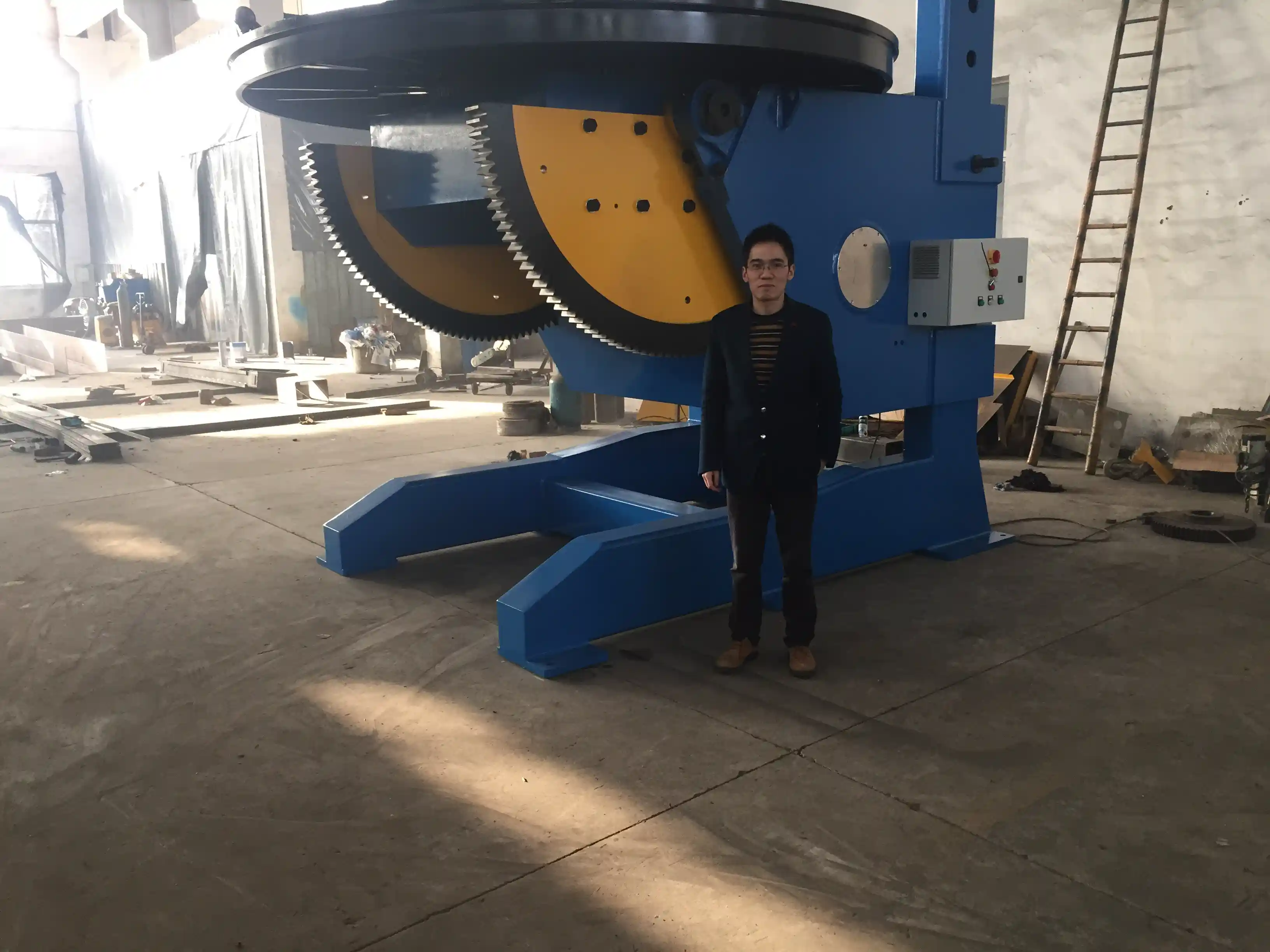
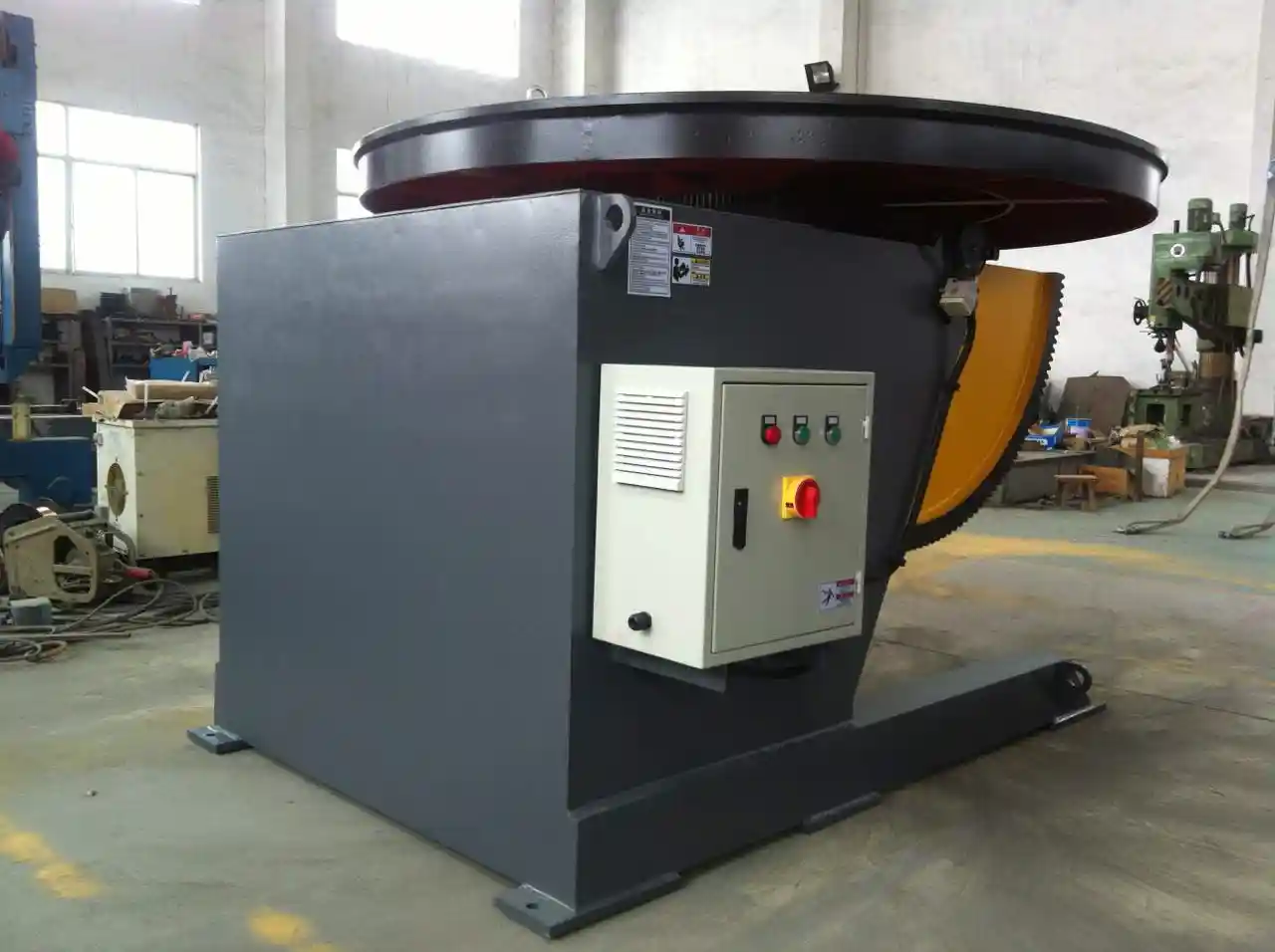
We offer various welding positioners designed for specific industrial requirements. Our Positionneur de soudage réglable (30 Tons) handles heavy workpieces with a 30,000 kg capacity, hydraulic lifting, and AC frequency stepless speed control. For larger projects, the 100 Tons Adjustable Height Positioner manages loads up to 100,000 kg, suited for wind tower fabrication and heavy steel structures. These machines are built for precision and durability in demanding production environments.
!Heavy Duty Positioner
 | Model | Load Capacity | Rotation | Tilt Range | Control System |
| :—————————— | :———— | :——- | :——— | :————- |
| 1 Ton 3 Axis Positioner | 1 ton | 360° continuous | 0-90° | Siemens PLC + HMI |
| 2 Ton 3 Axis Positioner | 2 tons | 360° continuous | 0-90° | PLC + touchscreen |
| Positionneur de soudage à 3 axes 3 Tons | 3000 kg | 360° continuous | 0-90° | PLC and touchscreen |
| Positionneur à trois axes 5 Tons | 5000 kg | 360° continuous | 0-90° | PLC and touchscreen |
| 5 Tons Adjustable Height Positioner | 5000 kg | 0-360° | 0-360° | AC frequency |
!Automated Welding Positioner
 ## What This Means Going Forward
Friction Stir Welding represents a genuine shift in fabrication capability. The combination of superior joint quality, reduced distortion, and broader material compatibility addresses real manufacturing challenges. Environmental benefits and cost efficiencies add to the case. As materials science advances and automation becomes more sophisticated, FSW will likely find its way into applications we haven’t anticipated yet. The technology has earned its place in serious manufacturing operations.
Partner with WUXI ABK MACHINERY for Advanced Welding Solutions
Leverage WUXI ABK MACHINERY’s extensive experience and innovative welding equipment to implement FSW and other advanced fabrication technologies. Our team provides tailored solutions to meet your specific manufacturing needs. Contact us today to discuss your project requirements. Reach us by email at jay@weldc.com or call us at +86-13815101750.
Frequently Asked Questions About Friction Stir Welding
Which industries are most impacted by the adoption of friction stir welding technology?
Aerospace, automotive, marine, and railway manufacturing have seen the most significant changes. These industries need high-integrity joints in lightweight materials, and FSW delivers exactly that. The ability to produce superior welds in aluminum alloys and dissimilar metal combinations has made it a standard consideration for advanced fabrication projects.
What are the common challenges when implementing friction stir welding in a production environment?
Initial equipment costs run higher than conventional welding setups. Tool design requires material-specific expertise, and operators need training on parameters that don’t apply to traditional methods. Optimizing settings for different materials and joint configurations takes time. That said, reduced post-processing, better weld quality, and improved structural performance typically justify the investment over production runs of any significant length.
Can friction stir welding be used for joining dissimilar metals, and what are the advantages?
FSW handles dissimilar metal joints well, which is one of its more valuable characteristics. The solid-state process avoids creating brittle intermetallic compounds that plague fusion welding of mixed materials. Joints come out stronger and more ductile. This capability lets engineers combine materials with different properties for specific applications—aluminum to steel in automotive structures being a common example.
 English
  Español
  Français
  Deutsch
  Português
  Русский